


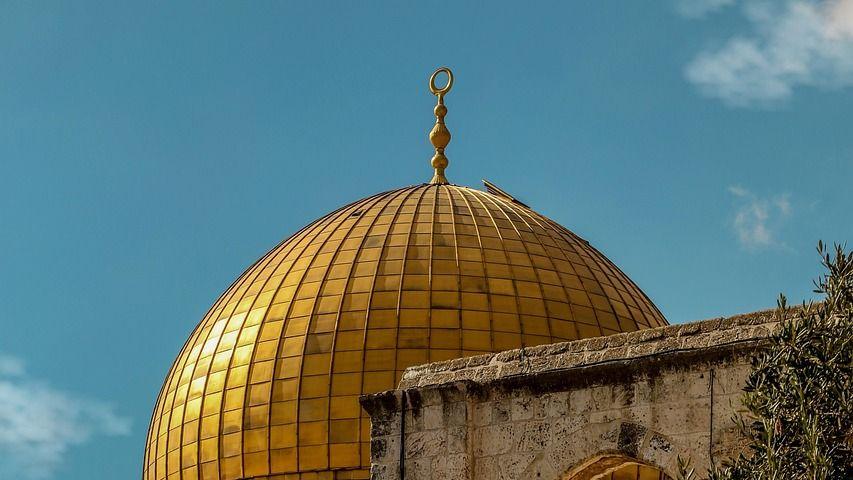

In the autumn of 1187, a French-born knight stood on the walls of Jerusalem with fewer than a dozen trained soldiers, a city swollen with refugees, and an army of tens of thousands camped in the dust below. He could have chosen the martyr’s death that the age celebrated in song and sermon. Instead, Balian of Ibelin chose to negotiate — and in doing so, secured the survival of roughly one hundred thousand civilian lives.
The Man Who Saved Jerusalem by Surrendering It
That choice — pragmatic, humane, and utterly at odds with the crusading ideal of holy sacrifice — is the kind of historical moment that tends to make filmmakers nervous. It offers no triumphant charge, no divine light breaking through clouds, no clear winner to send audiences home satisfied. And yet it happened. The real Balian of Ibelin negotiated the peaceful surrender of Jerusalem to Saladin in October 1187, securing terms that spared civilian lives in a century when the sacking of cities was almost universally accompanied by massacre.
The contrast with what Crusader armies had done when they first took Jerusalem in 1099 could not have been sharper. Contemporary chroniclers from both sides described a slaughter so thorough that the streets ran with blood. Balian’s negotiated surrender produced something almost without precedent in the military culture of the period: an orderly, conditional capitulation that Saladin honored in full.
Now consider what we usually get from a movie about the Crusades: divine mandate, Christian heroism, a clash of civilizations with a legible moral compass. The genre has had more than a century to develop its habits, and most of those habits point in exactly the opposite direction from Balian’s quiet, strange act of diplomacy. Which makes it all the more remarkable that a 2005 Ridley Scott blockbuster — imperfect, compromised by studio pressure, carrying all the weight of its Hollywood DNA — somehow arrived at that truth anyway.
The Crusades on Screen: A Long History of Getting It Wrong
The history of Crusades films is, with a few honorable exceptions, a history of simplification. From the spectacle-driven epics of early Hollywood to the post-September 11 wave of revisionist medieval dramas, films set during the Crusades have repeatedly reached for the same comfortable shapes: the noble warrior, the fanatical enemy, the clash of faiths rendered as a cosmic struggle between light and darkness. The sides change depending on the decade and the political climate, but the binary rarely does.
The dominant Hollywood failure is not malice but laziness — the flattening of medieval complexity into a story with a clear moral winner. Early Crusades epics cast Christian knights as civilization’s defenders. Later, more self-conscious productions overcorrected toward depicting the entire enterprise as Western aggression against a sophisticated, blameless Islamic world. Both framings capture something real and miss something essential. The actual Crusading period — spanning roughly 1095 to 1291 — was a chaos of competing political interests, dynastic ambitions, economic motives, religious enthusiasm, and tactical opportunism, involving actors on every side simultaneously capable of genuine idealism and breathtaking brutality.
If you survey the best-ranked movies about the Crusades, even well-intentioned entries tend to sacrifice the political and human texture of the period for a cleaner narrative arc. What would a genuinely historically rigorous Crusades film actually need to show? Christians fighting Christians and Muslims fighting Muslims. Pragmatic alliances across religious lines. The uncomfortable fact that the nominal “wrong” side sometimes behaved better than the nominal “right” one. Almost no film has been willing to do all of that at once — and sustain it across two hours of commercial cinema.
What Kingdom of Heaven Is — and What It Isn’t
Kingdom of Heaven, Ridley Scott’s 2005 epic, arrived into a cultural moment almost engineered to make nuance impossible. Released during the Iraq War and amid a global conversation about Islam and the West, the film was reviewed as a political document almost before anyone had watched it as a movie. The theatrical cut — shortened under studio pressure to under two and a half hours — was uneven enough that critics had genuine ammunition: characters felt thin, motivations rushed, emotional logic frayed at the edges.
The Director’s Cut, running to 194 minutes and restoring entire subplots and secondary characters, is a substantially different film, and the version that historians and serious viewers consistently treat with far more respect. It is the version this article is primarily concerned with.
It is worth being honest about the film’s historical liberties before arguing for its virtues, because the argument only works if we are not simply cheerleading. The Balian of Ibelin who appears in Kingdom of Heaven is a fictional construction: a French blacksmith of illegitimate birth who discovers his crusading heritage and sails east with a borrowed identity. The real Balian was a prominent Frankish nobleman born into the established aristocracy of the Crusader Kingdom of Jerusalem. The film compresses years of intricate political maneuvering into what feels like weeks. It invents a romance with Princess Sibylla that has no serious historical foundation. These are not minor adjustments. They are the kinds of liberties that cause historians to flinch — and rightly so.
And yet. Situated within the Crusader Kingdom of Jerusalem — that fragile, multiethnic Frankish state of the 1180s, balanced precariously between Saladin’s consolidating power to the east and its own catastrophically divided political class — the film threads one historical needle with a precision that almost no other entry in the genre has managed: it depicts the conflict as a political and human tragedy rather than a holy war with a righteous side.
The One Thing Kingdom of Heaven Gets Shockingly Right
The core argument for Kingdom of Heaven’s place among historically thoughtful Crusades films is not its production design, though the film is visually extraordinary. It is not its battle choreography, though that is often impressive too. It is something quieter and more difficult: the film’s rendering of the Crusader Kingdom’s internal political fracture.
At the heart of this is the portrayal of the divided Crusader court. The leprous King Baldwin IV presides over what historians call the “peace party” — pragmatic lords who understood that the kingdom’s survival depended on maintaining a workable equilibrium with Saladin: trading, negotiating, occasionally fighting but never provoking a war of annihilation. Ranged against them is the faction led by figures like Raynald of Châtillon, whose appetite for plunder and religious maximalism most medieval historians regard as the single most destructive force operating within the Kingdom of Jerusalem in the years before its collapse. This political fault line — between accommodation and zealotry, between realism and ideology — is one of the best-documented features of the period. Kingdom of Heaven renders it with surprising fidelity.
The film’s Saladin is equally significant. He is depicted as a statesman: disciplined, honorable, capable of both respect for an opponent and mercy toward the defeated. This is not soft-focus revisionism designed to flatter contemporary sensibilities. The historical Saladin’s conduct after Jerusalem’s surrender is among the better-documented episodes of the entire Crusading era. He honored the negotiated terms. He allowed the ransomed population to leave. He did not massacre the civilian inhabitants. His behavior stood in explicit contrast to the conquest of 1099, and both Muslim and Christian chroniclers of the period noticed and recorded it.
The real situation in October 1187 was almost novelistically strange. Balian had ridden to Jerusalem not to defend it but to escort his family to safety. He found himself trapped inside a city with almost no trained military resources, a population spiraling toward panic, and Saladin’s army ringing the walls. In an episode with few parallels in medieval history, Saladin granted Balian personal permission to enter Jerusalem — on the strict condition that he would not take up arms against him. The city’s inhabitants then begged Balian to lead its defense regardless. He broke his oath. And when the hopelessness of the military situation became undeniable, he walked out to negotiate with the man whose word he had violated.
That Saladin offered generous terms under those circumstances is remarkable in itself. That several medieval sources suggest he offered them partly out of personal respect for the man across the table gives the film’s central theme its real historical weight. Kingdom of Heaven is built around the proposition that the most important thing happening in 1187 was not the abstract clash of faiths but the choices of individuals — their honor, their pragmatism, their willingness to see each other as human beings rather than as symbols. The history, improbably, supports this reading.
The Road to 1187: How Jerusalem Fell
The catastrophe that brought Balian to those walls had been years in the making, and its causes were as much political as military. Raynald of Châtillon’s attack on a Muslim caravan — a flagrant violation of an established truce, precisely the kind of provocation the peace party had spent years preventing — gave Saladin both the pretext and the momentum he needed. The Battle of Hattin in July 1187 was one of the most complete military catastrophes in crusading history: the main Frankish army destroyed in a waterless valley, the King of Jerusalem captured, the True Cross seized. After Hattin, the Crusader Kingdom effectively ceased to exist as an organized military force. City after city fell with minimal resistance. Jerusalem was almost defenseless when Saladin arrived.
This sequence of events matters for how we read the film’s thesis. The fall of Jerusalem was not the story of faith defeating faith in open combat. It was the story of a fragile political entity destroyed from within — by the faction whose religious certainty made the compromises necessary for survival impossible — and then overwhelmed by the military consequences.
What Kingdom of Heaven captures, even within its Hollywood frame, is that the disaster had an internal logic. The peace party understood the kingdom’s strategic vulnerability. Raynald and those aligned with him did not, or did not care. When the reckoning came, it came quickly and comprehensively.
Why This Matters for How We Watch Crusades Films
The Crusades were not, at their core, a story of faith versus faith. They were two centuries of colliding political entities, economic interests, personal ambitions, and genuine idealism — with religious language doing heavy lifting at every stage. Films that reduce the period to a duel of civilizations miss the most historically interesting parts: the Crusader lords who formed tactical alliances with Muslim rulers against other Muslims; the Muslim factions that allied with Crusader states against rival Islamic powers; the merchants of every faith who kept trading through the wars; the individuals who managed to see each other across the lines that ideology drew.
Historians such as Thomas Asbridge, whose comprehensive account The Crusades: The War for the Holy Land is among the most accessible serious treatments of the period, and the late Jonathan Riley-Smith, whose revisionist scholarship reshaped academic understanding of crusading motivation, spent careers arguing for exactly this complexity. The more nuanced historiography that their work represents was part of the intellectual atmosphere in which Kingdom of Heaven was developed — and it shows, particularly in the Director’s Cut’s restored scenes of court deliberation and political calculation.
It is worth noting that the film’s moral ambiguity was apparently a commercial liability. Test audiences reportedly found the absence of a clear righteous side unsatisfying. The studio cut trimmed precisely the scenes that built the political complexity most carefully. That the film’s truest version had to be restored years later on home video says something pointed about what mainstream audiences still want from historical epics: not the messy truth, but the satisfying shape.
The Best Crusades Film Is the One That Leaves You Uncertain
Kingdom of Heaven endures as perhaps the most historically thoughtful movie about the Crusades not because of its siege sequences or its landscape cinematography, though both are genuinely impressive. It endures because it leaves you uncertain who was right — and because that uncertainty is historically earned rather than artificially manufactured for dramatic effect.
Return to Balian on the walls of Jerusalem, and the surrender reframes itself. This was not simply defeat. It was an argument about what the Crusades actually were: a war fought in God’s name, prosecuted by men with very human motives, and occasionally redeemed — if it was redeemed at all — by individuals who chose the living over the righteous. The film’s Balian asks, at one point, what Jerusalem is worth. Nothing, he answers. And everything. It reads like a screenwriter reaching for profundity. The historical record suggests it might simply be accurate.
For anyone who wants to go deeper into the real events behind the most compelling Crusades films, the story of 1187 is wilder, sadder, and more morally tangled than any single film has yet fully captured. Balian’s negotiation, Saladin’s restraint, Baldwin’s tragic reign, Raynald’s recklessness — these are not the simplified legends of a holy war. They are the documented record of human beings navigating an impossible situation, failing and succeeding and failing again, in ways that still have the texture of contemporary life nine centuries later. That any mainstream film came close to honoring that record is, against the considerable odds of the genre, something genuinely worth remarking on.

 English
 Arabic
 French
 Spanish
 Portuguese
 Deutsch
 Dutch
Dutch
 Italiano
 Russian
 Romaian
 Portuguese (Brazil)
 Greek
Greek