


'Di'Anno: Iron Maiden's Lost Singer' Director Reveals Takeaway
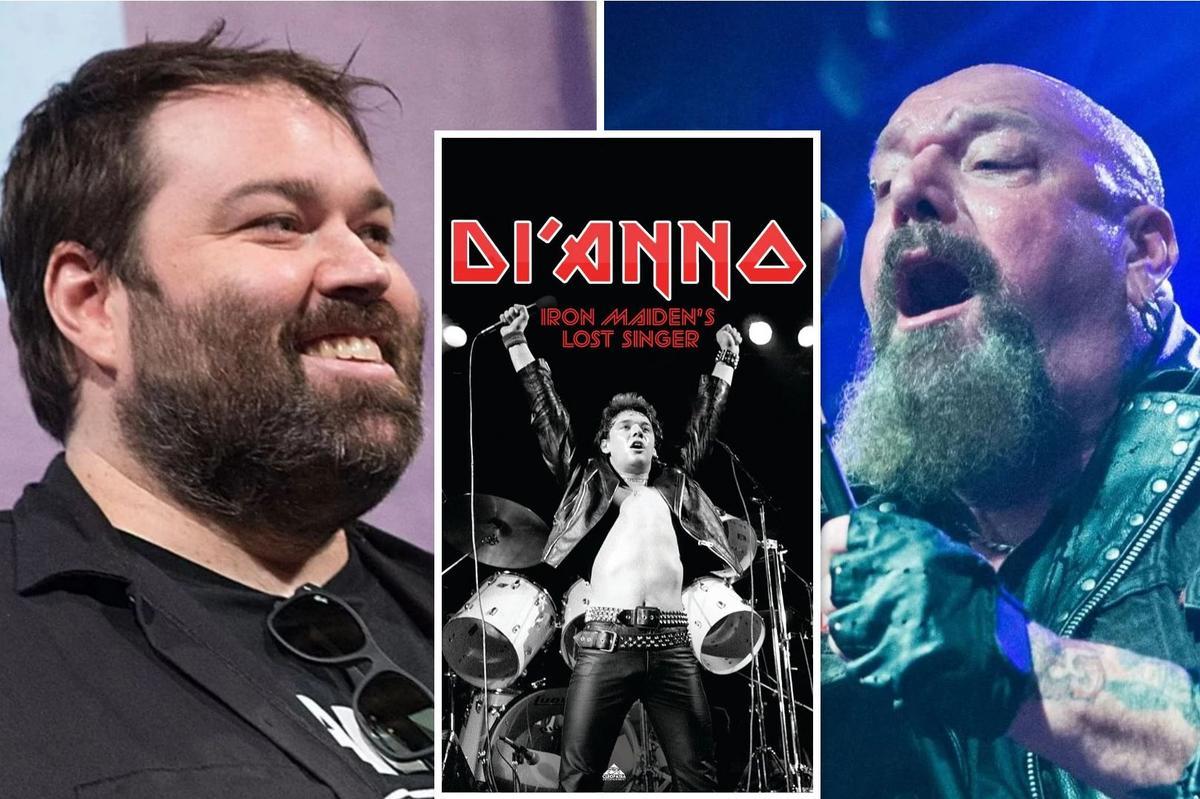
'Di'Anno: Iron Maiden's Lost Singer' Director Reveals His Big Takeaway From the Film
Documentarian and director Wes Orshoski was behind the camera for the excellent new film, Di'Anno: Iron Maiden's Lost Singer and the experience left him thinking about what he feels the big takeaway is.
Speaking with Full Metal Jackie on her weekend radio show, Orshoski shares, "I've heard some people say that this film is sort of a cautionary tale, and it is. I would say maybe don't let your pride get the best of you, you know? Don't be too proud to ask for help when you need it, you know? Think before you act sometimes."
"I think if Paul had done all the above, he might still be here," added the director, who also posited, "Sometimes in life as you get older you need help and pride is only gonna hurt you in a lot of ways."
Within the discussion, Orshoski reveals he was initially approached about doing a decidedly different and more light-hearted film about the former Maiden frontman. But the singer's perseverance through his health issues and the arrival of two fans willing to aid in his medical recovery soon became the heart and soul of the film.
They discuss some of the film's more emotional moments such as Di'Anno's return to the concert stage after his health issues and the healing impact that meeting with his former Iron Maiden bandmates had on his emotional state of mind.
Check out more of the chat below.
It's Full Metal Jackie and this week we bring you director Wes Orshoski to the show with us. Wes has directed the excellent documentary, Di'anno: Iron Maiden's Lost Singer, which digs into the life of Paul Di'Anno, the singer for Maiden's first two albums. Wes, a good place to start is how did you come to be part of this documentary and how did it change from what was initially pitched to you?
Matt Green at Cleopatra Records called me and pitched me on the idea. He had known Paul since the early '90s. Matt is originally from New York where he had spent a lot of time hanging out and partying with Di'Anno and the other guys in the band Killers, Paul's band around that time.
I think initially Matt called me up with Killers guitar player Cliff Evans, who was kind of Paul's de facto manager at the time and longtime friend, and I think initially they had an idea that it was gonna be more of a comical kind of film 'cause Paul could be quite a character and he could spin these yarns and he was kind of a cartoonist in a lot of ways, at least in their memory. So originally I think that they thought it could be kind of more of a a funny and more comical film. But it became something different, obviously, as you saw.
I experienced a much different Paul than Matt remembered. But just the thought of it, I signed up and said yes right away 'cause I didn't know that much about Paul, but Paul had kind of a mythical kind of stature.
Having left Maiden after those first two albums, nothing really kind of diminished his myth. So I thought, "Oh, this is a really interesting idea, This is an interesting film concept, like to kind of dig into the myth of Paul Di'Anno."
Di'Anno: Iron Maiden's Lost Singer Trailer
Wes, within the film we see the ups and downs for Paul. He could be very likable but also very rough on people. He was dealing with depression and immense pain, but we also saw his attitude lifted, his spirits change with the surgery and even getting engaged again. What was your personal take on who he was and where he was at in his life prior to his death?
I think he says in the film that it was never about money to him and that is accurate. I think he would've loved to have had tons of money. I think he would've preferred to have never sold off his Iron Maiden royalties, but he did. And he wasn't someone who spent a lot of time kind of looking backwards.
So around the time that I finished the film, he was healthier than he'd been in a decade and he was about to walk again. He was about to get out of that chair. He had taken some first steps for the first time in a decade and so things were looking up. He was feeling positive. He was feeling like change was possible finally,'cause his legs had deteriorated over decades. He started developing a sort of a limp in the '90s and then that evolved into him using a cane and then eventually his legs got so bad that he couldn't walk.
But through the kind of care and love of a group of fans and medical staffs in Croatia, he was finally starting to feel like his life was gonna turn around again. So that's the kind of guy that I remember. When he ended up dying of a heart defect, I didn't see that coming.
In many ways, one thing that comes across is Paul's appreciation for the fans that followed him. And I know financial concerns played a role in his returning to touring so soon, but there's also the love of playing live. What were your thoughts on seeing him at that first show in seven years?
He never looked freer, he never looked happier to me, you know? I had never seen him play live before that first show, seven and half years after his last one, and it was so hot in that room that night. They had to stop letting people in 'cause it was already so hot and literally it was one of those moments where the walls are literally sweating.
He kept wiping his head with towels and drinking water. And because Paul had taken care of himself so much over the last year prior, his voice was perfect. It was really odd. It sounded like it had been undisturbed for 30 years. I mean, it was perfect.
The falsetto was right there. It sounded like Rob Halford at times. And then at the end of the show he ended with a Sex Pistols song and it had all the bite and kind of snarl of Johnny Rotten. It was an absolute privilege to be there and to be shooting it and he was so happy.
A funny thing I had to cut this out of the film 'cause it didn't really have the effect that he wanted it to. But so he gets rolled up onto the stage in his wheelchair and these guys have to part the crowd, bring up a ramp so he can kind of roll up on it, small club, and he says, "Even in this wheelchair I'm taller than Ronnie James Dio." That's what he said and there were crickets. No one laughed. No one, I mean no one thought that was funny.
And he just got such a kick out of himself, but I had to slice that out. It didn't have the effect that he wanted, you know? But he was in a good mood and he just killed it that night.
It's Full Metal Jackie, director Wes Orshoski is with us, talking about Di'Anno: Iron Maiden's Lost Singer. And it's obviously a big moment in the film. I'm sure you'd love to show everything that you've got, but can you speak to being around him and what it meant to have him have that reunion with Steve Harris and ultimately have the band helping him out financially through his medical issues?
It's such a touching moment on screen when he realizes he's not alone.
When I started this film nine years ago in 2017, Paul misled me about his health. So he made it seem like in four or five weeks he'd be back on the road in Brazil and I quickly realized we were nowhere near that. So there wasn't a lot for me to shoot and so the film was kind of just delayed and delayed because of various reasons, mostly his health.
Then, in the middle of the pandemic, these two fans appear and one starts a crowdfunding campaign for him and the other one lures him to Croatia where he can get private healthcare in Croatia and still world-class healthcare, but at a fraction of the cost that it might cost other places. Yes, in England, healthcare is free, but they had already kind of helped him as much as they could legally.
He wasn't healthy enough to continue with finishing an operation that had already begun. So my film took a huge step forward when these fans came into the picture and then he, he went to Croatia to begin treatment.
But then it took another massive leap forward in May 2022 and that was because Maiden was starting their first post-pandemic tour in Zagreb, of all places, where Paul was living and getting better. And so the hope was that they would get together. So on that Saturday night was that incredible show which you see throughout the film. And on the Sunday night, Paul reunites with Steve Harris for the first time in 40 years. And then on the very next day, those two fans that are featured heavily in my film, Stefan and Castro, they come to Paul after having had a kind of secret meeting with Steve Harris and they tell him that Steve has agreed to pay for his surgery.
His whole life is kind of leading up to this surgery at this point. He had no idea how he was gonna pay for it because all the money that he had raised during crowdfunding had disappeared, had been spent on his care already. So that to me is the emotional heart of the film right there when these two guys, these two fans in Iron Maiden T-shirts with Iron Maiden across their chest come with this news that makes Paul cry and they put their hand on him and console him.
I flew home the next day and I was like, "Oh my God. I have a film now. I have, like, a really emotional film."
Wes, just before we were talking about that moment in the film where Paul realizes he's not alone. He had that meeting with Steve Harris and the fans that were helping out told him that the band's gonna be helping out financially. I have to say I'm just getting goosebumps recounting that moment. It was so emotional.
They actually went to meet with Steve to see if Iron Maiden would sell T-shirts with Paul Di'anno, meant to raise funds for Paul on their webstore. And Steve said if, "Well, if it's down to that, I'll just pay for the surgery. We'll just pay for the surgery." And Paul had no idea.
He was penniless. It was 40,000 pounds for the surgery alone, let alone the rehab that was gonna need to be done after, and his living expenses then and after. So I think the guys were a little bit scared to ask for too much, so they were able to get the 40,000 pounds for the surgery.
It was an incredible moment for all of us. And Paul wasn't that kind of stiff upper lip English guy. He could cry, you know? He was a crier. At the end of the film, you see him in Brazil and he's so happy 'cause I think there was a big part of him that thought he was never gonna get to go back to South America, never get to be onstage period again.
He's sweating profusely, but there are tears in there too. And at times he puts his hands over his face to hide it. But at other times he just would cry openly 'cause he was just so emotionally open and you gotta imagine a guy who's been in his wheelchair, how emotional you could be.
To have these super highs and super lows happening, it's just... He says, actually, in that scene when Stefan and Castro come with the good news, he's like, "An old guy like me can't take this much emotion. It's been an emotional weekend."
Wes Orshoski with us talking about Di'anno: Iron Maiden's Lost Singer. And at one point in the film, Paul is asked about his big takeaway and he says, "Fuck-ups in life shouldn't keep you from carrying on." That was his messaging. What is your own personal messaging that you hope people take from this documentary?
Well, that's a good one. That's very British, keep you from carrying on. I've heard some people say that this film is sort of a cautionary tale, and it is. I would say maybe don't let your pride get the best of you, you know? Don't be too proud to ask for help when you need it, you know? Think before you act sometimes.
I think if Paul had done all the above, he might still be here. Imagine if he had never sold his Maiden royalties. He may have had money to hire proper healthcare when he needed it.
But I think Paul, he lived like three hours from London, like near Stonehenge, and he was alone. And a guy in that state shouldn't be alone. He shouldn't have been too proud to ask for help or to ask his son, no matter what happened in their lives, if he could move in with him or move nearby and ask for his help.
Sometimes in life as you get older you need help and pride is only gonna hurt you in a lot of ways.
Sadly, Paul is not here for the Rock Hall induction this year, but you got his brief comment on it during a previous nomination for the band. As a music fan, what does it mean to you to finally see them be recognized? And even though there was some nonchalantness about it on camera, do you sense Paul would've loved being recognized as part of the band's history, especially having reconnected in such a positive way later in life?
1,000 percent. He would've loved it. A lot of the Brits don't really have that much respect for the Rock Hall. They don't really care that much about it. It's not that big of a thing in their culture. But one by one, you see them take part in the ceremonies and all the events that lead up to it before that induction ceremony. And they all come away one after another saying how they were caught off guard by how moving it was.
I'm from Cleveland. I love the Rock Hall. It's important to me. It matters to me. But they do get a lot of things wrong. And not having Maiden in sooner than this was one of the things they were getting wrong. It feels like justice that they're finally in. There's a lot of people behind them too. But I would have loved for them to get inducted when Paul was still alive 'cause maybe things would've been different. Maybe Maiden would've gone. Maybe they never had any intention of ever going. I don't know.
READ MORE: Bruce Dickinson and Steve Harris Share True Feelings About Iron Maiden's Rock Hall Induction
I'd still love it if Eddie showed up this year. 'Cause we know that Maiden is gonna be playing a gig that night and there's no way they're canceling that. I would love for there to be some sort of presence and had they been there two years ago or three years ago, I think Paul would've been super proud to be on that stage with them. That would've been an incredible moment for my film for him to walk for the first time.
Imagine if I coulda gotten him to finally get strong enough to that day to walk to that podium and stand with a cane or whatever. But I think that woulda been an incredibly heavy moment to end the film with.
It's a weird thing, the Rock Hall. I love it so much and I want it to be better. I'm here visiting my family in Cleveland. I went to see Echo & the Bunnymen in Cleveland at the House of Blues. Super sold out. I'm seeing people that are my age going crazy dancing and I'm just like why is there a giant exhibit on Wings and Paul McCartney at the Rock Hall right now and there's never been anything celebrating on a real level bands like Maiden or Motorhead or all the goth bands, like The Smiths and Joy Division, New Order, Echo & the Bunnymen.
All these people in this room are my age. They've sold out this venue tonight. And it is just as much their classic rock as Led Zeppelin and Cheap Trick were to people a little bit younger, you know? So yeah, it, I don't know, it just feels like justice that they're going in and despite what he said in the film, I think he would've loved the attention. He would've loved the whole week of attention. Paul loved attention. Paul loved people loving him.
Wes, diving into documentary filmmaking, a big part of it is having the story to tell. Can you talk about how much goes into making a decision to take on a project? Like, do you do a bunch of research prior to taking the job to see if you've got something there or is it better not to let that existing knowledge color where you're gonna take it and let the subject reveal themselves to you through the process?
Ah, good question. I wish I had the luxury to pick and choose. This was presented to me and it was a great idea. It was a small budget, but it was still an intriguing idea. The idea to me at the beginning was to work on it for one year total and this is nine years later.
So that was how I was gonna make the money make sense. But I still feel very lucky that Cleopatra was... Nobody else was knocking on my door saying, "Here, take this money to make a Paul Di'Anno film." But when I started the film, yeah, I didn't know what the story was. I didn't know how the story was gonna unfold. I didn't know who Paul really was. I had to learn about him.
The idea I had then, I thank God that got changed dramatically through medical delay after medical delay, and then COVID, because then these fans came into the picture and it changed it dramatically and that to me was way more interesting than just a bunch of talking heads talking about the making of the first two albums, you know?
First, let's tell people where the best way is to see this film if they haven't seen it or where they can watch the movie.
Yeah. In the States, you can get it on Apple, you can get it on Amazon digitally. You can buy it on Blu-ray, on DVD on Amazon and in the Cleopatra Records website. And there are other ways. I don't know all the ways, but in a couple of weeks there's gonna be a bonus edition with a DVD, Blu-ray, and the full live concert, the audio of the concert in Zagreb.
Yeah, I think it comes out next month in the U.K., and it's being rolled out in different regions at different times, but those are the big ones in America right now.
And also, Wes, what's been grabbing your interest as of late, and is there a next project on the horizon?
So many things. Right now I'm just finishing up a film about the Memphis soul and funk band called The Bar-Kays. In the funk and soul world, they're kind of well-known. A friend of mine named Adam Rubenstein came to me a couple of years ago and told me that one of his cousins was one of the members of The Bar-Kays that died with Otis Redding in the 1967 plane crash that killed Otis.
And he said that for his whole life, he'd wanted to do something to remember his cousin and those teenage phenoms that made the Soul Finger album, had a hit record, and so we went on this quest and it's filmed very much about Adam's quest.
I'm filming him meeting people famous in the Memphis and Stax world. People like Steve Cropper and, and Sam Moore, who have passed recently. And it's my first film about an American topic and I'm just super proud of it. It's very different from anything I've ever made.
Awesome. Well, wish you the best of luck and congrats again.
Thanks to Wes Orshoski for the interview. Di'Anno: Iron Maiden's Lost Singer is out now. Stay up to date with Orshoski on X and Instagram. Find out where you can hear Full Metal Jackie's weekend radio show here.
Below, see our picks for the best rock and metal films of the 2000s.
Best Rock + Metal Dramatic Movies of the 2000s
Gallery Credit: Chad Childers, Loudwire

 English
 Arabic
 French
 Spanish
 Portuguese
 Turkish
 Dutch
Dutch
 Italiano
 Russian
 Romaian
 Portuguese (Brazil)
 Greek
Greek