


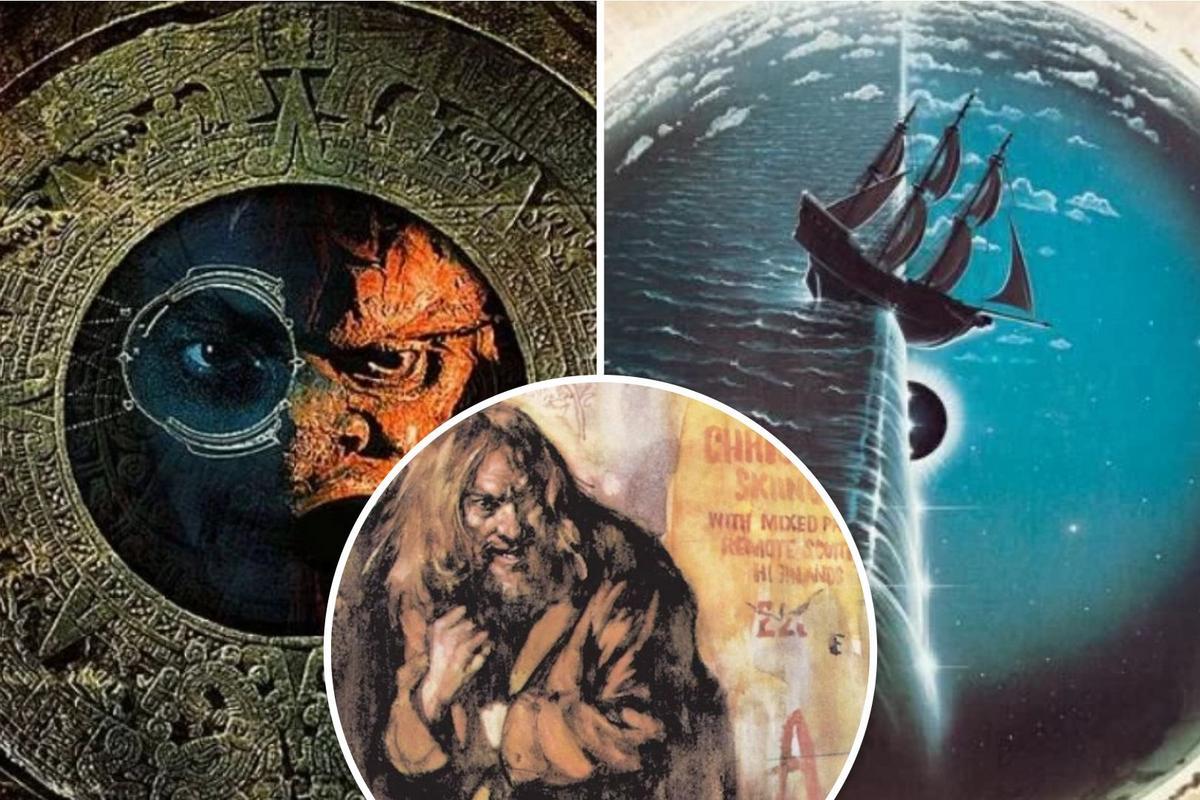
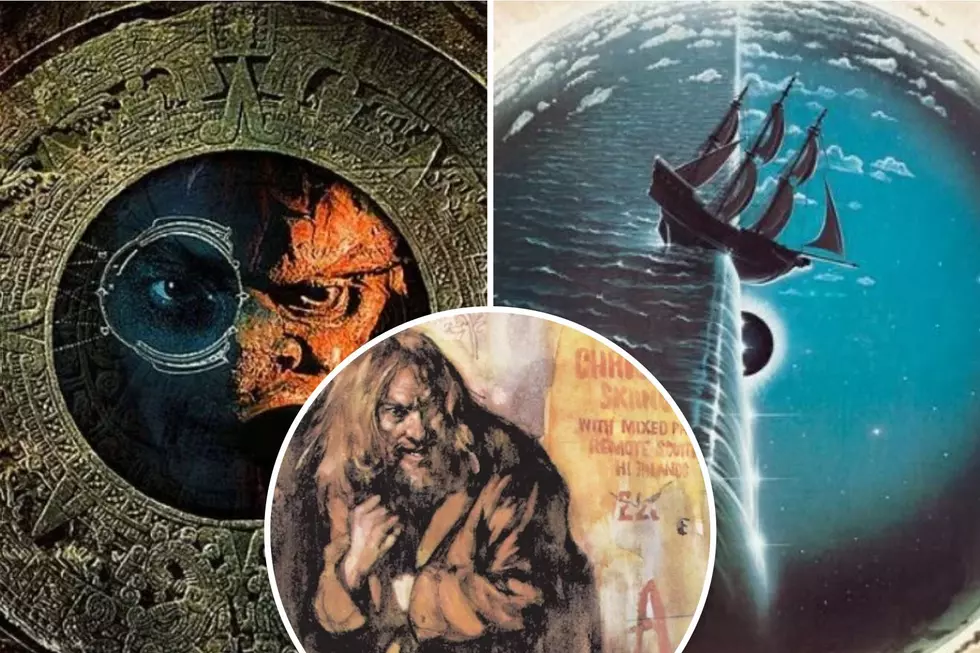
Here are the 11 best prog metal covers of prog rock songs!
Loudwire recently highlighted nearly a dozen great prog rock covers of non-prog rock songs, so we thought we’d put a different spin on the same sort of comparison by showcasing awesome progressive metal covers of progressive rock tunes.
Because prog metal wouldn’t exist without prog rock, it totally makes sense that artists from the more savage side of the fence would pay homage to the artists who — directly or indirectly — got them going, right?
READ MORE: The History of Prog Metal in 21 Albums
On that note, and probably to the shock of no one, there aren’t a ton of reinterpretations of modern prog rock classics since the majority of influential and timeless material came out during the 1970s. So, we’re shining a light on extra aggressive versions of classic prog rock tunes from names you’ll undoubtedly recognize and names you’ll be grateful to now know.
We’d love for you to sound off about your feelings on our picks, too! For instance, did we miss any important examples? Do we need to check our hearing because one of these covers is actually a catastrophic miss?
Before you decide, please give a careful read and listen to what we think are the 11 best prog metal covers of prog rock songs!
Between the Buried and Me, “Three of a Perfect Pair” (King Crimson)
Three of a Perfect Pair (1984) was the final LP of King Crimson’s ‘80s prog rock/new wave/post-punk trilogy, and its title track is among the catchiest and most evenly balanced compositions from that era. Like every progressive metal band, Between the Buried and Me were heavily influenced by them, and considering how keyboard-heavy and silky smooth their stuff can be, it’s no wonder why they tackled “Three of a Perfect Pair” on their appropriately titled collection of covers: 2006’s The Anatomy Of.
It’s nearly identical to the original in terms of its duration and direction, but with frontman Tommy Rogers’ higher pitched voice and sharper intersecting guitar loops adding freshness and a generally colder tone. Likewise, the percussion and guitar playing are rougher during the chorus and bizarre instrumental break near the end (which is emulated with surprising accuracy).
In hindsight, BTBAM’s rendition is amazing not only for how faithfully it recreates the past but also for how much it foreshadows their post-Alaska zaniness.
Allegaeon, “Roundabout” (Yes)
As we previously wrote, “Roundabout” is “a flawless synthesis of prog rock theatricality/complexity and radio-friendly catchiness,” and no one could do it better than Yes did on 1971’s Fragile. Knowing that, Allegaeon (who could be classified as tech-death if we want to split hairs) decided to truly make it their own as a non-album single back in 2020.
It begins quite authentically – but with a bit more weighty echo) – before re-envisioning “Roundabout” with fiercer riffs and rhythms (including some ultra-spicy guitar work). Ex-frontman Riley McShane mostly chooses to sing cleanly rather than growl/scream and his empowered singing and luscious harmonies add to the track’s dynamic fury.
Obviously, Yes purists and/or anyone who doesn’t like the harshest side of prog metal may not dig it, but everyone else should applaud Allegaeon’s more epic, operatic and hostile – yet carefully constructed and undeniably respectful – treatment.
Kassogtha, “Welcome to the Machine” (Pink Floyd)
If you’ve not heard about Swiss quintet Kassogtha, allow us to introduce you to their self-proclaimed “no-nonsense brand of groovy progressive death metal” that “combines a variety of influences to create a steamrolling fusion of old-school riffs, neck-breaking drumming and a vocal range effortlessly merging brutal growls and ethereal melodies.” All those qualities shine on their refreshing – if inherently controversial – adaption of this cut from 1975’s Wish You Were Here.
Lifted from their 2019 The Call EP, Kassogtha’s version condenses Pink Floyd’s blueprint with a similar but shorter and simpler build-up prior to singer Stephany Hugnin emulating David Gilmour’s verses. Understandably, both she and the instrumentation surrounding her swap much of Pink Floyd’s spacey effects and intoxicating atmospheres with crunchy ominousness and occasional roars. Kassogtha also replace Richard Wright’s trippy solo and the concluding sound collage with a fittingly powerful new outro that cements their captivating resourcefulness.
Devin Townsend, “Natural Science” (Rush)
The finale of 1980’s Permanent Waves, three-part odyssey “Natural Science” is a perfect testament to Rush’s knack for fusing engrossing hooks and moodiness; prog rock trickiness and recurring motifs; and insightful observations about humanity and nature. As such, it was an obvious choice to include in 1996’s Working Man (A Tribute to Rush) compilation. What wasn’t so predictable, however, was that the cover would be led by prog metal madman Devin Townsend alongside guitarists David Townson and James Murphy (Death, Testament); keyboardist Matt Guillory; drummer Deen Castronovo (Journey, Ozzy Osbourne); and bassist Stuart Hamm (Joe Satriani, Steve Vai).
By and large, they stick to Rush’s template, with Townsend mirroring Geddy Lee’s phrasing but with purer production and a grungier delivery. Those parallels and divergences are heightened once the full instrumentation kicks in (especially with Guillory’s cosmic solo before the main guitar part gets going). Eventually, Townsend launches into his signature shouting and shrieks, but both he and the track’s additional prog metal adjustments (namely, wackier and angrier guitar work) work wonders to filter “Natural Science” through a more ferocious lens. (The group even keep the closing ambiance.)
Twinstrumental, “Dance on a Volcano” (Genesis)
As you might guess, Twinstrumental consists of identical twins — Matt and Adam (last name unknown) — putting their unique spin on music from a variety of genres (including video game themes). Despite their name, they occasionally work with outside singers, too and a great example of that is their 2022 approach to “Dance on a Volcano” (the first song from Genesis’ debut LP without Peter Gabriel and seventh overall, 1976’s A Trick of the Tail).
Even their six-string tones are startlingly loyal to Genesis’ version, but with piercing accompaniment compensating for the lack of keyboards. Right on time, vocalist Steu — last name also unknown — chimes in as a suitable stand-in for Phil Collins as well (albeit with some autotune and/or other modifications). Twinstrumental’s tempo is slightly slower than Genesis’, but it’s damn close, and their prog metal slickness is in full force during the intrinsically less peculiar instrumental endcap. It’s an all-around terrific take on one of Genesis’ most exhilarating pieces.
Magellan, “Aqualung” (Jethro Tull)
The title track of Jethro Tull’s fourth record and international breakthrough, “Aqualung” signified the start of the band palpably moving away from hard rock and toward progressive rock while keeping their folk rock throughline. It remains their most famous tune and their best non-epic song, so it was especially important for U.S. outfit Magellan to handle it with care on 1996’s To Cry You a Song: A Collection of Tull Tales. Clearly, they exceeded all expectations.
Fascinatingly, they begin with a piano prelude and the third section of the composition instead of Martin Barre’s iconic riff. They soon launch into the song properly, though, with keyboardist Trent Gardner sounding surprisingly like Ian Anderson (cheeky laughs and all) as the arrangement stays traditional aside from some electronic percussion, gruffer guitar timbres and layered vocals. Of course, Wayne Gardner emulates one of the most famous guitar solos in classic rock with only slight alterations and Magellan’s symphonic ending is a superb complement.
Amorphis, “Levitation” (Hawkwind)
This is a particularly bold and gratifying reinterpretation, as the progressive death metal magic of Amorphis rarely has much resemblance to the space rock hegemony of Hawkwind. Nevertheless, the Finnish ensemble transformed the English troupe’s interstellar gem “Levitation” (from 1980’s Levitation) into a fast and fiery stampede on their second EP: 1997’s My Kantele
Amorphis expertly mix their belligerence with Hawkwind’s otherworldly colorfulness by juxtaposing aggressive guitar chords, percussion and singing — courtesy of ex-frontman Pasi Koskinen — with psychedelic keyboard swirls.
Just about every element and detour is accounted for (except that the increased heavy metal panic results in a less vibrant palette), and Koskinen even imitates Dave Brock’s exasperated breathing amid the jamming. The final verses appear sooner, too, so Amorphis cleverly use haunting dissonance to leave a lasting impression.
Vanden Plas, “Point of No Return” (Kansas)
Although they’re popular in certain places, Germany’s Vanden Plas surely deserve to be a household name for prog metal fans across the world. Not only do they have exceptional original material (namely, 2006’s Christ 0), but they’ve also nailed covers of two Marillion tracks from 1985’s Misplaced Childhood (“Kayleigh” and “Pseudo Silk Kimono”). That said, it’s their run at the eponymous opener to Kansas’ fifth LP, 1977’s Point of No Return, (released as a bonus track to 2002’s Beyond Daylight) that best showcases their skills at revising others’ stuff.
Interestingly, the music is substantially heftier than what Kansas did (while copying their trajectory to a tee), yet Andy Kuntz’s singing is slightly more reserved than Steve Walsh’s. Understandably, Vanden Plas don’t fully replicate Robby Steinhardt’s violins, either, and in general, their version is less spacious and vivid. None of that is a knock, though, as Vanden Plas due precisely what you’d hope they’d do with one of Kansas’ biggest hits.
Voivod, “21st Century Schizoid Man” (King Crimson)
The lead-in to King Crimson’s groundbreaking debut set (1969’s In the Court of the Crimson King), “21st Century Schizoid Man” was arguably the first progressive rock song. Almost 60 years later, it’s still one of the best, and like Yes’ “Roundabout,” it’s virtually untouchable. That didn’t stop Voivod from, well, touching it on 1997’s Phobos, however, and while they obviously don’t match King Crimson’s cut, they do a masterful job of turning it into a progressive/industrial/thrash metal powerhouse.
They skip over the original’s 30-second preamble and jump right into their rendition. Every instrument is razor-sharp, and rather than mimic Greg Lake’s vocal expressiveness, fellow bassist Eric Forrest goes for a grittier approach with discernably different timing. As for the still-incredible instrumental break, it’s naturally not as eclectic or expansive.
Regardless, Voivod put enough of their biting edge on most of it to silence any doubters of their abilities, and the wrap things up as faithfully but idiosyncratically as they started (complete with a similarly noisy outro).
Port Mahadia, “South Side of the Sky” (Yes)
Another awesome tune from Fragile, “South Side of the Sky” is among Yes’ heaviest songs, and while fans of the band surely adore it, it’s not nearly as well-known by non-prog audiences. (It’s only been played about 18.5 percent as much as “Roundabout” in concert, too, according to setlist.fm.) Thankfully, burgeoning ensemble Port Mahadia did their part to honor and bring more attention to it on 2016’s Quantum Space.
Port Mahadia’s build-up is significantly longer and they extensively modify Yes’ introductory natural sounds (replacing the foot stomps with bird chirps, electronic buzzing and arid atmospheres). Soon after, their simpler and crunchier arrangement keeps most of the necessary elements while primarily distinguishing itself with female vocalist Sol Yamil filling in for Jon Anderson. Gratefully, Rick Wakeman’s piano break is largely kept unchanged, too, and the guitar solo near the end is a very interesting shakeup.
Overall, Port Mahadia’s reimagining emphasizes Middle Eastern ambiance and metal guitarwork over symphonic robustness, making it a commendably uniquetribute to the group’s heroes.
Sun Caged, “Land of Confusion” (Genesis)
Say what you will about Genesis’ drastic transformation into one of the 1980s’ biggest pop-rock acts (as we have), but they undeniably had at least a handful of great songs scattered throughout the decade. Both creatively and intellectually, 1987’s immensely adventurous, catchy and politically-charged “Land of Confusion” (from Invisible Touch) is the best of the bunch, and anyone who loves it should appreciate Sun Caged’s rugged revamp (issued as a Japanese-only bonus track on 2007’s Artemisia).
Unsurprisingly, it’s a bit quicker and more metallic compared to Genesis’ quirkier and more fun production, and Paul Adrian Villareal’s soaring voice is a strong stand-in for Phil Collins. Fortunately, they emulate all of Genesis’ backing vocals and chants as well — plus the gorgeous bridge — and they even toss in some extra fancy guitar work within the chorus. Like all of the covers we’ve discussed on this list, Sun Caged don’t outshine Genesis here, but they thoroughly impress nonetheless.
Below, check out our picks for the 11 best prog metal albums of the 2020s (so far)!
The 11 Best Prog Metal Albums of the 2020s (So Far)
Keep scrolling to see the 11 greatest prog metal LPs of the decade (so far)!
Gallery Credit: Jordan Blum

 English
 Arabic
 French
 Spanish
 Portuguese
 Turkish
 Dutch
Dutch
 Italiano
 Russian
 Romaian
 Portuguese (Brazil)
 Greek
Greek