


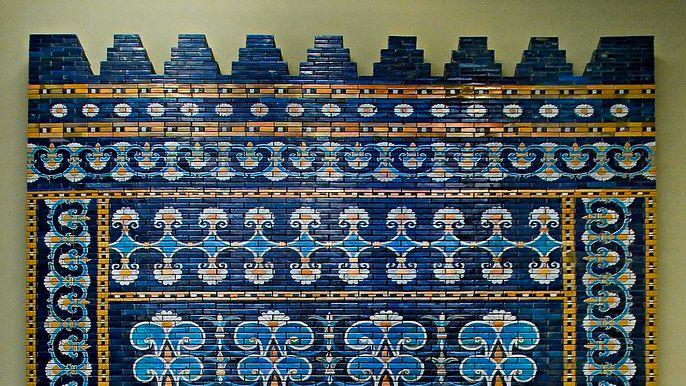

In 539 BCE, the most powerful city on earth braced for the worst. Babylon had seen conquerors before — kings who burned temples, smashed idols, and marched its priests away in chains. But when Cyrus the Great rode through the Ishtar Gate, something entirely unexpected happened: he gave the gods back to their people, and the crowd cheered.
The King Who Chose Consent Over Terror
The evidence survives in clay. The Cyrus Cylinder — a barrel-shaped tablet unearthed in Babylon in 1879 — records in cuneiform script how Cyrus restored local deities to their temples, returned displaced peoples to their homelands, and presented himself not as a foreign destroyer but as a servant of Babylon’s own god, Marduk. Some scholars have called it history’s first human-rights charter, a label that is historically contested and almost certainly anachronistic, but the political intelligence encoded in the object is not. Cyrus understood something that the Assyrians and Babylonians before him had missed: an empire built on terror has to keep terrorizing, forever, just to hold its shape. An empire built on consent runs itself.
That single governing insight helps explain one of the most striking facts in Persian Empire history: the Achaemenid Empire — founded by Cyrus the Great around 550 BCE and stretching at its height from Egypt to the doorstep of northwestern India — survived for roughly 220 years. Not as a stagnant backwater, but as the largest, most administratively complex empire the ancient world had yet produced. Almost every other superpower of the era collapsed in a fraction of that time. Persia endured, and the reason starts with a king who chose not to burn the temples.
From a Small Persian Tribe to the Largest Empire the Ancient World Had Seen

The story begins with an audacious act of rebellion — or so the legends insist. Cyrus the Great, ruler of a relatively modest Persian tribe in what is now southwestern Iran, overthrew the Median king Astyages around 550 BCE. Ancient accounts, including those of Herodotus, claimed Astyages was his own grandfather, though modern historians treat that genealogy with caution. Whatever the family dynamics, the military result was unambiguous: Cyrus walked away with the Median kingdom, its army, and a taste for larger prizes.
What followed was one of history’s most breathtaking expansions. Within roughly two decades, Cyrus absorbed Lydia — the fabulously wealthy kingdom in modern Turkey whose king, Croesus, was proverbially rich — and then Babylon, making himself master of the ancient Near East. His son Cambyses II added Egypt in 525 BCE. Darius I subsequently pushed the eastern borders toward the Punjab and extended Persian influence along the northern African coast. At its maximum extent, under Darius I, the Achaemenid Empire covered an estimated 5.5 million square kilometers, simultaneously governing the ancestors of today’s Iranians, Egyptians, Turks, Iraqis, Afghans, and Pakistanis under a single administrative framework.
No previous empire — not Egypt at the height of the New Kingdom, not the Assyrian war machine at its most formidable — had managed anything close to this scale. As the Metropolitan Museum of Art notes, the Achaemenid Persian Empire was the largest the ancient world had seen, running from Anatolia and Egypt across western Asia to Central Asia and the northwestern reaches of the Indian subcontinent. The sheer geography of the problem — dozens of languages, hundreds of local gods, climates ranging from Mediterranean coast to high-altitude steppe — would have defeated any empire that attempted to impose a single cultural template. Cyrus and his successors never tried.
The Core Strategy: Letting Conquered People Keep Their Gods

The policy had a practical elegance that modern administrators would recognize immediately. When Cyrus entered Babylon, he did not proclaim himself the Persian conqueror of the city. He adopted the title King of Babylon, honored the local deity Marduk, and retained the existing administrative class. To the average Babylonian farmer or temple priest, the new king looked less like an occupier and more like a leadership change that left daily life intact.
Contrast that with Assyrian imperial strategy, which involved mass deportations of conquered populations and the deliberate destruction of foreign religious symbols. The Assyrian method generated constant, exhausting rebellion. Every province was a potential wildfire requiring permanent military suppression. The cost — in soldiers, treasure, and administrative energy — was enormous and ultimately unsustainable.
Persia’s approach produced a different arithmetic. The most widely cited example sits in the Hebrew Bible. Jewish exiles hauled to Babylon by Nebuchadnezzar were freed by Cyrus and given not just permission but reportedly imperial support to return to Jerusalem and rebuild their Temple. For a people defined by their relationship with a specific god in a specific place, this was an extraordinary act of state generosity. The result was equally remarkable: a formerly captive people became loyal subjects, their scribes and priests incorporating Cyrus into their sacred narrative as an instrument of divine favor. He had purchased devotion at the cost of a construction project.
Scholars call this governing logic elite accommodation — retain local priests, scribes, and nobles in their positions, reward them with prestige and autonomy, and they become the empire’s middle management rather than its insurgents. The satraps, the local temple administrators, the regional scribes keeping records in their own languages — all had a personal stake in the empire’s stability. Rebellion meant losing status. Cooperation meant keeping it. National Geographic’s overview of the Persian Empire identifies this cultural flexibility as central to how the Achaemenids held such a vast territory together across generations.
The Administrative Machine: Satrapies, Royal Roads, and the King’s Eyes
Tolerance is a philosophy. Governance requires infrastructure. The Achaemenid Empire was also an engineering achievement of the first order, and the two systems reinforced each other in ways that made the whole far more durable than its individual parts.
The empire was divided into roughly twenty to thirty provinces called satrapies, each governed by a satrap — typically a Persian or Median nobleman backed by a military garrison — who collected taxes, maintained order, and served as the king’s representative. Crucially, the satrap left local customs, languages, and religious practices intact. The empire demanded taxes and military levies; it did not demand cultural conversion. This division of authority between imperial extraction and local autonomy was sophisticated enough that Alexander the Great, after conquering Persia, adopted the satrapy system wholesale rather than construct something new from scratch.
Communication across such distances required infrastructure that would not look out of place in a modern logistics operation. The Royal Road — a highway of roughly 2,700 kilometers running from Sardis on the Aegean coast to the Persian capital of Susa — was lined with relay stations where royal couriers could change horses and continue riding. Ancient sources, including Herodotus, suggest the full route could be covered in approximately a week, a communication speed that gave the imperial center real-time awareness of provincial conditions. For an empire that needed to know about a rebellion in Egypt before it spread to Babylon, speed of information was not a luxury but a survival mechanism.
Standardized weights, measures, and coinage — Darius I introduced the gold daric as a standard imperial coin — knitted together economies that had previously operated in entirely different commercial languages. And threading through all of it was a network of royal inspectors, known to the Greeks as the King’s Eyes and Ears, who traveled the satrapies assessing corruption, disloyalty, and administrative failure, reporting directly to the king. Small problems were caught before they became catastrophic ones. The center could intervene with precision rather than panic.
Darius, Xerxes, and the Cracks That Eventually Showed

If Cyrus invented the empire’s governing philosophy, Darius I — who ruled from 522 to 486 BCE after a contested and violent succession — built its permanent architecture. He codified law across the realm, standardized coinage, reorganized the satrapies into a more systematic structure, and commissioned Persepolis, the ceremonial capital in southern Iran whose columned ruins still command something close to awe today. The Getty’s exploration of ancient Persia and the classical world captures how Persepolis represented a convergence of artistic traditions drawn from across the empire — Greek, Egyptian, Mesopotamian, and Elamite craftsmen all contributing to a monument that was itself a physical argument for pluralist governance. Darius turned a fast-growing conquest into a functioning state.
The Greek problem loomed large in Western historical memory, though its significance to the empire as a whole requires careful proportioning. The Persian Wars — Marathon in 490 BCE, Thermopylae and Salamis in 480 BCE — are remembered primarily as Persian defeats, and militarily they were significant ones. Xerxes I sacked and burned Athens, then lost his fleet at Salamis in a naval engagement that ended any realistic prospect of subduing the Greek mainland. But Greece occupied the western fringe of a realm extending to the Indus River. The empire absorbed these defeats and continued functioning for another century and a half. The losses damaged the treasury and royal prestige; they did not crack the foundations.
What did eventually generate structural stress was largely internal. As satrapies matured across generations, their governors accumulated enough local power, wealth, and military muscle to contemplate independence. Royal succession — always a vulnerability in dynastic systems — triggered palace coups with increasing frequency in the fourth century BCE. And as Persian court culture grew more elaborate and inward-looking, the light touch of accommodation sometimes hardened into demands for deference that alienated the very provincial elites the system depended on. The model requires participants who believe the arrangement is worth keeping. When that belief eroded, the cracks spread.
Why 220 Years Is the Achievement, Not the Footnote

Alexander the Great swept through the Persian Empire between 334 and 330 BCE with a speed that still astonishes military historians, and the conventional narrative frames this as Persian collapse. But collapse relative to what? Rome, at a comparable institutional age, was still a regional Italian power fighting neighbors it had not yet subdued. The United States at 220 years old was 1996. Longevity at imperial scale, governing genuinely diverse populations across vast distances without modern communications or transportation, is genuinely difficult. The Achaemenid Empire’s run deserves to be evaluated on its own terms rather than solely through the lens of its ending.
Alexander himself delivered the most candid verdict on the empire he conquered: he kept it. He adopted the satrapy system, wore Persian dress in court, incorporated Persian nobles into his administration, and encouraged his generals to take Persian wives in a deliberate policy of cultural fusion. The Achaemenid administrative machine was too functional to dismantle. It simply changed its senior leadership.
The blueprint did not vanish with Alexander’s arrival. Two later Iranian dynasties — the Parthians and the Sassanids — rebuilt imperial rule from the same geographic and conceptual foundation, meaning that Iranian-centered imperial power shaped western Asia across three successive native dynasties spanning well over a millennium. The Achaemenids planted a seed that outlasted the tree.
One fact about the Persian Empire worth considering carefully: no other ancient empire of comparable geographic scale governed so many distinct cultures — so many languages, religions, legal traditions, and agricultural systems — with so little systematic cultural destruction. Dozens of languages were written and spoken within the empire’s borders. Temples to deities the Persians had never encountered received imperial protection. Local law codes continued operating under the umbrella of Persian sovereignty. The diversity was not a design flaw awaiting correction. It was the design.
What Cyrus Got Right That Empires Keep Getting Wrong
The Cyrus Cylinder did not stay buried in the ancient world. A replica sits today in the United Nations headquarters in New York, displayed as an emblem of pluralist governance. It is a striking afterlife for what was also, in part, a piece of royal propaganda — a king’s public declaration crafted to legitimize conquest — but the administrative principle it encodes proved more durable than the dynasty that commissioned it.
The question of how the Persian Empire lasted so long consistently draws historians back to the same structural answer: the Achaemenids engineered conditions in which the cost of rebellion exceeded the cost of cooperation, and they accomplished this not primarily through military terror but through carefully constructed incentive. Keep your god. Keep your language. Keep your administrative title and your income. Pay your taxes and supply soldiers when the king requires them. For most people in most provinces, across most of the empire’s existence, that was a bargain worth accepting.
The empire that appeared weakest on paper — decentralized, religiously pluralistic, administratively delegated, culturally permissive — turned out to be the most durable superpower the ancient world had yet produced. Empires that governed through enforced monoculture and systematic erasure burned bright and failed fast. Persia, the great accommodator, lasted two centuries at genuine imperial scale. And in the ruins of Persepolis, in the clay of the Cyrus Cylinder, in the administrative vocabulary that Alexander inherited and later empires would study, its ideas outlasted it by considerably longer.

 Arabic
 French
 Spanish
 Portuguese
 Deutsch
 Turkish
 Dutch
Dutch
 Italiano
 Russian
 Romaian
 Portuguese (Brazil)
 Greek
Greek