


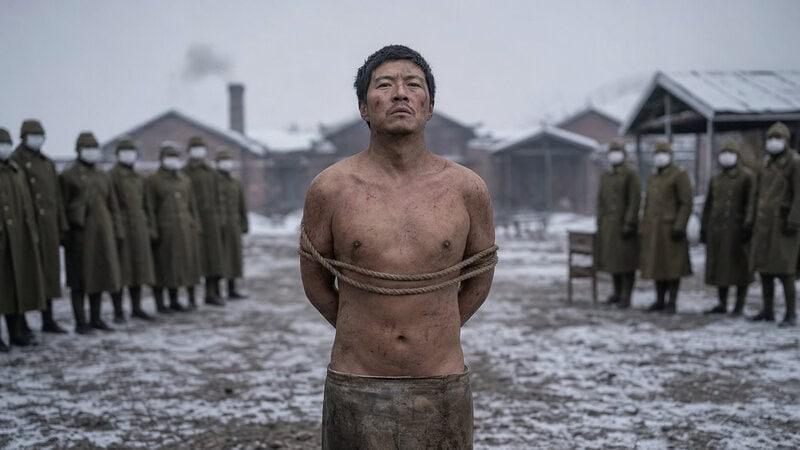

In the winter months outside Harbin, China, temperatures could fall to minus thirty degrees Celsius. Researchers at a compound called Pingfang knew this, and they used it. A prisoner — Chinese, Korean, Soviet, it hardly mattered to the men with the clipboards — would be led into the frozen air, arms submerged in ice water, while scientists recorded precisely how many minutes passed before frostbite set in, before tissue blackened, before the body began its surrender. The data was meticulous. The men who gathered it would never answer for it in any court of law.
What Unit 731 Actually Was

To call Unit 731 a secret laboratory undersells it considerably. The Pingfang complex, constructed on the outskirts of Harbin in Japanese-occupied Manchuria beginning in 1936, functioned closer to a self-contained city: its own railway spur, power plant, and airstrip, barracks for thousands of personnel, and a perimeter designed to ensure that nothing — no sound, no prisoner, no whisper of what happened inside — reached the outside world. Its official designation was a water-purification and disease-prevention unit, a bureaucratic fiction that fooled almost no one with clearance to know the truth.
The program carried the full institutional backing of Imperial Japanese Army leadership. This was not a rogue operation run by a handful of sadists at the margins of the war machine. It was funded, staffed, and directed from the top. Branch facilities extended across occupied China, making the enterprise not a single compound but an archipelago of research sites embedded in the bones of a conquered territory.
At the center stood Lieutenant General Shirō Ishii, the program’s architect and director. Ishii was a military physician of genuine intellectual ambition — charismatic, driven, and convinced that Japan could achieve a decisive battlefield advantage not through conventional arms but through pathogens. Plague. Cholera. Typhoid. Anthrax. Delivered not by soldiers but by infected fleas dropped from aircraft over civilian populations. He built the apparatus to test whether the theory worked, and he needed human subjects to test it on.
The prisoners held inside Unit 731’s facilities were referred to internally as maruta — logs. The word was not accidental. It was a psychological mechanism, a way of training researchers to perceive human beings as inert objects suitable for consumption. At least 3,000 men, women, and children were subjected to human experimentation at Unit 731’s facilities, though the full accounting connected to field operations is substantially larger.
The Experiments: What Was Done and to Whom

The categories of experimentation at Pingfang read like a taxonomy of what human beings can do to one another when institutional permission and ideological dehumanization converge. Prisoners were deliberately infected with plague, cholera, and typhus so researchers could measure lethality rates and the progression of disease through a living body. Vivisections were performed — surgical procedures conducted without anesthesia on conscious subjects — to observe organ function in real time. Prisoners were subjected to pressure-chamber experiments, centrifuge tests, and the cold-exposure trials that generated the program’s frostbite data.
Weapons-delivery systems were tested on living human targets. Prisoners were restrained in open fields while bombs loaded with plague-infected fleas were detonated nearby. The researchers wanted to know the effective dispersal radius. The prisoners provided the answer.
The victims were not selected randomly. They were overwhelmingly Chinese, Korean, Soviet, and Mongolian — civilians, suspected resistance fighters, prisoners of war. Women and children appear in the documented record. The deliberate targeting of vulnerable populations was structural, embedded from the beginning in how the program sourced and processed its subjects.
Scholarly estimates place the death toll inside Unit 731’s facilities at a minimum of 3,000 prisoners, with at least 10,000 prisoners killed in the facilities according to some estimates. The broader death toll connected to the program’s biological warfare field operations — plague dispersal over Chinese cities, contamination of water supplies — is estimated at approximately 200,000 deaths across the wider theater of conflict. For decades, these numbers existed in a historical record deliberately kept from public view.
How the United States Chose Data Over Justice

By the autumn of 1945, American investigators were moving through the wreckage of two defeated empires and finding things that demanded a response. In Germany, evidence of Nazi medical experiments was already being assembled for what would become the Nuremberg Doctors’ Trial. In Japan, investigators connected to the U.S. Army’s own biological warfare program arrived in Tokyo and began interviewing former Unit 731 officers. What they found produced not simple horror but something more complicated: recognition of value.
The researchers at Pingfang had spent nearly a decade conducting human experiments that American scientists had been unable to replicate, constrained as they were by medical ethics and the legal prohibitions governing research on human subjects. U.S. officials concluded that the data Ishii’s team had accumulated — on pathogen lethality, frostbite progression, and the dispersal of biological agents over populated areas — represented a research windfall that could not simply be handed to prosecutors.
There was also the Soviet Union to consider. Soviet investigators were pursuing the same leads, and the emerging logic of Cold War competition had already begun reshaping every strategic calculation. If the data was going to land somewhere, American officials reasoned, better Washington than Moscow. The Soviets, for their part, did prosecute twelve Unit 731 members they had captured — at the Khabarovsk War Crimes Trial in December 1949 — though the Western powers initially dismissed those proceedings as propaganda, a response shaped in part by their own interest in burying the immunity arrangement.
The deal that emerged was straightforward in its cynicism. Ishii and his core researchers provided detailed reports and testified privately to U.S. investigators. In exchange, they were shielded from prosecution at the International Military Tribunal for the Far East — the Tokyo War Crimes Tribunal that ran from 1946 to 1948. Unit 731 was conspicuously absent from the charges. Ishii was never indicted. He died of throat cancer in 1959, a free man.
U.S. government records related to Japanese war crimes, subject to a formal declassification effort beginning in 1999 aimed at making those records more accessible — confirmed what researchers had long suspected: the immunity was not an oversight. It was a policy decision, made deliberately and documented internally at the time.
The Silence That Lasted Decades
For roughly four decades after the war’s end, Unit 731 barely existed in the official historical record of either country most responsible for its suppression. Japanese school textbooks omitted it. The U.S. government had every incentive to stay quiet about an immunity deal that would have been difficult to defend publicly — particularly as the Nuremberg Code, drafted in 1947 in direct response to Nazi medical experiments, established informed consent as a foundational principle of medical ethics. The same government that endorsed that principle had simultaneously granted immunity to men who had violated it on an industrial scale.
The story began to crack open in Japan during the 1980s, driven largely by investigative journalists and historians willing to push against institutional resistance. The contrast with the German case grew harder to ignore. Nazi physicians who had conducted experiments broadly comparable to those at Pingfang were prosecuted at Nuremberg in 1946 and 1947; several were executed. The disparity in legal outcomes between the two groups of perpetrators stemmed not from any difference in the severity of the crimes but from a single strategic calculation made in occupied Tokyo in late 1945.
The victims of Unit 731 received nothing remotely equivalent to even the partial justice Nuremberg delivered. No reparations. No formal international tribunal verdict. For survivors and the families of the dead, the postwar world offered silence where accountability should have been.
Why It Still Matters
The ethical breach at the center of the immunity arrangement did not stay contained. The research data transferred to American investigators fed directly into U.S. biological warfare research programs during the Cold War, meaning the consequences of what happened at Pingfang extended well beyond the 1940s. The original crime generated knowledge; the immunity deal transferred that knowledge; Cold War research programs absorbed it. Each step moved further from accountability and deeper into institutional normality.
The foundational legal problem this created has never been cleanly resolved. The Nuremberg Code established that human experimentation without informed consent constitutes a war crime. The United States was among the powers that ratified that principle. The simultaneous immunity deal for Unit 731’s leadership did not merely create a double standard — it undermined the universality of the principle from the moment it was written. International law is only as strong as the willingness of powerful states to apply it consistently, and the Unit 731 case stands as an early and unusually clear demonstration of that structural limitation.
There is also the geopolitical lesson embedded in how the arrangement calcified. Once immunity was granted, reversing it became politically impossible. Reopening the question would have meant publicly acknowledging the deal, exposing the downstream research programs it fed, and confronting the contradiction between American prosecution of Nazi doctors and American protection of Japanese ones. Short-term intelligence gains had permanently foreclosed accountability — not because anyone made a deliberate decision to keep it closed forever, but because the logic of institutional self-protection did that work automatically over the decades that followed.
What We Know Now — and What Remains Contested

Declassified U.S. documents, decades of scholarly research, and Japanese court proceedings have substantially filled in the historical record, though significant gaps remain in both American and Japanese archives. A 2005 Tokyo High Court ruling acknowledged that Unit 731 existed and caused harm to victims, while denying compensation on jurisdictional grounds — a ruling that confirmed the basic facts while withholding any remedy, a posture that encapsulates much of what has characterized official responses to the subject.
Oral histories collected from Chinese survivors and from former low-ranking Japanese personnel who served near the Pingfang facilities describe a deliberate culture of dehumanization that was not incidental to the research program but central to its functioning. The maruta designation was an active psychological mechanism maintained through language and routine until atrocity became ordinary. Former personnel describe cafeteria meals, professional rivalries, and the bureaucratic texture of institutional life — all of it coexisting with what was happening in the experimental wards on the other side of the compound walls.
Japan’s ongoing debates over war memory and history education mean Unit 731 remains politically contested within Japan itself, pulled between those who want full public acknowledgment and those who resist what they frame as a selectively applied national narrative. That tension is genuine, and it shows no signs of resolving cleanly in either direction.
What is not seriously contested in any scholarly forum is the final shape of the story. The researchers who ran Unit 731 returned to civilian life in postwar Japan. Some became prominent physicians. Some held university positions. Some trained the next generation of Japanese medical professionals. Their careers continued, underwritten in part by an American government that had calculated, in the ruins of a world war, that their knowledge was worth more than their victims’ justice — and had acted on that calculation with a thoroughness that took half a century to fully surface.

 English
 Arabic
 French
 Spanish
 Portuguese
 Deutsch
 Turkish
 Dutch
Dutch
 Russian
 Romaian
 Portuguese (Brazil)
 Greek
Greek