


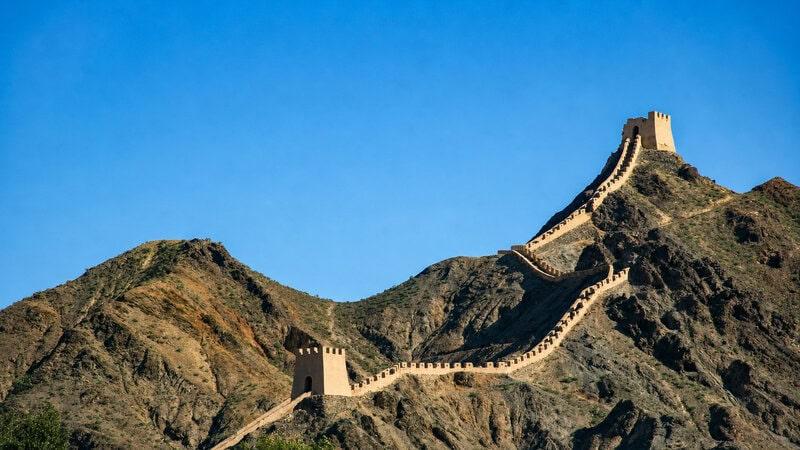

Imagine two decisions, made within decades of each other, that together sealed the fate of the longest-lasting native Chinese dynasty in history. One raised walls of stone and mortar across thousands of miles of northern steppe. The other quietly suppressed the records of the greatest fleet the world had ever seen. Both choices felt, at the time, like the rational acts of a civilization protecting itself — and both became the slow poison that brought the Ming dynasty to its knees.
A Dynasty’s Defining Years: What “Ming” Actually Meant

Before tracing how the Ming fell, it is worth pausing on what it was. The dynasty ruled China from 1368 to 1644 — 276 years, seventeen emperors, and a span of history that reshaped Chinese civilization in ways still visible today. The name Ming (明) means “brilliant” or “radiant,” and that choice of name was not accidental. It was a declaration. For nearly a century before the Ming, China had been governed by the Mongol-led Yuan dynasty. The restoration of native Han Chinese rule felt less like a political transition and more like a cultural resurrection — and the dynasty intended its name to say so.
Those 276 years are conventionally divided by historians into three broad phases: an early period of vigorous centralization, ambitious construction, and outward-looking expansion under the dynasty’s first emperors; a middle period of consolidation, cultural flowering, and the beginning of strategic retrenchment; and a long late period of fiscal strain, climatic crisis, and institutional decay that ended in 1644 with the fall of Beijing to rebel forces and the subsequent Manchu conquest. Understanding the Ming means holding all three phases in mind simultaneously, because the seeds of each period were planted in the one before it.
Rise from the Rubble: A Commoner Takes the Dragon Throne

The man who founded the Ming dynasty should not, by any reasonable measure of history, have founded anything. Zhu Yuanzhang was born into destitute poverty in 1328, orphaned as a teenager when plague swept through his village and killed his parents and siblings within weeks of each other. He begged. He wandered. He spent time as a novice monk in a Buddhist monastery, less out of devotion than because monasteries sometimes had food. By his early thirties he had transformed himself into a rebel warlord commanding thousands of men — and by 1368 he had driven the Mongol-led Yuan dynasty out of China entirely, declared himself the Hongwu Emperor, and established the Ming at Nanjing.
The electric charge of that moment cannot be overstated. Art flourished. Architecture became monumental. The eventual construction of the Forbidden City in Beijing — that vast crimson and gold complex begun under the Yongle Emperor in the early fifteenth century — announced that China was not merely restored, but magnificent. China’s population roughly doubled over the dynasty’s lifespan, a demographic expansion that reflected genuine agricultural innovation, relative internal peace across long stretches of the period, and expanding commerce. By the early fifteenth century the Ming state was arguably the wealthiest and most administratively sophisticated political entity on earth.
But Zhu Yuanzhang’s founding trauma ran deep. The same peasant orphan who had climbed to absolute power by trusting nothing and no one governed with iron suspicion. He purged his court obsessively, executing tens of thousands of officials and associates over the course of his reign. He distrusted merchants, foreigners, and any source of influence that could rival centralized imperial control. The paranoia that had kept him alive in the chaos of civil war became the dynasty’s inheritance — hardwired into its institutions, and fatally present in the decisions his successors would make about ships and walls.
The Dragon Sails: Zheng He and the World China Almost Owned

For one extraordinary generation, the Ming dynasty looked outward instead of inward. Between 1405 and 1433, the Muslim eunuch admiral Zheng He commanded seven massive naval expeditions that remain among the most astonishing feats of the premodern world. His treasure fleets sailed across the South China Sea, through the Indian Ocean, to the Persian Gulf, and down the eastern coast of Africa as far as present-day Kenya — decades before any European navigator had rounded the Cape of Good Hope. The largest vessels in his fleets, the so-called treasure ships, were described in period sources as far exceeding anything sailing in European waters at the time, though scholars continue to debate the precise dimensions recorded in surviving accounts.
These voyages were not primarily commercial ventures in the European sense. They were projections of imperial prestige, designed to draw distant kingdoms into the Chinese tributary system and demonstrate that the Ming emperor’s magnificence extended to the edge of the known world. Giraffes arrived at the Ming court as gifts from East African rulers, interpreted by court observers as the auspicious qilin of Chinese legend. Ambassadors from dozens of states came to pay respects. The diplomatic networks woven across these voyages extended Chinese influence across half the globe.
China had, in those decades, every structural prerequisite to become the dominant maritime civilization of the fifteenth century — the ships, the navigational knowledge, the organizational capacity, and the surplus wealth. What it lacked was the political will to sustain the project. Confucian court officials viewed the voyages with deep unease. Commerce was considered morally inferior in classical Chinese thought, the province of those who produced nothing and merely profited from others’ labor. The treasure fleets were ruinously expensive, and their returns — exotic animals, foreign tribute, diplomatic prestige — struck the scholar-gentry class as frivolous beside the serious business of governing an agrarian empire. The military threat on the northern frontier, meanwhile, demanded resources and attention that the court felt could not be spared for maritime adventure.
When the Xuande Emperor died in 1435, the voyages stopped. They did not slow down, scale back, or redirect — they stopped. Court officials who opposed revival of the expeditions reportedly worked to suppress or destroy the voyage records, making future resumption harder to justify. China’s window onto the wider maritime world was slammed shut, and then the boards were nailed across it from the inside.
The Maritime Ban: Closing the Door on the World

The haijin — sea prohibition — was not a single dramatic decree but a hardening policy position, rooted in restrictions that actually predated Zheng He and that tightened progressively across the fifteenth and sixteenth centuries. At its most severe, the ban prohibited the construction of multi-masted oceangoing vessels and criminalized private trade with foreign merchants. Enforcement was erratic and often brutal. The ideological justification combined Confucian suspicion of commerce, fear of the wokou — coastal raiders, often a mixture of Japanese and Chinese smugglers who terrorized the southeastern seaboard — and a bedrock conviction that China was self-sufficient and required nothing from beyond its borders.
The damage cascaded in ways the court did not anticipate and appeared unable to recognize even as the consequences unfolded. Coastal economies that had depended on maritime trade collapsed. Merchants who could not trade legally did so illegally, feeding enormous smuggling networks that were far harder for the state to regulate than licensed commerce would have been. The wokou problem the ban was ostensibly designed to solve worsened significantly, because desperate coastal communities found piracy and smuggling more viable than legal farming on thin coastal soils. The maritime institutions — shipyards, navigational expertise, commercial infrastructure — quietly atrophied from disuse.
Then the Europeans arrived. The Portuguese reached the South China coast in the early sixteenth century and, after turbulent negotiations including a failed embassy and a period of armed conflict, established a trading presence at Macau in 1557. The bitter irony is that they obtained this foothold not because China was militarily weak, but because the haijin had created exactly the kind of uncontrolled coastal disorder that made a regulated foreign enclave look like a workable solution to a problem of China’s own making. American silver subsequently began flowing into China through these channels — a stream of bullion that the imperial economy became deeply dependent upon, channeled through the very foreign trade the ban had theoretically forbidden.
The Great Wall Gamble: Stone, Soldiers, and the Northern Threat

While the court was suppressing its maritime records and prosecuting coastal traders, it was simultaneously embarking on the largest sustained construction project in human history. Almost everything visitors photograph when they see the Great Wall today is Ming-era work — the elegant brick-and-mortar fortifications stretching across mountain ridges and desert plateaus that have become China’s most recognizable image. The Ming rebuilt and massively extended existing wall systems on an entirely different scale and with far more durable materials than the earthen barriers left by earlier dynasties, sustaining the project across nearly two centuries at extraordinary cost in treasure and human life.
The strategic logic was genuine. The Mongols had not vanished when the Yuan dynasty fell. They remained a persistent threat on the northern steppe, capable of cavalry raids that could strike deep into Chinese territory with devastating speed. The Ming suffered a particularly traumatic demonstration of this vulnerability in 1449, when the Zhengtong Emperor led a disastrous military campaign against the Oirat Mongols, was defeated at the Battle of Tumu Fortress, and was captured — an event known as the Tumu Crisis that sent shockwaves through the dynasty’s confidence in mobile frontier defense. The Wall was in part a response to precisely that kind of catastrophe, designed to channel and slow raids and funnel mounted attackers toward fortified gates.
But it solved the problem by making the solution permanent and expensive rather than flexible and adaptive. The Wall required constant garrisons — hundreds of thousands of soldiers stationed along its length, requiring provisions, weapons, pay, and supply chains stretching across the entire northern frontier. The treasury drained steadily into stone. And the Wall offered a psychological false security — the sense that the border was handled, the threat contained behind a line on the map — that discouraged the development of the mobile, adaptive military capacity that might have served the dynasty better in its final decades.
The structural parallel to the maritime ban is impossible to miss. Both decisions reflected the same imperial temperament: retreat, enclose, control. Build a wall against the sea. Build a wall against the land. Commit irreplaceable resources to the walls, and trust that the walls will hold.
Culture and Commerce: The Ming Years Were Not Only Decline

It would be a serious distortion to let the strategic failures crowd out what the Ming dynasty’s years actually produced for Chinese civilization. This was the era in which the Forbidden City was completed, the most elaborate imperial palace complex ever built, whose basic layout survives intact in Beijing today. Ming craftsmen brought blue-and-white porcelain to its highest classical development, producing the wares that would define Chinese art for the world and drive a global export trade lasting centuries. Ming painters, calligraphers, and garden designers created works that became the standard against which later Chinese art measured itself.
The dynasty also presided over significant developments in commerce and urban culture that complicate any simple narrative of Confucian stagnation. Despite the haijin, regional trade networks within China expanded enormously. Towns and cities grew. A popular literary culture flourished, producing the great vernacular novels — including Journey to the West and Water Margin — that remain foundations of Chinese literature. The late Ming in particular saw a vibrant philosophical heterodoxy, with thinkers like Wang Yangming challenging orthodox Neo-Confucianism in ways that influenced intellectual life across East Asia.
Population growth itself was a kind of achievement, sustained by agricultural intensification, the spread of new crop varieties, and the relative internal stability that the dynasty, for all its institutional rigidities, managed to maintain across most of its 276 years. The catastrophe of the dynasty’s end should not be read backward onto the whole.
The Long Unraveling: How a Dynasty Digests Itself
The Ming dynasty did not collapse suddenly. It unraveled across the seventeenth century in a grim accumulation of compounding crises, each made worse by the structural choices baked into the dynasty’s bones. The fiscal strain of Wall maintenance and frontier garrisoning was relentless and worsening. A period of climatic cooling — part of the broader Northern Hemisphere phenomenon historians call the Little Ice Age — disrupted agriculture across northern China from the 1620s onward, producing cascading crop failures and famine in a society that had stretched its population to the limits of what its farmland could support under normal conditions.
The silver economy was simultaneously failing in ways the court could not adequately diagnose. Because the haijin had pushed trade into illegal and semi-legal channels, the state could neither regulate nor effectively tax maritime commerce. When the global silver supply contracted sharply in the 1630s — as Spanish colonial output from the Americas declined and trade disruptions compounded — the Chinese economy experienced a deflationary shock that made taxes harder to collect in silver, soldiers harder to pay, and the already-strained frontier garrisons harder to maintain. The fiscal machinery of one of the world’s most sophisticated states began seizing up at precisely the moment multiple emergencies demanded its full function.
Peasant rebellions broke out across the countryside, led most famously by Li Zicheng, a former government courier turned rebel commander whose forces captured Beijing in April 1644. The last Ming emperor, the Chongzhen Emperor, hanged himself on Coal Hill behind the Forbidden City rather than surrender to the rebels. It was a final act with a terrible poetry to it — the last native Chinese emperor of the dynasty, alone in a garden, the walls his dynasty had built and trusted unable to save him.
The final bitter irony arrived immediately afterward. It was not the Mongols — the enemies the Great Wall had been built to repel — who ended the Ming dynasty. It was a Ming general, Wu Sangui, commanding the strategically critical Shanhai Pass at the eastern end of the Wall, who opened the gates and invited the Manchu Qing forces through — choosing foreign conquest over submission to a rebel emperor. The wall that had consumed centuries of effort and incalculable treasure was rendered obsolete in a single decision by one of its own defenders.
The demographic cost of the Ming-Qing transition was catastrophic. Decades of war, famine, and epidemic disease erased a substantial portion of the population growth that had been among the dynasty’s most tangible achievements across its long reign.
What the Ming Dynasty Years Still Teach Us
It would be easy, and wrong, to read the Ming dynasty’s arc as a simple parable about isolation or institutional cowardice. The Ming dynasty years were the story of a genuinely powerful, genuinely sophisticated civilization making choices that seemed, from the inside, like prudent acts of self-preservation. The Great Wall addressed a real threat backed by living traumatic memory. The maritime ban responded to real coastal instability. Both decisions were supported by serious officials making serious arguments with the information available to them. The catastrophe was not in the reasoning — it was in what the reasoning could not see.
What neither the Wall nor the ban could address was the systemic brittleness they created together. A state that pours its surplus into static fortifications rather than adaptive capacity becomes fragile in direct proportion to the resources committed to stone. A civilization that criminalizes its commercial margins does not eliminate the forces those margins generate — it simply loses the ability to direct or tax them. The Ming dynasty did not weaken because its enemies were inherently stronger. It weakened because it chose, generation after generation, to manage fear rather than build flexibility, and because by the time the converging crises of the 1630s and 1640s arrived, the institutional tools for responding adaptively had quietly rusted away.
The treasure ships rotted in harbor. The Wall stood, magnificent and enormously expensive, against a threat that entered through the gate anyway. Both remain as monuments — not to simple failure, but to the cost of choosing enclosure at precisely the moment when engagement might have changed everything. The same dynasty that made those choices also gave China the Forbidden City, the blue-and-white porcelain that would define Chinese art across the world, the great vernacular novels, and a restored cultural confidence that outlasted the dynasty itself by centuries. History rarely grants us the luxury of separating a civilization’s gifts from the decisions that accompanied them.

 English
 Arabic
 French
 Portuguese
 Deutsch
 Turkish
 Dutch
Dutch
 Italiano
 Russian
 Romaian
 Portuguese (Brazil)
 Greek
Greek