


What REALLY Killed Hair Metal? Veteran Rock Producer Weighs In

Did Grunge REALLY Kill Hair Metal? Grammy-Winning Rock Producer Points to Another Cause
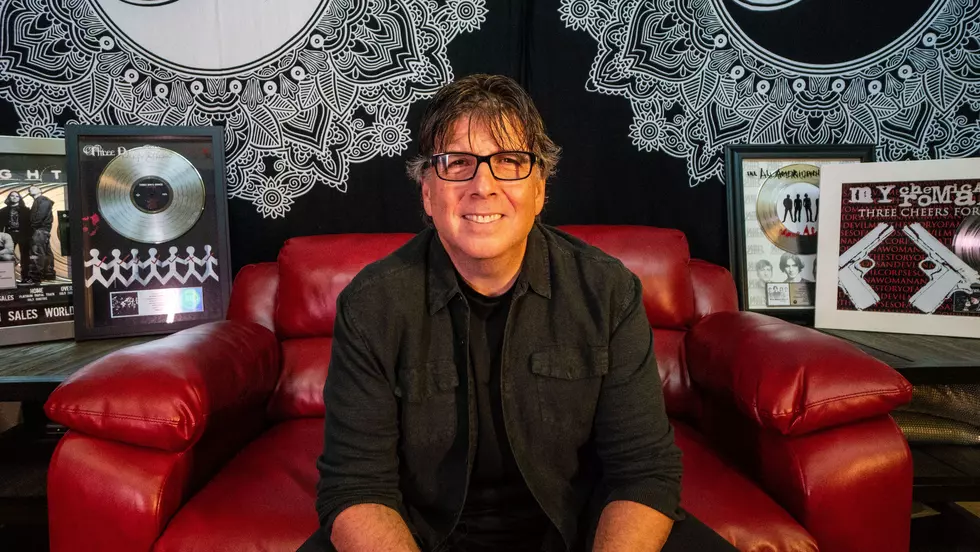
Did grunge really kill hair metal? The answer isn't as cut-and-dry as you've been led to believe, according to veteran rock producer Howard Benson.
In an exclusive interview with Loudwire, Benson details some of the vast changes the music industry has undergone since the big-money days of the '80s and '90s — some for better, some for worse. He also explains how, as the co-founder of his own label, Judge & Jury Records, he's able to give his artists much more equitable deals and help them make hits for a fraction of the food budget bands used to command.
The current climate of the music industry offers its own set of challenges, but Benson's decades' worth of experience underscores that previous eras have been upended as well. That includes a little nugget about hair metal's downfall you might not have been aware of.
How Nielsen SoundScan Helped Kill Hair Metal
Before working on smash hits for the likes of My Chemical Romance, Hoobastank, Three Days Grace, Halestorm and Daughtry, Benson made inroads in the late-'80s hard rock scene by producing Bang Tango's Psycho Cafe and Pretty Boy Floyd's Leather Boyz With Electric Toyz. Both 1989 debuts performed respectably, but multi-platinum success eluded the glam metal latecomers as the scene was already on its way out.
"I got into the music business about two years too late," Benson tells Loudwire. "That era, the hair band era, had started with, almost, Guns N' Roses — you can say 1986, around then, and it peaked in 1991 with the birth of Nirvana. That’s what killed it, pretty much. So I really had my first real record with Bang Tango. That was about 1989, 1990. And then after that, the Pretty Boy Floyds and the Little Caesars and Child's Play, all those bands, they were sort of already over. That sound was history, but we didn't really know it yet."
The glam metal scene's seemingly overnight extinction upon the advent of the Seattle sound (colloquially known as grunge) and the release of Nirvana's Nevermind has been endlessly documented. But Benson points to one other major factor that helped put the spandex-clad, big-haired rockers six feet under: Nielsen SoundScan.
READ MORE: The Best Album by 11 Legendary Hair Metal Bands
Introduced in 1991, SoundScan collected album sales data from barcode scans at participating businesses. It replaced Billboard's old method of calling record stores across the United States, making for more accurate tallies that were less prone to error or fraud. This, Benson explains, led to major chart shakeups that upended the conventional wisdom about what was popular at the turn of the decade.
"People don't really equate those two events happening, but SoundScan showed you what we were really selling," Benson says. "And before that, you faked the numbers. Everybody faked them. Not me, I didn't work at a record company. But Columbia would walk into Tower [Records] and say, "Okay, I'm going to give you 50 free Bon Jovi records and you're going to say we sold 100 Bon Jovi records,” and the clerk would say, 'Okay.'"
Once SoundScan implemented its barcode-scanning system, other artists emerged as frontrunners — and not just rock bands. "I remember the week it came in that the No. 1 record was something nobody had ever heard of, a guy named Garth Brooks," Benson recalls. "And all of a sudden, all the hair bands were at the bottom of the chart and we thought they were all at the top of the chart. So of course, the record company stopped signing them almost the next week. And then Nirvana. All of this stuff happened at once."
READ MORE: The History of Grunge Told in 13 Albums
Why Howard Benson Is 'Kind of Glad' the Old Record Industry Is Gone
In 2021, Benson co-founded Judge & Jury Records with Three Days Grace drummer Neil Sanderson. Their goal is to give artists greater creative freedom and more mutually beneficial deals than in the halcyon days of the music industry, when money was flying everywhere but artists had little say in how it got spent.
"Our budgets were $300,000, $400,000 every record — and that was considered cheap, believe it or not," Benson says. "The computers changed everything and made it a completely different business. I mean, God, dinners for an entire project would cost like 30,000 bucks and the bands expected it. If the bands didn't have a food budget, they would freak out. The lawyers jump on the phone and stuff. You could master [an album] seven times."
Nowadays, a Judge & Jury artist can record an entire album for the same price as one of those dizzying food budgets of yesteryear and they'll split the profits 50-50 with the label (an unprecedented move back in the day). Benson says this setup incentivizes both artist and label to make the best music possible. And even as the mp3 and streaming eras have cannibalized the profits of the record industry, there's still money to be made when the collaborations are successful.
READ MORE: How Three Days Grace Made the Best Rock Album of 2025 (Interview)
"I remember a guy over at Interscope told me they mastered the No Doubt record like 20 times," Benson recalls. "And now, of course, after the mp3, we really have realized that none of that mattered because people didn't give a shit whether it was an mp3 or a wav file or any of that. It was this big comeuppance for all of other technical guys."
It's common for music industry professionals to bemoan the loss of the old ways, but Benson has a different perspective. "I'm kind of glad it happened. Actually, it made the songs more important," he argues. "In the production process, you're not worrying too much about, 'Is it this guitar or that guitar? Is it 48kHz or 44.1 kHz?' Nobody cares. Are you speaking to somebody or not? Are you delivering this emotion?"
"I think great records are when you get it all right, when you pull it all off," Benson continues. "But you can still have the record company be happy by having hits that cost you 1,000 bucks."
See how these other famous producers got their start in bands of their own:
Bands 27 Big Music Producers Were In Before and After Switching Careers
Before they were name producers (and sometimes while), they had bands and performing careers of their own.
Gallery Credit: Rob Carroll

 English
 Arabic
 French
 Spanish
 Portuguese
 Deutsch
 Turkish
 Italiano
 Russian
 Romaian
 Portuguese (Brazil)
 Greek
Greek