




A lot of the animals of planet Earth could give you a pretty nasty bite if they wanted to, from the bone-crushing power of the hyena to the mighty jaws of a tiger, but which creature has the sharpest teeth of the animal kingdom? To find out, we need to wind back the clock.
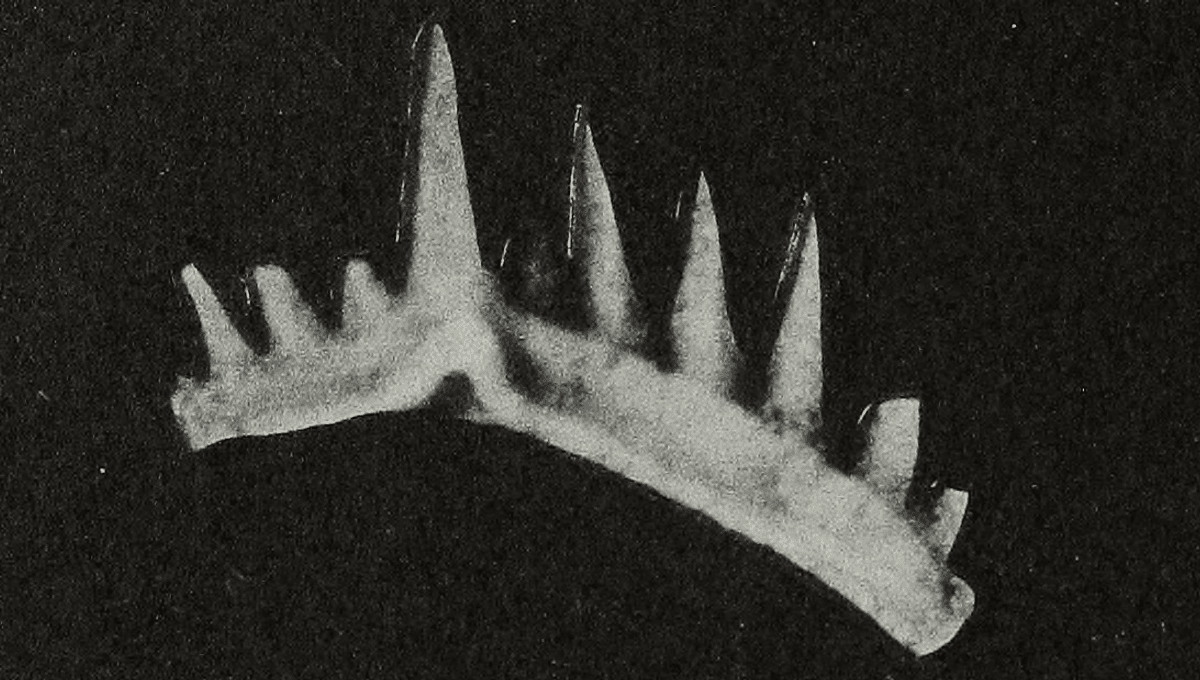
A soft-bodied animal with a body like an eel once swam on Planet Earth in the Precambrian eon. These were conodonts, and they lived from 500 million to 200 million years ago before being wiped out in the Triassic-Jurassic mass extinction event. While they were pretty tiny, measuring just a few inches long, they are considered by some to be one of the most successful vertebrates that ever lived. Their mouths contained no jaws but instead lots of tiny tooth-like structures known as elements that had tips just 2 micrometers wide. “It’s almost like a set of needles pointing out of the tooth,” Dr Alistair Evans from Monash University told Australian Geographic. The conodont Wurmiella excavata was said to have had razor-sharp structures that processed prey from left to right, rather than the typical up and down motion that we see today. Conodonts are thought to be the first creatures that evolved teeth. These are the sharpest dental structures ever to be measured. “We wanted to find out how these delicate teeth fitted together and how they could perform feeding functions,” said Philip Donoghue, a palaeobiologist at the University of Bristol, UK, and a co-author of a paper from 2012, in a statement. The study revealed that the conodont did not chew food in the same way as modern animals but rather relied on the concentrated forces through each extremely sharp tooth tip. This makes sense given their lack of jaws, as they would have relied on the sharp point of each tooth rather than a strong bite force to consume prey. “The inter-angles of the blade-like teeth would have been trapped first at the back, rocked forward and separated again,” explained Donoghue. The team think that conodonts could re-sharpen and repair worn teeth, a trait that seemed not to have been passed down through the ages.


 English
 Arabic
 French
 Spanish
 Portuguese
 Deutsch
 Turkish
 Dutch
Dutch
 Italiano
 Russian
 Portuguese (Brazil)
 Greek
Greek