


WhiteYura/Shutterstock
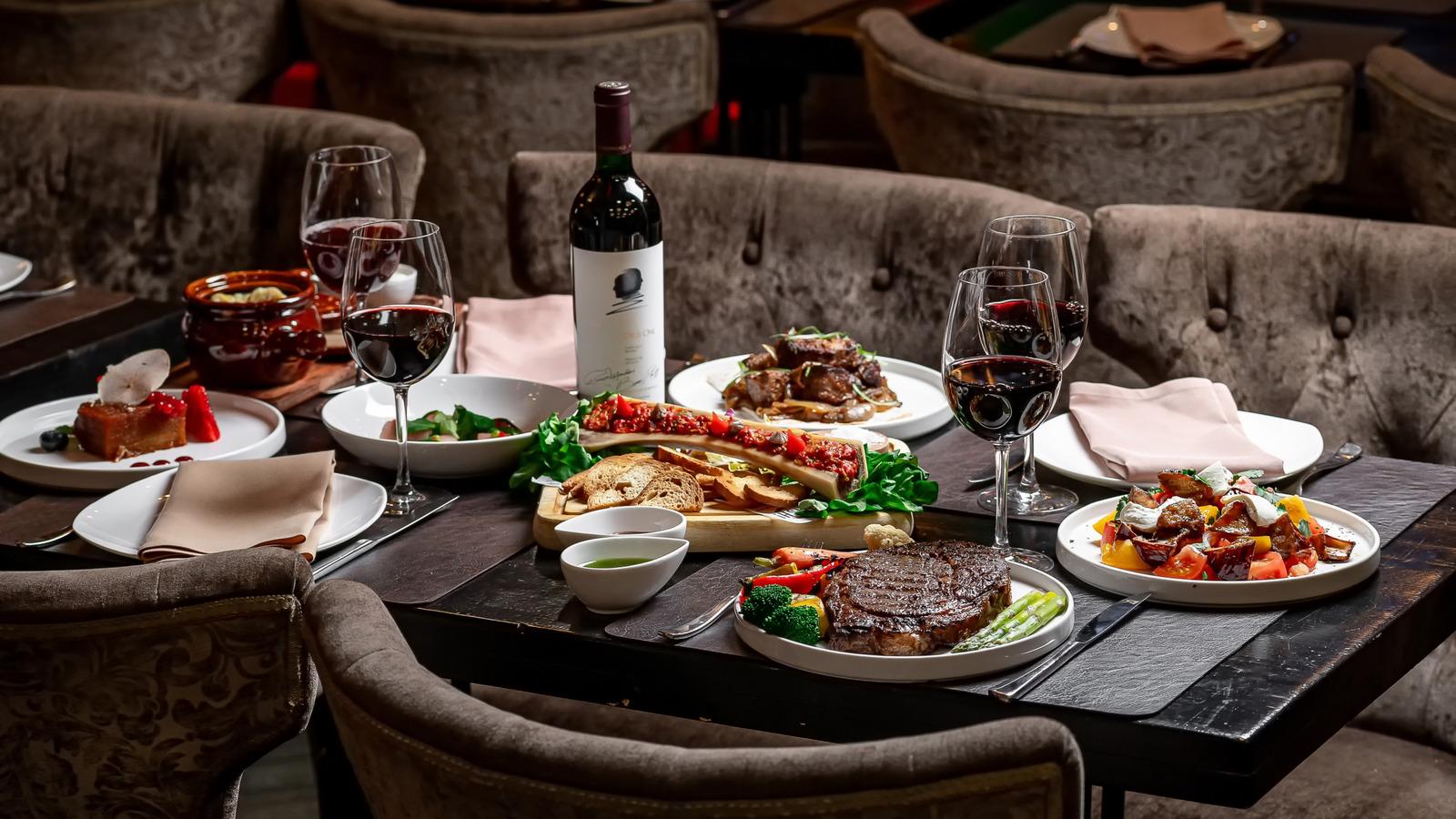
It's no secret that wine has a significant markup at restaurants. While you can always depend on Trader Joe's for finding a bottle under $10, it's not unusual to pay double that for a glass when dining out. This is normal: Restaurants follow a general rule of marking up bottles and glasses to help cover overhead costs. It'll always be more expensive than drinking at home, but how do you know if a restaurant's wine menu is truly overpriced?
The good thing is that you don't need to be a wine expert to decipher which wines on the list have a good price-value ratio. To learn how to order wine at a restaurant, start by identifying if the per-glass price fits into the standard range based on the type of establishment. For bottles, doing some quick research online can help you determine if it is unreasonably marked up, and if everything feels too expensive, with no real range of prices, it probably is overpriced.
Bottles are priced above the industry standard markup
Freemixer/Getty Images
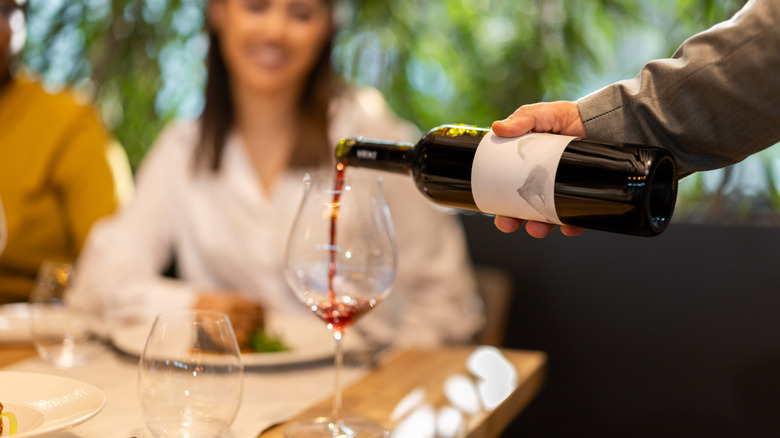
The standard markup for bottles or glasses of wine in the restaurant industry is 200-300%. While wine and alcohol are easy ways to generate more profit, this markup also accounts for overhead like labor, operating costs, and employee wages. You expect both food and wine to be more expensive than dining at home — it's part of paying for the experience — but sometimes it's worth calculating if you're paying too much for a glass or bottle.
Although you might not know how much the restaurant paid wholesale, you can look up the average retail price online. If a $20 bottle is listed for $80 or $100 on a wine menu, this is clearly a much steeper markup than usual, while $40-$50 is more reasonable. Comparing a few familiar bottles on the list can quickly reveal whether a restaurant's wine pricing is on point with industry standards or overinflated.
The menu only includes well-known brands and regions
David Silverman/Getty Images
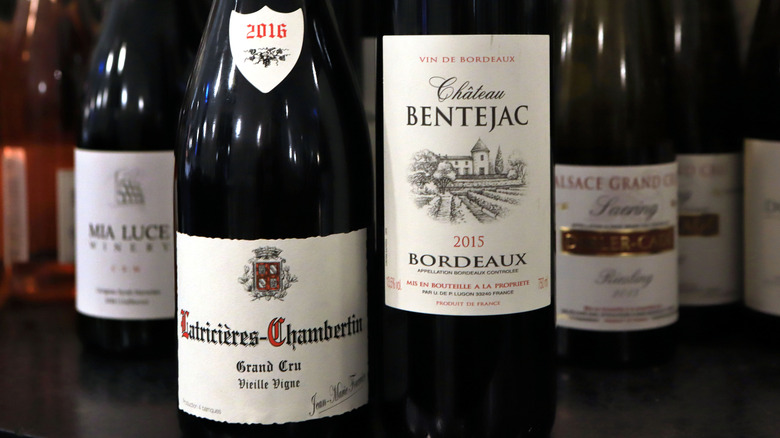
If you recognize every wine brand on the menu, that might not actually be a good thing. When mass-market brands and the most well-known regions dominate the list, that's a sign you may be paying more for recognition than for quality or value. This could be one of the situations where it makes sense to bring your own bottle of wine to the restaurant to enjoy something more unique or special, if the restaurant allows it. (But don't be surprised by corkage fees.)
Take, for example, well-known regions like Napa Valley or Bordeaux. The average diner might not know a lot about wine, but they will almost certainly know those names. If their wine knowledge doesn't extend much further, they may play it safe and choose what they know. Restaurants are well aware of this and often price the most popular brands and regions at a higher markup. One of the most common mistakes customers make when ordering wine is choosing the pricier well-known wines over the affordable, less familiar bottles.
On the other hand, a thoughtfully curated wine list includes lesser-known regions and smaller producers who often offer high-quality, interesting options at reasonable prices. Because customers may be unfamiliar with these, restaurants sometimes opt for a lower markup to make them more appealing. So if every bottle on the list comes from the most recognizable names, know that most of these are likely to be marked up more than the others.
Compared to the bottle, the by-the-glass price is exceptionally high
Simonen/Getty Images
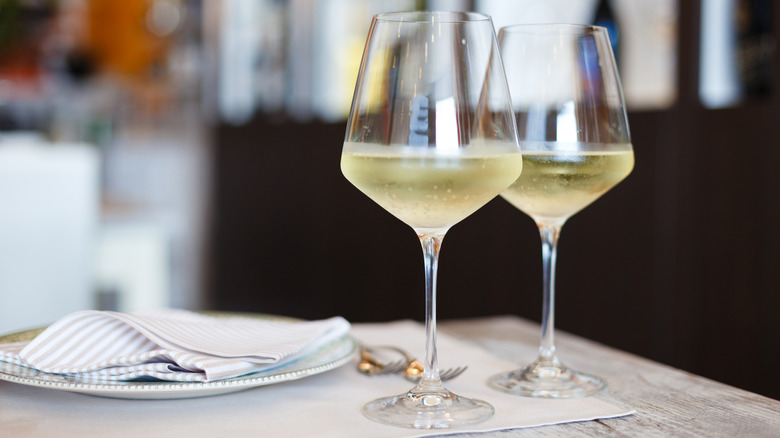
Another way to detect if the wine list is overpriced is to look at the by-the-glass prices. As it can be trickier to calculate a markup for glasses, as opposed to bottles, keep a figure in mind of what the upper limit should be. A safe gauge for a typical restaurant is not to pay more than $24 for a glass.
There are, of course, exceptions for high-end wines, which start around $25 and, on average, go up to about $50. Anything above this for a single glass should be a high-end or rare wine. The keyword here is "should" — spending $75 on a glass of wine means that it should be difficult to get your hands on otherwise. Common or easy-to-find wines shouldn't be priced above that $25 mark.
Restaurants often use a rule of setting a per-glass price that covers the cost of the bottle with just two glasses. This ensures that if no one purchases the rest of the bottle, the restaurant isn't wasting money. Since diners won't know the restaurant's wholesale cost, they can't calculate this exactly. Instead, compare the price of a glass to the bottle on the same menu. If a single glass costs close to one-third to one-half of the bottle price, the restaurant is likely using this pricing strategy. Anything more than that may be considered overpriced.
Every option feel expensive, with no price diversity
Carlo Prearo/Getty Images
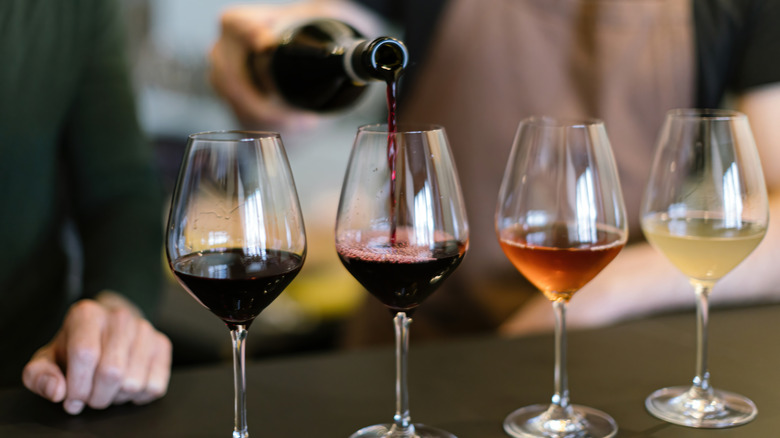
If every bottle on the wine list feels too expensive, it just might be. Wine lists are often strategically designed through a combination of psychology, good business practices, and creativity. A wine list with only pricey options is typically unappealing (unless you are in a fine-dining restaurant), so most of the time, there is a range of prices to meet the needs of different diners.
Oftentimes, restaurants add at least one wine that is considerably more expensive than the others, sometimes referred to as the anchor. This allows guests to splurge, but it also makes the others look more reasonably priced. When there is no entry-level or mid-priced bottles, every choice feels like a splurge, when it really shouldn't. This could suggest that the restaurant is pushing diners to spend more on wine, rather than providing reasonable value at each price point.
Finding a cheap wine is a good thing. The lowest-priced wine doesn't mean it's low quality or bad — it might just tell you that the restaurant got a great deal on bulk pricing, it's naturally a great value, or it's from a lesser-known producer.

 English
 French
 Spanish
 Portuguese
 Deutsch
 Turkish
 Dutch
Dutch
 Italiano
 Russian
 Romaian
 Portuguese (Brazil)
 Greek
Greek