


Mahmoud Suhail/Shutterstock
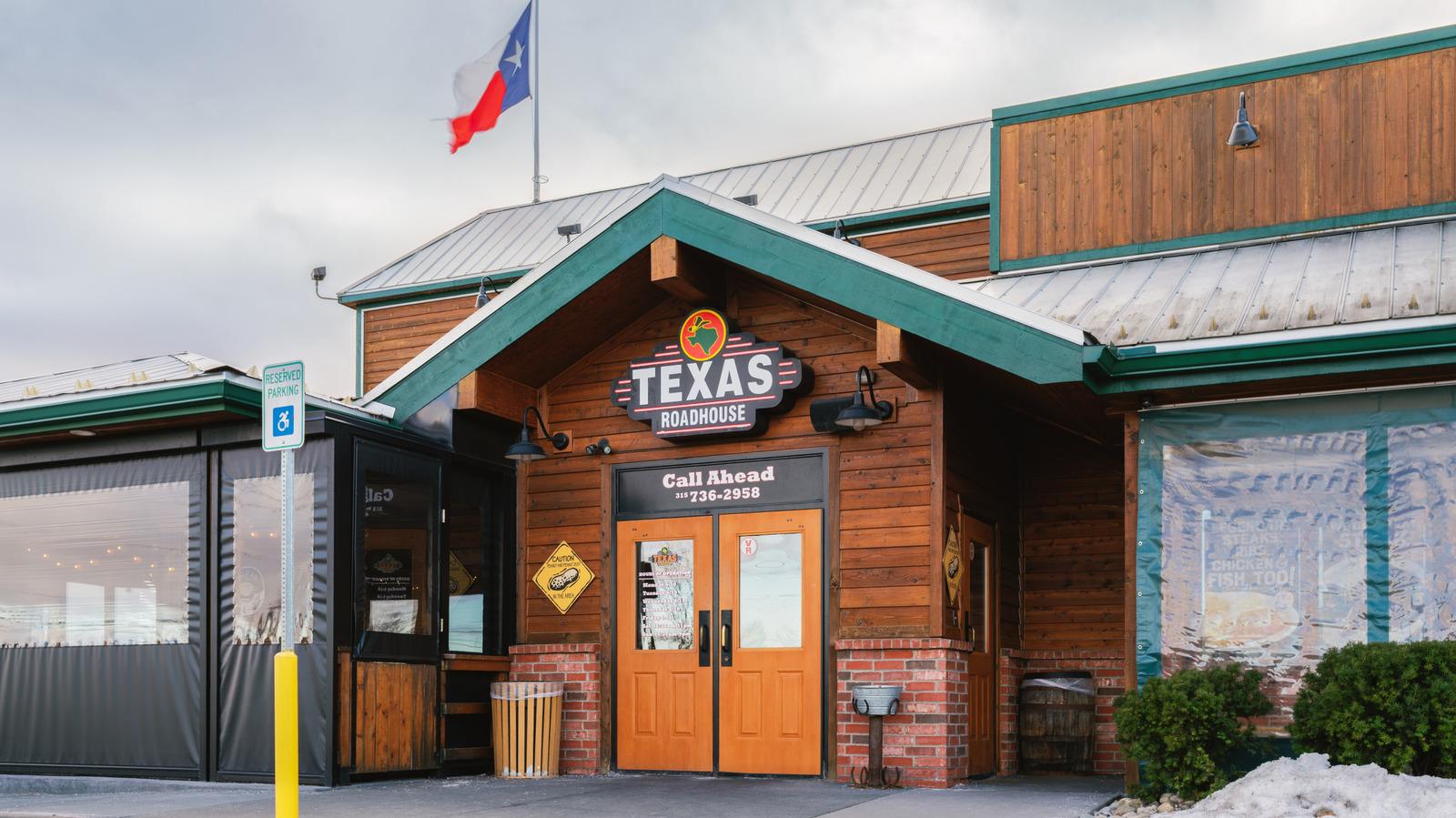
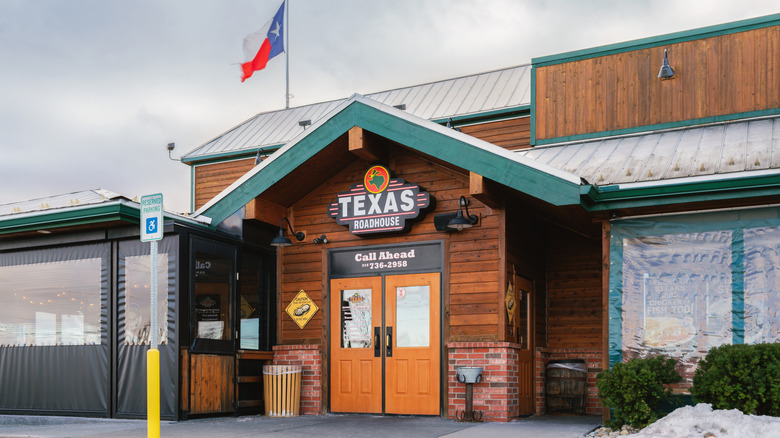
Since it first opened its doors back in 1993, Texas Roadhouse has become one of the most popular and successful restaurant chains in America. Founded in Indiana — not Texas — by Kent Taylor, who drew up his original ideas for Texas Roadhouse on a napkin, Texas Roadhouse surpassed Olive Garden in 2024 to become the country's largest casual dining chain.
But while longtime Texas Roadhouse fans may wax nostalgic about the restaurant's iconic line dancing, or shucking and chucking peanut shells onto the floor, the Texas Roadhouse you eat at today is not the same one your parents rocked up to in flannels and JNCO jeans three decades ago. While some key elements such as the restaurant's classic and delicious fresh rolls with cinnamon butter remain a constant, over the years Texas Roadhouse has undergone a number of major changes both inside the restaurant and behind the scenes.
The untold truth of Texas Roadhouse is that for all its homey, salt of the earth vibe, every decision and detail is meticulously planned and carefully executed. Some of those changes were necessitated by hard-earned experience. Others were caused by devastating loss. And some can only be chalked up to the timeless wonder that is Willie Nelson. Whatever the reason, these tweaks to the Texas Roadhouse formula have gone a long way towards turning it into the beloved restaurant you enjoy today.
1994: The first franchise efforts failed
Chapin31/Getty Images
Founder Kent Taylor had grand franchising plans for Texas Roadhouse right from the beginning. In 1993, the same year he opened the original Texas Roadhouse restaurant in Clarksville, Indiana, Taylor opened a second location in Gainesville, Florida. But opening more locations was about as far ahead as he had thought: Gainesville wasn't chosen for any particular reason other than the fact that Taylor thought the city was cool when he went there once for a track meet.
The Gainesville location was a success, but the kind of haphazard planning that went into its creation didn't serve the next round of franchises nearly as well. In 1994, Taylor opened three new locations: Cincinnati, Ohio and Clearwater and Sarasota, Florida. All three crashed and burned, and within a year Taylor was forced to close all three and head back to the drawing board — literally.
First came an overhaul of the menu with the help of head chef Jim Broyles, who developed key items such as Texas Roadhouse's signature barbecue sauce. Realizing that the company needed to be more intentional with the design of both the restaurant as well as choice of location for future Texas Roadhouse outposts, in 1996 Taylor built a prototype restaurant in Louisville, Kentucky to serve as the template for future franchises.
2002: Willie Nelson comes on board
Gary Miller/Getty Images
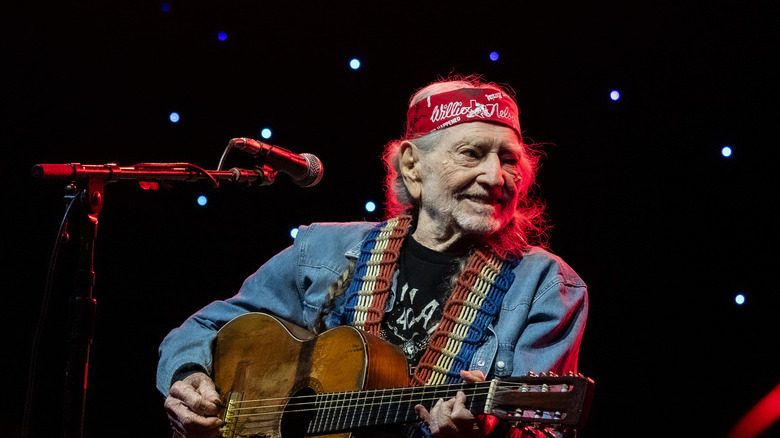
Willie Nelson is an absolute American legend, turning out top country music hits for over six decades. From movies to a public feud with the IRS to becoming a 21st century alternative lifestyle icon, Nelson has lived a wild and full life. But one of his most unexpected side endeavors — which is really saying something for a guy who sells weed-infused beverages – is as a Texas Roadhouse spokesman and franchisee.
Fittingly enough for this odd story, it began at Farm Aid, Nelson's series of benefit concerts to help American farmers. It was at a Farm Aid concert that Nelson met fellow philanthropist Kent Taylor, founder of Texas Roadhouse. The two became friends, with Taylor reportedly sitting in on some of Nelson's famous poker games. Before long, Taylor had convinced Nelson to move from high stakes to high steaks, and in 2002, Nelson became an official spokesman for Texas Roadhouse.
That helps explain why every Texas Roadhouse has a corner dedicated to Willie Nelson. Beyond Willie's Corner and the series of television commercials Nelson starred in for the restaurant chain, though, Nelson also put his money where his mouth was when he became an official franchisee in 2004. That's the year Nelson opened a Texas Roadhouse location in his home base of Austin, Texas, which is still the only Texas Roadhouse location owned by Willie Nelson. Nelson's involvement with the franchise helped legitimize the chain with Texans; the state now has more Texas Roadhouse locations than any other state.
2004: Texas Roadhouse goes public
Joseph Hendrickson/Shutterstock
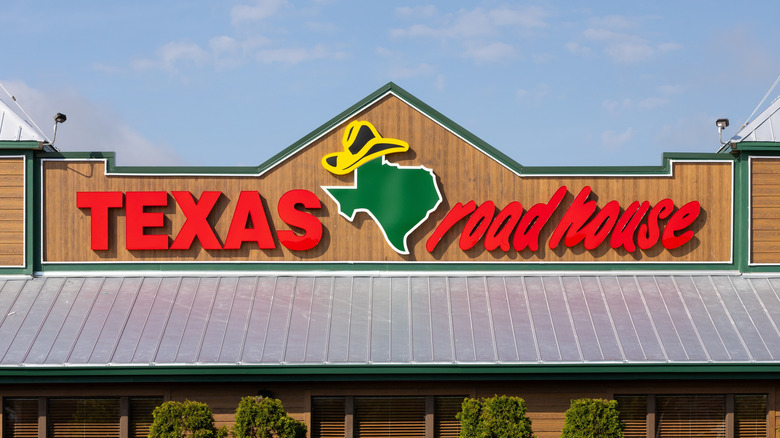
When Kent Taylor opened the first Texas Roadhouse in 1993, he raised money the old fashioned way: He got private investments from three cardiologists. Okay, maybe that's not the old fashioned way, but it seemed to work, so for the next decade Taylor resolutely kept Texas Roadhouse as a private enterprise. When the chain needed a cash injection in 1997, Texas Roadhouse employees helped raise a total of $5 million, keeping it all in the family. As late as 2003, Taylor told Chain Leader magazine that he had no plans to let outside investors get a piece of the action, saying, "I'm not interested; I don't need their money" (via Reference for Business).
So it was a surprise when, just a year later, Taylor unexpectedly took Texas Roadhouse public. The aim was to raise enough money to significantly increase the chain's expansion while also paying off the company's debt. It worked: The initial public offering brought in $159.3 million while still leaving Taylor in charge with over 61% of the total stock. On a personal level, he also made over $100 million in the bargain.
Going public provided a broad foundation for Texas Roadhouse's continued growth, and in the years that followed, the chain capitalized. In a 2024 review of the restaurant's first two decades as a publicly traded company, FSR magazine noted that Texas Roadhouse had expanded from 175 locations in 2004 to over 775 affiliated restaurants worldwide. Meanwhile, the stock's value had increased over 1,000%.
2007: The company line-dancing competitions begin

Brian A Jackson/Shutterstock
In 1992, a seismic cultural event happened: The release of Billy Ray Cyrus' number one country music hit "Achy Breaky Heart." Dropping just a year before Texas Roadhouse opened its doors, "Achy Breaky Heart" helped turn line dancing into a national phenomenon, which might help explain in part why line dancing became such an integral (and somewhat weird) tradition at Texas Roadhouse locations around the world.
There are reasons for the line dancing besides a love of Miley Cyrus' dad, though. For one, it provides a distraction for hungry customers waiting for their food. But beyond the logistical reasons, line dancing has turned into a bit of an unexpected media boon thanks to the company's annual line dancing competition. Begun in 2007, this competition is a national showdown where each Texas Roadhouse location competes in a choreographed line dancing routine at the company's yearly RISE conference. Over the years it's become such a big deal that local news media regularly report on the progress of individual teams, giving Texas Roadhouse a bootful of free publicity.
Of course, not everyone enjoys the line dancing. Some prospective employees find the requirement to dance on cue every so often to be a dealbreaker, while many patrons also find the sudden interruption of their meal to be annoying. But at this point line dancing is so entrenched in Texas Roadhouse culture that the legacy of Billy Ray remains safe.
2011: Texas Roadhouse goes global
npp_studio/Shutterstock
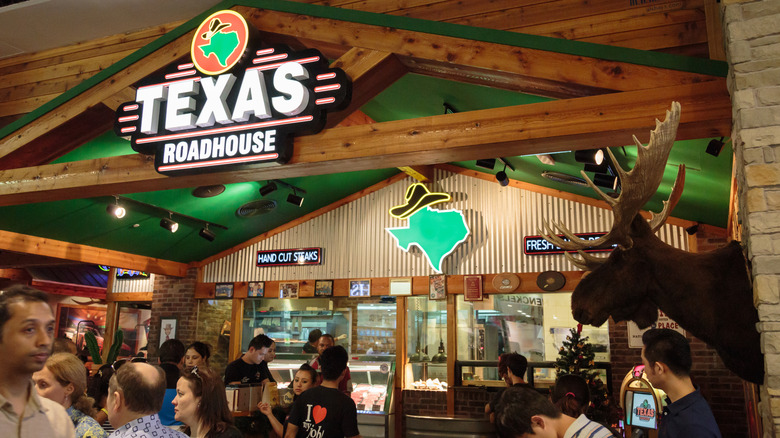
They say that everything is bigger in Texas. But you know what's even bigger than Texas itself? The planet Earth. In 2011, Texas Roadhouse fully embraced the bigger is better worldview when it expanded to the rest of the world with its first international locations.
Texas Roadhouse first announced its intention to expand overseas in 2010 when it revealed a development deal to open numerous Texas Roadhouse locations across the Middle East. G.J. Hart, who was Texas Roadhouse president and CEO at the time, said in an official press release, "We are very proud to expand the Texas Roadhouse brand internationally. We think that our quality food, service and value will appeal to consumers in the Middle East."
The first of those restaurants opened in 2011 in Dubai, United Arab Emirates to much fanfare. And it was just the beginning. The list of countries that now feature Texas Roadhouse franchises includes Mexico (with six locations and counting), China (in the heart of Shanghai), Korea (which in 2026 opened the chain's first standalone destination restaurant overseas) and the Philippines, where the wildly popular chain boasts an impressive 25 locations across the nation. All told, by 2026, there were more than 60 international Texas Roadhouse locations across 10 countries, with new locations continuing to open.
2013: Expanding the family
Jonathan Weiss/Shutterstock
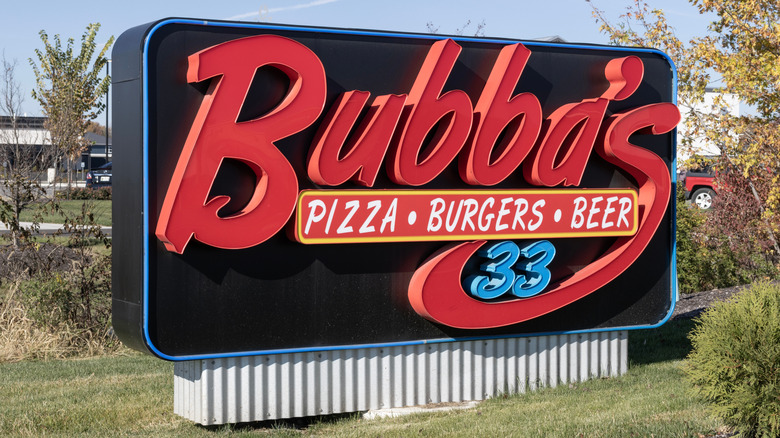
When Texas Roadhouse first tried to expand from a single restaurant into a chain back in the early 1990s, three out of its initial five new locations failed. Founder Kent Taylor revamped things, shifting gears into a slow-but-steady expansion model that saw the company incrementally grow at a sustainable rate. So it's probably no surprise that it took a full 30 years before Taylor grew the Texas Roadhouse family by opening its first sister restaurant chain, Bubba's 33, in 2013.
Named after Taylor himself, whose nickname was "Bubba," Bubba's 33 took the Texas Roadhouse formula and just tweaked the delivery format. Instead of taking its cue from the world of country music, Bubba's leans into the sports bar aesthetic. That means televisions showing sporting events are visible everywhere, with classic rock music providing the soundtrack, and a menu that features pizza and burgers rather than predominantly steak. It's become a hit, especially when paired alongside a Texas Roadhouse, as advertising synergy between the two brands has helped raise the profile of both restaurants.
Bubba's has become a hit, with over 50 locations across the United States. And its success helped inspire Texas Roadhouse to open another sister franchise, Jaggers, in 2014. Taylor said at the time that Jaggers "would have better burgers than Five Guys, and serve chicken tenders and sandwiches that could compete with Raising Cane's and Chick-fil-A" (via NRN). Jaggers has been more of a slow burn than Bubba's 33, opening just 15 restaurants in its first decade, but in 2026 it announced plans to add five more, suggesting bigger things are on the way.
2017: Embracing sustainability
Simonskafar/Getty Images
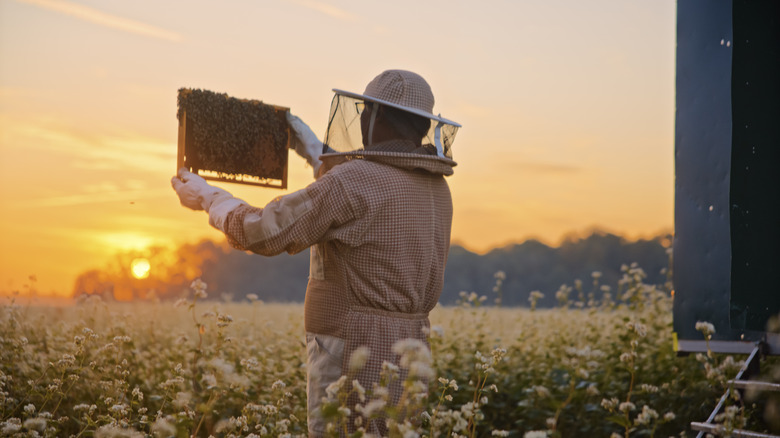
Nothing lasts forever, not even line dancing and discarded peanut shells crunching under your boot heel. But there are things that can be done to preserve the finer aspects of life, which is why in 2017, Texas Roadhouse launched its sustainability initiatives. Originally referred to simply as "bees and trees," the first wave of sustainability efforts included supporting local beekeepers around the country while also attempting to reduce emissions and embrace recycling efforts (via YouTube).
Those efforts have produced noticeable effects. In its 2025 annual sustainability report, Texas Roadhouse announced that through its recycling and composting efforts, the chain had saved the equivalent of more than 363,000 trees while reducing greenhouse gas emissions by over 49,000 metric tons. Meanwhile, the company has also rolled out guidelines covering its use of meats, from animal welfare and antibiotic use to sustainability.
Oh, and the company is still supporting bees and beekeepers. As of 2024, the chain reportedly had approximately 200,000 bees at its corporate headquarters, with sales of honey providing funding for the Andy's Outreach charity, which supports Texas Roadhouse employees facing financial hardship. And the chain also supports the education of beekeepers through partnerships with organizations such as The Bee Conservatory.
2019: Phasing out peanuts
Fcafotodigital/Getty Images
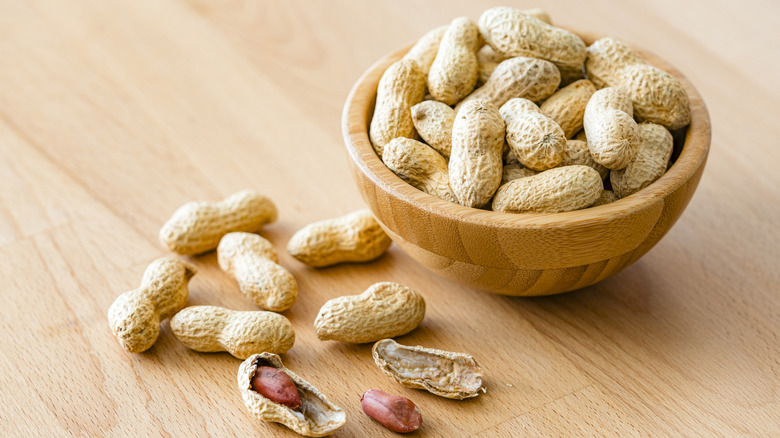
For decades, one of the most ubiquitous features of the Texas Roadhouse experience was cracking open fresh peanuts out of a bucket, snarfing them down, and then chucking the empty shells onto the floor. But around 2019, peanuts slowly began disappearing from many Texas Roadhouse locations leaving some peanut-lovers wondering just why you don't see peanuts at Texas Roadhouse anymore.
The answer isn't quite straightforward. While many locations reportedly phased out peanuts during the COVID-19 pandemic, others had already begun discontinuing the practice of throwing the shells on the floor prior to 2020 due to health concerns. In 2013, a Texas woman was awarded $185,000 by a jury after she slipped on peanut shells at a Texas Roadhouse and broke her kneecap. Three years later, the same thing happened to a diner in Iowa, who also sued the restaurant chain for damages.
Add in ongoing concerns from patrons about peanut allergies, and the decision to stop throwing peanut shells on the floor makes sense. But there is good news for fans of Texas Roadhouse peanuts. Peanuts are still available on request at Texas Roadhouse, and you may still be able to buy Texas Roadhouse peanuts at some sporting arenas. Additionally, you can buy bags of Texas Roadhouse brand peanuts online for consumption at home — where you are totally free to continue chucking the shells on the floor if you want.
2020: COVID reshapes Texas Roadhouse forever
Johnny Louis/Getty Images
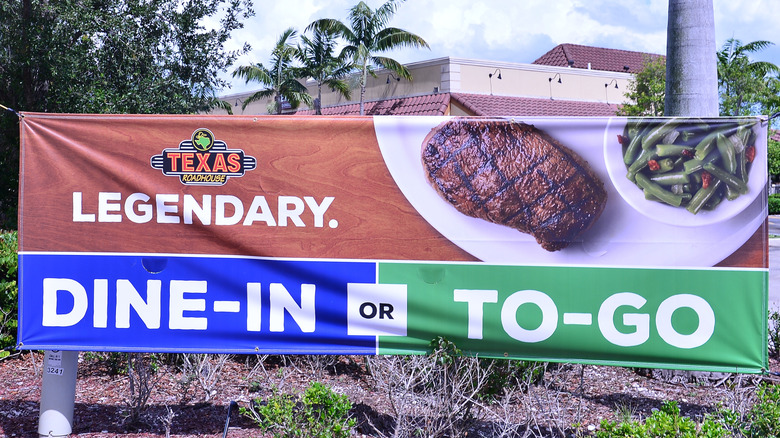
2020 was one of the most challenging years on record for the restaurant industry. With nationwide shutdowns caused by the COVID-19 pandemic, many restaurants struggled or even closed their doors forever, including locations from many major chains. But there was one significant statistical outlier to this trend: Texas Roadhouse, which bucked expectations by actually expanding and turning a profit in 2020.
Founder Kent Taylor explained in a CNBC interview that the key to the chain's success during the pandemic was pivoting to take-out, delivery, and offering new frozen food options. All certainly true, but it's also possible that Taylor was downplaying his own personal role in keeping the business thriving. In March 2020, when the first wave of lockdowns began, Taylor announced that he would be donating his considerable salary and all bonuses for the rest of the year to help pay frontline workers whose jobs were most directly impacted by the temporary closure of restaurants. Additionally, the company suspended paying dividends on stock so that money could be funneled back into the company where necessary.
Tragically, though, Taylor himself ultimately became a victim of the COVID-19 pandemic. In March 2021, Taylor died by suicide after reportedly suffering from severe post-COVID complications, including unbearable tinnitus. On the day he passed away, Taylor sent a heartfelt letter to the Texas Roadhouse family thanking and encouraging company workers in a final farewell. He also set up funding into tinnitus research to help afflicted military veterans.
2026: Embracing technology
Cheng Xin/Getty Images
When you think of your average roadhouse, you probably think of loud music, down home cooking, and rowdy vibes. Cutting edge technology? Not so much. But Texas Roadhouse isn't just your average roadhouse, something the chain has proven by becoming an industry leader in the field of high tech restaurant service.
At the forefront of Texas Roadhouse's technology push is its digital kitchen display system, which streamlines the order process for back of the house workers, making it easier to fulfill orders for both takeout and dine-in. Combined with an online ordering switchboard, which weaves together orders from multiple channels into one simplified system, the result is a cleaner, easier process for chefs and waitstaff.
Texas Roadhouse augmented this high-tech infrastructure in 2026 with the introduction of new handheld digital ordering tablets. These allow waitstaff to enter orders into the system as soon as a customer provides it, eliminating the lag time between your server taking your order and giving that order to the chefs. As a result, there's less time waiting for your food, as chefs can potentially begin making your order before your server has even left your table. It's also designed to help reduce or eliminate server error to make sure your order is as accurate as possible. So far, the tablets have only been rolled out to a few test sites, but based on positive feedback, it could be coming to a Texas Roadhouse near you soon.

 English
 French
 Spanish
 Portuguese
 Deutsch
 Turkish
 Dutch
Dutch
 Italiano
 Russian
 Romaian
 Portuguese (Brazil)
 Greek
Greek