


SabbirDigitall/Shutterstock
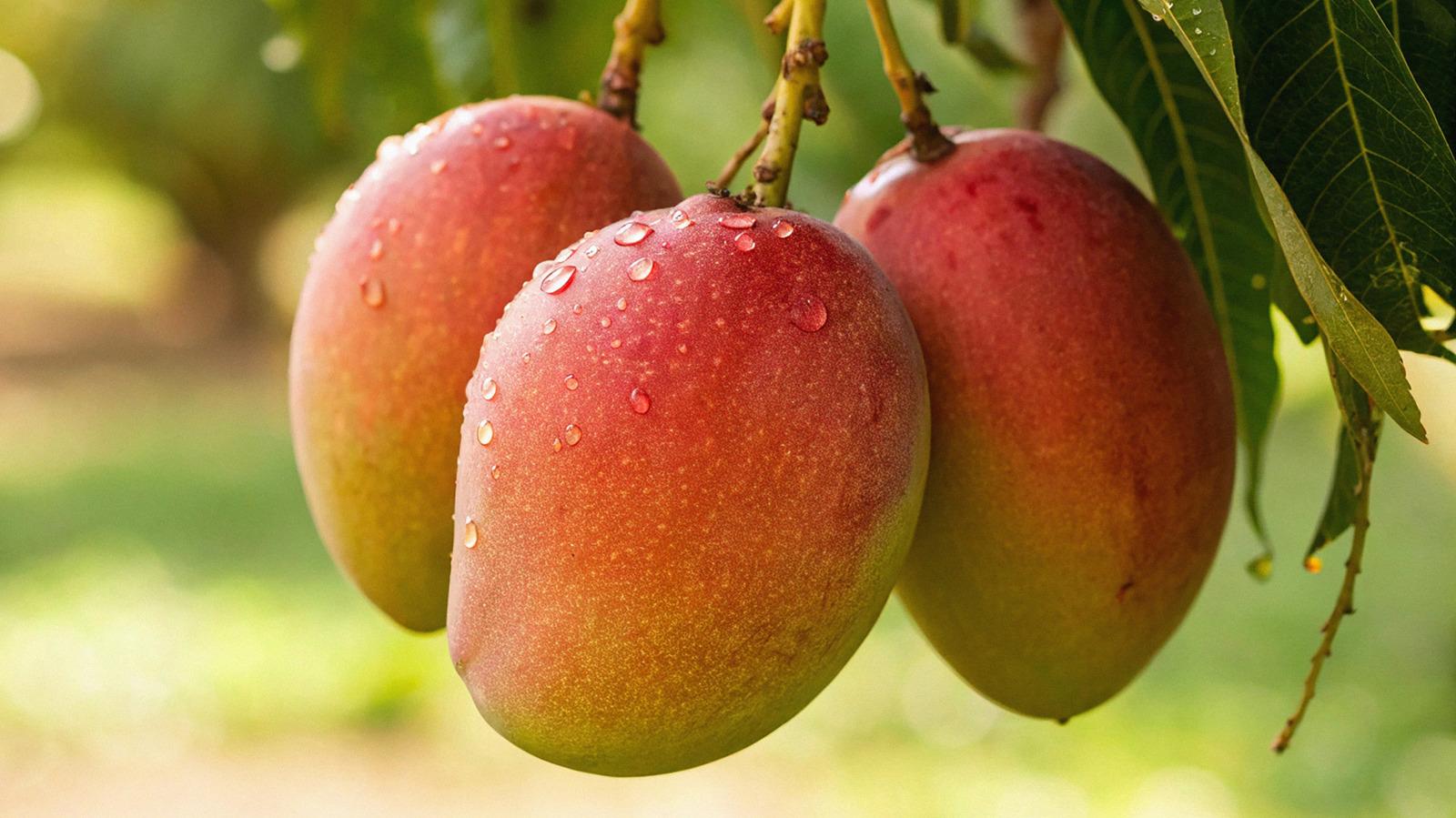
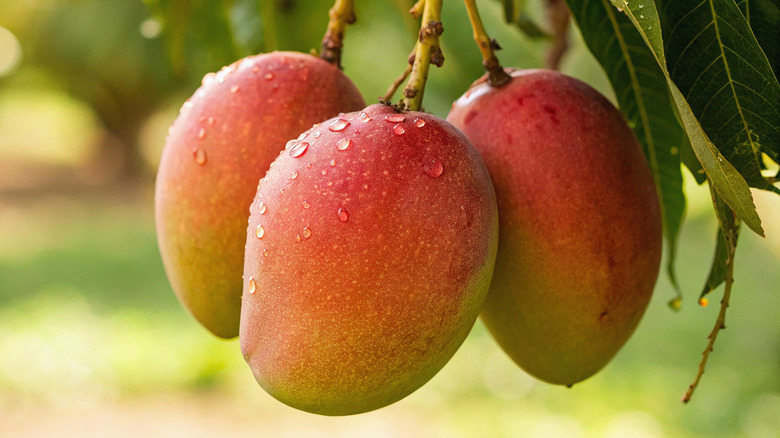
The mango's enticing tropical aroma, satisfying juiciness, and range of sour to sweet flavors earn it the title "King of Fruits." Its native South Asia has justly celebrated it for thousands of years. But even if you live outside India and Cambodia, the mango capitals of the world, you can still get your hands on a fresh, delicious mango. And once you have one, you don't need to feel intimidated. Getting the most out of this tasty fruit just requires a little bit of sleuthing.
Mastering the basic tricks and tips for finding the freshest produce will give you the confidence you need to navigate the grocery aisles or the local produce market. And these key tips for knowing when a mango is ready to eat — based on factors like scent, feel, and appearance — will set you up for success, whether you plan to enjoy your sweet tropical treat on its own or mix up a batch of fresh mango salsa.
How it feels
Athvisions/Getty Images
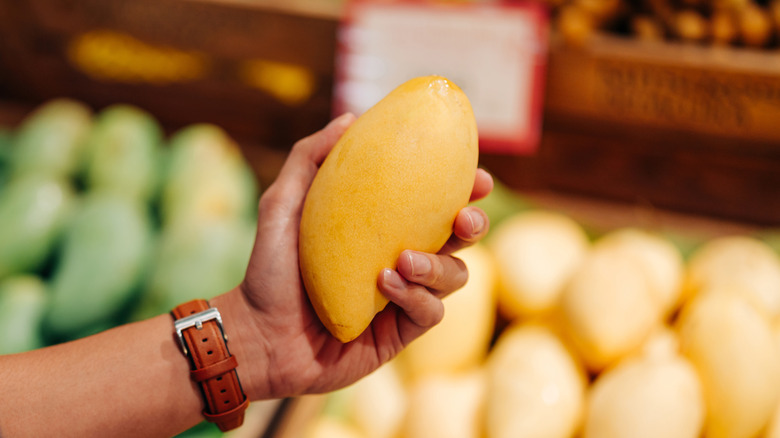
You can tell a lot about a mango just by feeling it with your bare hands. The first thing you should do is gently squeeze near the stem. If it feels hard as a rock, the mango still needs to sit for two or three days to finish ripening. If it gives slightly, your mango is ripe and ready to be sliced. This fruit becomes softer as it ripens, so anything past soft-but-still-firm will be more difficult to cut up. If the flesh feels mushy, it has either moved past ripeness or is bruised.
But you needn't worry or feel like a failure if your mango has sat for too long. As long as they aren't rotten, overripe mangoes are great additions to fruit smoothies or lassis, an Indian yogurt-based drink similar to a smoothie. Pureed overripe mangoes lend themselves to sauces, curries, marinades, and desserts. You can also use the puree as a quick and nutritious baby food. Unripe mangoes have a tangier flavor and crisper texture and can be used for pickling and in chutneys and salads.
How it smells
Sabbir Media/Shutterstock
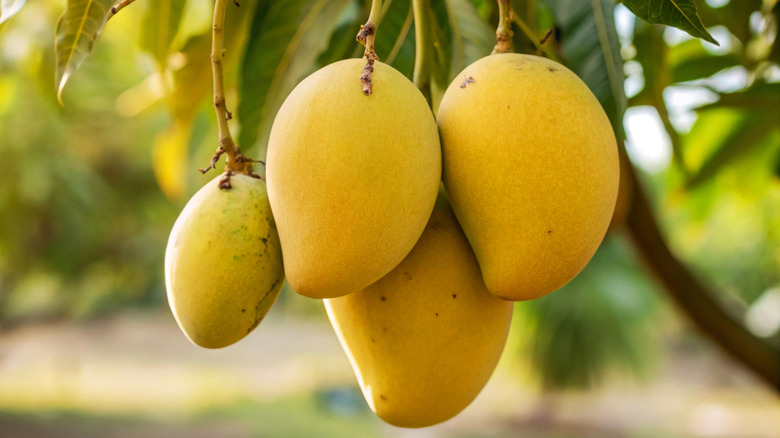
A ripe mango emits a noticeably fruitier smell than an unripe one. This enticing aroma is almost honey-like in its sweetness. If you detect a subtle grassy or resinous odor, or no aroma whatsoever, this means the mango is not yet ripe. After letting it sit for a few days to continue ripening, you should begin to notice its quintessential tropical notes. As when using the feel test, you should direct your nose to the stem of the fruit.
Scent also plays a key role in sniffing out a too-ripe mango. If it's been sitting too long, it may give off a sour or acidic odor. If it has an almost alcoholic kind of smell, this means the natural sugars within the fruit have begun to ferment, which is the start of the rotting process. These mangoes aren't worth salvaging and should be discarded.
How it looks
Highviews/Getty Images
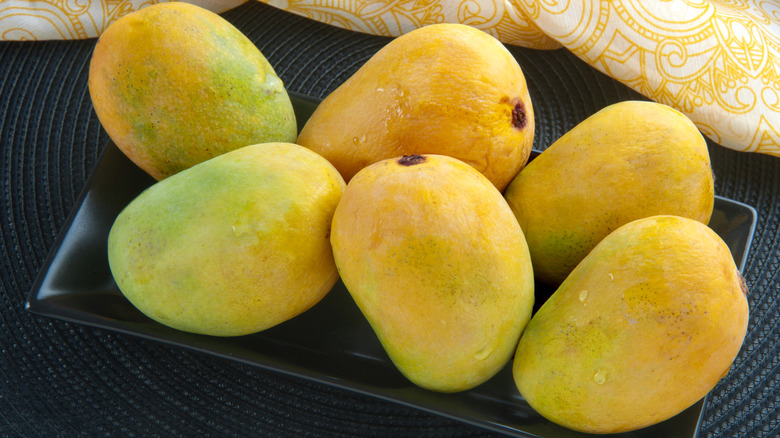
Sometimes people recommend judging a mango's ripeness by color. This metric, however, can be misleading because there are literally thousands of different mango cultivars with a rainbow of hues. The Keitt mango, as just one example, is green even when ripe. Unless you're familiar with the color shift of the specific varietal you're looking at, you can safely ignore this element of the fruit's appearance.
A better way to judge a mango by its looks is to once again pay attention to the stem. A stem that sticks out a little is one sign that it's nice and juicy. You also might notice a small golden halo around the stem or little white dots. These dots, known as sugar spots, are simply crystalized sugar, and they're an indicator of ripeness. You don't need to be discouraged by black dots on your mango, either. These are likely due to sap burn, a byproduct of the picking process. Mango tree sap is highly acidic, and if it comes in contact with the skin of the fruit, it will leave a mark. But this doesn't mean the mango itself isn't sweet, delicious, and safe to eat.

 English
 Arabic
 French
 Spanish
 Portuguese
 Deutsch
 Turkish
 Dutch
Dutch
 Russian
 Romaian
 Portuguese (Brazil)
 Greek
Greek