


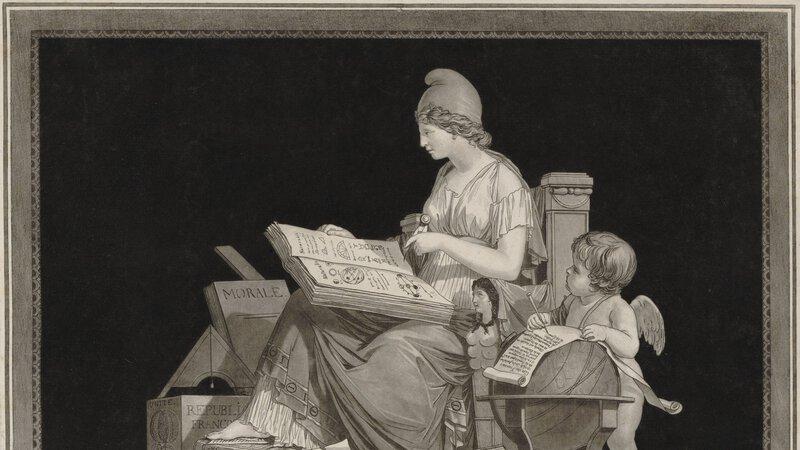

On a crisp autumn morning in 1793, a Parisian worker woke up to discover that Sunday no longer existed. Overnight, by the stroke of a government pen, the seven-day week had been erased from France — replaced by a ten-day cycle called a décade, and with it, the entire Christian architecture of time that had governed daily life for more than a thousand years. What followed was one of the most ambitious — and instructive — experiments in social engineering that the modern world has ever witnessed.
Year Zero: Why the Revolutionaries Went After Time Itself

To understand why the new French Republic would bother abolishing the calendar, you have to understand what the calendar meant. The Gregorian calendar wasn’t just a way of counting days — it was the skeleton of the Church’s power. Saints’ days marked the year’s rhythm. Sunday enforced religious obligation. Easter organized the emotional life of the community. To attack the calendar was to attack the same institution the Revolution had already set about stripping of land, influence, and eventually, its hold on the public conscience.
The French Republican Calendar was therefore as political as the guillotine — just quieter about it. Its architects backdated the new system to begin on 22 September 1792, the very day the French Republic had been proclaimed. That moment became Year One. Every year that came before — every date tied to a king’s reign or a pope’s authority — was, in effect, unmade. History would start again from scratch.
The ambition behind this wasn’t mere iconoclasm. It was Enlightenment rationalism in its most extreme form. The new calendar was built on scientific principles, aligned with the natural world and the decimal system that was simultaneously reshaping French weights and measures. Two men gave it shape: the mathematician Charles-Gilbert Romme designed the underlying structure, and the poet Philippe-François-Nazaire Fabre d’Églantine — an unlikely collaborator — invented the names that would make it sing. It was an improbable marriage of calculus and verse, and it produced something genuinely strange and, in its way, beautiful.
The National Convention formally adopted the calendar on 24 October 1793, though it was decreed retroactive to the founding of the Republic. Its implementation was swift and total: official documents, newspapers, and public institutions were required to use the new dating system immediately, with the old Gregorian references stripped from state correspondence almost overnight.
The Twelve Months, Renamed: Poetry Dressed as Politics

The year opened with Vendémiaire — from the Latin vindemia, meaning grape harvest — running from 22 September to 21 October. This was no accident. Anchoring Year One to the autumnal equinox was a deliberate statement: the Republic’s clock would be set not by the Pope’s calendar but by the turning of the Earth itself. Time, like the Revolution, would answer to nature and reason alone.
What followed was a full year’s worth of seasonal poetry. Autumn brought Brumaire (mists) and Frimaire (frosts). Winter arrived with Nivôse (snow), Pluviôse (rain), and Ventôse (wind). Spring unfurled through Germinal (germination), Floréal (flowers), and Prairial (meadows). Summer burned through Messidor (harvest), Thermidor (heat), and Fructidor (fruit). Even to a modern reader, the names carry a kind of music — a French countryside compressed into twelve syllables.
The month names were calibrated to the climate of the Paris basin, which created an immediate problem: in the south of France, Nivôse rarely brought snow, and in the overseas territories, the seasonal logic collapsed entirely. The calendar’s naturalism was, in practice, a Parisian naturalism quietly claiming to be universal.
One name would nonetheless become infamous beyond all the others. Thermidor — the month of heat — was the month in which Robespierre fell in 1794, arrested on 9 Thermidor Year II and guillotined the following day by colleagues who had grown terrified of where the Terror was leading. The Revolution’s own calendar had, without intending to, stamped its moment of self-correction with an indelible name. Thermidor passed permanently into the vocabulary of political history as shorthand for a revolution turning on itself — a meaning it retains in political science writing to this day.
Below the months, each of the 360 individual days underwent its own transformation. Every saint’s name was stripped away and replaced with something from the natural world — a plant, an animal, a tool, or a mineral. One day was named for a turnip. Another for a bull, a watering can, or a sulfur deposit. The sacred was methodically replaced by the agrarian and the useful; the martyrs of heaven were exchanged for the produce of the French earth. You can explore the full structure of the French Republican calendar, including its complete day-by-day assignments, to appreciate just how total this replacement was.
The Ten-Day Week: How Revolutionary France Abolished the Weekend

Of all the calendar’s features, none generated more sustained popular resentment than the ten-day week. Each thirty-day month was divided into three décades, with only the tenth day — décadi — designated as a rest day. Where workers had previously rested every seventh day, they now labored for nine consecutive days before their single break arrived. On paper, this was a rationalization of time. In the body, it was exhaustion.
The days of the décade carried purely numerical names: primidi, duodi, tridi, quartidi, quintidi, sextidi, septidi, octidi, nonidi, and décadi. They were functional, logical, and almost entirely loveless — a fact that ordinary people noticed immediately.
Market traders lost the weekly rhythms that had organized commerce for generations. Farmers found that the new cycle matched nothing in the natural world — livestock didn’t calve on a decimal schedule, and seasonal fairs didn’t rearrange themselves to suit a government decree. Church attendance collapsed officially but continued unofficially, with priests celebrating Mass on Sundays in secret and congregations quietly maintaining the rhythm their bodies and communities had always known.
The mathematics of the calendar also produced one of its stranger features: to make twelve thirty-day months add up to a full solar year, the designers appended five extra days — six in leap years — to the end of the calendar. These were called the jours complémentaires, more popularly known as the sans-culottides after the revolutionary working classes, and each was dedicated to a republican virtue: Virtue, Genius, Labour, Opinion, Rewards, and — in leap years — Revolution itself. They floated at the year’s end like a manifesto in miniature, a political catechism stitched onto the tail of the almanac.
The friction extended beyond France’s borders. Every letter sent abroad, every diplomatic communiqué, every commercial invoice required a double date — one in the Republican system, one in the Gregorian calendar used by the rest of Europe. French merchants and diplomats spent considerable energy simply translating between two incompatible systems of reckoning. The calendar’s universalist ambitions were quietly undermined by the very universalism it lacked: nobody else had adopted it, and nobody else was going to.
The Decimal Clock: An Experiment Too Far

The Republican calendar did not arrive alone. Its designers, intoxicated by the possibilities of decimal rationalization, simultaneously attempted to reform the day itself. The proposal divided each day into ten hours, each hour into one hundred minutes, and each minute into one hundred seconds. Clockmakers were commissioned to produce instruments with ten-hour faces alongside their traditional twelve-hour counterparts.
The experiment was so profoundly impractical that it was officially suspended within two years. Coordinating with foreign nations, navies, and astronomical observatories that used conventional time proved impossible. Sundials, already in wide use in the countryside, required entirely new calibrations. And workers who had organized their lives around sunrise, midday, and dusk found decimal hours a bewildering abstraction. The human body, it turned out, was not easily metricated. You can reprint the calendar on every official form in France, but you cannot stop a person from feeling hungry at noon or tired at dusk.
Living Inside the New Time: Resistance, Adaptation, and Strange Survivals

Street-level Paris adapted with the pragmatic creativity of a city that had survived far worse. Theaters, cafés, and markets quietly preserved their old schedules. The rural poor, many of whom had never owned a clock, struggled to track a ten-day cycle that mapped onto nothing they could observe in the sky or the soil. The revolutionary government pushed back through official documents, newspapers, and public clocks — all re-inscribed with Republican dates, all insisting on the legitimacy of the new order.
Yet the calendar was not entirely without genuine admirers. The seasonal month names were vivid enough that educated French citizens embraced them with something close to affection. A love letter dated 18 Floréal, An IV carries a romantic charge that 7 May 1796 simply cannot match. Farmers and naturalists found the plant-and-animal day names a useful shared shorthand for phenological observation — when a day is named for an ox, you know roughly where you are in the agricultural year. The calendar had real poetry in it; what it lacked was the one thing no government can manufacture — organic belonging.
The absurdities accumulated regardless. Two French people of the same era might genuinely struggle to agree on what day it was, depending on which system they were using. A grandmother raised under the old order and a grandson educated under the Republic inhabited, in a real sense, different times. Genealogical records from this period are a particular challenge for family historians, who must constantly translate between the two dating systems to make sense of births, marriages, and deaths — a practical headache that survives in archives to this day.
The Clock Runs Out: Napoleon, the Concordat, and the Death of Revolutionary Time

The calendar’s structural weaknesses were always present. What changed was the political will to overlook them. By the early 1800s, Napoleon had negotiated his Concordat with Pope Pius VII, signed in 1801, restoring the formal relationship between the French state and the Catholic Church. The Republican calendar now sat in open contradiction with that restored relationship — a daily reminder of a revolutionary purity that Napoleon had no particular interest in maintaining.
His calculation was straightforwardly pragmatic. As the history of the Republican calendar makes clear, a system that had served its symbolic purpose in the radical years had become, by 1805, a source of practical friction with every trading partner, diplomatic correspondent, and Catholic citizen France possessed. The cost now outweighed the benefit.
The end came without ceremony. On 1 January 1806 — which would have been 11 Nivôse, Year XIV in the old reckoning — France returned to the Gregorian calendar. There was no grand funeral, no public burning of the old almanacs. A senatorial decree was issued, the revolutionary clock simply stopped, and the next morning the French woke up inside a January that felt, for the first time in twelve years, recognizable to the rest of the world.
But the calendar refused to die entirely as a symbol. In the spring of 1871, when the Paris Commune briefly seized the city in the aftermath of the Franco-Prussian War, radical communards revived Republican calendar dates for a matter of weeks before the Commune’s violent suppression in late May. It was a ghost haunting its own grave — proof that the calendar had become, in its death, more powerful as a symbol than it had ever quite managed to be as a functioning system.
Why It Still Matters: The Calendar as a Mirror of Revolutionary Ambition
The history of the French Republican calendar is, in compressed form, a lesson in the limits of top-down social engineering. You can rename the months. You can print new almanacs. You can redesign clock faces and fine shopkeepers who close on Sunday instead of décadi. What you cannot easily do is rename the rhythms that structure human community — the pulse of a week, the familiar shape of a year, the social contract encoded in shared time.
Every subsequent attempt to redesign the week has echoed France’s experiment with depressing consistency. The Soviet Union tried a five-day continuous work week — the nepreryvka — beginning in 1929, then shifted to a six-day week in 1931, both schemes intended to break religious observance and synchronize industrial production. Within a decade, Stalin restored the seven-day week. The body politic, like the human body itself, tends to reject transplanted rhythms.
What the French calendar left behind was, in one narrow sense, richer than what it replaced: language. Thermidor and Germinal entered the permanent vocabulary of revolutionary history and literature. When Émile Zola published his great novel of miners and class struggle in 1885, he titled it Germinal — the month of germination, of things pushing upward through cold ground toward an uncertain light. The calendar had failed as a practical system of time. It succeeded, improbably, as a reservoir of metaphor — its month names still appearing in histories, novels, and political analyses written more than two centuries after Robespierre fell.
The revolutionaries who designed the calendrier républicain grasped something genuinely profound: whoever controls the calendar shapes consciousness. Every Sunday is a small, unremarked act of deference to an inherited order; every saint’s day a quiet endorsement of an institution the Revolution despised. Their mistake was the characteristic mistake of the Enlightenment at its most ambitious — the belief that consciousness could be rewritten as swiftly as a government decree could be printed and posted. Twelve years later, France woke up on a January morning, looked at the calendar on the wall, and found that Sunday had quietly, stubbornly come back.

 Arabic
 French
 Spanish
 Portuguese
 Deutsch
 Turkish
 Dutch
Dutch
 Italiano
 Russian
 Romaian
 Portuguese (Brazil)
 Greek
Greek