


Semenovp/Getty Images
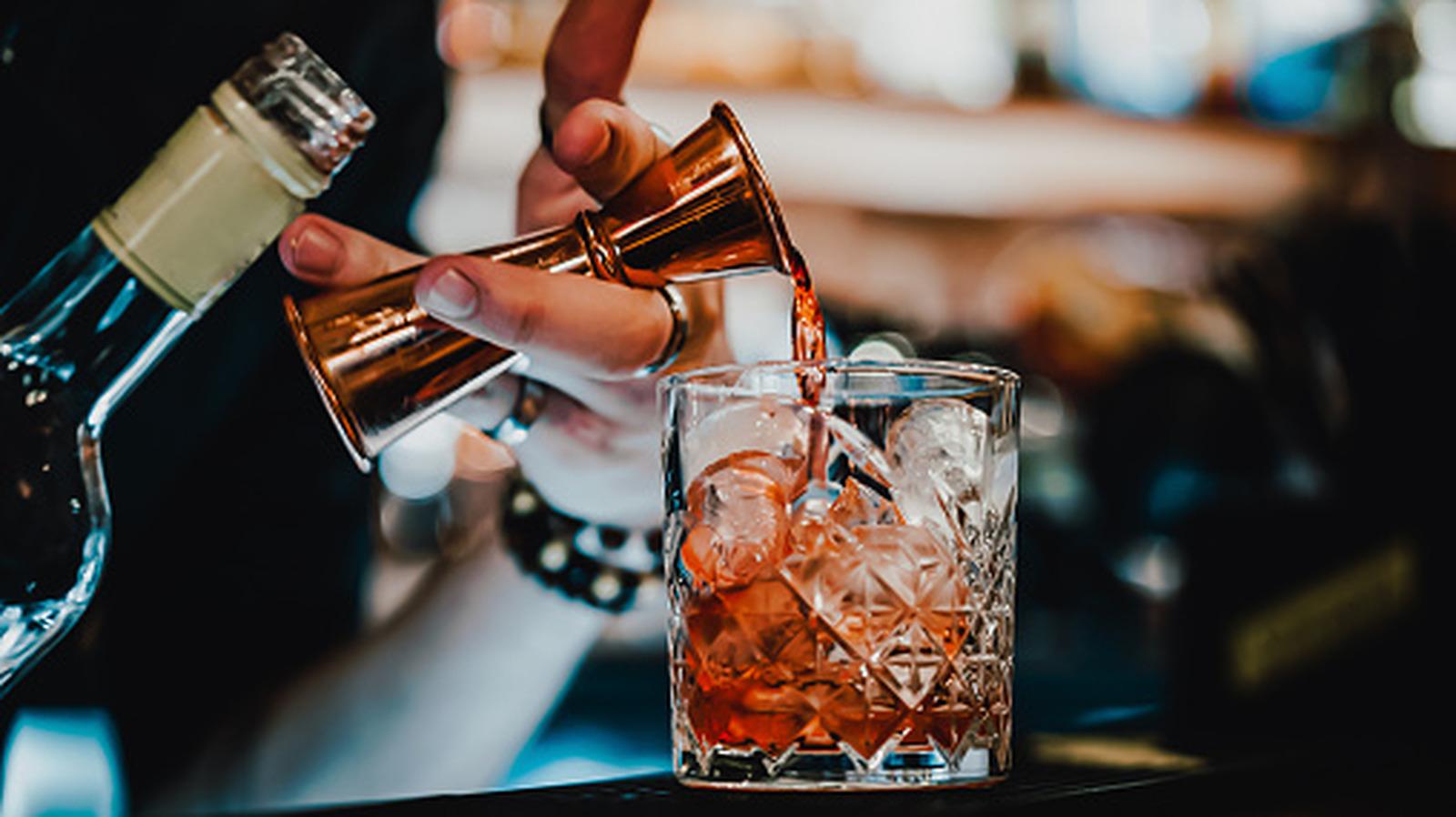
Many of us have needed a stiff drink at one point or another. Typically, most bars are happy to oblige. However, liquor laws aren't the same everywhere, and in one part of the country, there are some strong and specific limits on just how much booze can be included in a single drink. That's Utah, where bartenders are specifically prohibited from pouring more than 2.5 ounces of hard liquor per beverage.
This rule comes straight from the state's Department of Alcoholic Beverage Services, citing Utah state law. Of that 2.5 ounces, only 1.5 ounces can be a primary spirit, such as vodka, whiskey, gin, or tequila. The remaining ounce can be "secondary alcoholic flavorings," such as liqueurs, (which are different than liquor), used to build sophisticated cocktails (per abc4). This isn't just a matter of eyeballing or counting out a liquor pour, either. Other statutes require the use of a "calibrated metered dispensing system" approved by state regulators, designed to ensure precision in cocktail making, according to Utah State Legislature.
As restrictive as this might seem, it's actually the most liberal Utah's liquor laws have ever been. The change was implemented in 2008, before which only a single ounce of liquor was permitted, as a result of a 1990 law that also banned drink specials of any kind. Until 2017, bartenders were also required to mix drinks in a location not visible to patrons, a convention given the tongue-in-cheek nickname of the Zion Curtain, a reference to the influence of the state's large (and typically non-drinking) Mormon population.
Utah may be strict, but restrictive alcohol laws are common
CHEN FANGXIANG/Shutterstock
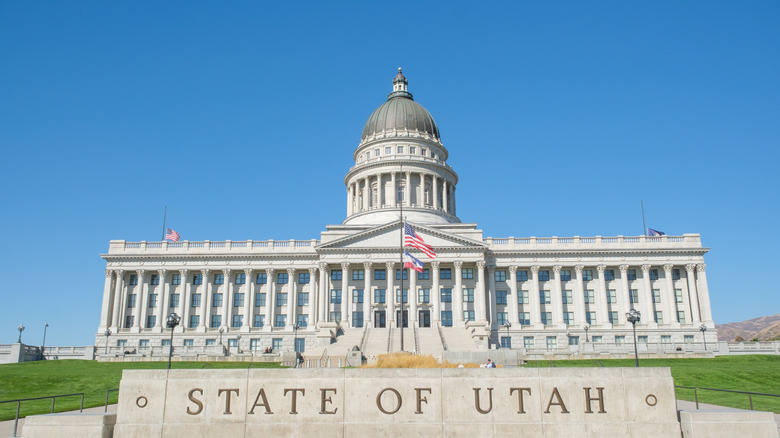
Although Utah's alcohol laws are among the most unusual and strict, they're certainly not alone in spelling out in detail where and when booze can be purchased. A number of states maintain Puritan-inspired blue laws, which is the real reason some states don't sell alcohol on Sundays. Alongside the Beehive State, happy hour is also against the law in Alaska, North Carolina, Massachusetts, Vermont, and Rhode Island, while around a dozen others have some happy hour limits spelled out in state regulations.
Despite Utah's tough restrictions, the state nevertheless maintains an active culture of brewers, distillers, winemakers, and more. You'll just need to be ultra-careful before getting behind the wheel after visiting one. It also has the strictest DUI limit in the country, with drivers found to be over the limit at a blood alcohol content of 0.05%, rather than the 0.08% in all other states.
Those who want an especially stiff drink can purchase the ingredients for a number of easy cocktail recipes to make at home. However, don't expect to order a double (or stronger) at a bar, no matter how well you promise to tip. Utah state law strictly and specifically keeps it to 2.5 ounces of booze per beverage.

 Arabic
 French
 Spanish
 Portuguese
 Deutsch
 Turkish
 Dutch
Dutch
 Italiano
 Russian
 Romaian
 Portuguese (Brazil)
 Greek
Greek