



In the summer of 1757, a British soldier gasped his last breath in the sweltering heat outside Calcutta. At almost the same moment, a Prussian infantryman hunched in a frozen trench in Silesia, praying his regiment would survive another dawn. Across the Atlantic, a colonial militiaman pressed his back against a Pennsylvania oak and listened for French boots in the underbrush. Three men. Three continents. One war that nobody had yet bothered to name.
A War With No Name, Fought Everywhere at Once

Most of us were taught that the First World War began in 1914, when a pistol shot in Sarajevo set Europe — and then the planet — ablaze. It is a tidy story. It is also, historians have increasingly argued, incomplete. More than 150 years before the trenches of the Western Front, soldiers were already dying on multiple continents in a conflict so vast, so interconnected, and so transformative that the National Army Museum calls it “the original world war.” That conflict was the Seven Years’ War, fought from 1756 to 1763, and it deserves far more than a footnote in the story of how the modern world was made.
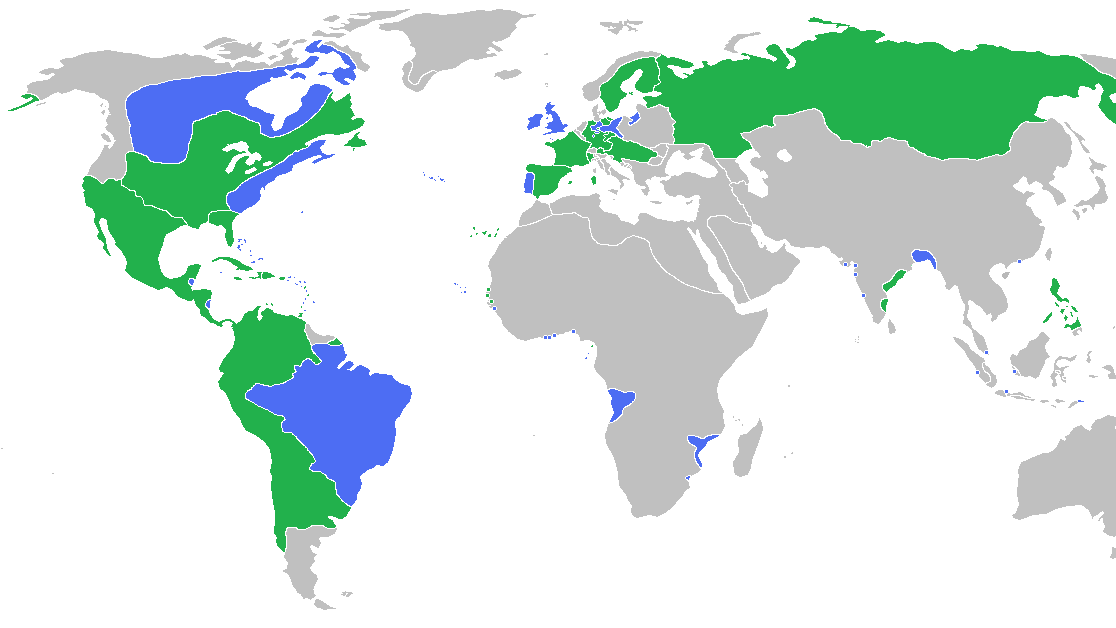
The Seven Years’ War was not simply a European squabble that spilled beyond its borders. It was a genuinely global struggle — waged in the forests of North America, the plains of Bengal, the sugar islands of the Caribbean, the trading posts of West Africa, and the harbors of the Philippines. The Canadian Encyclopedia describes it as “the first global war.” The question worth asking is: why don’t most people remember it that way?
Part of the answer is structural. The conflict wore a different name in almost every place it was fought. In North America it was the French and Indian War. In India it was a contest between rival trading companies and local rulers. In Europe it was a battle for continental dominance triggered by a realignment of alliances that stunned every chancellery on the continent. These separate stories have mostly been told separately. Told together, they reveal something far larger — a single, interconnected struggle that reshaped the map of the world and whose consequences are still playing out today.
Before the Starting Gun: The Fuse Was Already Burning in 1754

The formal war did not begin in 1756. The killing did. In the dense forests of the Ohio Valley, British colonial settlers and French frontier soldiers were already shooting at each other two years before any declaration of war reached a diplomat’s desk. This is one of the conflict’s most striking and underappreciated features: its North American theater ignited first, making it an early example of a colonial flashpoint dragging the great powers into open war — rather than the other way around.
In North America, the struggle wore a different name entirely. The French and Indian War, as it was known to British colonists, was the North American face of a larger imperial contest between Great Britain and France. It was a war of forest ambushes and river-fort sieges, fought alongside — and often guided by — Indigenous nations whose alliances, knowledge of the land, and military power made them far more than supporting characters. The Iroquois Confederacy, the Huron, the Algonquin, and dozens of other nations chose sides, shifted allegiances, and shaped outcomes in ways that no European general’s map could anticipate. Their participation was not incidental; it was frequently decisive.
By 1756, the colonial sparks had grown too hot to ignore. Britain and France formalized what their soldiers on the frontier had known for two years: they were at war. The conflict that a Virginia militia colonel and a French frontier commander had effectively started in the American wilderness had become a global conflagration. That colonel, incidentally, was George Washington — his very first military engagement, a skirmish at Jumonville Glen in 1754, was also the opening shot of what would become history’s first world war.
The European Powder Keg: Alliances Turned Upside Down

When war was formally declared in 1756, it triggered something European statesmen had not seen in generations: a complete reshuffling of the continent’s alliance system. Historians call it the “Diplomatic Revolution,” and the name barely captures the shock of it. France and Austria — rivals who had spent much of the previous century in conflict — suddenly found themselves fighting side by side. Britain and Prussia, improbable partners, faced them from the other side. A generation of alliance politics was overturned in a matter of months.
At the center of the European storm stood Frederick II of Prussia, known to posterity as Frederick the Great, one of history’s most gifted and desperate military commanders. Outnumbered on multiple fronts — Austria pressing from the south, Russia threatening from the east, France looming to the west, Sweden raiding from the north — Frederick fought with a speed and tactical audacity that became legendary. He won battles he had no right to win at Rossbach and Leuthen in 1757, then marched his exhausted army to fight the next engagement before his enemies could regroup. His treasury bled. His population suffered enormous losses. Prussian territory was repeatedly invaded and occupied. But Prussia survived, and Frederick emerged from the wreckage with his kingdom intact and his reputation as a military genius cemented for the ages.
The war’s European theater concerned Silesia, Hanover, and the broader question of continental dominance. But Europe was also the war’s command center, the place where decisions taken by kings and ministers sent ripples outward to every ocean. Every battle fought in the Ohio wilderness or on the coast of Bengal was, at some level, part of this larger contest for supremacy — which is precisely what made it a world war in the truest sense.
North America: A Continent Changes Hands

The North American campaigns of the Seven Years’ War tend to receive the fullest treatment in English-language history books, and for good reason: their consequences were enormous and long-lasting. After years of painful British reverses — ambushes, failed sieges, supply lines stretched to breaking — the tide began to turn after 1758. Britain’s naval power slowly strangled New France, cutting off reinforcements and starving the colony of resources it could not replace. The end came with almost theatrical drama.
On the Plains of Abraham, outside the fortress city of Quebec, on the morning of September 13, 1759, British General James Wolfe led his army up a cliff path that the French garrison had considered impassable. The battle that followed lasted barely fifteen minutes. Both commanding generals — Wolfe for Britain, the Marquis de Montcalm for France — were mortally wounded. Both died within hours of each other. It is the kind of scene that historical novelists might hesitate to invent for fear of straining credibility. But it happened, and it effectively sealed the fate of French Canada.
The consequences reshaped the modern world in directions that are still visible today. France surrendered its vast North American empire under the Treaty of Paris in 1763. Britain became the dominant European power on the continent. The colonists who had fought and bled alongside British regulars — and been largely ignored and condescended to for their trouble — were handed heavy new taxes to pay for the war’s enormous cost. The resentment that festered in the decade that followed found its expression in 1776. The American Revolution was, in a very direct sense, among the Seven Years’ War’s most consequential aftershocks. The borders of modern Canada, too, were drawn in large part by the fall of New France.
India and the Battle for a Subcontinent

If North America was the war’s most famous theater, India was arguably its most consequential — and the one most consistently absent from popular accounts. Here, the conflict wore yet another costume. It was fought not primarily between national armies but between rival trading companies, local rulers, and mercenary forces operating within the fractured politics of a weakening Mughal Empire. It was, in the most precise sense, a corporate war dressed in imperial clothes.
The pivotal moment came at the Battle of Plassey in June 1757, when Robert Clive — commanding an East India Company force that was substantially outnumbered on paper — defeated the Nawab of Bengal, Siraj ud-Daulah, whose army included French advisors and artillery support. The victory owed as much to prior political maneuvering and the defection of Nawab’s commander Mir Jafar as it did to battlefield tactics, but its effects were undeniable. Britain gained a foothold in Bengal that it would spend the next century expanding into dominion over the entire subcontinent.
The stakes could hardly have been higher. India’s trade routes, its textile wealth, its strategic ports, and the revenues of its land represented an economic engine of world-historical importance. What looked like a sideshow to European commentators watching Frederick the Great’s brilliant campaigns in Silesia was, in terms of long-term consequence, among the war’s most significant theaters. The British Empire that defined the nineteenth century was built on foundations laid at Plassey. The two centuries of colonial rule that followed — and the struggles for independence that eventually ended it — trace a direct line back to a June afternoon beside a mango grove in Bengal.
At Sea, in West Africa, in the Caribbean, in the Philippines: The Truly Global Reach

No element made the war’s global character clearer than its naval dimension. Britain’s Royal Navy functioned as the conflict’s circulatory system — moving troops, supplies, and dispatches across every ocean simultaneously, while working methodically to strangle France’s ability to do the same. The decisive moment came at the Battle of Quiberon Bay in November 1759, when Admiral Edward Hawke pursued a French fleet into treacherous coastal waters during a storm — a gamble that bordered on recklessness — and destroyed it. France effectively lost the capacity to reinforce its forces in North America, India, or anywhere else. The war’s outcome was, in many ways, sealed at sea before it ended on land.
But even Quiberon Bay does not exhaust the war’s geographic reach. In West Africa, British forces seized French trading posts, drawing the commerce of the Atlantic slave trade into the conflict’s orbit and adding another dimension of grim consequence to the list of assets changing hands between empires. In the Caribbean, sugar islands — among the most profitable territories on earth by eighteenth-century economic measures — were captured and recaptured, traded back and forth in peace negotiations like particularly valuable bargaining chips. Guadeloupe and Martinique changed hands. Cuba was briefly occupied by Britain. And in 1762, following Spain’s entry into the war on the French side, Britain seized Manila, briefly holding the capital of the Philippines in a campaign that most summaries of the conflict still barely mention.
The Seven Years’ War was a genuinely global conflict, with orders, dispatches, and supply ships crossing every ocean simultaneously, binding together theaters of war that had never before been coordinated on such a scale. The logistical achievement alone — managing interconnected campaigns across such distances with the communications technology of the mid-eighteenth century — was without precedent in the history of warfare.
Who Paid the Real Price
Any honest account of the Seven Years’ War must reckon with what it cost the people who had least say in it. Indigenous nations across North America found their carefully negotiated positions between European empires destroyed almost overnight. The British victory over France removed the balance of power that many Indigenous nations had exploited to maintain their autonomy. Within decades, the loss of that leverage would accelerate dispossession on a continental scale.
In India, the East India Company’s triumph at Plassey initiated a transformation of Bengal’s economy and governance that produced, within two decades, a catastrophic famine in 1770 in which millions died — a disaster directly connected to the disruption of existing agricultural and tax systems under Company rule. In West Africa, the transfer of slaving forts between European powers made no meaningful difference to the enslaved Africans passing through them, but it did consolidate British dominance of the Atlantic slave trade at the moment of its greatest volume.
The war was fought by European empires for European imperial purposes. Its costs were borne most heavily by people who were not European and who had no voice in the negotiations that determined the outcome. That asymmetry is not incidental to the war’s history — it is central to understanding what the conflict actually was and why its legacy remains contested and consequential.
The World After 1763: Why This War Still Echoes
When the Treaty of Paris was signed in February 1763, it rewrote the map of three continents. France surrendered its North American empire. Britain consolidated its grip on Bengal. The Caribbean settlements were reshuffled. Spain ceded Florida to Britain and received Louisiana from France as compensation. The world that emerged from the negotiations was recognizably the world that shaped the following two centuries — a world of growing British global supremacy, of wounded French imperial ambition, and of colonial resentments already beginning to curdle into something more dangerous.
The connections ripple outward in every direction. France, humiliated by its losses and determined on revenge, bankrolled the American Revolution a decade later — an act of geopolitical calculation that helped birth the United States while pushing France itself toward the fiscal crisis that contributed to its own revolution in 1789. The heavy war taxes Britain imposed on its American colonists lit the fuse of independence. The East India Company’s triumph at Plassey eventually produced the British Raj and nearly two centuries of colonial rule whose consequences are still being reckoned with. The Seven Years’ War’s legacy is embedded in the foundations of the modern world.
When we call 1914 the beginning of the first world war, we perform a quiet erasure — of the Bengal soldier in the summer heat, of the Prussian shivering in his trench, of the militiaman in the Pennsylvania forest, and of the millions of people across multiple continents whose lives, lands, and futures were transformed by a conflict they had no power to stop and no role in designing. The Seven Years’ War was fought across multiple continents. It was more immediately transformative for non-European peoples. It did more to establish the contours of the modern world. It earned its title — quiet and underappreciated as it remains: the war that made the modern world, a seven-year storm that raged from the Ohio Valley to the Bay of Bengal and left almost nothing unchanged.

 English
 Arabic
 French
 Spanish
 Portuguese
 Deutsch
 Turkish
 Dutch
Dutch
 Italiano
 Russian
 Portuguese (Brazil)
 Greek
Greek