


Robert Way/Getty Images
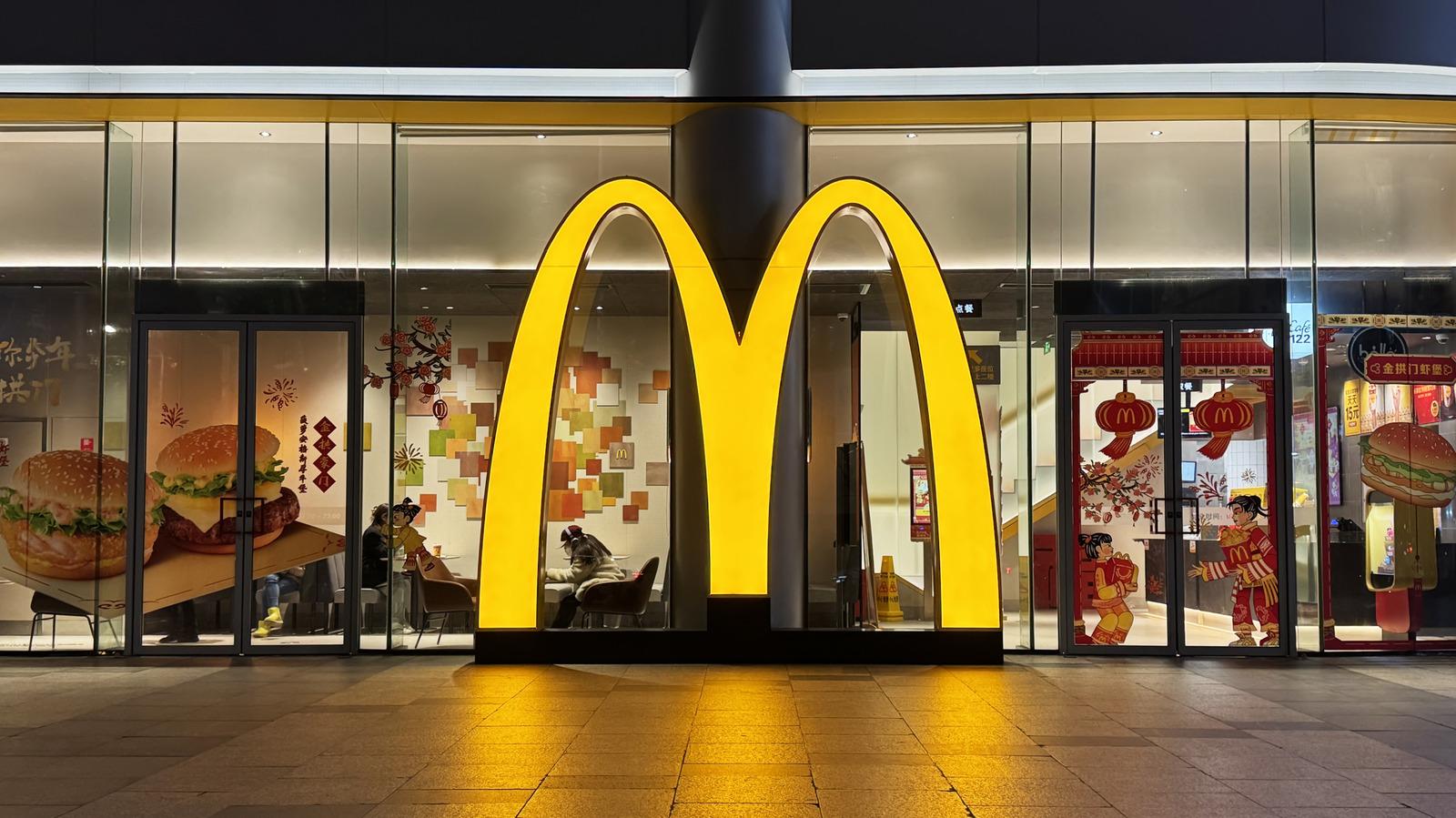
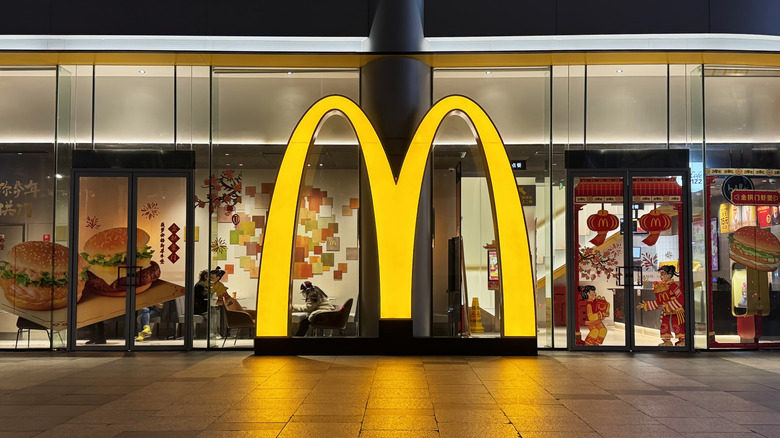
When it comes to McDonald's, one thing is patently clear: You're loving it. Since the chain was first opened way back in 1940 by brothers Mac and Dick McDonald, McDonald's has served billions of meals. In fact, according to McDonald's itself, the fast food giant serves more than 60 million customers around the world every single day.
But McDonald's wasn't always the iconic brand you know and love. It built itself up piece by piece, bit by bit over the decades. From Egg McMuffins to Big Macs to Ronald McDonald himself, many of the most famous and beloved McDonald's institutions were completely absent from the chain's early years and only came along though later development.
So if you take away everything you associate with McDonald's, is it still McDonald's? That's an existential question worthy of the Hamburglar. To answer it, we must travel back into the misty, distant past and look at the biggest changes that ever happened to McDonald's — and find out just how the chain transformed itself into a juggernaut one french fry at a time.
1961: Ray Kroc buys McDonald's
Bettmann/Getty Images
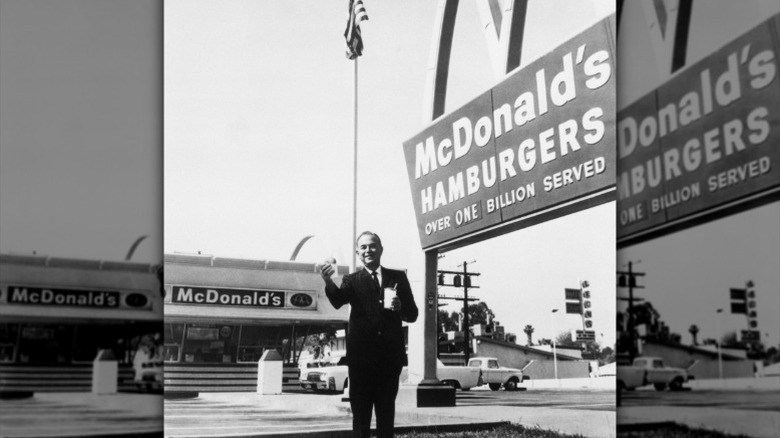
Some of the biggest innovations in fast food were pioneered by McDonald's founders Dick and Mac McDonald. Taking a cue from the way Henry Ford's assembly line production revolutionized the automobile industry, the McDonald brothers invented the "Speedee Service System." It emphasized delivery speed and low cost, allowing them to churn out burgers and other limited menu items at a much faster and more efficient rate than their competitors.
This caught the eye of entrepreneur Ray Kroc when he visited McDonald's in 1954. Impressed, Kroc had a vision of McDonald's franchises across the country. In 1955, Kroc became the franchise agent for McDonald's. But he and the McDonald brothers soon came to loggerheads over the restrictive terms of Kroc's franchise agreement. "It was almost as though they were hoping I would fail," Kroc wrote in his 1977 autobiography "Grinding It Out." "This was a peculiar attitude for them to take because the more successful the franchising, the more money they would make."
So Kroc took things into his own hands, literally putting his money where his mouth was: In 1961, he bought the McDonald's company from the McDonald brothers, right on down to the rights to their name. Free to do as he pleased, Kroc began setting his sights on nothing short of global fast food domination.
1962: Beyond burgers
Webclipmaker/Getty Images
In the early 1960s, franchisee Lou Groen recognized a major issue facing his Cincinnati, Ohio, McDonald's location: the Catholic religious season of Lent. Stretching for 46 days between Ash Wednesday and Easter, Catholics observing Lent often give up meat on Fridays as part of their religious observances. And that was an issue for Groen, himself a Catholic, because it meant that patrons in his heavily Catholic neighborhood were staying away from McDonald's because the only entree options involved hamburgers.
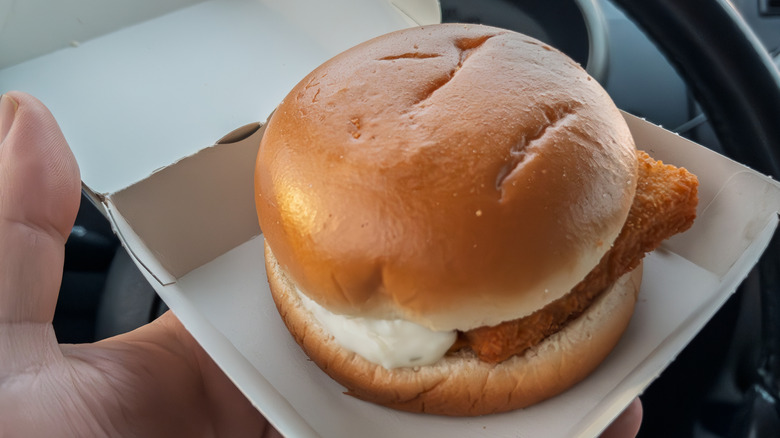
The solution was embedded in the problem: fish. Groen realized his customers were eating at a local fish restaurant instead, so he came up with the simple idea of offering a fish sandwich. It might not seem exactly revolutionary, but McDonald's owner Ray Kroc wasn't convinced that fish was the right fit for his restaurant. Instead, he proposed an alternative he called the Hula Burger, which was a slice of grilled pineapple on a burger bun.
Groen and Kroc decided to let customers decide, putting both on the menu one Friday for a head-to-head challenge. Kroc was likely the only person in the world surprised to see the final results, which saw the fish sandwich win by a tally of 350 to 6. Three years later, the newly christened Filet-O-Fish sandwich, which The New York Times called the "gold standard" for fast food, was rolled out nationwide. It remains a staple today, so popular that in 2026 an online petition for a Filet-O-Fish national holiday went viral.
1963: Ronald McDonald is introduced
Nick Laham/Getty Images
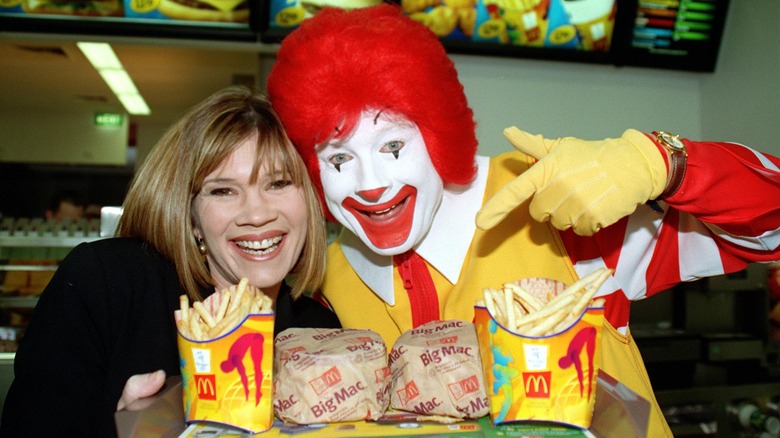
One thing Ray Kroc needed in order to expand his business was name recognition. As the chain expanded into new territories, people needed to know what McDonald's was. In 1963, the answer came in the form of a clown wearing fast food accoutrements on his head: Ronald McDonald. Originally played by former Bozo the Clown performer Willard Scott, who would go on to national fame as the weatherman for NBC's "Today" show, Ronald McDonald started off in regional ads in the Washington D.C. area before going national.
The character quickly exploded in popularity, especially after the company decided to focus on selling to impressionable children, with the idea that kids would get their parents to take them to McDonald's. In 1973, McDonaldland debuted, with Ronald and his new McDonaldland friends driving advertising. It worked: According to one study, 96% of American children could pick Ronald McDonald out of a lineup. At least some good came of this beyond increased burger sales: In 1974, the Ronald McDonald House charity, which focuses on children's healthcare issues, was founded.
Alas, times change. In 2016, following a viral clown scare and efforts from watchdog groups to get rid of Ronald due to concerns over advertising to children, McDonald's seemingly retired Ronald. These days, his rare appearances are mostly focused on promoting Ronald McDonald House.
1967: McDonald's goes global
Peter Turnley/Getty Images
1967 was a watershed year for McDonald's, as Ray Kroc's vision of becoming a global fast food empire took its first big step toward being a reality when the chain opened its first restaurant outside of the United States. Located in Richmond, British Colombia, Canada, the McDonald's grand opening coincided with Canada's Centennial, celebrating 100 years as an independent nation. And what better way to celebrate than by eating fast food from the U.S.?
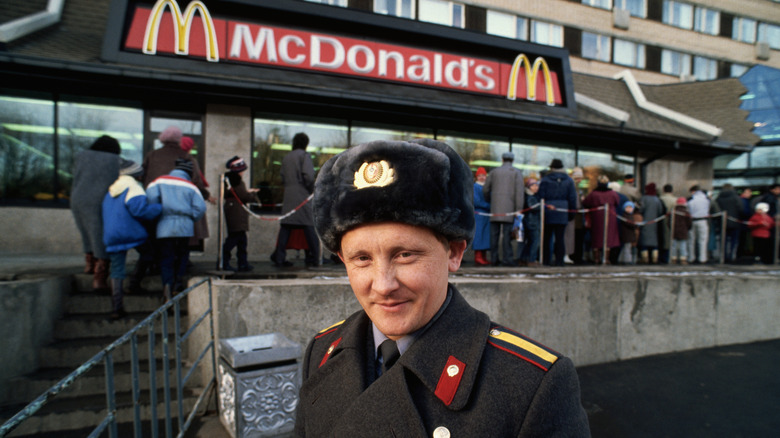
It was just the first small step toward what would become a worldwide empire. That same year, McDonald's tested the waters when it opened its first restaurant outside the continental U.S. in the territory of Puerto Rico. It was a success, and in 1970, McDonald's moved into Central America with the opening of a restaurant in Costa Rica. By the 1990s, McDonald's was making global headlines with its expansion: Locations in Moscow (1990) and Beijing (1992) were seen by some as extensions of American foreign policy using the soft power of capitalism to change hearts and minds.
McDonald's ultimately pulled out of Russia in 2022, selling off all of its franchise locations there to a local company, which rebranded under a name that translates to English as "Delicious, that's all." But McDonald's is still going strong everywhere else: By the start of 2026, there were an estimated 27,000 McDonald's locations operating outside the United States.
1967: The Big Mac is introduced
Forrest Anderson/Getty Images
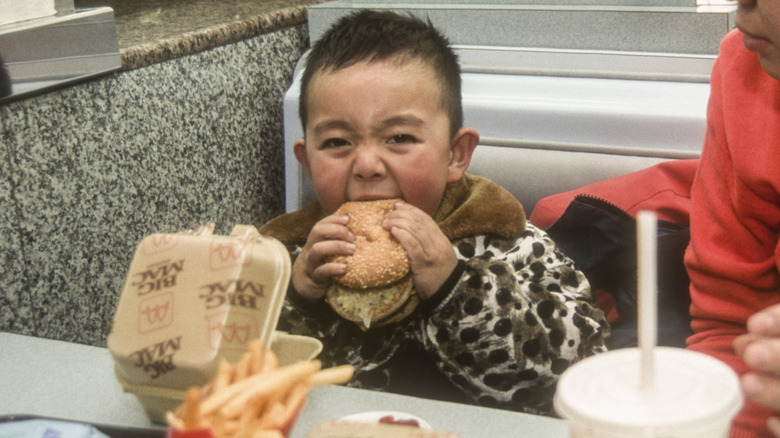
While McDonald's was beginning its international expansion in 1967, an equally important development that would change the course of the company was taking place much closer to home. After two years of experimentation to develop a bigger burger, Uniontown, Pennsylvania, franchisee Jim Delligatti created his masterpiece: the Big Mac.
To say it was a hit would be an understatement. Unable to deny the evidence of his own eyes — and bank account – Ray Kroc wisely decided to roll out the Big Mac on a national scale in 1968. Bigger burgers for bigger appetites meant bigger profits, and in 1974 the Big Mac hit iconic status thanks to a catchy jingle that's probably been going through your head from the first moment you read the word "Big Mac" in this article. "Two all beef patties, special sauce" ... yeah, you know the rest. No need to thank us for getting that stuck in your head for the next three days.
Combined with the wild growth of McDonald's overseas, the Big Mac actually became a bellwether for worldwide commerce. In 1986, The Economist magazine created The Big Mac Index, which uses the price of Big Macs around the world as a way to gauge buying power and relative value of international currencies. The iconic status of the Big Mac is especially impressive given that, according to reports, the company was originally planning on calling it The Aristocrat or possibly The Blue Ribbon Burger instead of Big Mac. Seems like it made the right choice.
1977: McDonald's adds a breakfast menu
Joe Raedle/Getty Images
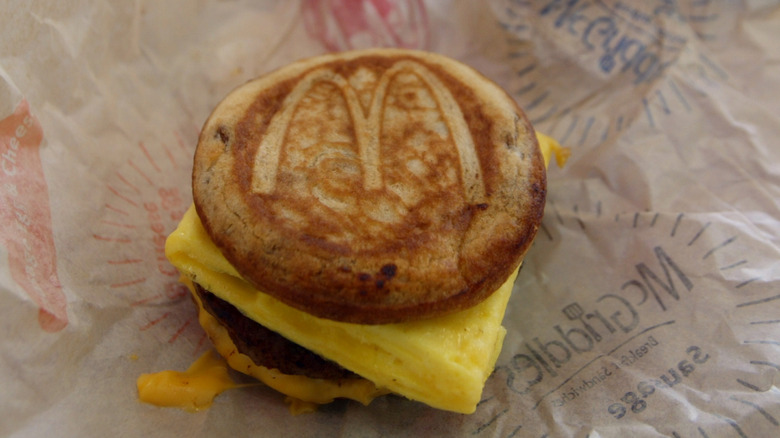
Hard to believe now, but once upon a time, you couldn't get breakfast at McDonald's. Up through the 1960s, the chain stuck to its meat and potatoes, which in the case of McDonald's literally were meat and potatoes. But some locations wanted to capitalize on the breakfast market. In 1970, Big Mac creator Jim Delligatti began selling donuts to his morning customers. The real breakthrough came a year later, though, when an innovative California franchisee named Herb Peterson created a new breakfast dish he called the Egg McMuffin.
It was a hit, but it took a while for McDonald's to realize it. After testing the Egg McMuffin in select markets beginning in 1972, it was three long years before it was rolled out nationally. From there, though, it was a short jump to a full breakfast menu, and in 1977, McDonald's finally began offering the classic lineup of dishes including hotcakes, scrambled eggs, sausages, and hash browns.
McDonald's breakfast became so popular that it led to a viral movement demanding All-Day Breakfast. The chain finally capitulated with great fanfare in 2015, but the party was sadly short-lived. In 2020, at the height of the COVID-19 pandemic, McDonald's suspended All-Day Breakfast, and so far it hasn't returned. Why? According to reports, the shutdown was less about the pandemic and more about All-Day Breakfast messing with order delivery speed, which was slowing things down and thus bringing in less money.
1979: The Happy Meal is introduced
Kristian Dowling/Getty Images
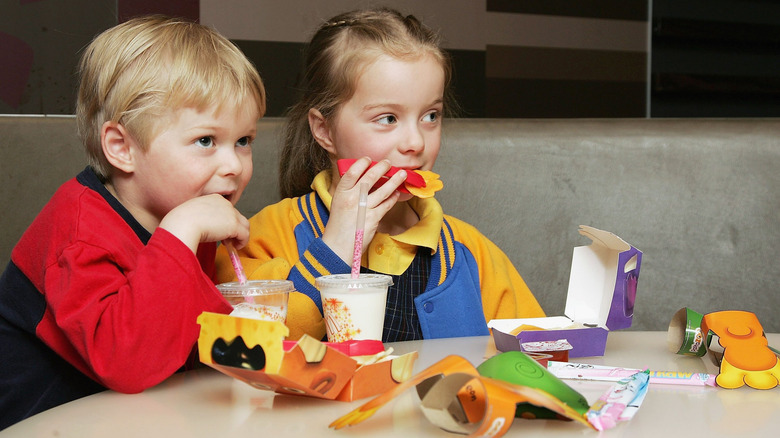
Quick: Who is the largest toy distributor in the world? If you guessed Mattel or Hasbro — or any other toy company or toy store — you're wrong. Nope, it's actually McDonald's, which reportedly doles out an estimated 1.5 billion toys every single year. And that's a result of the wild success of one of the biggest game changers in McDonald's history: the Happy Meal.
Who exactly invented the Happy Meal, though, is a matter of great debate. First, it should be acknowledged that one of McDonald's biggest rivals at the time, Burger Chef, introduced its own kids meal called the Fun Meal in 1973, some six years before the Happy Meal debuted. You might think that would render the argument over who invented the Happy Meal moot, but au contraire. Yolanda Fernández created a prototype for the Happy Meal at her franchise in Guatemala in the mid-'70s, and presented it to the rest of the McDonald's world at a franchise convention in 1977. She was later acknowledged by McDonald's for helping to create the Happy Meal.
Still, both Dick Brams and Bob Bernstein also claim credit for creating the Happy Meal. Brams, known as "the father of the Happy Meal," was a McDonald's regional marketing guy who worked with Bernstein (an ad executive) to devise the Happy Meal in 1977. Bernstein, however, claims that he was already working on the Happy Meal concept before Brams approached him. And you thought only kids fought over Happy Meal toys!
1983: Chicken McNuggets are introduced
Solusss/Shutterstock
Ever go into a McDonald's because you just had to satisfy that craving for a juicy batch of onion nuggets? Obviously not. But that's the alternate reality that some other, sadder you is experiencing in the McDonald's Multiverse. Once upon a time it was Onion Nuggets — not Chicken McNuggets — that McDonald's was aiming to bring to the menu.
The year was 1979. McDonald's executive chef at the time was René Arend, and he had an idea to cook up some onion nuggets. It makes some sense given the popularity of Burger King onion rings. But then McDonald's Chairman Fred Turner made a game-changing suggestion: Ditch the onions and use chicken instead. Winner winner, etc.!
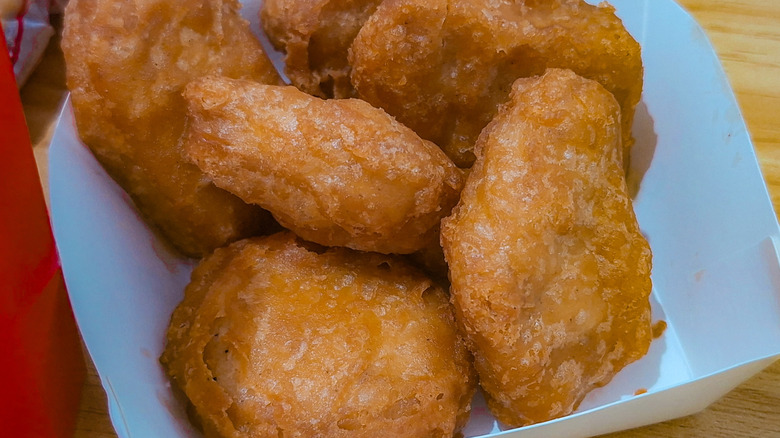
Four years later, the Chicken McNugget made its debut on McDonald's menus across the United States. In 1984, McDonald's started rolling out McNuggets worldwide, and from there the snackable chunks became a cultural touchstone. Of course, there have been some bumps in the road, such as the viral pink slime hoax in 2014 that had some customers believing McNuggets were actually the chicken equivalent of Soylent Green. But even that couldn't dent the popularity of Chicken McNuggets, and in 2025, McDonald's revealed that it sells 700 million pounds of Chicken McNuggets every single year. In your face, onions!
1990: The Health Food Craze Changes Everything
Junce/Getty Images
To hear the elders tell it, McDonald's food used to taste better back in the day than it does now. But is that perception just pure nostalgia? Not necessarily. It turns out there's something to it — and that something has to do with how the food is prepared.
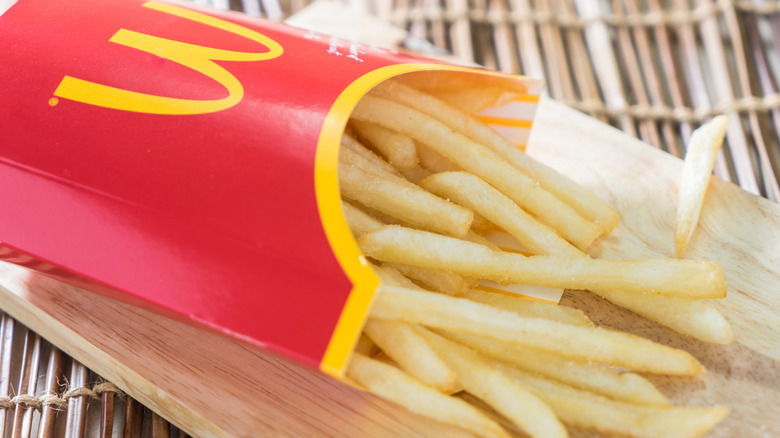
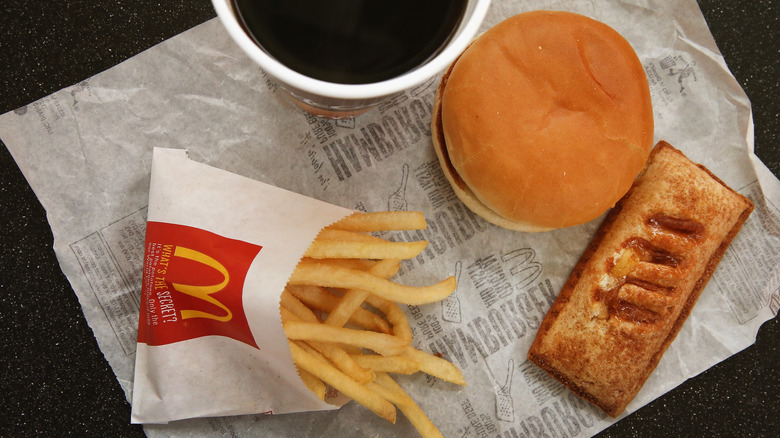
In the late 1980s, a low-fat health craze swept the nation, leading to new guidelines for how food should be prepared. Fast food restaurants were caught in the crosshairs, including industry leader McDonald's, which was the target of anti-fat food activists. So in response, McDonald's began making significant changes to how some of its most popular menu items were made. In 1990, the company stopped cooking it's french fries in beef tallow and switched instead to vegetable oil. Two years later, McDonald's began baking its signature apple pie dessert rather than frying it.
Those changes, along with other tweaks to McDonald's menu items, fundamentally altered how a McDonald's meal tastes. But things could change again: Beef tallow has been making a comeback in 2026 as people re-evaluate what makes food healthy. And McDonald's even brought back the fried apple pie in June 2026 for a limited time. So if you ever wondered what McDonald's used to taste like, now's your chance to take a bite out of the past.
2002: The Value Menu is added
Scott Olson/Getty Images
One of the biggest selling points for fast food joints, including McDonald's, has always been the low price. Getting a whole meal for a fraction of the cost of a fancier restaurant is a core part of the value. But with inflation and rising prices, how does a chain like McDonald's continue to provide value?
By introducing a value menu, of course! In 2002, McDonald's did just that when it debuted the Dollar Menu, where patrons could get staple McDonald's items for just a buck apiece. Over time, alas, even the Dollar Menu became a victim of the changing times. In 2017, it was changed to the $1 $2 $3 Menu, with a tiered pricing structure for different menu options. Then in 2019, it experimented with making the one dollar options available as add-ons if you bought something more expensive first.
By 2026, inflation reached the point where the McValue menu featured $3 and $4 price points, with the old buck a burger concept having gone the way of the Edsel. Even with limited-time discounts dropping some options under $3, the price hike was enough to get fans up in arms. Whether you love it or feel it stretches the definition of "value," though, the reaction proves that the McDonald's value menu remains a key component of the chain's identity.
2026: McDonald's embraces AI
irdill/Shutterstock
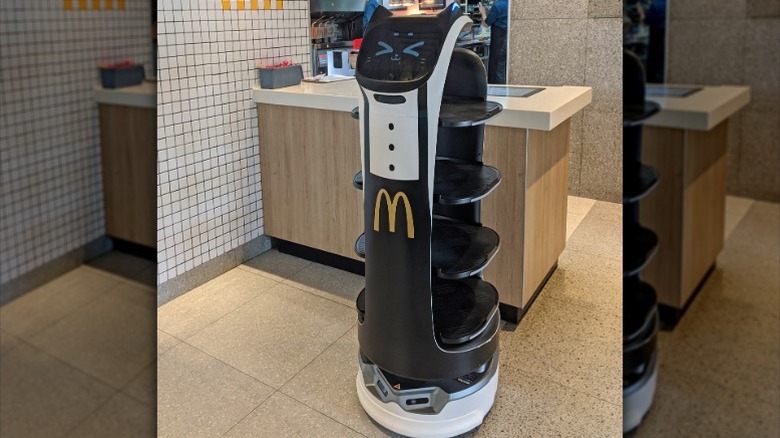
More than 85 years after McDonald's first opened its doors and began pioneering fast food as we know it, the company is still striving to be at the cutting edge. And in 2026, that means embracing the most cutting edge — and controversial — technology around: artificial intelligence.
In the fall of 2025, McDonald's detailed its agenda for modernizing and updating its massive fleet of restaurants with brand new upgrades, including AI. Among the uses for AI include an automated scale to make sure you weren't shorted on your order and an AI interface to completely automate the drive-thru experience. That latter innovation began being test-marketed in five McDonald's locations in June 2026, in preparation for a broader scale rollout to come at an indeterminate future date.
Those are just some of the big changes coming to McDonald's soon. Of course, we'll have to see how they pan out. For every Big Mac or Ronald McDonald that changes the course of fast food history, there's also a failed idea like the meatless pineapple Hula Burger that was a colossal bust in 1962. Whether or not AI ends up being the game-changer it seems like is something we'll have to revisit when we do our updated list in the year 2110. So stay tuned!

 English
 Arabic
 French
 Spanish
 Deutsch
 Turkish
 Dutch
Dutch
 Italiano
 Russian
 Romaian
 Portuguese (Brazil)
 Greek
Greek