


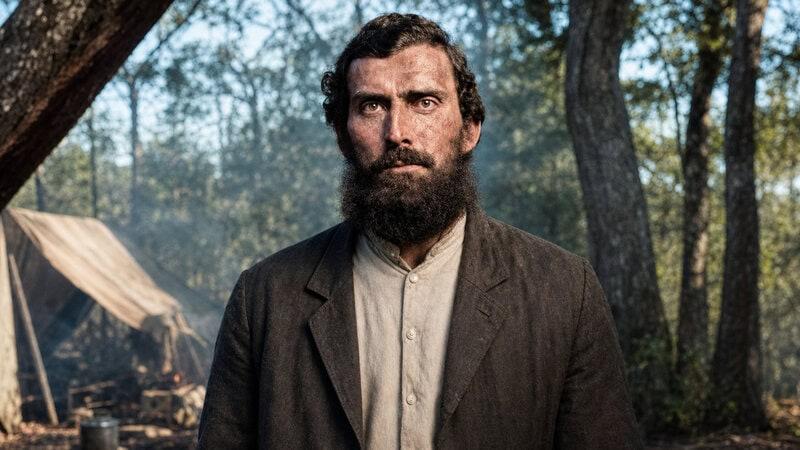

Deep in the pine woods of southern Mississippi, in the sweltering summer of 1863, a group of ragged men — Confederate deserters, subsistence farmers, and escaped enslaved people — held a stretch of swamp country against the full authority of the Confederate States of America. They had no plantation houses, no cavalry, and no illusions about glory. What they had was a leader named Newton Knight, a dirt-poor farmer and army medic who had looked hard at who was dying in this war and who was profiting from it, and had made a choice that would brand him a traitor, an outlaw, and, generations later, a legend.
Who Was Newton Knight? The Man Before the Myth
To understand what happened in Jones County, Mississippi, you first have to understand what Jones County was — and what it wasn’t. It was not the Mississippi of grand plantation houses and fields white with cotton stretching to the horizon. It was the piney woods: a landscape of scrub forest, red clay soil, and subsistence farms worked by families who owned few or no enslaved people and had built their lives around hogs, corn, and whatever the thin earth would give them. The men of this region were not wealthy enough to have a stake in the plantation economy that the Confederacy was created to protect. Many of them had voted against secession in 1861.
Newton Knight was one of these men. Conscripted into the Confederate Army, he served as a field medic beginning in 1863, close enough to the carnage to witness exactly what ordinary Southern men were being fed into — and for whose benefit. What he saw did not inspire patriotic fervor. It crystallized a suspicion that had been hardening across the South’s poorer upland regions: that this was a rich man’s war being fought with poor men’s blood.
The policy that transformed that suspicion into outright conviction was the Confederate “Twenty Negro Law,” which exempted one white man from military service for every twenty enslaved people a family owned. In a single stroke of legislation, the Confederate government confirmed what men like Knight already sensed — that the planter class had written the rules of sacrifice to protect itself. A man who owned twenty enslaved people could stay home and tend his wealth. A man who owned none could go and die at Vicksburg. Historians have described Knight as stubborn and principled, possessed of a moral certainty that made accommodation feel like self-betrayal. These were not comfortable qualities in a man who had decided he was on the wrong side of a war.
Desertion, the Swamp, and the Birth of a Rebellion

Knight deserted the Confederate Army and came home to Jones County, where he discovered he was far from alone. Hundreds of men across the region had made the same calculation and were hiding in dense swamps and forests to avoid the Confederate conscription officers hunting them. What Knight did next is what separates his story from simple draft-dodging: he organized these scattered, frightened men into a disciplined guerrilla militia.
The company that coalesced around Knight raided Confederate supply lines, ambushed tax collectors, and fought back against the impressment gangs — Confederate details sent into the countryside to strip farms of food, livestock, and anything else that might feed the war effort. For the families left behind by conscripted men, these gangs were a catastrophe, arriving to take the last hog and the last bushel of corn while children went hungry. Knight’s militia stood between those families and the gangs, and in doing so built the kind of loyalty that cannot be manufactured by speeches or flags.
The rebellion’s most radical dimension was its composition. Knight’s band included enslaved people who had escaped from local plantations, making this an interracial resistance movement of a kind that would have been shocking even in the Union states, let alone deep inside the Confederacy. The Free State of Jones, as it came to be known, was not a ragtag collection of stragglers but a functioning community of the dispossessed — with supply networks, safe houses, and the active support of a significant portion of the local civilian population. Smithsonian Magazine’s account of the revolt captures how genuinely organized and sustained this resistance became.
Jones County, Mississippi: Why This Place, Why This Moment

Jones County’s geography made it a natural fortress for rebels. The wiregrass and pine hill country of southern Mississippi was remote, thinly settled, and threaded with swamps that cavalry horses could not easily penetrate. Confederate authorities who dispatched units into the region to suppress the uprising found themselves fighting terrain as much as men. Repeated expeditions failed, and each failure hardened the resolve of Knight’s network while further eroding Confederate authority in the area.
Timing also mattered enormously. By 1863 and into 1864, the Confederacy was fracturing under pressures that went far beyond Jones County. Vicksburg had fallen in July 1863, splitting the Confederacy in two and shattering the myth of Confederate invincibility. The conscription net was drawing tighter, pulling in men who had hoped to wait out the conflict. Inflation was destroying what little purchasing power ordinary Southern families had. The promise of Confederate glory was curdling, across the South, into starvation and grief. Jones County was the most dramatic and organized expression of a discontent that flickered in Appalachian hollows and upland counties from North Carolina to Texas — but it burned brighter and longer there than almost anywhere else.
Anti-Confederate resistance was never limited to the North. Mississippi’s own historical record documents how Knight’s movement fit into a broader pattern of Southern Unionist resistance that Lost Cause mythology would later work hard to erase from public memory.
After the War: Reconstruction and a Life Lived Outside the Lines

When the Confederacy surrendered, Newton Knight did not slip back into obscurity. He swore loyalty to the Union and was called into service by the United States Army as a commissioner charged with distributing thousands of pounds of food to the desperately poor people of his region — a role that made him a local power broker at the very moment when the South’s social order was being dismantled and rebuilt. He threw himself into Reconstruction politics with the same stubbornness he had brought to guerrilla warfare, working to protect the rights of Black freedpeople in Jones County at a time when doing so was physically dangerous and socially ruinous for a white Southerner in Mississippi.
His personal choices ensured that white Southern society would never forgive him even if it could have forgiven his wartime treason. Knight formed a lifelong partnership with Rachel, an enslaved woman who had been essential to the wartime resistance network — carrying messages, providing intelligence, and sustaining the underground that kept the militia alive. Their relationship, and the children they had together, placed Knight permanently beyond the pale of respectable white Southern memory. He was too radical, too complicated, too interracial to be folded into any comfortable narrative about the war’s meaning.
By the end of Reconstruction, as Redeemer Democrats retook Southern state governments and the brief, extraordinary experiment in biracial democracy collapsed, Knight had been effectively written out of the history that white Mississippi chose to remember. He was not forgotten by the descendants of those he had sheltered and fought alongside — but for the broader culture, the Free State of Jones became a footnote, then a rumor, then almost nothing at all.
From Forgotten History to Hollywood: Victoria Bynum and the 2016 Film
The recovery of Newton Knight’s story owes an enormous debt to historian Victoria Bynum, whose meticulous archival research reconstructed the history of the Jones County deserters and their interracial rebellion from court records, military documents, family papers, and oral histories that had survived in scattered fragments. Bynum’s book The Free State of Jones assembled these pieces into a coherent and richly detailed account of a community that had been suppressed, mythologized, and largely lost to mainstream historical consciousness. The National Endowment for the Humanities traced the connection between Bynum’s scholarship and the film it eventually inspired, underscoring how directly serious historical research shaped what reached the screen.
That film — the 2016 historical drama Free State of Jones, directed by Gary Ross and starring Matthew McConaughey as Newton Knight — brought this buried chapter of Civil War history to a mass audience. McConaughey’s Knight is lean and driven, a man propelled by class fury and personal loyalty, and the film makes no apology for centering a story about poor white Southern resistance and interracial solidarity at the heart of the Confederacy. For many viewers, it was the first time they had encountered the idea that the Confederacy faced organized armed rebellion from within its own borders.
Historians and critics assessed it as a serious, if necessarily compressed, treatment of its subject. Critical response collected on Rotten Tomatoes reflected a divide between those who praised its ambition and historical seriousness and those who found its length and density demanding — which is perhaps an occupational hazard of trying to compress a decade of extraordinary history into a single film. Discussion among Civil War enthusiasts, including threads such as this one on Reddit’s Civil War community, shows how deeply the film’s release renewed popular interest in separating the documented history from Hollywood’s dramatizations.
Historical Accuracy: Where the Film Holds and Where It Simplifies

The question of the film’s historical accuracy is one its release made genuinely urgent, and it deserves a direct answer. The core facts hold up: Knight’s desertion, the formation of a guerrilla militia composed of deserters and escaped enslaved people, the sustained armed resistance against Confederate authority, and Knight’s postwar role as a Union commissioner and Reconstruction activist are all solidly grounded in the historical record. The film’s page on IMDB reflects the ongoing conversation about how faithfully the production handled this material.
The dramatic license lies mainly in the compression of timelines, the sharpening of certain characters into composites, and the simplifications that narrative film inevitably demands. What no feature film can fully capture is the sheer complexity of the real Newton Knight — a man who was neither a simple hero on a white horse nor a convenient symbol of Southern redemption. He was a product of class resentment, personal loyalty, and a moral code forged in poverty and war that placed him permanently outside the society he was born into. He did not fight for an abstraction. He fought because the war had come for his neighbors, stripped their farms bare, and demanded that poor men die so that rich men’s enslaved property could remain enslaved. That the logic of that resistance pushed him toward an interracial alliance and a lifelong commitment to Black freedom is one of the Civil War era’s most remarkable and underappreciated arcs.
Why the Free State of Jones Still Matters
The Free State of Jones is a reminder that the Confederacy was never a monolithic white South marching in lockstep toward a shared cause. Dissent, resistance, and outright rebellion existed within its borders from the beginning — in the hollows of Appalachia, in the hill counties of Alabama and Mississippi, in the pine woods where Newton Knight raised whatever flag he had and dared the Confederate cavalry to come find him.
Recovering these stories, as Victoria Bynum did with painstaking archival care, does not simply add a footnote to Civil War history. It changes the shape of the war itself. It forces a reckoning with the class divisions, racial alliances, and internal contradictions that the Lost Cause mythology spent generations smoothing over. And it reminds us that history’s most surprising acts of courage tend to come not from expected places, but from ordinary people who have simply been pushed past the point where they can pretend any longer that the cause is worth the cost.

 English
 Arabic
 Spanish
 Portuguese
 Deutsch
 Turkish
 Dutch
Dutch
 Italiano
 Russian
 Romaian
 Portuguese (Brazil)
 Greek
Greek