


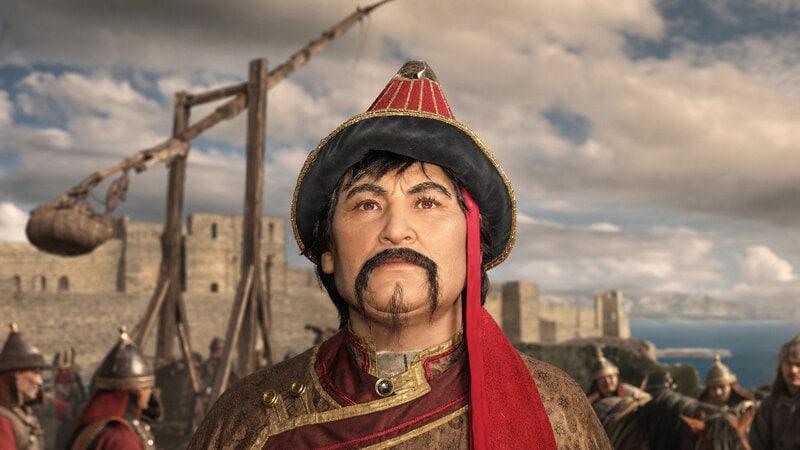

In the autumn of 1346, soldiers of the Golden Horde were dying outside the walls of Caffa — a Genoese trading colony on the Crimean peninsula — and their commander made a decision that would reshape the world. He ordered his catapults loaded not with stone, but with corpses: the bodies of men felled by a mysterious illness that blackened the skin and killed within days. The diseased dead arced over the battlements. The Genoese merchants who fled by ship carried something invisible with them into the Mediterranean. Within four years, somewhere between a third and a half of Europe’s population was gone. That is the shadow the Mongol Empire cast longest — and it is the shadow that Europa Universalis IV almost entirely forgets to render.
What EU4 Actually Builds: The Formable Empire Explained
The Mongol Empire does not exist at the start of a standard EU4 campaign. It is a ghost — a formable nation, a political entity you must will back into existence from the rubble of history. According to the EU4 wiki’s entry on the Mongol Empire, the tag sits dormant in Asia, waiting to be reconstituted by eligible successor states rather than simply handed to the player at the outset. That design choice is, quietly, a historically honest one: the real Mongol Empire ceased to function as a unified political entity after 1260 and never recovered a single center of gravity. There is nothing to inherit because there is no unbroken line of succession to follow.
Only specific nations carry the legitimacy to attempt the reformation. The Golden Horde and the Ilkhanate are among those eligible — a deliberate nod to the real fragmentation of Genghis Khan’s legacy after 1260, when the empire splintered into competing khanates that warred as bitterly with each other as they ever had with outside enemies. Rebuilding requires patience, diplomatic cunning, and a willingness to fight on multiple fronts simultaneously, which is roughly what reunification would have demanded in reality.
Within the EU4 community, one particular starting nation has earned a devoted following. A Reddit discussion on the best nation to form the Mongol Empire identifies Oirat as widely considered the strongest practical launchpad — and that choice carries genuine historical texture. The Oirats were a confederation of western Mongol tribes who, in the fifteenth century, came startlingly close to reunifying the fragmented steppe world under the warlord Esen Taishi, who captured the Chinese Zhengtong Emperor at the Battle of Tumu in 1449. They were the last serious contenders for a Mongol revival before the rise of the Manchu Qing, which makes them a narratively resonant vessel for a comeback story.
For players who want an additional layer of authenticity, the Extended Timeline mod deepens the experience. The Extended Timeline wiki describes the Mongol Empire formable as a Tengri-Vajrayana steppe horde nation representing Mongolia at its historical peak. That hyphenated religious tag is not decorative — it captures a genuine and fascinating duality. Mongol rulers, particularly in the later empire, navigated simultaneously between the shamanic traditions of the steppe and the Tibetan Buddhist institutions that offered both spiritual authority and administrative reach across Central Asia. The game is, in this small detail, doing serious historical work.
How the Mongol Empire Actually Expanded — and Why It Was Never Simple

Genghis Khan unified warring Mongol and Turkic tribes by 1206, and what followed was one of history’s most consequential military revolutions. The Mongol army was built on radical mobility — cavalry that could cover distances sedentary armies could not imagine — combined with sophisticated feigned retreats designed to draw enemies into open terrain where Mongol archers could dismantle them at range. Terror was a deliberate policy instrument: cities that submitted were absorbed and often administered tolerantly; cities that resisted were methodically destroyed as object lessons for the next settlement down the road.
By 1279, at the empire’s greatest extent under Kublai Khan, its territory stretched from the Korean peninsula to the Danube — roughly 24 million square kilometers, the largest contiguous land empire in recorded history, governing a substantial fraction of the world’s population. But conquest was never just cavalry charges. The Mongols were systematic co-opters of conquered expertise. They absorbed Chinese siege engineers to crack fortified cities, Persian administrators to manage complex bureaucracies, and Silk Road merchants to keep a vast logistics network functioning. The empire was, among other things, a remarkably sophisticated long-distance communications system — and that capacity for rapid transmission across enormous distances would prove fateful in ways no one anticipated.
EU4’s horde mechanics — the raiding economy, the tribute relationships, the grinding tension between nomadic government and settled administration — reflect this underlying dilemma honestly. Conquering cities was the easy part. Figuring out what to do with them afterward, without dissolving the Mongol identity that had made conquest possible in the first place, was the existential crisis that consumed the empire from within. The game forces players to feel that tension in mechanical terms, which is precisely the point.
The Historical Accuracy EU4 Gets Surprisingly Right

The fragmentation model is perhaps EU4’s most historically faithful structural choice. Rather than presenting a unified Mongol Empire as a playable starting nation, the game forces players to engage with successor khanates — reflecting the real civil war that erupted after 1260, when Kublai Khan and his brother Ariq Böke fought a brutal contest for supremacy that permanently fractured Mongol unity. The empire never recovered a single political center after that rupture. EU4 internalizes this by making reunification a monumental project rather than a straightforward inheritance, which is exactly what it would have been.
The steppe horde government type also does real conceptual work. It loosely models the ulus system — the Mongol practice of distributing territorial appanages among royal family members — which is precisely why the empire was structurally prone to fragmentation. When a great khan died, his domain became contested inheritance among sons and grandsons, each with legitimate claims and loyal armies. EU4’s overextension penalties and administrative strain mechanics, frustrating as they are to manage, function as a plausible simulation of why an empire that reached from Korea to Hungary collapsed within 150 years of its greatest extent.
Religious flexibility is modeled thoughtfully too. The Golden Horde converted to Islam under Khan Öz Beg in the early fourteenth century; the Yuan dynasty under Kublai Khan patronized Tibetan Buddhism; earlier Mongol rulers had shown documented sympathy toward Nestorian Christianity and maintained relationships with various religious institutions across their territory. EU4’s religious tolerance mechanics, however imperfect at the level of granular detail, gesture at this pragmatism — rulers who understood that governing enormously diverse populations required a degree of theological flexibility that was genuinely unusual in the medieval world.
The Staggering Detail EU4 Leaves Out: The Mongols and the Black Death

Here is where the story turns dark in ways the game does not follow. Historians now broadly agree that the Mongol Empire’s trade and military networks functioned as the primary corridor along which Yersinia pestis — the bacterium responsible for bubonic plague — traveled from its reservoir populations in Central Asian rodent communities to the rest of the connected world. The Pax Mongolica, celebrated as an era of unprecedented safe long-distance trade across Eurasia, was simultaneously the delivery mechanism for the deadliest pandemic in recorded human history.
The Caffa siege of 1346 is the most viscerally dramatic moment in this transmission story — the use of plague-ridden corpses as projectiles stands as one of history’s earliest documented instances of biological warfare — but the disease had already been moving westward along Mongol infrastructure for years before that siege. The empire’s genius for rapid movement and communication across vast distances was, in the most terrible accidental sense, perfectly engineered to carry a pathogen wherever its roads and caravans reached.
The Black Death killed an estimated thirty to sixty percent of Europe’s population between 1347 and 1351. Comparable or worse mortality struck populations across the Middle East and parts of Asia, though demographic records for those regions are patchier and estimates remain contested among historians. The demographic collapse that followed directly contributed to labor shortages that shifted power relationships between peasants and landowners, to institutional crises that weakened feudal structures, and to theological upheavals that reshaped medieval civilization in ways still visible centuries later. The Mongol Empire did not intend any of this — but it carried the plague the way a river carries sediment, invisibly and at scale, along infrastructure built for entirely different purposes.
EU4 does model plague events in a limited way. Disaster mechanics and random events can represent epidemic outbreaks, and they are genuinely damaging for the affected player. But there is no systemic mechanic in which expanding Mongol trade network density meaningfully raises pandemic risk for neighboring and distant civilizations — no feedback loop where the empire’s greatest connective achievement becomes a vector for civilizational catastrophe across regions the player never directly touched. The butterfly-effect consequence that makes the Mongol Empire arguably the most consequential in terms of unintended global harm is simply not represented on the board.
Why the Omission Matters — for Players and History Readers Alike

For EU4 players, the missing mechanic creates a subtle but real distortion of what the Mongol experience actually meant. Rebuilding the empire feels like a triumphant optimization puzzle — a satisfying campaign of expansion, diplomacy, and administrative management that rewards skillful play with a powerful new tag and an imposing map. What it does not feel like is a double-edged achievement with consequences radiating outward into civilizations the player will never directly govern. The glory is there. The shadow is not.
For readers approaching this as a history question, the plague connection reframes the entire Mongol legacy. The same empire that enabled cross-continental intellectual exchange — Persian astronomers in dialogue with Chinese mathematicians, European merchants reaching China overland for the first time — was also the structural precondition for the worst demographic catastrophe in pre-modern recorded history. These facts do not cancel each other out. They belong together, and holding them together without resolving the tension between them is what genuine historical understanding looks like.
Game designers face a real and sympathetic design dilemma here. Punishing a player’s hard-won success with an unstoppable continent-wide plague event would feel arbitrary and punitive in ways that could sour an otherwise rewarding campaign. The deeper challenge is narrative as much as technical: games are built around meaningful agency, and systemic outcomes that bypass player agency entirely are genuinely difficult to integrate without making it feel as though the game is simply happening to the player. That structural tension — between honoring historical consequence and preserving the sense that player decisions matter — is not unique to Paradox, but it is especially visible here, where the historical consequence in question reshaped the known world.
The Verdict: Remarkable Fidelity, One Civilizational Blind Spot
EU4’s Mongol Empire formable is, taken on its own terms, a genuinely thoughtful piece of historical game design. The fragmented starting position, the carefully chosen pool of eligible successor nations, the religious complexity encoded in the Extended Timeline’s Tengri-Vajrayana tag, and the mechanical tension between steppe identity and settled empire — all of these reflect real historical dynamics in ways that reward players who go looking for the history behind the mechanics. The Oirat path popular in the community is historically resonant in exactly the right way: the Oirats represent the last ember of serious Mongol reunification ambition, making them the most fitting narrative vessel for a comeback story that history itself ultimately did not allow to succeed.
But any player who forms the Mongol Empire and then picks up a serious history of the plague years will feel the uncanny absence — the sense that the game handed them the glory of Genghis Khan’s legacy without the shadow that followed his successors’ roads westward. The trade network the game rightly celebrates as the empire’s connective achievement was also the route along which Yersinia pestis traveled, unseen, into Europe and the Middle East, altering the trajectory of civilizations that the Mongol Empire never formally conquered and may never have intended to harm.
Play the game. Revel in the strategic depth — it genuinely earns the praise. Then read about the siege of Caffa, and about the ships that left that harbor carrying something the Genoese merchants did not know they were carrying. The full story of the Mongol Empire is not only how it expanded across the known world. It is what it carried with it, invisibly, down every road it built.

 English
 Arabic
 French
 Spanish
 Portuguese
 Deutsch
 Dutch
Dutch
 Italiano
 Russian
 Romaian
 Portuguese (Brazil)
 Greek
Greek