


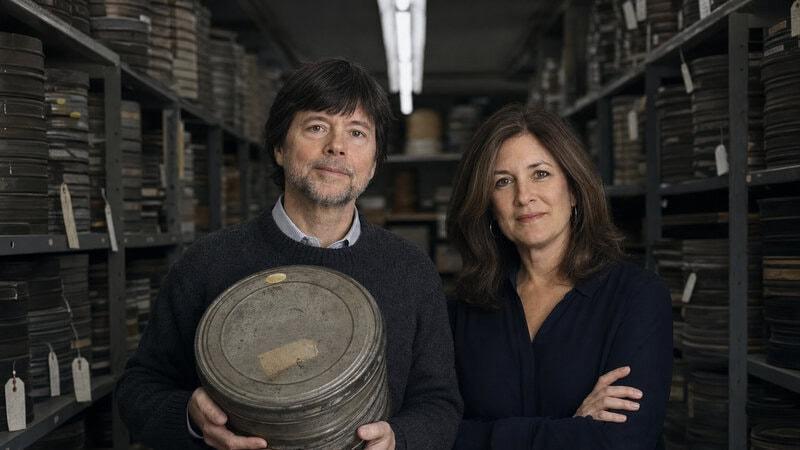

Somewhere in a government archive, a metal canister of 16mm film sat untouched for decades — logged, stamped, and effectively buried. The images inside showed things the Pentagon had decided the American public did not need to see. Then Ken Burns and Lynn Novick came looking for it.
What the Burns Vietnam Documentary Actually Is
The Ken Burns and Lynn Novick Vietnam War documentary is a ten-episode, eighteen-hour series that aired on PBS in September 2017. Burns and Novick spent approximately ten years making it. The production drew on nearly eighty firsthand witnesses representing every major perspective in the conflict — American veterans, antiwar protesters, North Vietnamese Army soldiers, former Viet Cong fighters, South Vietnamese civilians and military personnel, and diplomats from multiple governments. It incorporated news footage, military after-action film, internal Pentagon briefing reels, South Vietnamese government propaganda films, and archival material from Vietnamese government vaults in Hanoi that Western filmmakers had rarely been permitted to access.
That combination — the breadth of testimony, the depth of the archival excavation, and the deliberate inclusion of Vietnamese voices that American accounts had historically ignored — is what separates this series from every Vietnam documentary that preceded it. Understanding why requires understanding what previous productions were working with, and what they weren’t.
A Decade of Research Before a Frame Was Cut

Burns and Novick began not with footage but with a structural question: whose account of the Vietnam War had been systematically excluded from the version America taught in schools, screened in theaters, and enshrined in memorials? The answer, they concluded early in the research process, was nearly everyone outside the American military experience. North Vietnamese soldiers, South Vietnamese civilians who lost everything in a war fought ostensibly on their behalf, former Viet Cong fighters whose motivations and losses had been treated as irrelevant or propagandistic in Western retellings — all of them were largely absent from the dominant American narrative.
Dismantling that absence became the production’s central structural commitment. Burns and Novick traveled to Vietnam repeatedly, negotiating access with a government that had its own fraught relationship with the war’s official memory. They recorded testimonies in Vietnamese and English across multiple trips, working through interpreters and local researchers to reach witnesses who had never spoken on camera for a Western production. The nearly eighty voices the series ultimately assembled were braided together across all ten episodes — not to manufacture false moral equivalence between combatants, but to insist on the straightforward proposition that the war happened to real human beings on every side of it, and that any account claiming to explain what occurred must account for all of them.
The archival work running beneath those testimonies was equally demanding. The production team sifted through hundreds of hours of material held in American military archives, the National Archives, and private collections — military after-action footage, internal briefing films, news reels that had never made broadcast, and South Vietnamese government films that documented the profound institutional fragility of America’s chosen ally in Saigon. Much of this material had not been suppressed through any single dramatic classification order. It had been quietly categorized under labels — “training material,” “operational records” — that kept it out of press pools and away from public view through simple bureaucratic inertia rather than formal secrecy.
The History of Official Image Control the Series Exposes

To understand why some of the footage in the series lands with the force it does, it helps to understand the sustained history of image management that preceded it. From the earliest years of American involvement in Vietnam, the Pentagon exercised careful control over what military cameramen filmed, how that film was logged, and which images reached journalists and television networks. The logic was partly strategic and partly political: footage of civilian casualties, destroyed villages, and the human cost of American firepower was understood to be damaging to public support for the war. So it was managed — sometimes through classification, sometimes through the simpler mechanism of never releasing it to press pools in the first place.
The documentary situates its archival discoveries within the broader record of official disclosure that had preceded the production. The Pentagon Papers, leaked by Daniel Ellsberg in 1971, had already revealed that multiple administrations systematically misled the public and Congress about the war’s trajectory and prospects. The Church Committee hearings of 1975 opened further windows into covert operations and intelligence failures. Decades of Freedom of Information Act litigation had pried additional records loose from agencies that had never volunteered them. Burns and Novick were not working in a vacuum — they were working at the end of a long chain of forced disclosure, and their contribution was to translate that documentary record into a sustained visual and testimonial narrative accessible to a general audience.
What the series draws from those archives reframes the conventional American account in a fundamental way. The standard post-war narrative has long rested on a particular explanation for defeat: a war that was militarily winnable but lost through political failure at home, a military effort betrayed by antiwar protests, media distortion, and a collapse of national will. The classified record assembled in the series presents a different picture — a war built on a foundation of deliberate official deception, in which the gap between what commanders told the public and what they wrote in internal assessments was large, sustained, and known to be both large and sustained by the people maintaining it.
What the Declassified Footage Actually Shows
Watching the series, the most viscerally affecting moments are often the quietest — not the combat sequences but the images that show what combat meant for the people not carrying weapons. Footage of South Vietnamese villages after American air operations. Film documenting the enormous refugee flows that the war’s conduct generated across the countryside. Aerial reconnaissance imagery showing the true scale of civilian displacement in the Mekong Delta. Military film of napalm strike aftermath, logged as training material precisely to keep it away from journalists embedded with combat units. Internal briefing footage in which senior officers privately acknowledged that body count statistics — the war’s primary chosen metric of progress — were being systematically inflated at every level of the reporting chain.
The North Vietnamese archival material Burns and Novick brought back from Hanoi carries a different kind of weight. Here is the war as experienced inside a society that the United States spent years attempting to bomb into political submission — not as abstraction, but as daily life, as ordinary people navigating extraordinary circumstances, as a population that absorbed devastation on a scale that American audiences had almost never been invited to contemplate from the receiving end. Placed alongside the American military film, this footage produces a kind of stereo reality: the same war, experienced simultaneously from positions so far apart that they seem to inhabit different worlds.
The series does not soften atrocity on any side. The context surrounding the My Lai massacre — the killing of hundreds of unarmed South Vietnamese civilians by U.S. Army soldiers in March 1968 — is handled with the gravity it requires, and the documentary makes clear through archival and testimonial evidence that My Lai was not an isolated breakdown but a symptom of operational conditions and command cultures that senior officers had allowed to develop and that internal reports had documented. Prisoner treatment, civilian targeting, and the conduct of American, North Vietnamese, and Viet Cong forces are all addressed without the morally comfortable vagueness that less disciplined productions have settled for.
Why PBS, and Why the Broadcast Mattered

A project of this political sensitivity landing at PBS was not accidental. Public broadcasting’s editorial independence — its structural separation from the advertiser pressure that governs decisions at commercial networks — made it the only realistic home for a series that was always going to disturb someone with institutional authority to object. Burns had established at PBS what a long-form historical documentary could accomplish: the Civil War series, Jazz, Baseball. That relationship gave the Vietnam project a platform capable of absorbing political friction without retreating from it.
There was friction. Before the September 2017 premiere, Vietnam veterans’ organizations across the political spectrum previewed the series and raised objections — some arguing that Burns had dishonored the sacrifice of those who served by emphasizing official failures, others arguing that the documentary had not gone far enough in documenting the war’s crimes. The Vietnam Veterans of America published a detailed critical review that engaged seriously with the series’ editorial choices. The disagreement was, in a sense, the argument the series was built to provoke: there is no politically comfortable version of this history, and any account honest enough to be worth a viewer’s eighteen hours was going to disturb people who had organized their understanding of the war around a tidier story.
The broadcast itself was an event with genuine civic dimensions. For the first time, American households received this volume of declassified Vietnam imagery in a single sustained, contextualized narrative — not as a news segment, not as a theatrical release requiring a ticket, but as something available, serialized, and dense enough to actually alter how a viewer understood the war. You can watch the complete series and return to individual episodes, which matters enormously for material this complex and this painful.
The Witnesses: Eighty Voices, One Catastrophe

If the declassified footage is the series’ most historically explosive element, the nearly eighty witness testimonies are its emotional and intellectual spine. Burns and Novick built deliberate symmetry into the selection: for every American account of a specific engagement or policy decision, a Vietnamese voice — from the North or the South — was sought to answer it. A former NVA soldier describes a firefight. A U.S. infantryman describes the same engagement from the other side of the tree line. Both accounts appear in the same episode, sometimes only minutes apart. The effect is not moral equivalence — it is dimensionality, the sudden recognition that the war you thought you understood was simultaneously a completely different war happening in the same physical space, to people whose humanity the official American account had largely declined to register.
Some of the most powerful testimony in the series comes from witnesses whose names were almost entirely unknown before the cameras found them. A North Vietnamese woman who describes, as a child, listening to B-52 strikes shake the ground beneath Hanoi and learning to calculate which direction to run before the next wave. An American military advisor who concluded as early as 1963 that the fundamental premises of U.S. policy in Vietnam were false — and who, like so many others in comparable positions, said nothing publicly and watched the escalation continue. These are not footnotes to the history. In the series’ consistent argument, they are the history.
The chorus of eighty voices is itself the documentary’s most radical structural claim. It insists that the Vietnam War is not a closed chapter amenable to a single national account, but a living wound whose full reckoning requires sitting with the discomfort of hearing from everyone who bled — in every language, under every flag, on every side of every wire.
Critical Reception and Lasting Significance
The series drew wide critical recognition upon its release and has retained its standing as the most comprehensive Vietnam War documentary produced for a general audience. Critical aggregators reflected near-unanimous praise for its scope, its handling of testimonial evidence, and the integration of archival material that had not previously appeared in a public documentary context. The more substantive debate, ongoing since the premiere, has centered on specific editorial choices: whether Burns and Novick achieved genuine balance or imposed a particular interpretive frame; whether the decision to foreground American official deception adequately contextualized the war’s geopolitical stakes; and whether the Vietnamese perspectives assembled, while unprecedented in scope for a Western production, were themselves fully representative of the range of Vietnamese experience.
Those debates are worth having. They are, in fact, precisely the debates a documentary of this ambition should generate. What is not seriously contested is the series’ archival contribution: it placed declassified visual and documentary evidence in front of a mass audience in a form rigorous enough to change how that audience understands what the official record conceals, and patient enough to let the evidence speak at the length it requires.
Why It Remains Essential Viewing
More than seven years after its premiere, the Burns and Novick Vietnam War series holds a rare place in documentary history — not only as an archival achievement but as a model for how democratic societies might honestly reckon with catastrophic official failures. In an era defined by contested historical memory, institutional distrust, and increasingly sophisticated mechanisms of information control, a documentary built explicitly on declassified evidence and multi-sided testimony carries a civic argument inside its aesthetic one: this is what serious public accountability looks like, and it took this long to arrive.
The mechanics of narrative control that shaped public understanding of Vietnam have not disappeared. The impulse to manage battlefield imagery, to classify footage that complicates official accounts, to allow inconvenient records to accumulate dust in archive categories where no one will request them — that impulse is structural and persistent, not historical and resolved. What Burns and Novick demonstrated is that the archive eventually yields to patience and to the rigorous application of disclosure law, and that the truth captured on film — by American military cameramen, by journalists, by enemy cameras on the other side of the wire — is more durable than the classifications stamped on the canisters containing it.
All ten episodes remain available through PBS and major streaming platforms. For any reader who wants to understand the gap between what the American government told the public about Vietnam and what the declassified record actually shows, this is the place to start — and, in all likelihood, to return to more than once.

 English
 Arabic
 French
 Spanish
 Portuguese
 Deutsch
 Dutch
Dutch
 Italiano
 Russian
 Romaian
 Portuguese (Brazil)
 Greek
Greek