


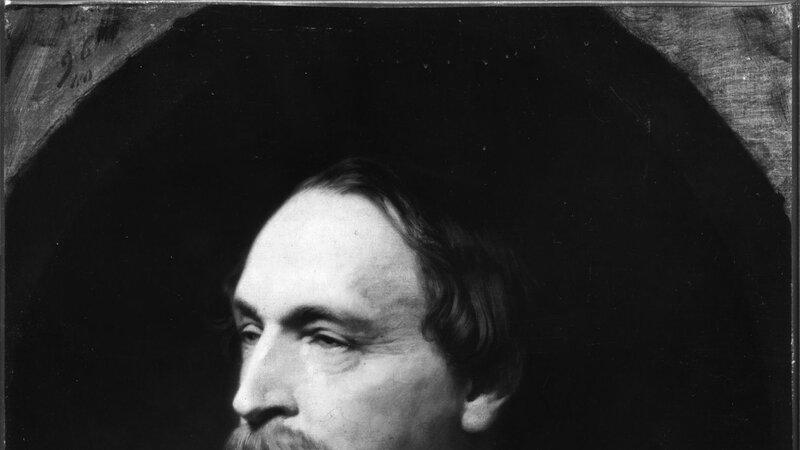

Before Paris woke on the morning of 2 December 1851, the soldiers were already in position. While the city slept, posters had been plastered across walls dissolving the National Assembly, and republican deputies were being dragged from their beds by men acting on orders from the one person who had been elected to protect the republic — its own president.
The Night That Changed France Forever

The date was not chosen carelessly. The second of December was the anniversary of Austerlitz, Napoleon Bonaparte’s most dazzling battlefield victory, and also the anniversary of the first Napoleon’s coronation as emperor in 1804. Every Frenchman who could read a calendar understood the signal. Charles-Louis-Napoleon, sitting president of the Second Republic, was not simply seizing power — he was staging a myth, and he had chosen opening night with a showman’s precision.
By morning, the coup was effectively complete. The man that voters had trusted with the presidency had used that democratic legitimacy as a ladder — and then kicked it away. It was audacious, it was ruthless, and it was, in its bones, a blueprint that ambitious leaders would reach for again and again across the next two centuries.
The man at the centre of it all had been born on the night of 20 to 21 April 1808, in Paris, into a dynasty already beginning to fracture. Given the names Charles-Louis-Napoleon at birth, he came into the world as the nephew of an emperor at the height of his powers. He would spend the next four decades learning, through exile and failure and prison, how to claw that power back. What he invented in the process was something genuinely new: the modern populist playbook, a set of tactics so effective that politicians still run them today, usually without acknowledging where they came from.
A Name as a Political Weapon

To understand Napoleon III, emperor of France, you first have to understand what he was not. He was not a general. He had no Austerlitz, no Egypt, no Marengo. His uncle, Napoleon I, had seized Europe’s imagination through battlefield genius of a kind that comes along perhaps once a century. Charles-Louis-Napoleon had no such arsenal. What he had instead was a surname, and he understood — decades before the age of political consultants — that a name can be made into a brand powerful enough to substitute for almost any other qualification.
After Waterloo, the Bonaparte family scattered into exile. Charles-Louis-Napoleon grew up on the margins of European aristocracy, stateless and largely powerless, but he was paying close attention. He watched as the legend of Napoleon I, shorn of its uglier details, curdled into nostalgia for the generation that had lived through empire. To millions of French people — particularly peasants and provincial workers with no particular affection for the Paris establishment — empire meant order, glory, and France at the centre of the world. Someone who could credibly embody that memory was not selling a policy platform. He was selling a feeling.
His early attempts to convert that feeling into power were farcical by most measures. A coup attempt at Strasbourg in 1836 fizzled ingloriously. A second attempt at Boulogne in 1840 ended with him arrested, tried, and sentenced to life imprisonment in the fortress of Ham. But here is where Charles-Louis-Napoleon demonstrated a gift that pure military men rarely possess: he understood that failure, properly narrated, can become mythology. From his cell, he wrote political pamphlets — most notably The Extinction of Pauperism in 1844, a serious if vague engagement with the condition of France’s working poor — and cultivated a martyrdom narrative: the rightful heir, imprisoned by a nervous establishment. Each arrest was, functionally, free publicity. By the time he escaped from Ham in 1846, disguised as a labourer named Badinguet, the world already called him Napoleon III, as if the throne were simply waiting to be reclaimed. The name itself was the argument, and he had been making it for years.
The First Democratic Emperor: Winning the Presidency of France

The revolution of 1848 cracked French politics open in ways that no established figure knew how to navigate. The July Monarchy of King Louis-Philippe collapsed, a republic was declared, and — for the first time in French history — a direct presidential election by universal male suffrage was held. The established politicians of Paris regarded Charles-Louis-Napoleon as a curiosity, possibly useful, certainly controllable. They were catastrophically wrong on the second count.
In December 1848, running as the ultimate outsider against a political class the country had just finished overthrowing, he won approximately 74 percent of the popular vote. His nearest rival, the republican general Louis-Eugène Cavaignac, received fewer than 20 percent. The margin was not a victory. It was a verdict. Charles-Louis-Napoleon had spoken over the heads of the Parisian elite directly to peasants and provincial workers, using cheap printed material and the sheer gravitational pull of the Bonaparte name, promising order after years of revolutionary exhaustion. It was the classic outsider-populist formula, and it worked with a completeness that left his opponents blinking.
As president of the Second Republic, he governed with a patience that belied his eventual ambitions. While the legislature fragmented into factional squabbling, he methodically built loyalty in the institutions that actually held power: the army, the Catholic Church, and the provincial administrations. He understood something his opponents did not — that democratic legitimacy, once earned through a vote, is a kind of currency, and it can be spent on things the voters never explicitly approved. The presidency was never the destination. It was the mechanism.
The Coup, the Plebiscite, and the Birth of the Second French Empire

The coup of 2 December 1851 was executed with the efficiency of a man who had been planning it for years — which he had. The National Assembly was dissolved by decree. Republican opponents, including several dozen deputies, were arrested before they could organise resistance. Troops controlled the key points of the capital. An estimated 200 to 400 civilians died in street fighting or summary executions during the days that followed — a fact that sat uncomfortably alongside the regime’s subsequent self-presentation as a popular movement.
And then, almost immediately, came the move that distinguished Napoleon III from a common military strongman: he called a plebiscite. Within weeks of seizing power by force, he asked the French people to ratify what he had done — and approximately 7.5 million voted yes, against roughly 640,000 no votes. The numbers, whatever their precise reliability given the political climate and reported administrative pressure on voters, conveyed the essential point. He was manufacturing democratic consent after the fact, wrapping an authoritarian act in the forms and language of popular sovereignty. The coup had happened. The plebiscite made it legitimate, or at least made it look legitimate, which in politics is often the same thing.
A second plebiscite followed in November 1852, approving the restoration of the empire. He formally became Emperor Napoleon III in December 1852, and his reign would last until September 1870 — nearly two decades built on this foundational sleight of hand. The plebiscite was not democracy. It was the performance of democracy: using the machinery of popular will to ratify a fait accompli. It is a technique that would recur with grim regularity across the following century and a half, deployed by figures who rarely acknowledged the Frenchman who had pioneered it.
The Populist Playbook: Spectacle, Infrastructure, and the Permanent Campaign

Once in power as emperor, Napoleon III governed through a strategy that modern political operatives would find immediately legible. The first element was tangible material improvement. Working with the prefect Baron Georges-Eugène Haussmann, he oversaw the wholesale transformation of Paris between roughly 1853 and 1870 — the grand boulevards driven through medieval neighbourhoods, an entirely rebuilt sewer system, new parks including the Bois de Boulogne, and the unified stone facades that define the city today. This was not mere urban planning. It was propaganda architecture: the government’s achievement made visible and monumental, impossible to ignore, impossible to attribute to anyone else. The project also, with deliberate strategic logic, created wide straight streets along which troops could move and artillery could be positioned — the Paris of barricades was literally demolished and replaced.
Alongside the building programme came a massive expansion of the railway network. When Napoleon III took power, France had roughly 3,600 kilometres of track; by 1870, that figure had grown to more than 17,000 kilometres, connecting provincial France to the capital and to the national economy in ways that affected millions of ordinary lives. You could disagree with Napoleon III’s politics, but if the railway had come to your town, you felt his reign in your bones. Tying popular loyalty to material progress is one of the oldest tricks in governance, but he deployed it with unusual sophistication and scale.
The second element was relentless spectacle. Military parades, imperial ceremonies, heavily managed coverage in a press his regime substantially controlled — the emperor’s image was everywhere, a constant visual drumbeat reinforcing authority. He understood, before the age of mass photography or broadcast media, that a leader’s presence must be felt even by people who will never meet him.
The third, and perhaps most impressive, element was his capacity to carry multiple contradictory messages simultaneously. Catholic conservatives heard him defend the Church and its temporal power, including his support for the Pope’s position in Rome. Workers heard him back early labour reforms, including the legalisation of strikes in 1864 and the expansion of mutual credit institutions. Peasants heard him promise land security and rural stability. The ability to be all things to all audiences — without the contradictions becoming lethal — is the defining skill of the successful populist, and Napoleon III practised it with a fluency that his contemporaries found difficult to counter precisely because they could not agree on what he actually stood for.
The Contradictions That Define Him — and Why They Feel Familiar

The Extinction of Pauperism, written in his prison cell, was a genuine engagement with the suffering of France’s working poor. He was, by the standards of his class and era, something approaching a social reformer in his instincts. And yet his regime jailed journalists, exiled political opponents — Victor Hugo among the most prominent, who spent the entire Second Empire in exile rather than accept an amnesty — and maintained a surveillance apparatus that monitored dissent with bureaucratic thoroughness. This is not hypocrisy in the simple sense. It is the structural contradiction at the heart of populism itself: the promise to liberate the people combined with the concentration of power in the hands of the leader who claims to speak for them.
To his credit — and this is a detail that complicates the easy villain reading — he recognised the contradiction’s limits. In the 1860s, his regime evolved in a liberalising direction. Press censorship was progressively relaxed. Real parliamentary debate was permitted and opposition deputies gained genuine legislative influence. He spoke openly of a “Liberal Empire,” a second act that suggested he understood raw authoritarianism had a shelf life and that a political brand, like any other, requires periodic refreshment. His chief minister from 1869, Émile Ollivier, was a genuine liberal who had previously opposed the regime. Whether this evolution reflected genuine conviction or purely tactical adaptation is a question historians continue to debate; in political terms, the distinction may matter less than it appears.
What ended his reign was not a domestic opposition he had failed to suppress, but the remorseless arithmetic of actual warfare. The Franco-Prussian War of 1870, which his government entered with reckless overconfidence in French military superiority, exposed the catastrophic gap between the spectacle of imperial military glory and its reality. Captured at the Battle of Sedan on 2 September 1870, Napoleon III became the last monarch France would ever have — brought down not by a rival politician or a popular uprising, but by a Prussian army that had no interest in his mythology and no vulnerability to his brand. The populist who builds a career on manufactured glory is perpetually exposed by the single undeniable reality that punctures it.
Why Napoleon III Matters Now
Karl Marx, watching the coup of 1851 from London, wrote in The Eighteenth Brumaire of Louis Bonaparte that history repeats itself — first as tragedy, then as farce. The tragedy was Napoleon I; the farce was his nephew. It is a memorable formulation, and it did enormous damage to Napoleon III’s historical reputation for more than a century, consigning him to the role of second-rate imitator, a man playing dress-up in his uncle’s uniform. The 21st century has been quietly reconsidering that verdict, and the reconsideration is overdue.
Scholars studying the mechanics of illiberal democracy and modern populism have found, beneath the period details, something strikingly contemporary in Napoleon III’s life and political career. The outsider campaign run against an establishment the public had already lost faith in. The cult of personality constructed around a powerful inherited name rather than personal achievement. The use of referenda not to discover public opinion but to ratify decisions already made. The weaponisation of infrastructure as visible loyalty-building. The constant blurring of governance and performance, so that the leader is always, in some sense, still campaigning. These are not period curiosities. They are living tactics, recognisable in democratic and semi-democratic systems across multiple continents.
He ruled France for nearly two decades, oversaw the transformation of Paris into the city it largely remains today, built a railway network that integrated the national economy, legalised trade union activity decades before most European governments, and navigated the mechanisms of democracy with a shrewdness that his contemporaries consistently underestimated — often fatally for their own careers. He was the first elected president of France and the last monarch, and in the space between those two facts lies almost everything worth understanding about how democratic legitimacy can be captured, stretched, and turned against itself.
The historians who dismissed him as farce were not wrong about the man’s vanity, his miscalculations, or the tawdriness of aspects of his court. But they missed the thing that mattered most: the tactics he assembled in 1848 and 1851 outlasted him by more than a century and show no signs of retirement. If the playbook he wrote is still winning elections today, the question worth sitting with is not really about Napoleon III at all. It is about what voters have always wanted from power, and what they have always, in quiet and unacknowledged ways, been willing to surrender to get it.

 English
 Arabic
 Spanish
 Portuguese
 Deutsch
 Turkish
 Dutch
Dutch
 Italiano
 Russian
 Romaian
 Portuguese (Brazil)
 Greek
Greek