


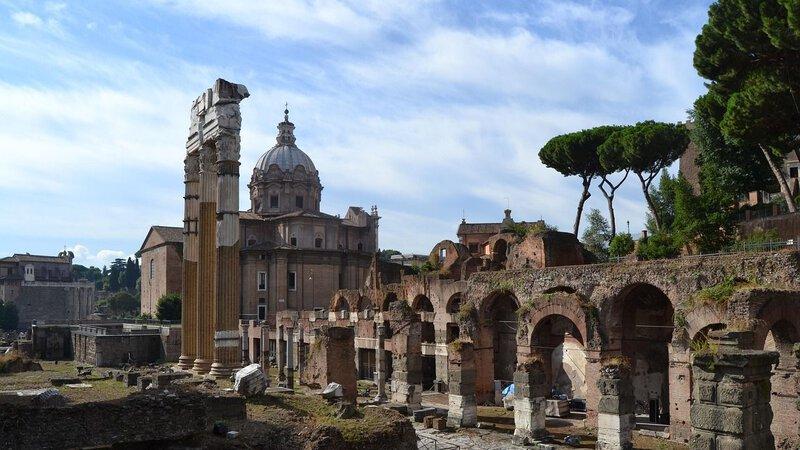

On September 4, 476 AD, a sixteen-year-old boy named Romulus Augustulus was quietly escorted out of power by a Germanic chieftain named Odoacer — no siege, no burning palace, no funeral pyre for an empire. The last emperor of the Western Roman world was simply told to go home, given a pension, and sent to a seaside villa in Campania. Most Romans living through that autumn barely registered that anything had changed at all.
That quiet, anticlimactic moment is where most accounts of the medieval period begin. But the closer you look at it — and at the equally blurry moment when the Middle Ages ended — the more you realize that the dates themselves are editorial decisions, not discovered facts. Understanding why historians chose these particular bookmarks, and why they still argue about them, is more illuminating than memorizing any pair of numbers.
The Standard Answer — and Its Honest Limitations
Ask a history teacher what years the medieval times covered and you will likely get something close to this: the Middle Ages ran from roughly the 5th century to the late 15th century, spanning nearly a thousand years of human civilization across Europe and beyond. That is a reasonable working answer, and it is the framework taught in most classrooms around the world.
The two anchor dates most widely used are 476 AD — when Odoacer deposed Romulus Augustulus and ended the Western Roman Empire — and 1492, the year Christopher Columbus crossed the Atlantic. These bookmarks feel satisfying. They are memorable, they have a certain drama, and they give the era a shape. But they are ultimately a simplification, a useful editorial decision rather than a discovered truth.
It is also worth knowing that the word “medieval” itself was invented centuries after the fact. Renaissance scholars coined the term — derived from the Latin medium aevum, meaning “middle age” — specifically to separate their own era of supposed rebirth from what they condescendingly dismissed as a long, dim interval between the glory of ancient Rome and their own enlightened present. The label was always a verdict as much as a description. Calling an era the “Middle” Ages only makes sense if you have already decided that antiquity and the Renaissance are the two things worth framing it between.
The Three Acts Inside a Thousand Years

Within that thousand-year span, historians broadly recognize three distinct phases, each with its own character, crises, and momentum. Treating them as a single undifferentiated block is a bit like calling the years between 1800 and today one unbroken chapter of human experience.
The Early Middle Ages stretch from roughly 476 to 1000 AD — a world of fragmented kingdoms, manuscript-copying monks, and recurring plague. Cities shrank. Long-distance trade thinned. The population of Europe fell from its Roman peaks. Viking longships cut through North Atlantic fog toward coasts that had never seen a Norse sail. It was not a dead era — remarkable things happened — but it was, by many measures, a leaner and more fractured world than what Rome had built.
The High Middle Ages run from about 1000 to 1300, and they feel, in many ways, like a civilization gathering momentum. Temperatures warmed slightly across Europe. Agricultural yields climbed. Population rose. Towns grew into cities. The great cathedrals of France and England went up stone by stone over generations, feats of structural engineering that still astonish architects today. The first European universities opened — Bologna, Oxford, Paris — and a culture of formal intellectual inquiry began to take root.
The Late Middle Ages close out the period between roughly 1300 and 1453 or 1492, depending on who you ask. The Black Death arrived in 1347 and killed somewhere between a third and half of Europe’s population within a few years. That catastrophe reshuffled everything: labor markets, the authority of the Church, the relationship between peasants and lords, the texture of artistic imagination. Many historians treat the Black Death as the true hinge into the Late Middle Ages — the moment after which the medieval world began unmistakably becoming something else.
Why 476 AD: The Fall No One Felt in Real Time
Return for a moment to Odoacer and that quiet autumn in 476. After deposing the young emperor, he did something revealing: he sent the imperial regalia — the crown, the robes, the symbols of Roman sovereignty — to Constantinople, and politely informed the Eastern Emperor Zeno that there was no longer any need for a separate Western figurehead. He did not declare the end of Rome. He suggested Rome could be managed more efficiently with one emperor instead of two.
For a farmer in Gaul or a merchant in Carthage, Roman law still governed contracts, Roman roads still connected markets, and Roman bureaucrats still collected taxes. The machinery of civilization did not grind to a halt on September 4th. It shifted ownership, gradually and unevenly, over decades and centuries.
Historians favor 476 as the opening of the medieval period not because it felt like a rupture to people living through it, but because it offers a clean symbolic break — a moment when the formal paperwork of Western Roman authority ceased. The question of when the Middle Ages started turns out to have a partly practical answer: someone had to pick a date, and this one, at least, is defensible.
But even that defense has complications. Three centuries later, Charlemagne was deliberately reviving Roman imperial ceremony at his Carolingian court, staging himself as a successor to the Caesars and persuading the Pope to crown him Emperor on Christmas Day, 800 AD. If Rome had truly ended in 476, nobody told Charlemagne. Britannica’s account of the Middle Ages treats the Carolingian moment as one of the defining developments of the early medieval period — evidence that “Rome” never fully died in the European imagination, only transformed.
Some scholars push the start date earlier, back to the Crisis of the Third Century, when the Roman Empire began fracturing under military pressure and economic strain in the 200s AD. Others prefer a later start — around 500 or 600, when Christianity had more completely reshaped political life and Germanic kingdoms had consolidated enough to feel like a genuinely new order. Where you place the beginning depends significantly on what you think the Middle Ages actually were.
The End Date Debate: 1453, 1492, or Something Else?

If the opening of the Middle Ages is contested, the closing is practically a free-for-all among historians. Three dates dominate the conversation, each with a serious case behind it.
1453 marks the fall of Constantinople to the Ottoman Sultan Mehmed II — the moment when the Eastern Roman Empire, Rome’s direct institutional heir, finally ceased to exist after more than a thousand years. Greek scholars fleeing the city carried manuscripts and ideas westward into Italy, helping fuel the Renaissance. It was an ending, and a beginning, of enormous consequence.
1492 carries perhaps the most weight of any single year at the era’s close. Columbus crossed the Atlantic under the Spanish crown — but 1492 was also the year Granada fell, ending nearly eight centuries of Muslim political presence on the Iberian Peninsula and completing the Spanish Reconquista. For Spain specifically, 1492 is widely considered the end of the medieval period, a date that simultaneously closes one world and violently opens another. Educational overviews of the medieval period frequently use the same framing, marking 476 as the start and 1492 as the finish — a clean thousand-year arc.
Then there is the softer landing zone: the 1400-1450 window, which many general historians prefer precisely because it resists false precision. The printing press emerged in the 1440s with Gutenberg’s movable type. The Renaissance had already been reshaping art, literature, and philosophy in Italian city-states for decades before Columbus ever set sail. These were not sudden arrivals but long, slow sunrises, suggesting the medieval period blurred into modernity gradually rather than snapping shut on a calendar date.
Choosing 1492 versus 1453 reflects a genuine philosophical disagreement about what drives historical change. If you believe ideas and intellectual movements matter most, the Renaissance and the printing press push you toward an earlier, softer endpoint. If you think political power and the fate of empires are the real engines of history, the fall of Constantinople in 1453 is hard to argue against. And if you believe geography — the permanent connection of two hemispheres — reshapes everything, then 1492 wins almost by default.
A Reminder: This Is Primarily a European Frame

Throughout all of this, it is worth remembering that the medieval period dates anchoring European history textbooks do not map onto the rest of the world. While European knights jousted and plague moved through Venetian streets, the Song Dynasty in China was producing printed books, paper money, and gunpowder weapons. The Islamic world sustained centers of mathematics, astronomy, and medicine that outpaced anything in contemporary Europe. The Byzantine Empire — officially the continuation of Rome — carried on its own rich civilization until 1453. Sub-Saharan African kingdoms rose and fell on entirely their own rhythms. The medieval era, as it is typically described, is largely a story about Europe, and it is worth knowing that going in.
Non-European historians have increasingly challenged the entire framework. The “medieval” label was invented by European Renaissance scholars to describe European experience. Applying it as a universal category — as if the whole world was defined by what happened to Rome — erases the independent rhythms of civilizations that were not watching Western Europe at all. The Wikipedia entry on the Middle Ages acknowledges this tension directly, noting that the period and its defining characteristics are primarily framed in the context of European history.
Why the Disagreement Is the Most Valuable Part

Here is a reframe worth sitting with: the fact that the Middle Ages timeline resists a single clean answer is not a failure of historians. It is evidence that history is alive, contested, and perpetually being rewritten by people with new questions and new perspectives.
The practical stakes are real. Museum curators building exhibitions must pick a number. Curriculum designers must draw a line somewhere on a timeline. Novelists and filmmakers must choose which world their characters inhabit. Each of those choices quietly shapes which stories get told, whose ancestors are centered in the narrative of progress, and which civilizations are treated as the main characters of a given era.
Understanding that serious historians genuinely disagree about the medieval period dates is not a sign that the subject is confused or unreliable. It is a sign that the subject is serious — that real intellectual stakes ride on where you draw the lines, and that those lines reveal something about the values and assumptions of whoever is drawing them.
The Takeaway: Hold the Dates Lightly, Take the Era Seriously
The most useful working answer for the curious reader is something like this: the Middle Ages ran from roughly 476 to 1492 — approximately a thousand years — with 476 marking the symbolic collapse of Roman authority in the Western Empire and 1492 standing as the most globally resonant year at the era’s close. That is a defensible framework, widely used, and good enough to navigate most conversations, most curricula, and most museum placards.
But the honest asterisks matter. Spain’s experience of when the Middle Ages started and ended differs from England’s, which differs from Byzantium’s, which differs profoundly from China’s or Mali’s or the Aztec world’s. The dates are a European frame placed around a European story, and the rest of the world was busy writing its own.
Which brings us back to that sixteen-year-old boy being quietly shown the door in the autumn of 476. His removal did not feel like the beginning of a new age to anyone watching. And the Middle Ages ended much the same way — not with an explosion but with a slow, overlapping series of departures: a scholar leaving Constantinople with a crate of manuscripts, a goldsmith in Mainz inking a page of movable type, a ship disappearing over a western horizon. Each civilization quietly became something new before anyone had agreed on what to call the moment.
The next time someone asks what years were the medieval times, the most honest and interesting answer is not a pair of numbers. It is the story of why the question is so hard to answer — and what that difficulty reveals about how human beings, in every age, try to make meaning from the blur of time.

 English
 Arabic
 French
 Spanish
 Portuguese
 Turkish
 Dutch
Dutch
 Italiano
 Russian
 Romaian
 Portuguese (Brazil)
 Greek
Greek