


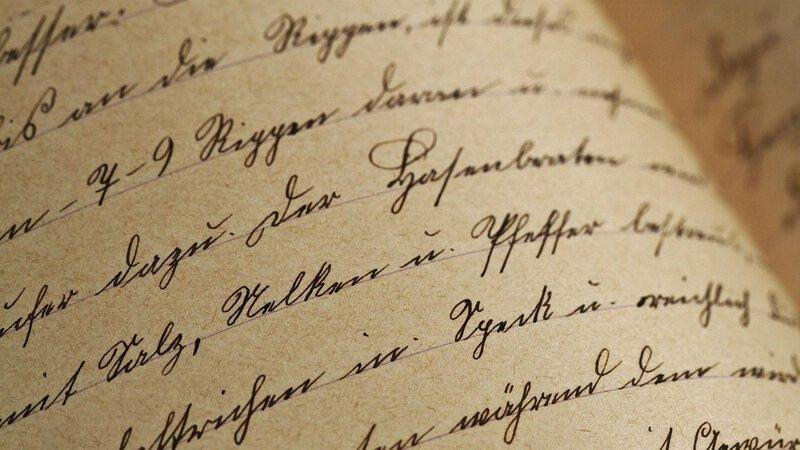

She pulls on the white cotton gloves slowly, the way you might before handling something sacred — or dangerous. Then the librarian sets it in front of her: a small, water-stained codex, no larger than a modern paperback, its pages the color of old teeth. She opens the cover, and the floor drops out from under six centuries of human certainty.
The Book That Has Broken Every Expert Who Has Opened It
The Voynich Manuscript, held at Yale University’s Beinecke Rare Book & Manuscript Library, looks, at first glance, like something you half-recognize. Medieval illustrations of plants, astronomical wheels, naked figures bathing in elaborate pools — the visual grammar of a herbal, an alchemical guide, or a physician’s reference. Your brain begins to file it away. Then you try to read a single word of the text running alongside those drawings, and something quietly breaks. The letters are not Latin. They are not Arabic, Greek, or Hebrew. They are not anything. They belong to a script that no linguist, cryptographer, historian, or algorithm has ever definitively deciphered — and people have been trying for roughly six hundred years.
That is the central, almost comedic paradox of the Voynich Manuscript: a book that looks as though it was made to be read, written with obvious confidence by a hand that clearly knew exactly what it was doing, and yet has refused to yield a single confirmed word to anyone who has ever opened it. Some of the most formidable codebreakers in history have come for it. All of them have left empty-handed. This article will not pretend to solve it. But it will get as close as honesty allows to explaining why it remains, defiantly, the world’s most baffling manuscript — and why that might matter more than the answer itself.
What You Are Actually Looking At: Inside the Manuscript

Pick up a high-resolution scan of any page — the manuscript has been fully digitized and is freely available to study — and the first thing that strikes you is the handwriting. It is not hesitant or experimental. The script, now called Voynichese, flows with the relaxed authority of someone writing in their native tongue, its looping characters filling roughly 240 pages of vellum, that carefully scraped animal skin that medieval scribes prepared with obsessive care. The ink has faded to brown in places, but the hand behind it was practiced. This was not someone learning a system as they went. This was someone who already knew it cold.
The illustrations crowd every section in faded greens, dusty blues, and a rusty red that might once have been vivid. The botanical drawings are perhaps the most immediately unsettling: plants rendered with obvious botanical intent — roots, stems, flowers, leaves — that match nothing in any known flora, living or extinct. These are not simply unknown species awaiting identification. They are fundamentally strange combinations, as if someone had assembled a herbarium from a world operating on slightly different rules. The zodiac-like wheels filling the astronomical sections are packed with tiny human figures, each apparently labeled with Voynichese text. Networks of pipes, pools, and channels occupy other pages in ways that might represent a cosmological system, human anatomy, or something with no clear referent in our reality at all.
Crucially, the pictures and the text are not merely decorating each other. They appear to be explaining each other — interlocked in meaning, each requiring the other to make sense. This means the manuscript is not simply a linguistic puzzle. It is a double cipher: break the script, and you may still need the images to understand what it says. Break the images alone, and the words remain opaque. Whoever created this believed — or wanted their audience to believe — that the two systems together formed a complete and coherent whole.
A Fifteenth-Century Object With a Twentieth-Century Name
Radiocarbon dating of the vellum, conducted by the University of Arizona in 2009, points to the early fifteenth century — specifically a range of approximately 1404 to 1438 — placing the manuscript’s physical creation firmly in the late medieval period. This was a world of alchemists and herbalists, of monks copying manuscripts by candlelight and emperors collecting objects of occult wonder. Into that world, at some point, someone wrote this book.
Its modern story begins in 1912, when a Polish book dealer named Wilfrid Voynich purchased it from the Jesuit Collegio Romano in Italy and announced, with the breathless confidence of a man who knew he had found something extraordinary, that it was unlike anything he had ever seen. He was right about that, if nothing else. The manuscript took his name almost immediately, which is a minor irony: the one thing we know for certain about the Voynich Manuscript is that Voynich did not write it.
Before Voynich, the document’s history is shadowy but suggestive. A letter discovered in the manuscript and dated to 1665 or 1666, written by Johannes Marcus Marci of Prague, indicates that the book had once belonged to Holy Roman Emperor Rudolf II — a monarch whose court was a magnet for astrologers, alchemists, and purveyors of strange knowledge. The implication is that even by the seventeenth century, the manuscript was already famous for being impenetrable, already considered an object of special and inexplicable power. It eventually arrived at the Beinecke as MS 408, where it now sits in a climate-controlled vault, its high-resolution scans available to anyone with an internet connection. The manuscript’s enduring mystery has drawn researchers and enthusiasts from virtually every field imaginable, and the democratization of that obsession has been thorough.
The Codebreakers Come for It — and Leave Empty-Handed
During the Second World War, American cryptanalysts who had broken enemy codes of genuine strategic sophistication turned their methods on Voynichese. These were not amateurs — these were people whose analytical skills carried real consequence on the battlefield. They reported, quietly, that the manuscript defeated them entirely.
What makes Voynichese so maddening is not that it looks like nonsense. If it looked like nonsense, experts could dismiss it and move on. The problem is that it looks like language. The script has consistent internal structure: certain characters appear only at word beginnings, others only at endings, in patterns that suggest grammatical rules rather than random generation. The frequency distribution of letters and word-shapes follows curves similar to those found in natural human languages. By the statistical measures linguists use to distinguish real language from gibberish, Voynichese is not gibberish. It is something that behaves like language without being any language anyone has ever identified.
One widely discussed statistical observation is that Voynichese appears to follow Zipf’s law — the principle that in any natural language, a small number of words appear very frequently while most words appear rarely. Voynichese word frequencies align with this distribution. That alignment is either compelling evidence of genuine linguistic structure or evidence that a sophisticated forger understood, or stumbled upon, how natural language statistically behaves. Neither interpretation is comforting.
In the twenty-first century, machine learning models trained across dozens of languages were aimed at Voynichese with considerable fanfare. The results produced headlines — announcements of partial decipherment, tantalizing connections to Hebrew, Arabic, or obscure Romance dialects — and then, almost without exception, collapsed under peer scrutiny. The cycle has repeated often enough to have its own grim rhythm: a breakthrough is claimed, excitement builds, experts examine the methodology, and the claim quietly dissolves. The decoded-Voynich announcement keeps arriving. None have survived.
Three Theories, Zero Proof: Encoded, Invented, or Faked?
Scholarship has settled, uneasily, around three main possibilities. The first is that the manuscript contains a real language or a known text disguised by a cipher — perhaps a sophisticated polyalphabetic substitution system, a method of encryption that would be centuries ahead of its documented invention if true. If this theory is correct, cracking Voynichese would not just explain a book. It could rewrite the history of cryptography.
The second theory holds that Voynichese is an invented language — a constructed system designed to represent concepts in a new or philosophical way. This would explain its internal consistency: a constructed language has rules because its creator imposed them, not because the language evolved through centuries of human use. Projects of exactly this kind were attempted in the seventeenth century by European intellectuals who dreamed of a perfectly rational mode of communication. The Voynich Manuscript might represent an earlier, stranger attempt at the same ambition.
The third theory is the one that amuses and haunts in equal measure: that the manuscript is an elaborate, beautiful, and utterly meaningless hoax, constructed to sell to a credulous nobleman or an emperor willing to pay handsomely for a book of secrets. This hypothesis has genuine scholarly support, and it is reinforced by the Rudolf II provenance — a court famously susceptible to alchemical swindlers and sellers of occult wonders. And yet the hoax theory carries its own burden. Creating hundreds of pages of statistically language-like nonsense by hand, with consistent internal rules sustained across multiple distinct scribal sections, would itself represent a staggering cognitive achievement. The hypothetical forger, if one existed, would be as remarkable as the mystery they created.
Why We Cannot Look Away: The Psychology of the Unsolvable
There are other unsolved historical mysteries. Lost civilizations, undeciphered scripts, disputed authorship, vanished artifacts. Most generate scholarly interest and occasional documentary coverage. The Voynich Manuscript generates something closer to obsession, and it is worth asking exactly why.
Part of the answer lives in the illustrations. Even casual viewers immediately feel the strangeness of the plant drawings — the way they activate a recognition reflex that never quite fires. Your brain insists the plant should be identifiable. It is drawn in the visual idiom of a real botanical illustration. And yet it is not a real plant. That misfiring recognition, repeated across hundreds of pages, produces a specific cognitive itch that is almost impossible not to try to scratch.
Part of the answer is also democratic. No credential protects you from the manuscript’s silence, but no credential excludes you from the attempt either. No institution has solved it. No algorithm has cracked it. The persistent amateur working alone with a spreadsheet and a fresh theory occupies exactly the same position as the tenured professor, in the sense that both of them are, so far, wrong. This keeps the global community of Voynich researchers vast, eccentric, deeply serious, and perpetually renewed. Every generation discovers it fresh, brings new tools, and arrives with the specific confidence of someone who has just learned about a problem that everyone else has apparently been solving incorrectly.
Six Hundred Years Later, the Page Is Still Winning
Return, at the end, to the Beinecke. A small book of scraped animal skin sits in a climate-controlled vault in New Haven, Connecticut. At this moment, it is defeating every mind that meets it. Mathematicians, linguists, classicists, cryptographers, and neural networks trained on the accumulated text of human civilization have all arrived at the same answer, which is not an answer at all. There is something almost comic about that image, and something genuinely humbling — the kind of humbling that feels increasingly rare.
If the manuscript is ever decoded, it could unlock a lost language, a forgotten science, or a medieval worldview unlike any we have encountered — proof that human knowledge once traveled roads we can no longer find. If it is never decoded, that too is a kind of knowledge. It would suggest that human ingenuity can produce things that permanently exceed human understanding, that some locks were built without keys, or with keys we will simply never hold.
Either way, resist the comfort of a false resolution. Six hundred years of the world’s best efforts suggest the answer is not arriving soon. And perhaps the most honest place to leave this is in the vertiginous feeling of standing before something that genuinely cannot be explained — not yet, and perhaps not ever. The Voynich Manuscript endures not because we are close to understanding it, but precisely because we are not. In a world where almost any question can be searched and answered in seconds, that particular silence is its own extraordinary, stubborn power.

 English
 Arabic
 French
 Spanish
 Portuguese
 Deutsch
 Dutch
Dutch
 Italiano
 Russian
 Romaian
 Portuguese (Brazil)
 Greek
Greek