


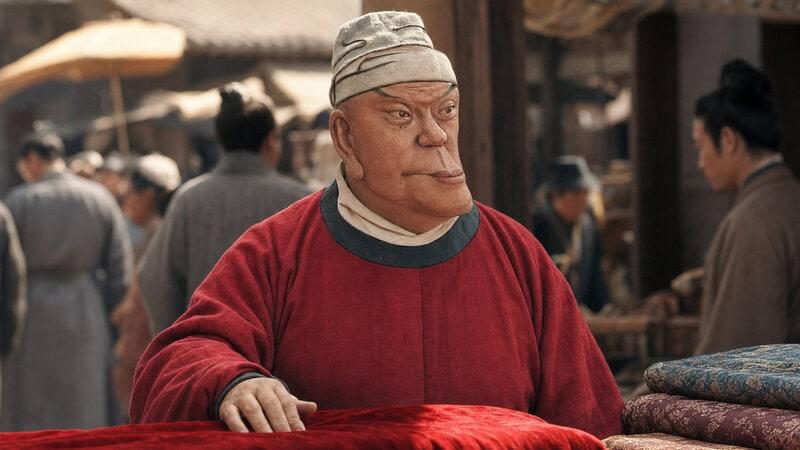

In 1440s Nanjing, a prosperous silk merchant stands at the edge of a market stall, his fingers brushing a bolt of fabric so deeply, luminously red that it seems to hold its own light. He thinks of his wife — of how the color would suit her. That thought, if acted upon, could have brought soldiers to his door.
The Wrong Shade of Red Could End Your Life

In Ming Dynasty China, clothing was not self-expression. It was a legal document worn on the body, and choosing the wrong color was not a matter of bad taste — it was a matter of criminal law. The crimson silk the merchant admired belonged to a world he was forbidden to touch: the world of high-ranking noblewomen, whose red robes with large sleeves announced their station as clearly as any written title. Ordinary women were legally confined to peach red, purple-green, and muted light tones — a palette not chosen for beauty alone, but engineered to keep social rank visible at a glance.
This is the story of how Ming dynasty dress became one of history’s most elaborate systems of social control — and how, almost in spite of itself, it produced some of the most formally magnificent clothing China has ever known.
What People Actually Wore: A World of Layers

Before the laws, there was the clothing itself — and it was genuinely beautiful. Women across the social spectrum during the Ming period (1368-1644) favored the ao, a short jacket that sometimes featured a standing collar, framing the face with quiet elegance. Practical and refined in equal measure, it formed the foundation of a silhouette built entirely on layering.
Over the ao and a long flowing skirt, a woman might wear a beizi — an open-front overgarment with long vertical panels that fell gracefully to the floor. On top of that, or belted at the waist, came the bijia, a sleeveless vest that added visual structure and a surface for embroidery without overwhelming the body’s overall line. Ming dynasty women’s clothing favored this composed, layered architecture: each garment a canvas for color and needlework, but each layer also a visible ledger of rank.
The more refined the fabrics and the more intricate the embroidery, the more immediately legible a woman’s position in the social hierarchy. Fashion functioned as instant biography. Men’s dress operated by the same logic, only more bluntly: male officials wore the famous bufu, robes bearing large embroidered rank badges sewn to the chest and back. A crane identified a high-ranking civil official; a tiger declared military service. Any literate observer — and even many who were not — could read a man’s exact grade in the imperial bureaucracy simply by glancing at his chest.
Common men, meanwhile, were restricted to plain robes in undyed or lightly colored hemp and cotton. Even the cut of a collar, the depth of a hem’s border embroidery, and the material of a belt buckle fell within the reach of regulation. The body, from head to foot, was a managed text.
The Architecture of Control: How Ming Sumptuary Laws Were Built

Sumptuary laws — government regulations dictating what citizens could wear, eat, or display based on social rank — were not a Ming invention. China had practiced them for over a thousand years before the Ming refined them into something approaching surgical precision. What the Ming added was systematic, dynasty-wide enforcement with real consequences.
The driving force was the dynasty’s founder, the Hongwu Emperor, who reigned from 1368 to 1398. A former peasant who had overthrown the Mongol Yuan dynasty through sheer military determination, Hongwu was obsessed with restoring what he saw as proper Han Chinese order — the clear, legible social hierarchy that he believed the Mongol interlude had blurred and corrupted. Within years of the dynasty’s founding, clothing codes were reissued and systematically tightened. This was not incidental housekeeping. It was ideological architecture.
The scope of regulation was staggering. Rules governed not merely color but fabric type — silk for the highborn, cotton and linen for commoners. They governed pattern motifs: five-clawed dragons were exclusively imperial, and specific floral arrangements carried their own coded meanings. Hat styles, shoe materials, the number of decorative hairpins a woman could wear — all fell within the reach of the law. Ming dynasty clothing history cannot be separated from this regulatory framework, because the clothing and the law grew together, each shaping the other across nearly three centuries.
Unlike earlier dynasties, where dress codes were often more aspirational than enforced, the Ming maintained a surveillance infrastructure of local magistrates, guild inspectors, and community informants that made fashion a matter of genuine legal peril. A tailor who cut a robe in a forbidden color was not merely bending a social norm. He was committing a documented offense subject to formal punishment.
The Color Hierarchy: A Spectrum Ranked by Power

At the pinnacle stood imperial yellow and the five-clawed dragon motif — both reserved exclusively for the emperor and his designated heirs. Unauthorized use was not merely illegal; it constituted an act of lèse-majesté. Below that apex, specific reds, golds, and deep purples cascaded downward through ranks of nobility and officialdom in a carefully maintained gradient of permission.
The noblewoman’s red robe was not merely fashionable. It was a legal uniform. Its precise shade, its sleeve width, the specific embroidered motifs permitted on its surface: all of these details were governed by sumptuary code. A first-rank lady and a third-rank lady could both wear red, but not the same red, not the same sleeve width, not the same embroidery. The garment was a form letter, filling in rank where a written document might otherwise be required.
Ordinary women, by contrast, lived in a palette of beautiful but deliberately humbling tones. Peach red — a warm, desaturated pink, far removed from the saturated crimson of court — was permitted. So was purple-green, a muted blue-violet. These were not ugly colors, but they functioned socially as the visual language of common birth. Contemporary accounts suggest that over decades of living under these codes, people internalized the grammar so thoroughly that wearing a forbidden hue could produce genuine fear — indicating that the laws did not merely change wardrobes, but reshaped the psychological relationship between color and social identity.
Dignity in Constraint: The Aesthetic That Emerged

Here is the central paradox of Ming dynasty clothing: the rigid rules did not produce dull clothing. They produced some of the most formally magnificent dress in Chinese history, precisely because artisans and wearers channeled creative energy into everything that remained permitted to them.
Historians consistently describe Ming dynasty dress as dignified, formal, and generous in its proportions — a look of composed authority rather than ornamental excess. Women’s dress in particular trended conservative compared to the Tang dynasty’s open-necked exuberance or the Song’s delicate refinement. The Ming silhouette was covered, layered, and architecturally considered: a person shaped by fabric into a statement of order.
But within permitted boundaries, the creativity was extraordinary. Embroiderers developed staggeringly complex floral and phoenix motifs, working in silk thread so fine that the surface of a robe appeared painted rather than stitched. Fabric weavers in Suzhou — already the textile capital of the empire — produced silk brocades of such technical virtuosity that a single ceremonial robe could require months of continuous labor to complete. The system designed to suppress individual expression inadvertently fostered a golden age of Chinese textile craft, because the only sanctioned form of competition was excellence within an assigned category.
It is worth dwelling on that craft. The kesi tapestry weave technique, perfected during this period, allowed weavers to produce images of birds, landscapes, and calligraphy directly into silk cloth with a resolution and tonal range that rivaled painting. Robes made using kesi were so labor-intensive that they functioned as portable treasure as much as clothing. The constraint of sumptuary law, paradoxically, made technical ambition the only available arena for display.
When the Rules Broke Down: Merchants, Commerce, and Fashion Creep

The cracks appeared slowly, then all at once. By the mid-to-late Ming — roughly the 1500s onward — booming commercial prosperity in the Yangtze River Delta had placed silk, gold thread, and fine dyes within financial reach of wealthy merchants who were legally barred from wearing them. Money, as it tends to, began to erode the distance between what the law permitted and what the market supplied.
Magistrates periodically staged public crackdowns, confiscating illegal garments and levying fines on tailors brazen enough to cut forbidden fabrics. But the volume of violations had grown so vast that systematic enforcement became theater rather than justice. The law still existed; the fear it generated was real; but the sheer commercial momentum of late Ming China was producing more well-dressed lawbreakers than any bureaucracy could process.
Women outside the formal Confucian household hierarchy — concubines, entertainers, women operating in the floating world of urban commerce — occupied a legally ambiguous space that allowed forbidden colors and fabrics to circulate quietly into mainstream fashion. Their dress, often deliberately spectacular, became a slow solvent on the color hierarchy. What began as transgression became, season by season, simply what fashionable women wore.
Some historians and contemporary observers in the late Ming read the visible breakdown of the dress code as a symptom of broader moral disorder — a society, as they described it, literally wearing its own disintegration. Whether or not that reading was fair, the dynasty fell in 1644, and the clothing regulations that had defined it for nearly three centuries collapsed along with imperial authority itself.
The Hanfu Revival: Ming Silhouettes in the Twenty-First Century
Centuries later, the ao jacket, the beizi layer, and the bijia vest are experiencing a remarkable second life. The Hanfu revival movement — a cultural phenomenon that has drawn large numbers of young Chinese people to wear reconstructed historical garments as acts of identity and pride — has drawn heavily on Ming dynasty Hanfu clothing as one of its primary references. At festivals, in public parks, and in university courtyards across China, young people layer Ming silhouettes in colors chosen freely, for pleasure, for beauty, and for a sense of cultural belonging.
The irony is not lost on those who know the history. Garments engineered to enforce hierarchy, to mark distinction, to confine the merchant’s wife to peach red and the noblewoman to crimson — these same garments are now worn as declarations of personal freedom and cultural continuity. The colors that once sorted a society into its legal compartments are now mixed and chosen at will by anyone who finds them beautiful.
The revival has also prompted serious scholarly and popular interest in the technical reconstruction of Ming garments — in understanding how kesi weave was structured, how collar styles evolved across the dynasty’s nearly three centuries, and how regional variation played out within the constraints of imperial code. Ming dress is no longer merely a historical artifact; it is an active reference point in contemporary Chinese cultural identity.
What Ming Dynasty Dress Leaves Behind
What Ming dynasty clothing ultimately demonstrates is that fabric has never been trivial. Every culture encodes power, aspiration, and anxiety into what it puts on bodies. The Ming simply had the bureaucratic will — and the imperial ambition — to make that encoding explicit, legally binding, and, in its most severe applications, a matter of punishment. Clothing has always carried the weight of social meaning; the Ming just ensured that everyone understood the penalty for misreading it.
Somewhere in a Suzhou museum, a centuries-old robe of crimson silk survives — vast ceremonial sleeves spread wide, the color still vivid after all this time. It is the exact shade that once divided the woman who was permitted to wear it from the woman who was not. That legal distance is gone. The robe remains.

 English
 Arabic
 Spanish
 Portuguese
 Deutsch
 Turkish
 Dutch
Dutch
 Italiano
 Russian
 Romaian
 Portuguese (Brazil)
 Greek
Greek