


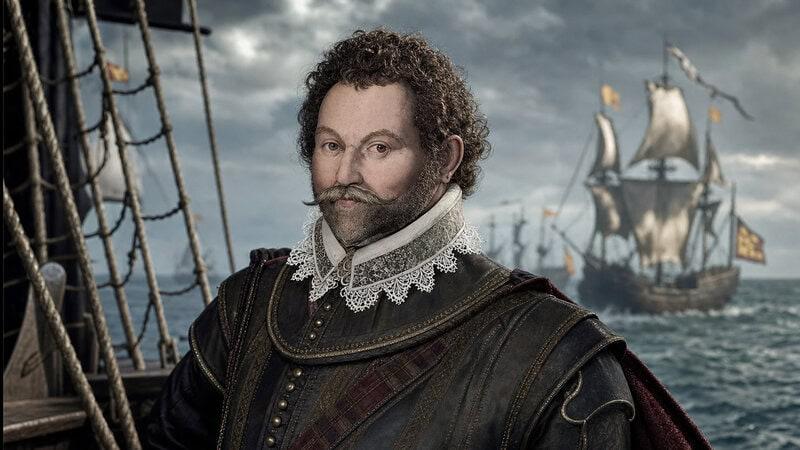

On a grey July morning in 1588, the English Channel filled with sails. One hundred and thirty Spanish ships moved in a tight, disciplined crescent formation — the largest invasion fleet Europe had ever assembled — and the men aboard them carried a simple, iron certainty: God was with them, England would fall, and history was about to turn. Within three months, roughly half those ships would lie on the seabed, and the certainty would lie with them.
Why Philip II Built the Armada

To understand the Spanish Armada, you have to understand the man who ordered it. King Philip II of Spain ruled an empire that stretched from Peru to the Philippines, the richest and most powerful monarchy on earth, and by the mid-1580s he had one consuming strategic obsession: overthrow the Protestant Queen Elizabeth I and return England to the Catholic fold. The grievances driving him were real and had accumulated over years. English privateers — men such as Francis Drake, operating with Elizabeth’s quiet approval and a share of the profits — had been systematically plundering Spanish treasure ships returning from the Americas. England had been covertly funding Dutch Protestant rebels fighting Spanish rule in the Low Countries. And Elizabeth had, in 1587, executed Mary Queen of Scots, a Catholic claimant whose survival had long been Philip’s diplomatic lever over England.
The Spanish Armada he dispatched from Lisbon was the physical expression of that accumulated fury and calculation. At its formal count it comprised 124 warships and support vessels, swelling to approximately 130 in total, carrying around 27,000 men and more than 1,100 guns. Philip had spent years planning it, had secured papal blessing for what he genuinely regarded as a holy crusade, and annotated the dispatches governing its preparation in the margins of documents late into the night. By any measure, it was a staggering concentration of European power pointed at one small Protestant island.
The strategic plan had an elegant architecture. The Armada sailing north from Lisbon was never meant to fight England alone. It would sweep up the English Channel, rendezvous off the Flemish coast with a battle-hardened Spanish army of around 17,000 veterans under the Duke of Parma, ferry those troops across the narrow straits in flat-bottomed barges, and overwhelm London in a coordinated land and sea assault. On paper, it was formidable. In practice, it was a plan held together by assumptions that would each, in turn, fail.
The Cracks Beneath the Spectacle

Look closely at that magnificent fleet and the structural weaknesses become visible before a single shot is fired. Spanish naval doctrine was built on a logic inherited from Mediterranean warfare: close with the enemy, grapple the hulls together, and let trained soldiers pour across the deck rails to fight the kind of infantry engagement they knew and excelled at. It was a sound doctrine for the sheltered, relatively calm waters of the Mediterranean. It was poorly suited to the cold, churning, tide-ripped English Channel, and it would prove catastrophic on the open North Atlantic.
The provisioning was worse still. Barrels made from green, unseasoned wood — hurriedly sourced to replace supplies that Drake had destroyed in his audacious 1587 raid on Cadiz harbour — had already begun to rot before the fleet left Lisbon, contaminating the food and water stored inside them. Corruption riddled the supply contracts further down the chain. Men would sail into one of history’s most consequential naval campaigns already weakened by spoiling meat and foul water. It was a slow, invisible catastrophe accumulating in the holds before the first English sail was sighted.
Then there was the command. The original admiral, the Marquis of Santa Cruz, died in February 1588, weeks before departure. His replacement, the Duke of Medina Sidonia, wrote to Philip in something close to despair, explicitly begging not to be given the position, confessing that he suffered from seasickness and possessed no meaningful naval experience. Philip sent him anyway, reasoning that administrative competence and social authority mattered more than seamanship. Medina Sidonia would prove conscientious and personally brave, but he was commanding a fleet in waters he did not know, in a role he had never sought, executing a plan he had inherited rather than designed.
England’s Defence: Fast Ships, Low Ammunition

England, for its part, was improvising under pressure. Lord Charles Howard commanded the English fleet, with Francis Drake as his vice-admiral, and the ships under their command had real advantages. English vessels were sleeker, lower in the water, and more manoeuvrable than the tall, castle-like Spanish galleons. They were built for speed and long-range gunnery rather than boarding, and their gun crews could reload and fire at a rate Spanish gunners could not match. In a straight exchange of broadsides at distance, the English held the edge.
For a week, running engagements unfolded up the length of the Channel. The English harassed, feinted, and fired from a distance deliberately calculated to stay beyond the reach of Spanish grappling hooks. Several skirmishes — off Plymouth, off Portland Bill, off the Isle of Wight — produced dramatic manoeuvring but limited damage to either side. The Armada’s tight defensive crescent formation, ships packed closely enough to protect each other’s flanks with overlapping fields of fire, was proving nearly impenetrable to the tactics the English had available. After days of fighting, they had sunk virtually nothing of significance, and their powder and shot were running dangerously low. Howard sent urgent, anxious requests to shore for resupply.
The tactical deadlock broke on the night of 7 to 8 August 1588, off the Flemish port of Gravelines, where the Armada had anchored to await news of Parma’s readiness. The English prepared eight fireships — unmanned vessels packed with pitch, kindling, and loaded guns — and sent them drifting on the tide into the anchored Spanish fleet after dark. Fireships were a known weapon and the Spanish had posted a screen of pinnaces to intercept them, but in the darkness and confusion the screen failed. Captains who had orders to cut their anchor cables and manoeuvre clear in a controlled fashion instead panicked. The Armada’s disciplined formation, the one tactical asset that had protected it for a week, shattered in the night.
The Battle of Gravelines on 8 August was the only genuine English naval victory of the entire campaign. Howard’s fleet pressed its advantage against a scattered enemy in disarray, driving the Spanish ships northward and damaging several. But even here, the honest scorecard is sobering. English cannon fire sank or destroyed perhaps five Spanish ships during the battle. The Armada was damaged and disorganised, and critically it was now being pushed north with the wind — away from Parma’s army and away from any prospect of achieving its strategic mission — but it was not destroyed. England’s guns had not won the war. They had merely shoved the Spanish fleet into the hands of something far more lethal.
The Weather Finishes the Job

With the Channel route back to Spain now blocked by English ships holding the windward position, Medina Sidonia made the only rational choice left to him: sail north, around the top of Scotland, then south along the exposed Atlantic face of Ireland, and back to Spain the long way. It was a voyage of roughly 3,000 miles, requiring navigation charts the Spanish barely possessed, crossing the full width of the North Atlantic in late summer aboard ships that had been at sea for weeks and were already in varying states of damage and disrepair.
What the storms did to the Spanish Armada across September and October of 1588 is almost impossible to read without a kind of quiet horror. Ships designed for the Mediterranean, already weakened by weeks of campaigning and provisioned with rotting food and foul water, were driven sideways by successive Atlantic gales onto the iron-grey rocks of the Scottish and Irish coastlines. At least 24 vessels were wrecked on the Irish coast alone. Survivors who managed to drag themselves ashore often found not refuge but English troops and compliant local lords, operating under a policy that offered no quarter — men who had crossed an ocean and survived a shipwreck were killed on the beaches where they landed.
The rotten provisions that had been a grinding problem in July became a killing catastrophe by September. Dysentery and scurvy moved through the surviving ships. Fresh water ran out. Men died not from English cannon shot but from thirst and disease on vessels taking on water in North Atlantic gales, with no friendly port willing to receive them.
The numbers deliver the verdict with brutal simplicity. Of approximately 130 ships that had left Lisbon with such confidence, only around 67 made it back to Spain. English cannons had accounted for perhaps five. The Atlantic consumed the rest, along with an estimated 15,000 men who had sailed out of Lisbon believing history was going their way.
Elizabeth’s Triumph and the Myth That Hardened Around It

Elizabeth I had spent the weeks of the Armada crisis doing what she did with rare mastery: performing courage so convincingly that it became politically real. Her speech to the troops assembled at Tilbury in Essex — delivered to an army still braced for an invasion that the storms had already, unknowingly to those on shore, effectively cancelled — is one of the great pieces of political theatre in English history. She offered her body, she declared, but possessed the heart and stomach of a king. Whatever its military irrelevance by the moment of delivery, it was exactly what the moment required of a ruler.
The portrait followed. The Armada Portrait of Elizabeth I, painted to commemorate the victory, is a masterpiece of political image-making. Elizabeth sits magnificent and untouchable, her hand resting on a globe, implying dominion over the world. Behind her, two painted windows open onto scenes: in one, the Armada sailing in disciplined formation; in the other, ships breaking apart on rocky shores in a storm. The visual argument is deliberate and compressed. God and England had acted together to punish Catholic Spain’s presumption. The image required no caption.
The official narrative crystallised rapidly. “God blew and they were scattered” was struck onto commemorative medals. Sermons repeated the formulation from pulpits across the country. It served Elizabeth’s political purposes precisely — a Protestant God had visibly and meteorologically intervened on England’s behalf — and it quietly, efficiently wrote North Atlantic meteorology out of the starring role it had actually played. None of this is to diminish what Elizabeth genuinely achieved. She had held England in the fight through years of underfunded, improvised defence against the wealthiest empire in the world, authorised the fireship attack that fractured the Armada’s formation, and provided her nation with a story about itself it desperately needed. But the victory the portrait celebrates was, in its most decisive chapter, a weather event dressed in the language of providence.
What the Armada’s Failure Actually Meant
It is tempting to read 1588 as the moment Spanish imperial power broke. It did not. Philip II sent further armadas against England and Ireland in 1596, and Spain remained the dominant European superpower for decades after the Armada’s wreckage settled on the seabed. The Anglo-Spanish war continued until 1604, long after both Elizabeth and Philip were dead. England’s victory was as much symbolic as it was strategically decisive, and the symbolism mattered more in the short term than any shift in the balance of power.
What genuinely shifted was harder to quantify but more durable. The defeat cracked Philip’s aura of divine invincibility at a moment when that aura had been one of his most effective instruments of power. It energised Protestant Europe — the Dutch Republic, the French Huguenots, the German Protestant princes — at a moment when it badly needed a signal that Catholic Spain could be resisted and defeated. And it gave England a founding myth of national character: the small island, the outnumbered fleet, the providential storm, the Protestant God who arranged the weather in England’s favour. That myth would be reached for, consciously and unconsciously, in every subsequent crisis of English and British history, its language still audible in the speeches of 1940.
The deeper lesson, though, belongs to anyone willing to look past the portraits and the medals. The Spanish Armada of 1588 failed because its operational plan was impossibly complex and depended on a precise coordination between two forces separated by hundreds of miles of hostile sea; because its logistics were compromised before it left port; because its commander lacked the experience and, by his own admission, the temperament for the role; and because no admiral in history has successfully won a battle against an Atlantic gale. The weather builds no monuments and sits for no portraits. But if we are honest about why the Armada lies scattered across the seabed from Gravelines to Galway — rather than Spanish armies marching on London — the Atlantic Ocean deserved the commemorative medal more than almost anyone else.

 English
 French
 Spanish
 Portuguese
 Deutsch
 Turkish
 Dutch
Dutch
 Italiano
 Russian
 Romaian
 Portuguese (Brazil)
 Greek
Greek