


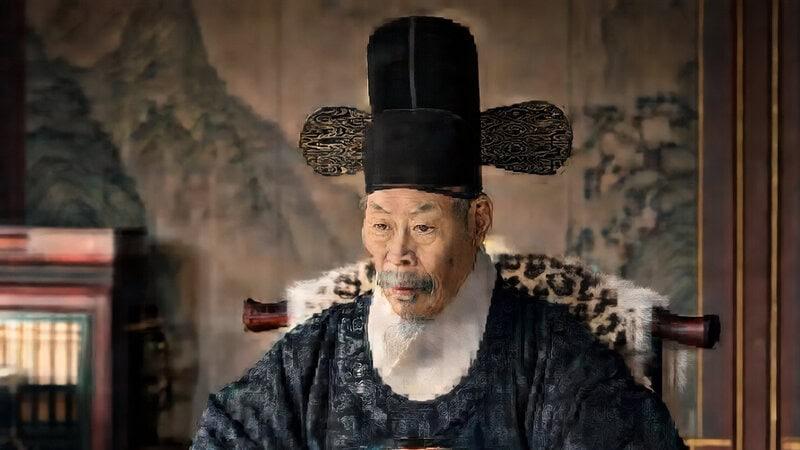

In the summer of 1388, a Goryeo general named Yi Seong-gye marched his army to the edge of the Yalu River, looked across at the far bank, and made a decision that would reshape Korean history for the next five centuries. He turned around.
The General Who Changed Direction

The orders had been straightforward enough: cross into Ming Chinese territory and push back against Beijing’s territorial claims. But Yi Seong-gye was a practical man, the kind of commander who counted horses and supply lines before he counted glory. The campaign was unwinnable, the king who ordered it was weak, and the aristocrats who surrounded the throne were more interested in protecting their land grants than in governing a country that was visibly rotting. So instead of crossing the river, Yi marched his army back toward the capital — and kept going until he had toppled the government itself.
The Goryeo dynasty, which had ruled the Korean peninsula since 918, had grown magnificent in some respects and hollow in others. Its Buddhist-influenced culture produced exquisite celadon pottery and illuminated manuscripts. Its hereditary aristocracy — the men who passed titles and land from father to son for generations — had produced something else: a system in which bloodline was the only qualification that mattered. Talented men born to the wrong families had no path to power. Incompetent men born to the right ones could never truly be removed. The people at the bottom — farmers, artisans, soldiers — bore the weight of a nobility that had forgotten it owed them anything.
Yi Seong-gye was not an idealist. He was a battle-hardened general who had spent his career fighting Mongol remnants and Japanese pirates along Goryeo’s fractured borders. But he had seen enough of the system to know it was broken beyond repair from within. In 1392, he declared a new dynasty and gave it an ancient name: Joseon. The capital moved from Kaesong to Hanyang — the city that sits today beneath the towers and subway lines of modern Seoul. A 505-year story had just begun its first sentence.
What Was Being Replaced — and Why It Mattered

To understand what Joseon built, you have to feel the weight of what it was building against. The Goryeo dynasty was not simply old; it was structurally exhausted. Power had pooled for so long in the same hereditary families that reform from within had become nearly unthinkable. When military strongmen eventually seized control in the twelfth century, they ruled beside puppet kings in an arrangement that satisfied no one and served the country poorly. Then came the Mongol invasions of the thirteenth century, which forced Goryeo into a subordinate relationship with the Yuan Empire that lasted nearly a century and drained the dynasty of whatever remained of its internal confidence.
Yi Seong-gye and his circle of Neo-Confucian advisers — most prominently the scholar-official Jeong Do-jeon, who became the dynasty’s chief ideological architect — had diagnosed the disease clearly: when bloodline alone determines who governs, talent is wasted and corruption is guaranteed. The cure they prescribed was radical for its time and place. They would rebuild Korea’s governing institutions from the ground up, anchoring legitimacy not in hereditary right but in demonstrated learning, moral conduct, and administrative competence.
The dynasty they created would prove more durable than anything its neighbors managed over the same span. Joseon’s history overlaps with the full arc of China’s Ming dynasty, the rise and long reign of the Qing, and in Japan, the Muromachi, Momoyama, Edo, and Meiji periods in succession. Empires and shogunates rose and fell around it. Joseon kept going. The question worth asking is why.
The Radical Wager: Let the Exam Decide

The answer begins with a piece of paper and a brush loaded with ink. Joseon’s founders institutionalized the gwageo, a rigorous state civil service examination that became the dynasty’s most subversive and most defining contribution to Korean history. The premise was almost shockingly simple: the men who governed should be the men who could demonstrate mastery of the Confucian classics, administrative reasoning, and literary composition — in writing, in a competitive examination, evaluated on merit.
In theory, any free man could sit the exam. In practice, preparation required years of intensive study, which meant the system favored the yangban, the scholar-gentry class that had the land and leisure to educate their sons. It would be wrong to call the gwageo a perfectly democratic institution. It was not. But it was something new and genuinely powerful: a meritocratic ideal embedded at the heart of government, one that constrained raw hereditary power more effectively than any previous Korean system had managed. A yangban family whose sons repeatedly failed the examinations would find their influence fading within generations. A family that consistently produced successful candidates would rise. Blood still mattered — but performance mattered more, and that distinction was consequential.
The cultural earthquake this created was enormous. Across Joseon, families invested in education as a survival strategy. Village schools spread into the countryside. The production and copying of books became a sustained industry. Joseon developed one of the most literate scholarly classes in the premodern world — not because its rulers were especially enlightened in the abstract, but because the exam system made literacy economically and socially indispensable. You can read more about how this examination culture shaped the dynasty’s institutions in this overview of Joseon’s history.
Confucianism as Operating System

The gwageo did not exist in isolation. It was the practical instrument of a much larger ideological project. Joseon’s founders made a deliberate, almost surgical decision to replace Goryeo’s Buddhism — which had become entangled with aristocratic privilege and monastic land-holding — with Neo-Confucianism as the governing philosophy of the state. This was not a religious conversion so much as a total rewrite of how power was supposed to work and who was qualified to hold it.
The Confucian logic built into Joseon’s government contained something genuinely unusual for its era: a theory of royal accountability. Kings were legitimate only insofar as they behaved as moral exemplars. Officials were not merely permitted to criticize a straying ruler — they were duty-bound to do so. Silence in the face of royal error was itself a moral failing, not a safe posture.
This principle had institutional teeth. Bodies like the Office of the Censor-General, the Saganwon, existed specifically to criticize the king and his ministers. Remonstrance officials occasionally infuriated monarchs so thoroughly that the officials were beaten, exiled, or executed — which, paradoxically, is a measure of how seriously the institution was taken on both sides. A king who simply ignored the censors would have undermined the Confucian legitimacy on which his rule depended. To strike back at a critic was at least to acknowledge the critic’s standing.
What this created, structurally, was a government whose moral authority was distributed across an educated bureaucratic class rather than concentrated solely in a royal bloodline. A dynasty that depends entirely on the quality of its kings is only ever one bad succession away from collapse. A dynasty whose legitimacy is spread across hundreds of examination-trained officials deployed across the country’s provinces is considerably harder to decapitate — as subsequent history would demonstrate in the harshest possible terms.
King Sejong and the Alphabet That Changed Everything

The dynasty’s finest creative hour came during the reign of King Sejong (r. 1418-1450), who stands as vivid proof of what the examination-meritocracy could produce when it worked well. Sejong was a scholar-king in the fullest sense: deeply read in the Confucian classics, genuinely curious about astronomy, medicine, agriculture, and music, and surrounded by some of the most talented officials the gwageo system had ever produced. His Hall of Worthies, the Jiphyeonjeon, functioned as a state-sponsored research institute that generated advances across multiple fields simultaneously.
Sejong’s most consequential achievement was sponsoring the creation of hangul, the Korean phonetic alphabet, promulgated in 1443. Before hangul, literate Koreans wrote in classical Chinese — a system perfectly adequate for a small elite trained from childhood in its complexities, and an insurmountable barrier for everyone else. Hangul changed the arithmetic of literacy. Its systematic design, built around phonetic principles rather than thousands of memorized characters, meant that a motivated learner could achieve basic competence in days rather than years.
The premise behind hangul was rooted in a distinctly Joseon-flavored conviction: that a literate population was a stronger, more governable, and more morally developed one. An educated people were not a threat to be feared but a resource to be cultivated. Sejong’s contributions to Korean language and governance remain among the most consequential achievements of any ruler in East Asian history, and hangul itself is today recognized by linguists as one of the most rationally designed writing systems ever created.
Surviving the Unthinkable

The theory of distributed, meritocratic governance was tested, savagely, by military catastrophe. In 1592, the Japanese leader Toyotomi Hideyoshi launched an invasion of Korea that would last, in two brutal waves, until 1598. The Imjin War was a disaster of the first order. Japanese forces burned through the peninsula with alarming speed, captured the capital, and sent the Joseon king fleeing northward toward the Chinese border. Roughly a generation later, the rising Manchu power to the north invaded in 1627 and again in 1636, forcing Joseon into a humiliating subordinate relationship with what would become the Qing dynasty.
Other dynasties have died from less. Joseon survived both crises. Part of the reason was military — the naval commander Yi Sun-sin, whose geobukseon, or turtle ships, devastated Japanese supply lines during the Imjin War, is rightly celebrated as one of history’s great defensive strategists. But an equally important reason was structural. The distributed network of Confucian-educated local officials and scholar communities meant that governance capacity was never fully destroyed even when the capital fell and the king was in flight. The bureaucracy was not a building that could be burned. It was an idea, and a set of trained habits, carried in the minds of thousands of men across the country.
Joseon also demonstrated a pragmatic diplomatic flexibility that its Confucian framework both constrained and ultimately enabled. When the Ming dynasty that Joseon had recognized as the paramount power in East Asia collapsed and the Qing rose in its place, Joseon adapted its formal relationships without dissolving. It grieved the Ming privately — for decades afterward, some Joseon scholars performed private rituals honoring the fallen dynasty — while managing a workable formal relationship with the Qing publicly. This kind of painful nimbleness is what survival in a dangerous regional neighborhood requires, and Joseon practiced it with enough consistency to endure.
The Cracks in the Miracle
Honesty about Joseon requires acknowledging what eventually went wrong, because the same forces that made the dynasty strong gradually became sources of rigidity and institutional decay.
By the dynasty’s later centuries, the yangban class had calcified into something uncomfortably close to the hereditary elite Joseon had been founded to replace. Families learned to game the examination system with sufficient consistency that success became as much a matter of accumulated social capital and private tutoring networks as of raw individual talent. The meritocratic ideal survived — but increasingly as a piece of cultural legitimacy that no longer fully corresponded to social reality. The examination still sorted people; it sorted them somewhat less fairly than its founding premise promised.
The factional conflicts among scholar-officials — the bungdang, or party strife — became a recurring nightmare. Brilliant men trained from childhood to argue the finest points of Confucian ethics turned that argumentative energy on each other, forming ideological cliques that fought for court influence with an intensity that sometimes paralyzed government entirely. The literati purges of the fifteenth and sixteenth centuries destroyed careers and lives on a large scale. The examination meritocracy had produced exactly the kind of high-powered, deeply opinionated elite it was designed to produce; the problem was that such an elite, in a closed system with limited outlets for ambition, will eventually turn inward.
There was also the deeper problem of Confucian conservatism itself. The same philosophical framework that gave Joseon its stability and longevity made it structurally slow to revise its fundamental assumptions. As Western technology began reshaping global power balances in the eighteenth and nineteenth centuries, and as Japan undertook the wrenching modernization of the Meiji period, Joseon’s scholar-officials debated the correct Confucian response to challenges that the founding texts had never anticipated. The world was not waiting for the answer. The legacy of the late Joseon period is inseparable from this collision between a sophisticated, internally coherent civilization and a rapidly changing world it was ideologically unprepared to meet on its own terms.
The dynasty that began in 1392 ended in 1910, when Japan formally annexed Korea following decades of encroachment, unequal treaties, and the systematic dismantling of Joseon’s sovereignty. Joseon did not collapse from within; it was ended from outside, by an industrialized imperial power operating according to rules the gwageo examination had never been designed to address. After 505 years, the examination ran out of questions it could answer.
Why Joseon Still Echoes
Stand in Seoul today — in the shadow of Gyeongbokgung Palace, the great royal complex Yi Seong-gye’s dynasty built in Hanyang — and you are standing in a place of unusual historical density. The capital of modern South Korea sits directly atop the capital of Joseon. The continuity is physical and cultural in equal measure.
South Korea’s legendary, sometimes ferocious devotion to education is not a modern invention or a product of postwar economic planning alone. The parents who hire tutors and enroll children in late-night hagwon study academies, the students who prepare for years for the suneung university entrance examination, are participating in a cultural logic that Joseon’s founders encoded into Korean life six centuries ago. The specific content has changed beyond recognition. The underlying conviction — that the test, not the title, should determine your fate — has not moved.
The larger historical lesson Joseon offers is one worth sitting with carefully. The dynasty that lasted longest in Korean history, that survived invasions which toppled contemporaries and diplomatic reversals that shattered empires, was the one that anchored its legitimacy not solely in a bloodline but in an idea. Merit — or at least the credible, institutionalized promise of merit — turned out to buy a remarkable amount of loyalty and resilience across a very long span of time. That it eventually fell short of its own ideals, and proved unable to adapt when the world changed its terms, does not diminish the achievement. It makes it more instructive.
The general who turned his army around at the Yalu River in 1388 was thinking about a bad campaign and a broken king. He could not have imagined that the institution his advisers planted — the radical wager that a written examination could outperform a noble bloodline as a mechanism for selecting the men who govern — would still be shaping the lives, anxieties, and ambitions of millions of people six hundred years later. That is what durable ideas do. They outlast the men who plant them, and sometimes, they outlast the dynasties built around them entirely.

 English
 Arabic
 Spanish
 Portuguese
 Deutsch
 Turkish
 Dutch
Dutch
 Italiano
 Russian
 Romaian
 Portuguese (Brazil)
 Greek
Greek