


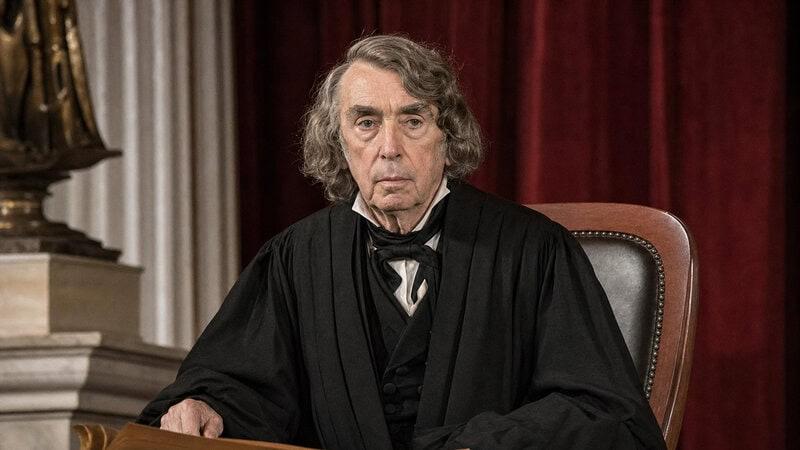

On the morning of March 6, 1857 — just two days after James Buchanan took the presidential oath — a frail, 79-year-old Chief Justice named Roger Taney shuffled to the front of the Supreme Court chamber and began reading an opinion he was certain would finally end America’s agony over slavery. Instead, he lit the fuse that blew the country apart.
A Man, Not a Legal Abstraction

Before there was a constitutional crisis, there was a person. Dred Scott was an enslaved man who had spent years living on free soil — first in Illinois, a free state, and then in Wisconsin Territory, made free by the Missouri Compromise of 1820. His enslaver, U.S. Army surgeon John Emerson, had taken him there during the 1830s and 1840s, and Scott had lived on free soil long enough to believe, reasonably, that the law recognized what geography had already granted him.
After Emerson’s death, Scott did something that required extraordinary courage: he sued for his freedom in a Missouri state court in 1846, arguing that his prolonged residence on free soil had legally emancipated him. It was not a radical argument. Missouri courts had recognized this principle before under the doctrine “once free, always free.” But the Missouri Supreme Court reversed years of its own precedent in 1852, ruling that Missouri law could return to bondage a person who had previously resided in a free state. The legal ground was shifting beneath Scott’s feet, and the shift was not in his favor.
His case climbed to the United States Supreme Court, where it stopped being just about one man’s freedom and became a proxy war over the most explosive question in American politics: could Congress restrict slavery’s expansion into new territories, and did Black Americans — free or enslaved — possess any legal standing at all? The full arc of Scott’s eleven-year legal journey is preserved in Missouri’s digital archive of the Dred Scott case records, 1846-1857, which holds the original court documents from his long fight for freedom.
What the Supreme Court Ruling Actually Said

Taney’s majority opinion was not a narrow ruling. It was a cathedral of judicial overreach, and the full text preserved by the National Archives makes that scope unmistakable. The Court could have dismissed Scott’s case on jurisdictional grounds and stopped there. Instead, Taney used the moment to attempt to settle the slavery question by judicial decree — permanently and in slavery’s favor.
The ruling moved in three devastating steps. First, Taney declared that no Black person — free or enslaved — could claim United States citizenship, and that therefore Scott had no standing to bring suit in federal court at all. The Court treated him not as a plaintiff with a grievance but as a piece of movable property that had somehow wandered into the wrong courtroom. Second, the Court ruled that Scott’s years of residence in a free state and free territory had not entitled him to freedom, directly cutting the legal legs from under the argument he and his lawyers had spent years constructing.
The third step was the most explosive. The Court struck down the Missouri Compromise as unconstitutional, holding that Congress had violated the Fifth Amendment by depriving slaveholders of their “property” — enslaved human beings — without due process of law. In one stroke, the justices declared that Congress had never possessed the authority to ban slavery from any territory, and never would. As Britannica’s account of the Dred Scott decision explains, this was not judicial interpretation — it was judicial legislation of the most radical kind, reaching far beyond any question the case required the Court to answer.
The cumulative effect was suffocating. Black Americans had no constitutional protections. Congress could not limit slavery’s spread. No legal foothold for compromise remained anywhere in the ruling. Taney had not settled the question. He had abolished every peaceful mechanism for answering it.
Two Dissenters and a Fabricated History

The ruling drew two dissents, and together they amount to one of the most pointed rebukes in the history of American jurisprudence. Justice John McLean and Justice Benjamin Curtis each rejected the majority’s conclusions root and branch, but it was Curtis’s dissent that drew blood most directly.
Taney’s opinion had rested heavily on the claim that the Founders had never intended Black people to be included in the phrase “all men are created equal” — that, at the time of the Constitution’s ratification, the understanding was universal that Black Americans were a separate and subordinate class with no legal rights a white man was bound to respect. Curtis dismantled this claim methodically and with documentary precision. He showed that at the time of the Constitution’s ratification, free Black men had held citizenship and exercised voting rights in at least five states: New Hampshire, Massachusetts, New York, New Jersey, and North Carolina. These were not marginal cases or contested interpretations. They were historical facts that Taney had simply ignored because acknowledging them would have collapsed his argument.
Curtis’s dissent did not merely disagree with the majority — it exposed the opinion’s bad faith. He resigned from the Court shortly afterward, so disgusted was he by what he had witnessed. The resignation of a sitting Supreme Court justice in protest is itself a measure of how far Taney’s opinion had departed from any recognizable standard of legal reasoning.
There is a bitter irony lodged at the heart of the ruling. Taney and his allies were, nominally, defenders of limited government and legislative prerogative. Yet by invalidating the Missouri Compromise — decades of democratic compromise hammered out by elected representatives — they engaged in precisely the kind of aggressive judicial activism they claimed to oppose. Nine unelected men had decided, without any democratic mandate, that the question of human slavery in the American territories was permanently and constitutionally settled.
The Political Earthquake

President Buchanan had privately lobbied justices before the ruling was issued. He hoped the decision would silence antislavery agitation once and for all, and he hinted in his inaugural address that the Court was about to resolve the territorial question in a way that all Americans should accept. He was catastrophically wrong about what acceptance would look like.
The reaction in the North was not submission. It was fury. Republican newspapers reprinted Taney’s full opinion not as a legal defeat but as a recruitment pamphlet, holding it up as proof that a “Slave Power” had captured every branch of the federal government. Frederick Douglass, rather than despairing, predicted publicly that the decision would accelerate slavery’s destruction — that its very extremity made it unsustainable and that the Constitution, properly read, remained an antislavery document.
The ruling also demolished Stephen Douglas’s doctrine of “popular sovereignty” — the idea that settlers in new territories could vote on whether to permit slavery. The Court had just ruled that neither Congress nor territorial legislatures could ban slavery anywhere. Douglas’s middle position, already fragile, had been vaporized from above by the very judicial branch he had expected to stay neutral.
Abraham Lincoln made the Dred Scott decision a centerpiece of his famous 1858 Senate debates with Douglas. Lincoln pressed a chilling logical extension of the ruling: if the Fifth Amendment prevented Congress from keeping slavery out of territories, what would stop a future Supreme Court from ruling that no individual state could ban it either? The argument electrified Northern audiences who had not previously considered themselves abolitionists. They were not being asked to feel sympathy for enslaved people — they were being told that their own states might soon lose the power to exclude slavery from within their own borders.
From the Courtroom to Fort Sumter

The connection between the Dred Scott decision and the Civil War is not metaphorical. It is causal. By destroying every legal mechanism for limiting slavery’s expansion, the ruling left antislavery Americans with a stark conclusion: the political system, as the Court had now definitively interpreted it, could not resolve the slavery question through normal legislative means. Something more drastic would have to.
The Republican Party channeled that conclusion into electoral energy. In 1860, Lincoln won the presidency without carrying a single Southern state, running on an explicit platform opposing slavery’s expansion — the very thing the Dred Scott ruling had declared constitutionally protected forever. Southern leaders had promised that a Republican presidential victory would mean secession. They kept that promise. The decision had convinced the South that the federal government was its permanent constitutional protector; Lincoln’s election felt, to Southern slaveholders, like the capture of that protector by an enemy force.
When the guns finally stopped firing and the Union turned to rebuilding itself, Congress made a point of writing the repudiation of Dred Scott directly into the Constitution. The Fourteenth Amendment, ratified in 1868, guarantees citizenship to all persons born or naturalized in the United States. As the Constitution Center’s analysis of Dred Scott v. Sandford notes, the amendment was crafted in conscious, explicit rejection of Taney’s ruling — its opening clause a direct answer to his denial of Black citizenship, written into the nation’s founding document so that no future court could revisit the question.
What Happened to Dred Scott

Dred Scott himself lived only briefly as a free man after the ruling. In May 1857 — just months after the Supreme Court declared him property — his then-owner, Taylor Blow, emancipated him. Scott worked as a porter at Barnum’s Hotel in St. Louis and died a free man in September 1858, before the Lincoln-Douglas debates concluded, before the election, before secession, and before the constitutional amendment that finally erased the legal logic of Taney’s opinion from American law.
His name attached itself permanently to one of the great constitutional catastrophes in American history. The simplest answer to what the Dred Scott decision did is also the most devastating: it tried to end a national argument by declaring one side’s position the permanent, constitutionally mandated truth — and it produced exactly the catastrophe it was designed to prevent. A court that reached for total power over an unanswerable question found itself holding nothing but the match that started the fire.
More than 165 years later, the ruling endures as a monument to a specific and recurring failure: the assumption that raw institutional authority can substitute for moral legitimacy. The Supreme Court had the power to declare Dred Scott property. It did not have the power to make the country believe it. And in the gap between legal decree and human conscience, a war was born. The full historical and legal record of Dred Scott v. Sandford remains essential reading for anyone who wants to understand how a single judicial opinion can reshape a nation — and how profoundly the law can fail the people it is supposed to protect.

 English
 French
 Spanish
 Portuguese
 Deutsch
 Turkish
 Dutch
Dutch
 Italiano
 Russian
 Romaian
 Portuguese (Brazil)
 Greek
Greek