


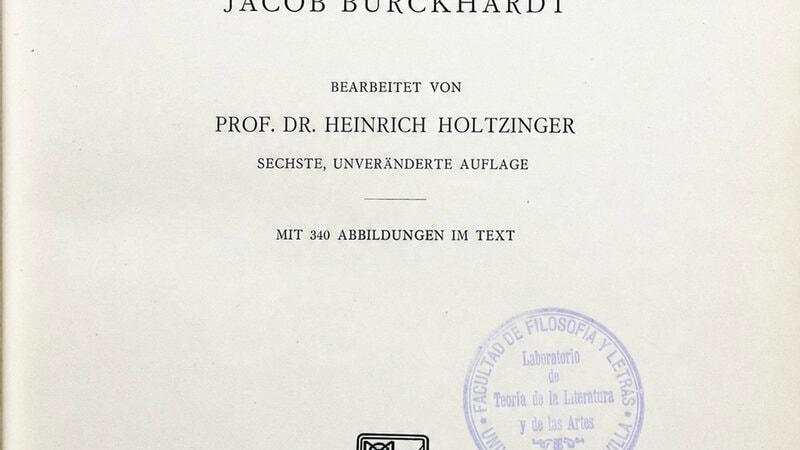

In 1860, a reserved Swiss professor handed his publisher a manuscript about Italian city-states and, without quite meaning to, crystallized a concept that would end up on museum walls, school syllabuses, and television documentary titles across the entire Western world. The word was already there, waiting — but Jacob Burckhardt was the one who turned it into a civilizational verdict.
The Moment a Swiss Scholar Rewrote European Memory

Basel in 1860 was a prosperous, quietly serious city — a good place for a quietly serious historian to work. Jacob Burckhardt was not a man who courted celebrity. He lectured at the university, walked the same streets year after year, and harbored a deep, almost mournful suspicion of the modern world roaring to life around him. What he produced in that careful, anxious solitude was The Civilization of the Renaissance in Italy — a book that arrived with little immediate fanfare but carried, as one later reader put it, a very long fuse.
The central claim was audacious for a man of such modest temperament. Burckhardt argued that a specific cluster of Italian city-states — Florence, Venice, Rome — had not merely produced beautiful paintings or clever poets. They had, he insisted, given birth to a wholly new kind of human being: the self-aware individual, conscious of himself as a personality to be shaped, projected, and celebrated. That transformation deserved its own name, its own epoch, its own chapter in the story of civilization. He called it the Renaissance.
Here is the paradox worth sitting with: we say “the Renaissance” as casually as we say “the Middle Ages” or “the Industrial Revolution,” as if the concept had always existed in that tidy, confident form. It had not. Before Burckhardt gave the idea its full architecture in 1860, the word gestured at various things in various contexts. After him, it meant something specific — and that specificity reshaped how educated Europeans understood their own past, their own modernity, and ultimately themselves.
What Burckhardt Actually Argued — and Why It Felt Like a Thunderclap

The book’s structure was itself a statement. Rather than marching through popes and princes in conventional chronological order, Burckhardt organized his argument around cultural categories: the state as a work of art, the development of the individual, the revival of antiquity, the place of morality and religion in a society that was quietly outgrowing both. This was a revolutionary move in historical writing at a time when most historians still treated politics as the skeleton of the past and culture as decorative tissue attached to it.
His thesis, stripped to its core, was that the Italian city-states of the fourteenth through sixteenth centuries represented not a religious extension of the medieval world but a rupture — a violent, creative break toward modernity, individualism, and secular self-fashioning. Florence, Venice, and Rome were not, in his telling, primarily pious Christian communities doing God’s work in marble and fresco. They were competitive laboratories of politics, personality, and ambition, providing what he described as the seedbed of a new form of society.
That temperament behind the thesis is worth noting. Burckhardt was not celebrating the world he described. He was diagnosing it. The same forces that produced Leonardo and Machiavelli — radical individualism, the concentration of power in charismatic hands, the displacement of inherited moral frameworks — were, he feared, the forces now producing the mass politics and nationalism of his own nineteenth century. His portrait of Renaissance Italy was, at least partly, a warning dressed as a history.
Before the Book: What ‘Renaissance’ Meant Before 1860

The word itself was not Burckhardt’s invention. Italian writers of the sixteenth century, most famously Giorgio Vasari in his celebrated lives of the artists, had used rinascita — rebirth — to describe a revival of painting, sculpture, and architecture after what they considered the long eclipse of the medieval centuries. But Vasari was talking about art, not civilization. He was making a professional argument about craft standards, not a philosophical claim about the nature of modernity.
The French historian Jules Michelet used the word “Renaissance” in a volume published in 1855, five years before Burckhardt, and deserves credit for an early deployment of the term in something close to its modern sense. But Michelet’s treatment was narrower, less systematic, and ultimately less influential. It was Burckhardt who gave the concept its full architecture — the interlocking arguments about individualism, statecraft, the recovery of classical antiquity, and the secularization of European life that together made the Renaissance a coherent civilizational story rather than a convenient label.
Before that architecture existed, most European historians framed the transition from medieval to modern primarily through religion — through the Reformation, the moment when Luther’s challenge to the Church cracked Western Christianity apart. Italy barely figured in that story except as the corrupt institution the Reformation was reacting against. Burckhardt’s intervention was to insist that Renaissance Italy had to be read on its own secular, aesthetic, and political terms — that the real hinge of modernity swung not in Wittenberg in 1517 but in Florence a century earlier.
The City-States at the Heart of the Argument
Burckhardt saw the Italian city-states as unique pressure cookers. Small enough to be dominated by individual genius, wealthy enough from trade to fund art and scholarship, and politically turbulent enough to demand the kind of pragmatic, amoral brilliance that Machiavelli would eventually theorize — these were environments where personality counted for everything and inherited rank for rather less than usual. That made them, in Burckhardt’s telling, the cradles of the modern self.
Florence receives the starring role. The Medici as patrons, Dante and Petrarch as the first poets to treat their own inner lives as serious literary subjects, Leonardo and Michelangelo as the supreme examples of individual genius transforming a medium — all of it served as proof that a city of wool merchants and bankers could produce a civilization of unprecedented psychological depth and visual ambition. Venice appeared as the counter-model: stable, oligarchic, and deliberately opaque, demonstrating that the Renaissance was not one thing but a family of related experiments in how a city might govern and express itself. Rome, imperial and papal simultaneously, embodied the volatile mixture of antique ambition and Christian power that made Renaissance Italy both dazzling and dangerous.
One Hundred and Sixty Years of Pushback
The book found its audience, spread through European universities, and eventually became — as subsequent scholarship has repeatedly confirmed — the foundational text through which educated readers understood the Italian Renaissance. It also attracted, in roughly equal measure, every subsequent generation’s most pointed criticisms.
Twentieth-century medievalists, led by figures like Charles Homer Haskins, argued that Burckhardt had invented an excessively dark Middle Ages specifically to make his Renaissance shine brighter by contrast. There had been intellectual and artistic renaissances in the ninth and twelfth centuries too — moments of recovery, translation, and creative energy that Burckhardt’s narrative simply absorbed into its foil. The “medieval” world he described was partly a construction designed to serve his argument about rupture.
Feminist historians from the 1970s onward raised a question that proved harder to deflect. Burckhardt’s autonomous individual — the self-made Renaissance man conscious of his own personality as a work of art — was entirely, unreflectively male. Women’s experience of the same cities and the same decades looked nothing like his liberating story. The merchant’s daughter in Florence, the noblewoman in Venice, the abbess in Rome all moved through a world of severe legal and social constraint that Burckhardt’s framework had no vocabulary to describe.
Social historians added a class dimension to the critique. The individualism Burckhardt celebrated was the privilege of a tiny, wealthy elite. Peasants, artisans, and the urban poor lived in conditions of material continuity with medieval life that no amount of Medici patronage disturbed. To write the history of Renaissance Italy as the history of its geniuses was, in this reading, to write the history of an oligarchy and call it universal.
And yet the framework refuses to die — not because historians are credulous, but because Burckhardt was not simply describing the past. He was diagnosing modernity, tracing the origins of the individualism, the secular statecraft, and the aesthetic self-consciousness that his own century had inherited and amplified. That diagnosis remains uncomfortable in ways that keep readers returning to the source.
A Book That Is Also a Self-Portrait
The Civilization of the Renaissance in Italy appeared in 1860 — the same year the aftershocks of Darwin’s On the Origin of Species, published the previous November, were still rattling theology across Europe and Garibaldi was unifying Italy at the point of a sword. It was an age obsessed with rupture, progress, and the uneasy question of what civilization actually meant now that God’s direct hand in history was becoming harder to assert. Burckhardt’s book is a product of that obsession as much as it is a study of fifteenth-century Florence.
Reading it today — whether in the freely available Project Gutenberg edition or in a modern print edition — means reading two things simultaneously: a portrait of Italian city-state culture at its most intense, and a self-portrait of a nineteenth-century European intellectual who found the present alarming and went looking in the past for an explanation. Those readers encounter a writer who admired the world he described and feared what it had become.
That double vision is what gives the book its peculiar, lasting power. Burckhardt was not a triumphalist. He did not think the Renaissance had made things simply better. He thought it had made things more intense, more individualistic, more politically dangerous — and he could see those qualities fully operational in his own century, heading, as he suspected, toward catastrophes he could sense but not yet name.
What We Mean When We Say ‘The Renaissance’ Today
The term has become cultural shorthand so powerful that it now shapes museum labels, school curricula, and documentary series without most of the people using it having any idea they are operating inside a framework built by a melancholy Swiss professor in 1860. Every time a gallery describes a Florentine painting as “Renaissance,” every time a teacher explains that the period represented a rebirth of classical learning, every time a documentary opens with a sweeping shot of the Duomo and announces the dawn of the modern world — Burckhardt’s fingerprints are on the glass.
Contemporary historians tend to use the term pragmatically, as a loose periodizing convenience rather than a grand civilizational verdict. They acknowledge that what the Renaissance actually was looks very different depending on whether you are studying court patronage, popular religious practice, the experience of women, or the global trade networks that funded Florentine banking. The Civilization of the Renaissance in Italy has itself become a subject of sustained scholarly inquiry — an ongoing debate about what Burckhardt got right, what he projected from his own anxieties, and how his complicated feelings about modernity shaped what he chose to notice in the historical record.
The most honest answer to the question of what defined the Renaissance is this: a man who was afraid of the present went looking in the past and found a story so structurally elegant, so rich in human texture, and so usefully diagnostic of what modernity feels like from the inside, that the rest of us have been living inside it ever since. More than a century and a half later, historians are still arguing about whether Burckhardt was right — which is, in its own way, the most convincing possible proof that he was onto something real.

 English
 Arabic
 French
 Spanish
 Portuguese
 Deutsch
 Turkish
 Italiano
 Russian
 Romaian
 Portuguese (Brazil)
 Greek
Greek