


Kelsey Juntwait/Mashed
Hamburgers offer home cooks many advantages: They're tasty, customizable, filling, and pretty affordable. One underrated bonus to this staple is that you can prepare them in a variety of different ways to suit your situation, whether that's in a pan, in the oven, on the grill, or over a campfire. But burger lovers should be aware that not every cooking method deserves their valuable time (and beef). When we tried 12 different ways to cook burgers, it was clear that the sous vide process was a lot more trouble than the final product was worth.
Sous vide cooking is, almost without question, the least-common burger preparation method on the list. The process involves sealing food in plastic and placing it in a container in which heated water circulates around it, gently cooking it over a long period of time. Devices known as sous vide machines keep the water at the correct temperature and track the cooking time, ensuring that the extended heat exposure kills any potentially harmful pathogens.
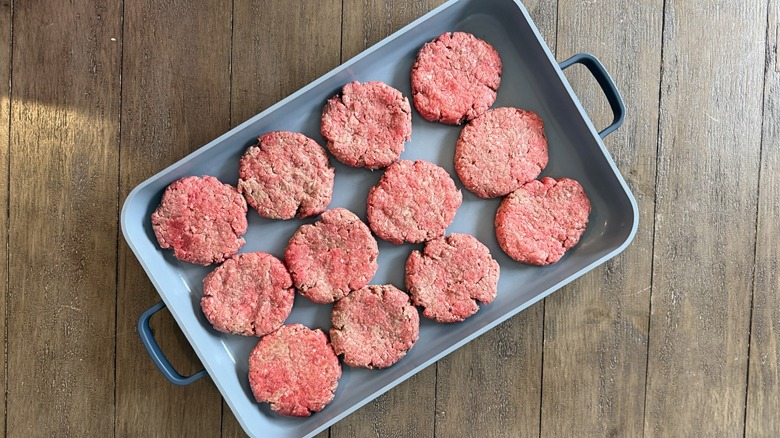
That said, the process is fairly time- and equipment-intensive. Although home cooks can often get away with squeezing air out of a normal plastic bag before sealing, ideal sous vide cooking requires a vacuum sealer to ensure everything is completely sealed and in full contact with the warm, circulating water. That's in addition to the sous vide machine itself, which can cost hundreds of dollars for quality brands, although basic models are available for under $100. On top of this, consider the amount of time required to vacuum-seal the food, preheat the water, and cook the burgers (at least 40 minutes or up to several hours), compared to the many faster and simpler options.
High on time, low on quality
Kelsey Juntwait/Mashed
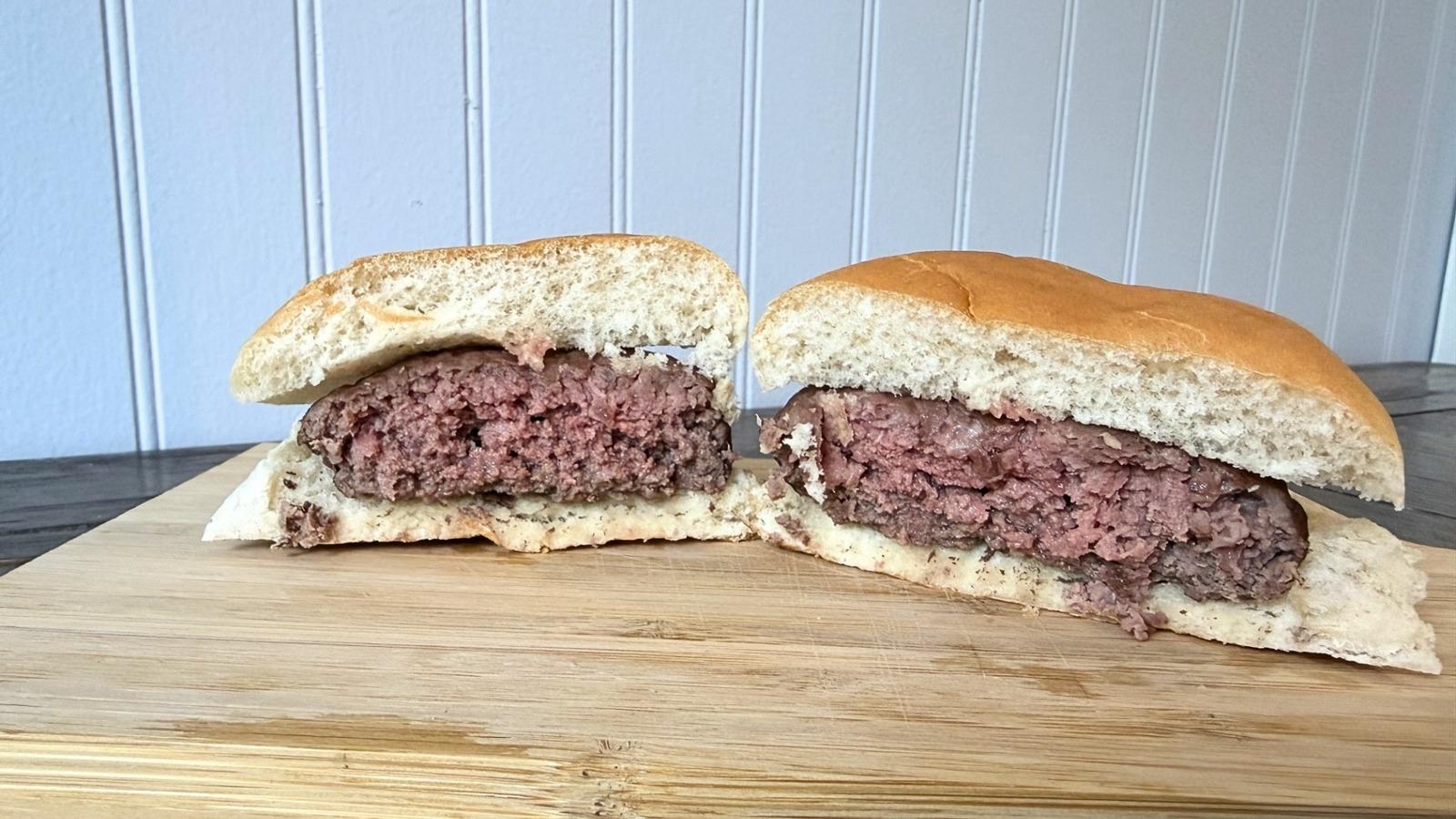
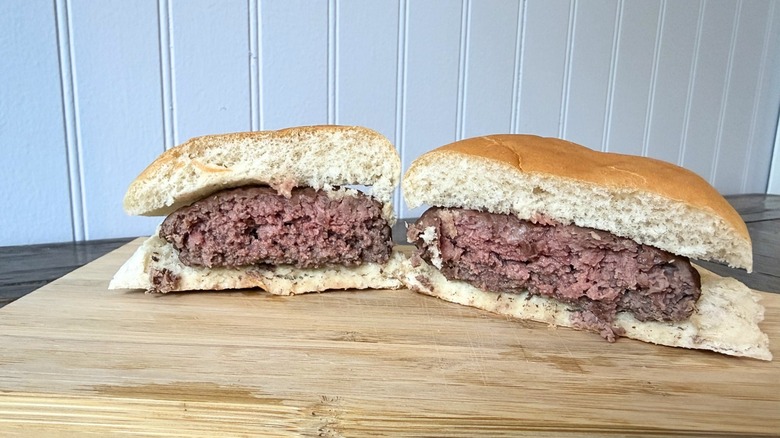
The hassle and time required for sous vide cooking are enough to recommend superior methods, like charcoal grilling (our reviewer's top choice). However, this doesn't even account for the underwhelming results. While the sous vide process can safely cook a hamburger patty, it leaves a lot to be desired quality-wise. Our reviewer called the flavor "muted," the texture overly dense and mushy, and the experience "similar to eating medium rare meatloaf" rather than a true burger. None of these descriptors compare favorably to other burger-cooking methods.
Although sous vide is undeniably ill-suited to this particular food, it's still a valuable tool in the home cook's arsenal. According to John Warr, executive chef at Radisson Blu Mall of America and FireLake Cocktail Bar & Grill, the best types of food to sous vide include cuts that require precision and care to avoid overcooking or drying out, such as filet mignon, ribeye, chicken breast, and fish. When used on these proteins, the low, controlled heat ensures full cooking without overdoing the exterior.
Burgers offer a wonderful degree of versatility, no matter which of the dozens of homemade burger recipes you choose. They can be grilled, smoked, broiled, cooked in a pan, or even air fried. Just skip the sous vide method — it's far more trouble than the mediocre results are worth.

 English
 Arabic
 French
 Spanish
 Portuguese
 Deutsch
 Turkish
 Dutch
Dutch
 Russian
 Romaian
 Portuguese (Brazil)
 Greek
Greek