


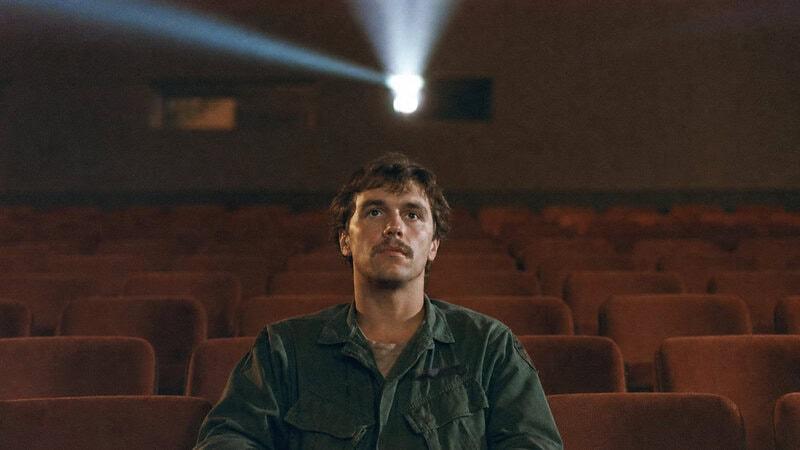

He sat in the back of a nearly empty theater in Columbus, Ohio, in the summer of 1979, a former grunt who had slogged through the Central Highlands two years before the fall of Saigon, and watched a helicopter gunship strafe a Vietnamese beach while “Ride of the Valkyries” shook the walls. He recognized the chaos. He recognized the smell that the images conjured — diesel, rot, something sweet and chemical underneath it all. What he did not recognize was the war.
The Smell of Napalm and the Weight of Myth

That gap — between what the screen shows and what the veteran lived — is the defining tension running through half a century of Hollywood’s Vietnam. And yet that same veteran, and hundreds of thousands like him, kept going back. They argued in living rooms and VFW halls and, eventually, online, about which films deserved respect and which ones were frauds dressed in jungle fatigues. Those arguments were never just about movies. They were about who gets to own the memory of a war that killed approximately 58,000 Americans and more than two million Vietnamese civilians and combatants combined — a conflict whose images, for most Americans born after 1975, exist almost entirely on film.
The stakes of getting Vietnam wrong on screen are therefore unusually high. These films did not simply entertain a generation; they built the architecture through which that generation — and every one since — understands what the war was, what it meant, and what it cost. So when veterans call a movie accurate, the question worth pressing is: accurate to what, exactly? The firefights? The psychology? The politics? The particular, unrepeatable texture of being young and afraid in a place that wanted to kill you? The answer changes depending on who is asking — and that shifting answer is precisely what makes the conversation about the best Vietnam War movies so difficult to close.
What Veterans and Soldiers Actually Think: The Ranking Wars
The lists that veterans and military audiences produce when asked to rank the best Vietnam War movies differ strikingly from the ones film critics produce, and those differences are revealing. Military Times ranked Platoon (1986) first, followed by Apocalypse Now (1979), The Deer Hunter (1978), and Full Metal Jacket — a sequence that broadly aligns with critical consensus, even if the reasoning behind those placements diverges sharply from any purely aesthetic argument.
The Vietnam Veterans of America poll tells a different story. There, Full Metal Jacket climbed to second place, and the titles ranked just behind it — Hamburger Hill and BAT-21 — barely register in mainstream critical discussions at all. Other strong vote-getters in the VVA poll included Platoon, Apocalypse Now, In Country, and The Hanoi Hilton: a range of films varying wildly in tone, budget, and artistic ambition, but sharing one quality that veterans appear to prize above all others. They do not flinch.
What becomes clear when reviewing any serious catalog of Vietnam War films with veteran commentary attached is that factual accuracy and emotional truth are two distinct categories — and veterans weigh them differently than critics do, and differently than casual audiences do. Keeping those two categories separate is the only way to make sense of how the same community can place Apocalypse Now and Hamburger Hill on the same list without contradiction.
Platoon (1986): Oliver Stone’s Foxhole

Oliver Stone is the only major director in this conversation who actually fought in the war he was filming. He served two voluntary combat tours in Vietnam, was wounded twice, and earned a Bronze Star. Platoon is explicitly autobiographical — protagonist Chris Taylor’s arc of disillusionment maps closely onto Stone’s own — and that biographical weight shows in every frame. No other Vietnam War film carries quite the same quality of someone settling a personal score with history.
What Stone gets right is granular and visceral: the fractured unit cohesion between short-timers and new arrivals, the class fault lines between college-educated draftees and career noncommissioned officers, the heat that doesn’t break at night, the rot that gets into everything. The village massacre sequence is rooted in documented atrocities, most notoriously the My Lai massacre of March 1968, and Stone shoots it without redemptive framing — which made it genuinely difficult to watch in 1986 and remains so today.
What the film compresses is its moral timeline. The descent from idealism to complicity to horror happens faster on screen than veterans recall it happening in the field; dramatic necessity demands what reality rarely provides, which is a clean arc. The film is set during 1967 and 1968, the period bracketing the Tet Offensive, when American troop levels in-country were approaching 540,000. Stone gestures at this strategic context without fully explaining it — which is perhaps appropriate for a film told entirely from the foxhole looking up, never from the map room looking down. That deliberate narrowness of perspective is a strength disguised as a limitation.
Apocalypse Now (1979): A Masterpiece Built on a Deliberate Lie

Francis Ford Coppola never pretended he was making a documentary. Apocalypse Now is an adaptation of Joseph Conrad’s 1899 novella Heart of Darkness transplanted onto the Mekong River, and the film’s most hallucinatory sequences — the rogue Special Forces commander in his Cambodian temple, the Do Lung Bridge with no commanding officer, the Playboy Bunnies airlifted into the jungle — bear almost no relationship to documented military operations. Coppola has said as much. The film is a fever dream using Vietnam as its landscape, not a reconstruction of it.
And yet veterans consistently vote it onto their lists, and that requires explanation. What Apocalypse Now captures with something approaching eerie precision is the psychological texture of prolonged counterinsurgency: the absurdist command logic, the moral vacancy produced by a war with no front lines and no definable victory condition, the feeling of institutional authority dissolving the deeper you move into the field. The film arrived in theaters in 1979, less than four years after the fall of Saigon, and one year before post-traumatic stress disorder was formally classified as a diagnosis in the DSM-III. It gave a shape — operatic, nightmarish, unrealistic in its specifics — to something veterans were experiencing but could not yet name.
That is a different kind of accuracy than getting the radio frequencies right. It may ultimately be a more important kind, and it explains why a film that invents most of its plot details continues to command genuine respect from people who lived the war it depicts.
Full Metal Jacket (1987): Two Films, Two Kinds of Truth

Stanley Kubrick never went to Vietnam. He filmed Full Metal Jacket almost entirely in England, using a derelict gasworks in Beckton to stand in for the ruins of Hue. And yet the film’s first half — the Parris Island boot camp sequence — is arguably the most forensically precise depiction of 1960s Marine Corps recruit training ever committed to film. Kubrick hired R. Lee Ermey, a former Marine drill instructor, and allowed him to improvise large portions of his dialogue. Marine veterans watching those scenes have consistently reported the same reaction: that is exactly how it was.
The Battle of Hue sequence occupying the film’s second half is more stylized — geographically compressed, atmospherically heightened — but it captures something true about urban combat that the jungle films rarely touch: the disorientation of fighting in a built environment, the way streets and rooms change the geometry of killing. Kubrick uses Vietnam as a lens for examining institutional dehumanization as a universal process rather than a specific historical event, and that philosophical ambition is precisely what separates Full Metal Jacket from Hamburger Hill — and why both films belong in the same serious discussion without canceling each other out.
Hamburger Hill (1987): The Ground-Level Standard

Hamburger Hill, consistently ranked near the top of polls conducted among service members and veterans, has none of Full Metal Jacket‘s universal philosophical ambitions — and that is precisely its strength. The film dramatizes a specific, documented engagement: the May 1969 assault by elements of the 101st Airborne Division on Ap Bia Mountain in the A Shau Valley, a ten-day battle in which American forces suffered approximately 72 killed and 372 wounded. They took the hill. Ten days later, they abandoned it. The engagement became a flashpoint for congressional criticism of the war’s attrition strategy, and the film honors it with the kind of ground-level specificity — this unit, these men, this hill — that Kubrick deliberately avoids.
Both approaches are legitimate. They are simply telling different truths, at different scales, for different purposes. The veteran who prizes Hamburger Hill for its procedural honesty and the veteran who prizes Full Metal Jacket for its psychological insight are not disagreeing about quality; they are disagreeing about what they need a war film to do.
The Deer Hunter, BAT-21, and the Wars Hollywood Almost Never Shows
The Deer Hunter (1978) is built around one of the most disputed images in Vietnam War cinema: Viet Cong captors forcing American prisoners to play Russian roulette. Historians and veterans have found no credible documentation that this practice occurred. The scenes are almost certainly invented. And yet the film’s portrait of what the war did to working-class communities in western Pennsylvania — the men it took, the broken versions it returned, the silences it installed where certainty used to be — is considered by many veterans to be among the most emotionally accurate treatments of the conflict ever filmed. A central invented detail sits inside a larger emotional truth, and audiences have been arguing about whether that trade-off is acceptable since the film’s release. The argument itself has not been resolved, which may be the point.
BAT-21 (1988) operates in almost the opposite register: low-profile, procedurally grounded, based on documented events. The film dramatizes the true story of Lt. Col. Iceal Hambleton, an Air Force electronic warfare officer shot down over North Vietnam during the 1972 Easter Offensive, whose rescue became one of the most costly search-and-rescue operations in Air Force history. It represents a chapter of the war’s final phase that receives almost no attention in the broader Vietnam War films conversation, which skews heavily toward the infantry experience of 1966 through 1969. That skew is itself a kind of historical distortion that BAT-21, almost alone among major releases, quietly corrects.
The Hanoi Hilton (1987) opens up yet another largely neglected dimension: the experience of American prisoners held at Hỏa Lò Prison in Hanoi. The POW experience — years of captivity, systematic interrogation, and isolation — is as much a part of the Vietnam War’s history as any jungle firefight, and its near-absence from the dominant Vietnam War films conversation says something about which stories American cinema has been most comfortable telling, and which it has preferred to leave in the margins.
What the Best Vietnam War Films Agree On — and What That Tells Us
Across every version of the Vietnam War movie list that veterans and military audiences consistently endorse, one throughline emerges with remarkable consistency: the films that resonate most deeply are the ones that refuse resolution. No clean victories. No unambiguous villains. No final scene in which the sacrifice is validated by something worth the cost. The war as veterans experienced it did not offer those consolations, and the films they trust are the ones that don’t manufacture them retroactively.
The question of historical accuracy in Vietnam War movies turns out, on close inspection, to be two separate questions that critics and veterans are almost never asking simultaneously. Factual accuracy asks: did this battle happen, were these weapons used, did this command structure exist? Psychological accuracy asks: does this feel like what prolonged violence does to human beings, to units, to communities, to countries? The films that veterans return to most reliably tend to score high on the second measure even when they stumble on the first — and the films that score highest on factual detail without achieving psychological truth tend to disappear from the conversation within a decade of their release.
There is also a significant absence worth naming directly. The South Vietnamese soldiers who fought alongside Americans for years, and the Vietnamese civilians who bore the heaviest absolute losses of the entire conflict, appear as background figures or victims in almost every Hollywood treatment of the war. Australian and South Korean forces, whose contributions were substantial, are similarly invisible. The most honest accounting of what the best Vietnam War movies get right must include an accounting of what the entire genre, taken together, still gets wrong. The war lasted more than a decade across jungle, rice paddy, river delta, city, open sea, and the skies above Hanoi. No two-hour film can hold all of that. What the best films can do — and what the best ones have done — is hold some portion of it honestly, with enough integrity to sustain the argument that follows every screening.
The veteran from that Columbus theater in 1979 is still watching. Somewhere — on a streaming service now, not in a theater — he is watching the helicopters come in low and the river unspooling toward Cambodia, and he is still arguing with the screen. That argument, the refusal to let any cinematic version stand unchallenged, is itself a form of bearing witness. The screen gets it wrong. The arguing, continued over fifty years and counting, gets it closer to right.

 English
 Arabic
 French
 Spanish
 Portuguese
 Deutsch
 Turkish
 Dutch
Dutch
 Italiano
 Russian
 Romaian
 Portuguese (Brazil)