


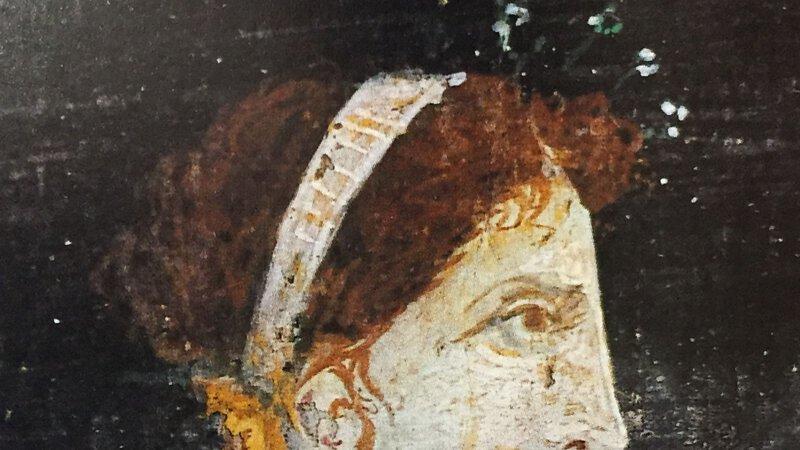

In the summer of 30 BC, two bodies were carried into a mausoleum somewhere near Alexandria, and then — with the quiet finality that only history can manage — the door closed on one of the ancient world’s greatest stories and never, in any verifiable sense, opened again. For more than two thousand years, the tomb of Cleopatra VII has been the most tantalizing missing address in archaeology: recorded, described, reportedly visited by Roman emperors, and yet utterly, maddeningly gone.
The Queen Who Vanished Twice

Cleopatra died once in August of 30 BC, in the collapse of everything she had spent her reign holding together. She died a second time, more slowly, as the centuries swallowed the city she called home. Alexandria — cosmopolitan, earthquake-prone, perpetually contested — was rebuilt over and over again, its ancient bones sinking beneath the Mediterranean and beneath the concrete of a modern metropolis of more than five million people. What Cleopatra knew as her capital is largely inaccessible today, buried under the living city or drowned in the sea.
The ancient sources are tantalizingly specific and yet ultimately useless as a map. Plutarch recorded that Cleopatra supervised construction of her own mausoleum near a temple of Isis, and that after Mark Antony died from his wounds, she was buried beside him in that same structure. Roman historians noted that Augustus — who had every reason to diminish Cleopatra’s legacy — nonetheless allowed her burial to proceed with royal honors. The emperor Caligula, generations later, reportedly visited the tomb. It existed. It was known. And then, with no dramatic sacking on record, no fire, no decree, it simply vanishes from the written record.
The stakes of finding it can hardly be overstated. This would not be a footnote in archaeological history — it would rank alongside the discovery of Tutankhamun’s tomb as one of the defining moments in our understanding of the ancient world. Not just the physical remains, if any survive, but potentially inscriptions, objects, and written records bearing on questions historians have argued over for centuries.
What the Ancient Sources Say — and What They Don’t

Plutarch is the closest thing to a near-contemporary witness, writing within living memory of events. His account places the mausoleum near a temple of Isis, which Cleopatra — a queen who fashioned herself as Isis incarnate — would have considered deeply meaningful. But “near a temple of Isis” in ancient Alexandria is almost comically unhelpful: Isis temples were ubiquitous across Ptolemaic Egypt, and the city’s religious geography has been transformed beyond recognition.
The core scholarly disagreement is geographic. Some historians believe the mausoleum stood inside Alexandria proper, perhaps near the royal quarter along the harbor — a district now partially submerged. Others argue that Cleopatra, facing Roman occupation, would have sought a sacred site outside the city, somewhere her burial could be protected by religious significance rather than political goodwill. That disagreement has sent searchers in radically different directions for generations, and neither camp has produced a confirmed answer.
What makes the silence so striking is the knowledge that the tomb existed within documented memory. Augustus visited. The structure stood. The fact that it then disappears entirely — no later Roman tourist, no medieval Arab geographer, no Renaissance traveler mentions visiting it — suggests either that it was destroyed and its location forgotten, or that it was deliberately concealed. Rome had reasons to suppress Cleopatra’s cult. Her image, her story, and her physical remains represented a rival claim on power and on Egypt. It is not impossible that the tomb was raided or its location deliberately obscured within a generation of her death.
Kathleen Martinez and the Temple in the Desert

For most of the twentieth century, the search for Cleopatra’s tomb was more theoretical than practical — scholarly debate without serious fieldwork. Then came Kathleen Martinez. A Dominican lawyer turned archaeologist and Egyptologist, Martinez developed a theory that broke sharply from the Alexandria-centered consensus. Her conviction was that the answer lay not in Alexandria itself but roughly twenty-five miles to the west, at a crumbling temple complex called Taposiris Magna — and she was willing to stake her professional reputation on it.
The logic is rooted in Cleopatra’s own religious identity. Taposiris Magna translates roughly as “Great Tomb of Osiris” — a name saturated with significance for a queen who considered herself the living embodiment of Isis, Osiris’s divine consort. The site held a functioning temple, a lighthouse echoing Alexandria’s famous Pharos, and a strategic position on the coastal strip west of the capital. For a queen planning her own eternity, it would have been rich with meaning.
Martinez began excavations at Taposiris Magna and kept digging through years of painstaking work that yielded extraordinary but always tantalizing results. Her teams unearthed coins bearing Cleopatra VII’s image — direct physical evidence connecting the queen to this site. They also found headless royal statues, ritual burial shafts, alabaster fragments, and mummified remains of high-status individuals interred in ways suggesting proximity to royalty. None of it was conclusively Cleopatra. All of it tightened the circle.
The skeptics were never silent. Rival Egyptologists argued the site was geographically and historically unlikely, and that Plutarch’s description pointed firmly toward Alexandria. But Martinez had a powerful counter-argument: no one else was producing a better candidate. The question of how close archaeology has come to finding Cleopatra’s tomb is, in many ways, a question about how far Martinez has come — and she has come further than anyone before her.
What Has Been Found at Taposiris Magna

Excavations at Taposiris Magna have, over the years, built a cumulative case that would be remarkable for any archaeological site. The digs have produced coins stamped with Cleopatra’s image, amulets, and ritual objects consistent with a high-status religious complex. Tunnels and chambers beneath the temple have been partially mapped, revealing underground architecture of a complexity suggesting the site was designed to hold something — or someone — of great importance. The layout is not that of an ordinary provincial temple.
Egypt’s Ministry of Tourism and Antiquities has maintained active involvement in the ongoing excavation, a signal that the evidence Martinez’s team is producing is being taken seriously at the highest levels of Egyptian heritage management. Archaeological work in Egypt requires government coordination and approval, and continued state backing carries institutional weight.
Each excavated layer at Taposiris Magna also rewrites the micro-history of the site itself. In Cleopatra’s era, this was not a remote ruin — it was a functioning religious and commercial center with connections to Alexandria and the wider Mediterranean world. It was, in short, exactly the kind of place where a Ptolemaic queen might have chosen to build a tomb designed to outlast her dynasty. Whether she did remains the central unanswered question.
The Sunken Port: A New Dimension to the Search

Then came the sea. Researchers announced the identification of a submerged ancient port off the Egyptian coast near Taposiris Magna, a finding that introduced a new dimension to a search that had been largely land-based. National Geographic reported on the discovery in connection with the broader search for Cleopatra’s tomb at Taposiris Magna, and the implications for understanding the site’s ancient importance are significant.
The port matters for reasons beyond the drama of its submersion. Taposiris Magna was never just a temple — it occupied a strategic coastal position, and the presence of a functioning harbor nearby confirms the site’s significance as a regional hub worthy of royal investment. A queen selecting her eternal resting place would not have chosen an obscure backwater. She would have chosen a place with presence, access, and cultural weight. The identification of an ancient port off the coast near Taposiris Magna strengthens the geographic and logistical case for the site as a genuine Ptolemaic center of importance.
Researchers have been careful not to overclaim. The port is a puzzle piece — a fragment of context rather than a smoking gun. But underwater archaeology along Egypt’s Mediterranean coast has already rewritten history before. The submerged ruins of ancient Alexandria yielded a palace quarter, colossal statues, and artifacts that transformed understanding of the Ptolemaic world. The sea, it turns out, preserves what the land destroys. The sunken harbor near Taposiris Magna suggests the water off this stretch of coast still holds significant secrets.
Why Two Thousand Years of Searching Has Produced No Answer

The absence of a discovery is not, in this case, evidence that the search has failed — it is evidence of how formidable the obstacles are. Alexandria’s geology alone would defeat most searches. The ancient city has sunk roughly six meters below its original level over two millennia, a consequence of seismic activity and the natural subsidence of the Nile Delta. Entire districts of Cleopatra’s world now lie underwater or beneath modern neighborhoods, roads, and infrastructure. You cannot simply dig where instinct points.
Political and logistical barriers compound the geological ones. Excavating beneath a living city of millions requires extraordinary coordination between archaeologists, governments, and urban planners. Many of the most promising zones lie under military areas or densely populated neighborhoods where excavation would require displacement on a massive scale.
There is also the paradox of Egypt’s archaeological richness. The country’s ancient layers are so dense, so perpetually yielding new discoveries at major sites, that searching for one specific tomb resembles trying to find a single sentence in a library where every shelf contains a different civilization. Every dig turns up something important. That very abundance makes a targeted search for Cleopatra’s burial place extraordinarily difficult to prosecute with precision.
What Finding the Tomb Would Actually Mean
A confirmed discovery of Cleopatra’s tomb would do more than fill a gap on a historical map. It would reshape the narrative around her death and its aftermath in ways that are difficult to fully anticipate. Were Antony’s remains actually buried beside her, as Plutarch claimed, or did Roman politics ultimately override that final wish? Was her burial elaborate — a statement of Ptolemaic dignity in defeat — or deliberately modest, stripped of the grandeur her dynasty had represented? Did the Romans allow the tomb to stand intact, or was it quietly desecrated in the years after her death?
Physical evidence — inscriptions, funerary objects, potentially biological material that modern forensic science could analyze — would give historians tools they have never possessed. The written record of Cleopatra’s life is extensive but filtered entirely through the perspectives of her enemies and admirers, almost all of them writing long after the fact and with distinct agendas. A tomb would represent her own statement, expressed in the language of Ptolemaic burial ritual, about who she believed herself to be.
For Egypt, the implications would extend far beyond academia. A verified tomb of Cleopatra VII would become an instant world heritage destination of the highest order, drawing global attention and positioning Egyptian-led archaeology at the center of international scholarly conversation. The cultural and economic resonance would be felt for generations.
And for Kathleen Martinez, who has spent years of her professional life pursuing this question through desert excavations, political complexity, and the patient accumulation of suggestive but not conclusive evidence, vindication would not arrive as a quiet journal publication. It would arrive as one of those rare moments — rarer than they should be in a field that traffics in revelation — when history stops being a mystery and becomes, at last, a place you can stand inside and finally know.

 English
 Arabic
 Spanish
 Portuguese
 Deutsch
 Turkish
 Dutch
Dutch
 Italiano
 Russian
 Romaian
 Portuguese (Brazil)
 Greek
Greek