


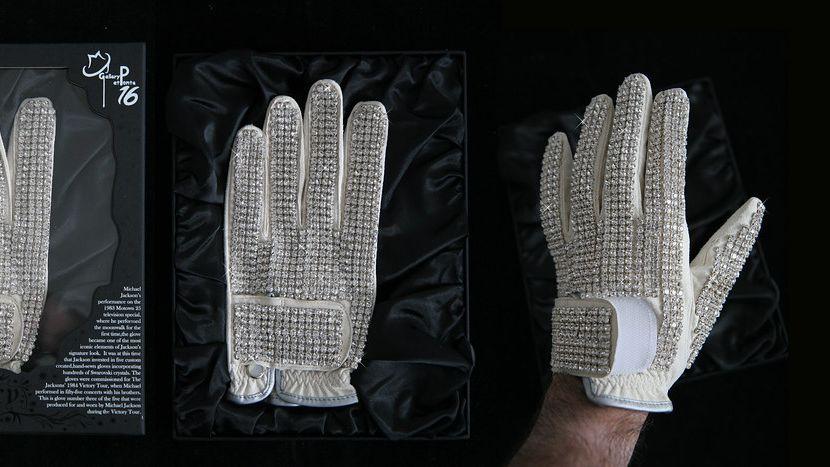

On the night of May 16, 1983, something happened on an NBC soundstage in Burbank, California, that roughly 47 million television viewers could not quite explain. A young man in a black fedora and a single white glove appeared to walk forward while his feet carried him silently, impossibly, backward across the floor. The air went out of the room. The screaming started. And a move that had been alive for half a century suddenly felt like it had arrived from another world.
One Glove, One Moment, One Move That Stopped the World
The occasion was Motown 25: Yesterday, Today and Forever, a television special celebrating the legendary record label’s anniversary. Michael Joseph Jackson, born August 29, 1958, was twenty-four years old. He had spent his entire life performing — since he was a small child touring with his brothers, through the Jackson 5’s explosion into American living rooms, through a solo career that was already remarkable before this night. And yet nothing in that history quite prepared the audience for what happened when the opening bass line of Billie Jean began to pulse through the speakers.
Jackson hit his mark, let the music breathe, and then — at a moment precisely chosen for maximum theatrical effect — he planted his right foot, raised his left heel, and began to glide. His upper body stayed perfectly erect, almost casual, as though he were strolling down a boulevard. His feet said something else entirely. He was moving backward, smoothly, without visible friction or effort, as though gravity had quietly excused itself from the stage.
The paradox at the heart of this moment is the paradox at the heart of Michael Jackson’s artistic legacy. The move that felt like it had fallen from the future was, in fact, rooted in decades of street corners, vaudeville stages, jazz clubs, and underground dance culture stretching back to the 1930s. Tracing the real history of the moonwalk means traveling through all of those spaces before we ever reach that single white glove — and understanding that Jackson’s genius lay not in invention, but in something arguably more difficult: transformation at a scale the world had never seen.
The Earliest Footprints: Vaudeville, Jazz, and the Backslide
The history of the moonwalk does not begin with Michael Jackson. It begins somewhere in the blur between jazz performance and vaudeville showmanship, in the era when Black entertainers were forging an entirely new visual language for American popular culture under conditions of crushing inequality and fierce creative pressure.
As early as the 1930s and 1940s, performers working in jazz and vaudeville traditions were experimenting with a fluid backward glide — sometimes called the backslide or the buzz step — that created the illusion of frictionless, almost weightless motion. The mechanics were already recognizable: a careful weight transfer, one foot dragging flat while the other pushed off, the upper body held deliberately still to amplify the visual contradiction happening below the waist.
Dance historians frequently point to a 1955 performance by tap dancer Bill Bailey at the Palace Theater in New York as one of the earliest clearly documented instances of a backward tap-glide closely resembling what would eventually become the moonwalk. Bailey executed the move in a way that made audiences gasp — which tells us something important: the illusion was already fully formed, already powerful, already capable of stopping a crowd in its tracks, nearly three decades before Motown 25.
What kept these early versions invisible to mainstream audiences was not any lack of brilliance. It was geography, race, and documentation. These moves lived inside Black performance traditions and working-class entertainment spaces that mainstream America largely ignored. The knowledge traveled person to person, body to body, the way dance knowledge always has. No one wrote it down. No one filmed it reliably for posterity. And so the history of the backslide remained, for most of the world, effectively secret.
Marcel Marceau, Mime, and the Grammar of Illusion
There is a surprising detour in the moonwalk’s family tree — one that runs through the silent theaters of postwar France rather than the jazz clubs of Harlem. French mime artist Marcel Marceau spent the 1950s and 1960s developing and refining illusion-of-motion techniques that manipulated an audience’s perception of direction, gravity, and momentum. His famous routines — walking in place, walking against the wind, descending invisible staircases — were built on the same fundamental deception that makes the moonwalk work: the body tells one story while the feet tell another.
Mime technique filtered into popular entertainment throughout the 1960s, influencing performers across television, theater, and variety stages who began incorporating anti-gravity body illusions into their acts. The visual grammar Marceau had codified in silence found its way, through imitation and experimentation, into the wider performance vocabulary of the era.
This is not merely a theoretical connection. Michael Jackson was a voracious, almost obsessive student of performance history, and associates and biographers have documented his deep admiration for Marceau specifically — making the mime influence a matter of record rather than speculation. Jackson absorbed what Marceau understood about misdirection, about using the stillness of one body part to dramatize the movement of another. He grasped, intuitively, that the moonwalk worked for the same reason a mime’s invisible wall works: the contradiction between what the eye expects and what it actually sees creates a genuine, involuntary moment of wonder.
The Street Owns It: Soul Train, Popping, and the Los Angeles Underground
By the 1970s, the move had found a new home and a new name. In the street dance culture of Los Angeles, inside the competitive world of popping and locking — where dancers on corners and in clubs treated their own bodies as instruments for producing shock and awe — a version of the backward glide was circulating under the name the backslide. It was one weapon among many in an arsenal of body isolations and physical illusions, performed with the casual ferocity that characterizes all great street dance.
Soul Train, Don Cornelius’s landmark weekly television program, served as the national broadcast window through which these underground moves reached Black American audiences across the country. Week after week throughout the 1970s, the Soul Train line showcased the bleeding edge of Black dance culture, keeping moves like the backslide alive in popular consciousness even as mainstream media remained largely unaware of them.
Among the dancers refining the backslide during this era was Jeffrey Daniel, a Soul Train regular who would become one of the most important human bridges in this entire story. Daniel was performing the backslide publicly and on television as early as 1979. He was a member of the R&B group Shalamar and, in 1982 — just one year before Motown 25 — performed the move on the UK television program Top of the Pops, introducing British audiences to something they had never seen. More crucially: Jeffrey Daniel is widely and credibly credited with personally teaching the backslide to Michael Jackson. In any honest accounting of Jackson’s dance history, Daniel’s name belongs near the top of the credits.
Jackson Learns, Refines, and Reinvents
What Jackson did with what he learned from Jeffrey Daniel — and from the long tradition behind Daniel, and from Marcel Marceau’s silence, and from every other tributary feeding into this river — was not simply reproduction. It was transformation through obsession.
Collaborators who worked with Jackson during the preparation for Motown 25 have described his rehearsal process in terms that border on the extraordinary. He practiced the move for weeks before the taping, returning to it again and again with the focus of an athlete preparing for a single defining competition. He refined the weight distribution. He extended the glide’s duration beyond what most performers attempted. He added a precise heel-drop snap at the end — a small punctuation mark that gave the move a beginning, middle, and end, turning a fluid illusion into a complete sentence with a period.
And then there was his instinct for context. Jackson did not deploy the moonwalk randomly or early in the performance. He placed it at a specific, earned moment inside Billie Jean — a song already building enormous emotional pressure — and let the silence of the audience’s disbelief do the rest of the work. He understood something that separates great performers from merely skilled ones: timing does not just enhance impact, it multiplies it exponentially.
The name itself did important mythological work. The term moonwalk — evoking Neil Armstrong’s 1969 lunar footsteps, weightlessness, the impossible made real — became attached to the move after the Motown 25 broadcast. It was a perfect label, and it helped separate Jackson’s version in the public imagination from every earthly predecessor. The backslide became the moonwalk, and the moonwalk became Michael Jackson, and the history of everything that came before quietly receded from view.
After Motown 25: How One Night Rewrote Dance History’s Memory
The cultural shockwave from the Motown 25 broadcast was immediate and measurable. Within days, dance studios across America were reporting students arriving with a single urgent request: teach me the moonwalk. A name and a demand that had not existed before the broadcast were suddenly everywhere, demonstrating with startling clarity how a single televised moment can rewrite collective memory — not just adding something new to public consciousness, but effectively erasing awareness of what had existed before.
Through the 1980s and 1990s, Jackson’s moonwalk became one of the most universally recognized physical gestures on earth. It appeared in advertising, in film, and in sports celebrations on fields and courts worldwide. Every school playground in every country seemed to contain at least one kid sliding backward in sneakers, tongue between teeth in concentration. The move had achieved something genuinely rare in popular culture: it had become a shared reference point that crossed every border of language, age, and background.
The irony embedded in this global triumph is one that the moonwalk’s full history makes impossible to ignore. A move born in marginalized Black performance spaces, refined on street corners and underground stages with no cameras running, was celebrated primarily as the singular genius of one performer — with the community of dancers and innovators who had carried it across fifty years remaining largely invisible in the mainstream telling. The move traveled; the credit did not travel with it.
Jackson himself navigated this tension in ways that reflect well on him. He credited Jeffrey Daniel in interviews while also describing his own refinements and contributions with precision. He understood that he was both an inheritor and an inventor — that these roles are not mutually exclusive, and that the greatest artistic acts are often acts of passionate, transformative borrowing rather than creation from nothing.
Legacy: What the Moonwalk Tells Us About How Art Actually Travels
The moonwalk’s journey — from 1930s jazz and vaudeville floors to a 1983 television stage to the imagination of the entire world — is a near-perfect case study in how performance art actually moves through culture. Not through books or copyright notices or formal transmission. Through bodies. Through watching and imitating and competing and loving a thing so much that you must make it your own. Through the long, patient, mostly unrecorded conversation that dancers have been having with each other across generations for as long as human beings have moved to music.
Michael Joseph Jackson — American singer, songwriter, dancer, and philanthropist, born August 29, 1958, who died in Los Angeles on June 25, 2009 — built his legacy as the King of Pop on exactly this capacity. He could absorb what existed, study it until he understood it better than almost anyone alive, and then present it at a scale and with a precision that made the whole world feel they were seeing it for the very first time. That is not theft. It is not even imitation. It is something closer to alchemy.
To say that Jackson invented the moonwalk is to undersell what he actually did, which was harder and rarer. Anyone can invent a move. Only a handful of performers in all of human history have taken something that already existed and made the entire world fall in love with it simultaneously — in a single night, in a way that proved permanent across every culture on the planet.
Every person who has ever tried to moonwalk on a kitchen floor, a school hallway, or a wedding reception — feet sliding back on socks, arms extended for uncertain balance, face lit up with the pure joy of attempting the impossible — was unknowingly joining a conversation between dancers who never shared a stage. Bill Bailey added an early verse. Jeffrey Daniel passed the thread forward. And Michael Jackson made sure that conversation would never, ever end.

 English
 Arabic
 French
 Spanish
 Portuguese
 Deutsch
 Turkish
 Dutch
Dutch
 Italiano
 Russian
 Romaian
 Greek
Greek