


S-cphoto/Getty Images
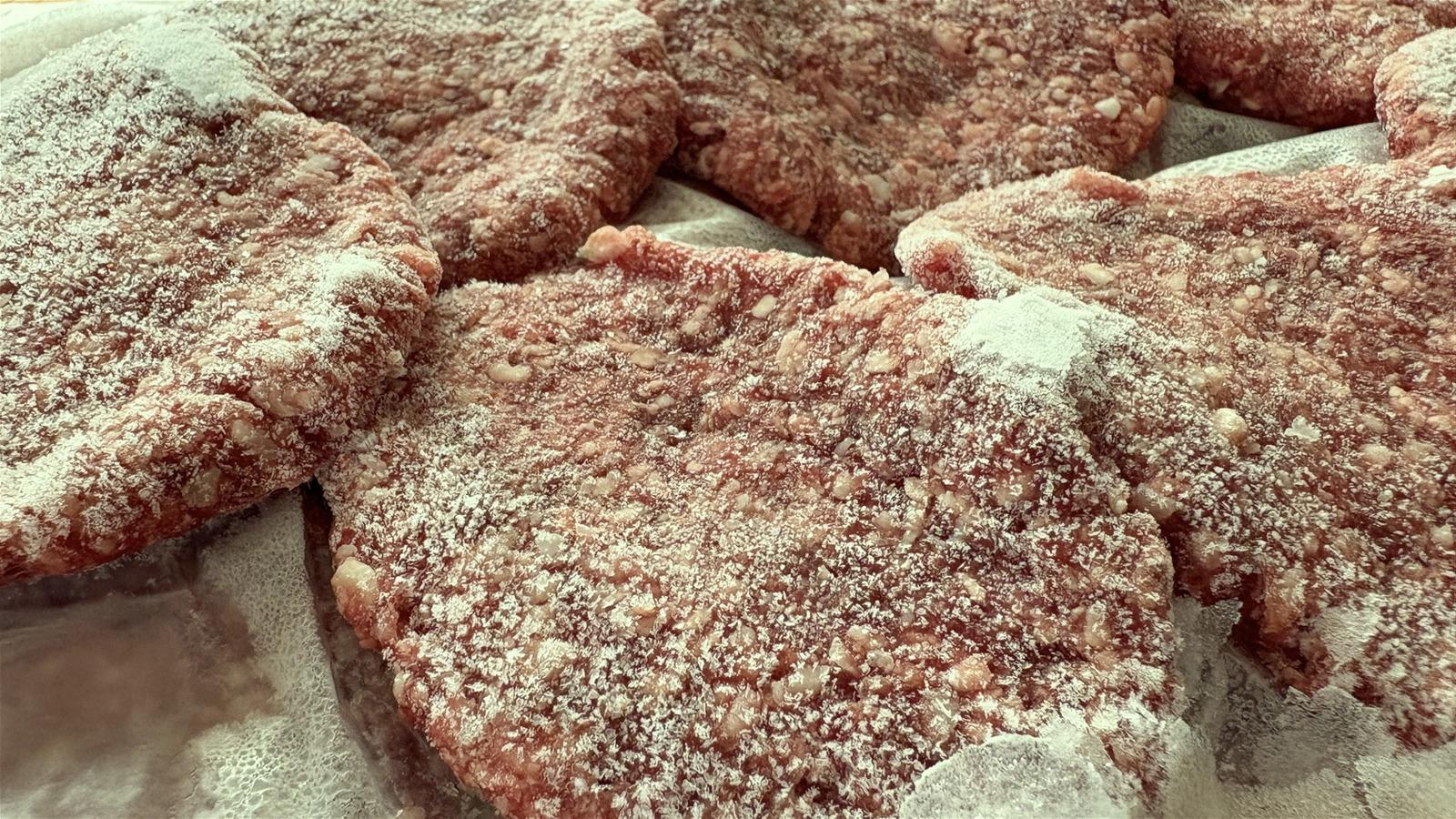
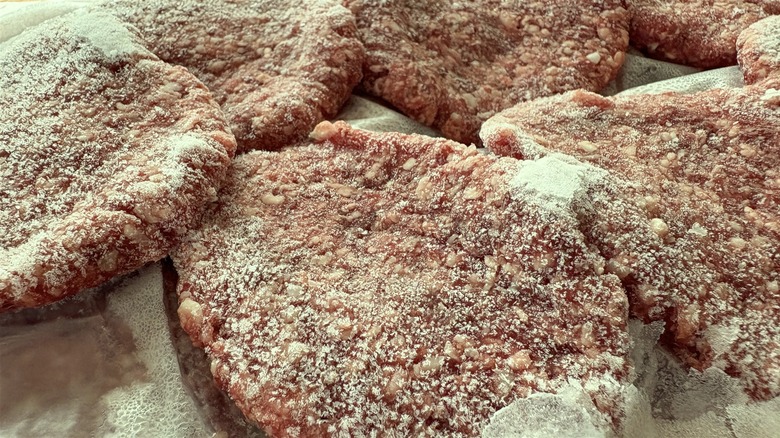
It's a situation that's surprisingly more common than you think: you get yourself a pack of high-quality frozen burgers and then promptly forget about them. A month later, you remember that you've got some tasty beef stashed away, only to discover it's somehow developed weird patches of green during its time in the freezer. In many cases, that sickly green tint could actually just be the result of oxidation and a trick of the light rather than the burgers going bad.
The reason your frozen burgers look red when they're fresh is the presence of myoglobin, an iron-rich protein that helps muscles store oxygen. The colors of meat can change depending on how much oxygen the myoglobin is exposed to and how that affects its chemical state. When it's deprived of oxygen, for example, it enters the deoxymyoglobin state and takes on a purplish tone. When it oxidizes beyond its red state, myoglobin becomes metmyoglobin, which appears green or brown to the naked eye as it continues to degrade.
Frozen meat can sometimes make that green coloration much more pronounced because of how light diffracts on its surface. Your burgers have a thin sheet of frozen moisture on the surface, and depending on how it catches the light, it can make the greenish hues of metmyoglobin pop even more. While it's certainly less attractive than bright red burger meat, meat that's turned green only because of myoglobin oxidation remains perfectly safe to eat.
Green coloration on your burgers can also be a warning sign
Just because green spots on your burgers could be safe, it shouldn't automatically be assumed you can eat them, especially if you suspect that they haven't been properly stored. A 2003 study published in Food Microbiology found that green discoloration on bologna could be the result of two bacteria, Carnobacterium viridans and Aerococcus viridans. The latter of the two is a pathogen associated with urinary tract infections and several other illnesses.
It's also possible that green patches could be the result of mold growing on the meat. Some types of mold are capable of surviving freezing temperatures, entering a dormant state where growth is inhibited to a point where it's essentially paused. Fluctuations in temperature, either through a malfunctioning freezer or frequent defrosting, can create windows for those mold spores to reactivate and begin their growth cycles. Over time, this growth can reach a point where it's much more visible on the meat.
In either of these cases, it's best to cut your losses and toss the meat out. Foodborne illnesses are no joke, and saving a burger or two isn't worth spending a few nights at the hospital. If you suspect that the green coloration on your frozen meat is the result of mold or bacteria, you can look for additional signs of meat spoilage to confirm your suspicions. Check it for other colors, off-putting smells, or slimy textures. Any of these will tell you that your burgers have gone bad and should be disposed of immediately and hygienically.

 English
 Arabic
 French
 Spanish
 Portuguese
 Turkish
 Dutch
Dutch
 Italiano
 Russian
 Romaian
 Portuguese (Brazil)
 Greek
Greek