


Krezofen/Getty Images
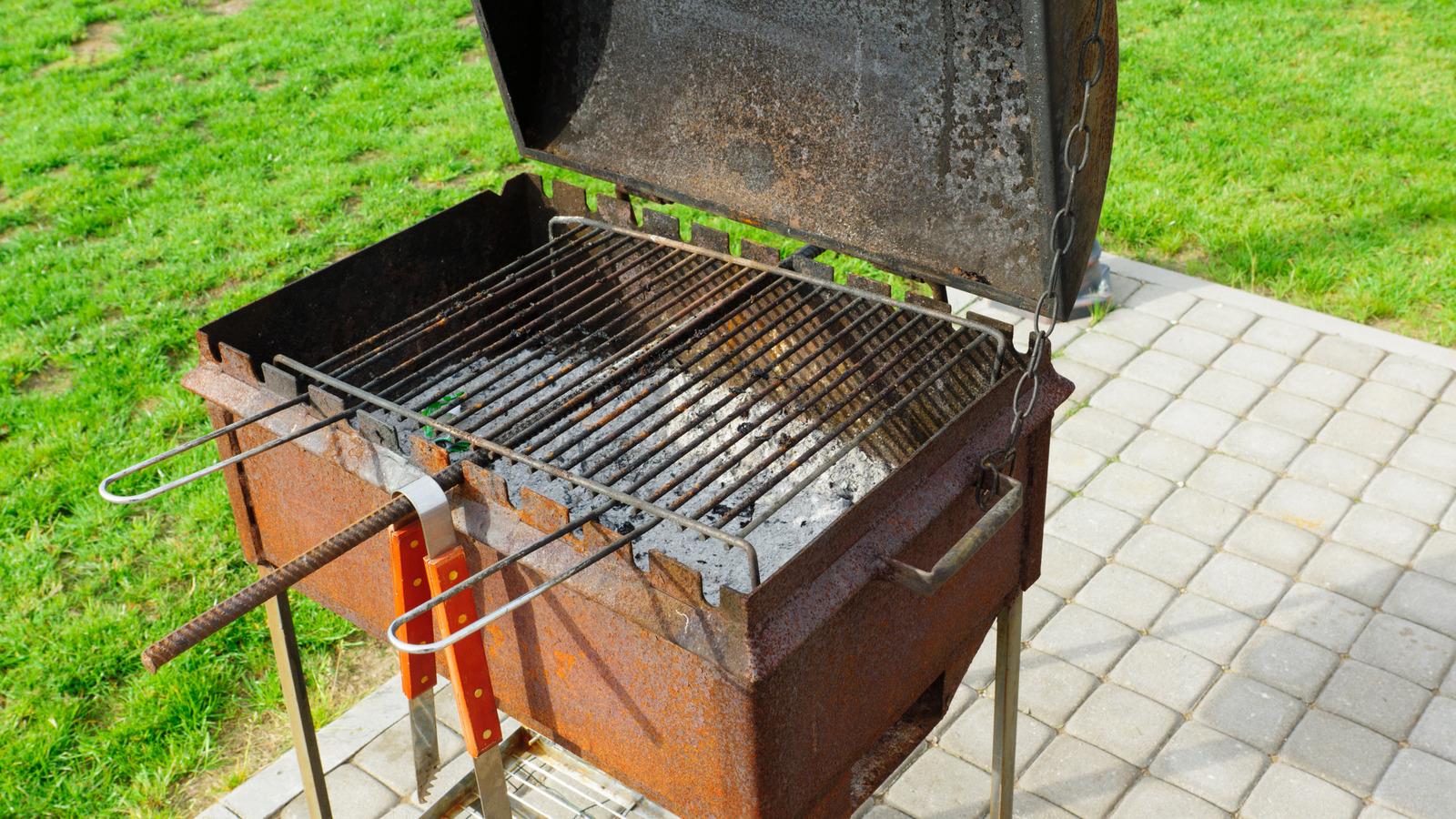
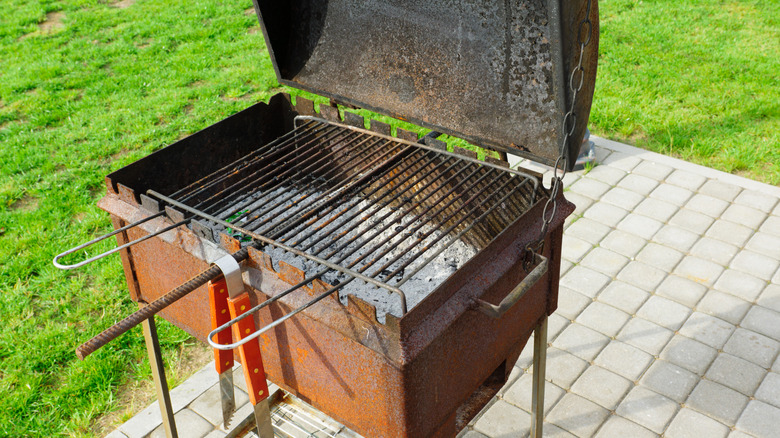
If you're opening your grill for the first time in the grilling season to deliver perfect burgers, or even if you use it regularly, take a good look at the grates. Rust can form on the grates for a variety of reasons, including leftover stuck food particles, moisture and damp environments, and even exposure to salt air (if you're near the ocean). It's not safe to cook food on a rusty grill, but don't make these mistakes when cleaning your grill before you use it.
Inspect your grill and look for a buildup of orange-brown, flaky material on the grates — that's the rust, which forms on some types of metal when exposed to water and air in the right conditions. While rust can form on any metal grates, they're not all equally prone to rusting. Aluminum or cast-iron grates tend to be more apt to rust, while stainless steel may be manufactured as resistant to rust.
The problem with rust is twofold. On the one hand, rust can slowly detach itself from the metal and contaminate your food. The USDA warns rust is not safe for consumption and should be fully removed before using any cookware, including your grill, that has it. Small amounts of rust are generally harmless, but it's safest to simply not eat any. On the other hand, over time, rust can also harm the grill itself. Eventually, as rust forms and flakes off, it degrades the grates' integrity.
How to fix a rusty grill
Marta Masdeu/Getty Images
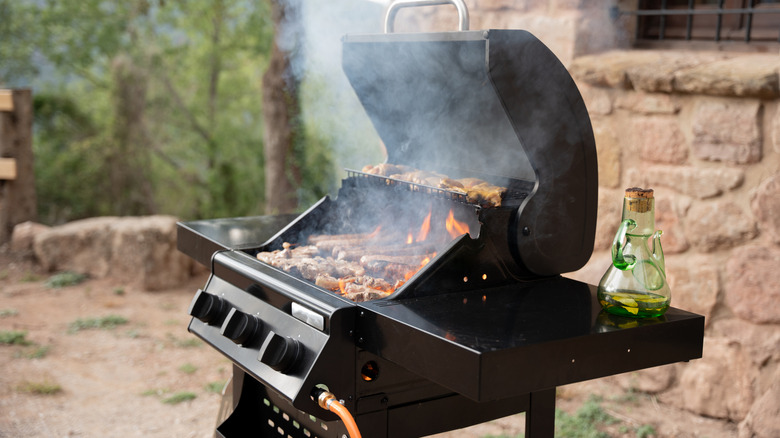
Because you want to avoid letting rust build up, it's a good idea to remove it as soon as you observe it. The first step is to scrape off any loose rust flakes, which can be done by scrubbing with a grill cleaning brush. A note of caution here: Stainless steel grills may be less likely to rust, but they're also easier to damage. Avoid steel wool or metal brushes on stainless steel, though they'll work just fine on other types of metal.
Once you've loosened the bigger flakes, it's time to get deeper into the grates themselves. And the best place to start is a natural cleaning combo that's also helpful throughout the house: baking soda and vinegar. Use one part baking soda to two parts vinegar to form a paste, then cover the grates with the paste and let it sit for 15 minutes before scrubbing with steel wool or a brush. Then wash with warm water and dish soap before letting it dry completely.
For tougher rusty areas, consider a targeted, spot-clean approach — look to your kitchen for the needed ingredients. This cleaning method is similar to how you'd clean a rusty cast iron pan: Sprinkle salt on rusty spots, then rub it with a lemon sliced in half. After letting it sit, wash it with soap and water and dry. Rust left after these methods may require a food-safe rust remover product or it might be time to replace the grates.

 English
 Arabic
 French
 Spanish
 Portuguese
 Turkish
 Dutch
Dutch
 Italiano
 Russian
 Romaian
 Portuguese (Brazil)
 Greek
Greek