


Boss themes, sagas, and Goblin Jazz: How World of Warcraft's music reflects a shifting Azeroth
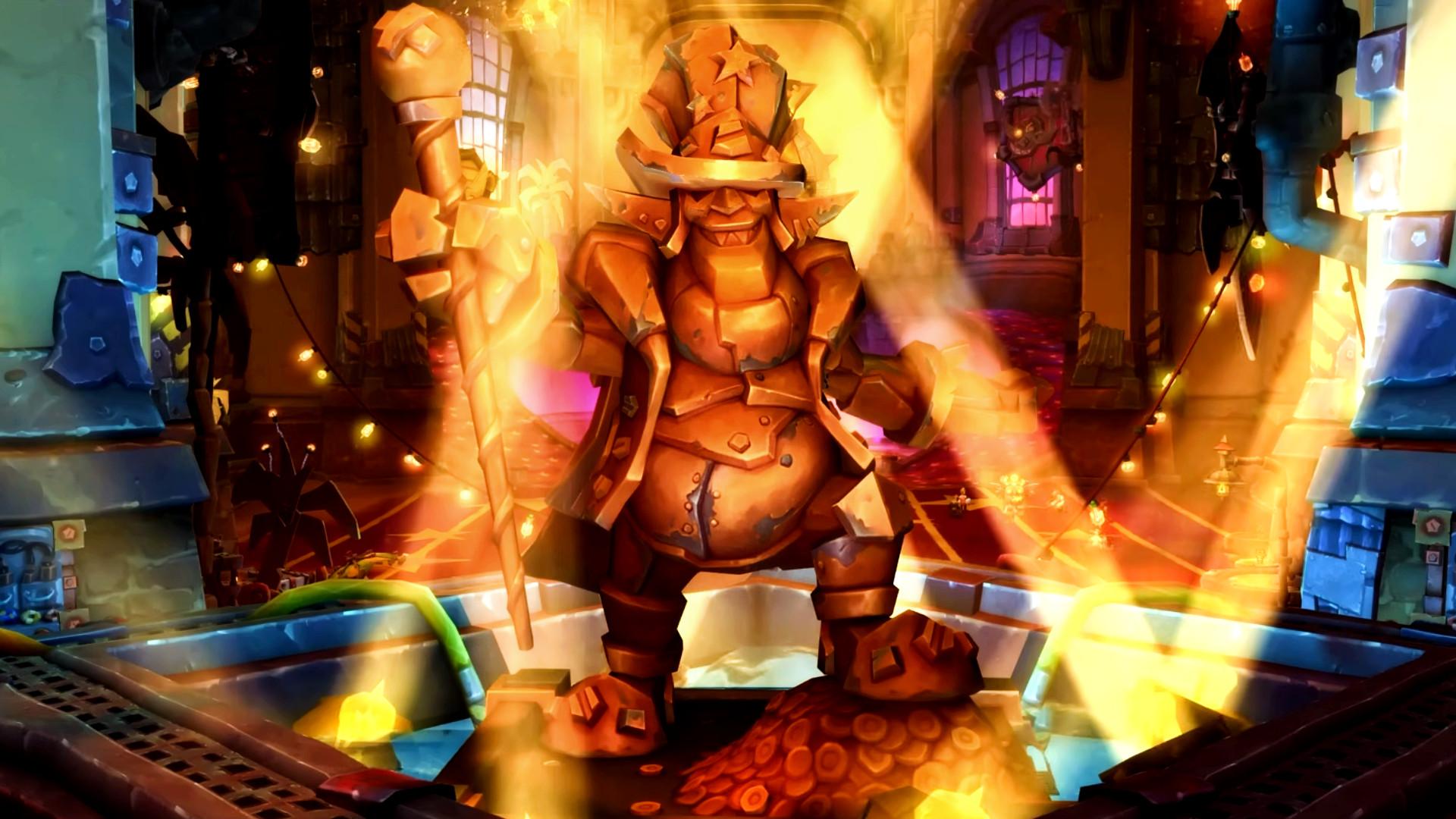
Boss themes, sagas, and Goblin Jazz: How World of Warcraft's music reflects a shifting Azeroth
World of Warcraft and music go hand in hand. It's been three decades since the original Warcraft: Orcs and Humans introduced us to Azeroth, and in that time its soundtracks have grown and shifted. In 2026, we're smack-bang in the middle of the Worldsoul Saga, marking the first 'connected trilogy' of expansions. How does modern WoW reflect the journey it and its players have taken? I recently had the chance to speak with current World of Warcraft Lead Composer Leo Kaliski, alongside Blizzard's Music Director Derek Duke and Principal Producer Charlotte Pyle, about how sound has evolved with the MMORPG over the years.
Music has been synonymous with World of Warcraft since its inception, and much of that carried over from the previous Warcraft games. We're now 22 years deep on the MMO, and 32 for the full series. That's a heavy legacy, and a lot to keep track of. "WoW has such a long history of music and so many themes - that was probably one of the most daunting things when I came on as the lead," Kaliski admits. "There's a patch about the Night Elves, wanting to make sure I know all the Night Elf Music really well and decide what we reference and what we don't.
"We're definitely always looking back, because the fans know the WoW music really well," Kaliski continues. "If we ever do something that doesn't feel faithful to the original cultures' music, they pick up on it." As Blizzard's Music Director for the past 25 years, Duke also plays a key role in overseeing this process. "Even something as simple as Troll music being too different from these Trolls, or too much like those Trolls, you can get pretty nitpicky," he adds, "It's too much like Forest Trolls, it's too much like Amani Trolls."

Production quality has long been one of Blizzard's strengths, and Duke says the team thinks of itself "as game developers more than composers, because we write the music, but it's so much more than just writing music. It's not just a single element to add to the games, it's not just something to add in at the last minute. It's something that's integral to the games themselves - it's a piece of the puzzle."
"I think a big part of it, especially in recent years, is how many composers we have working on it," Kaliski tells me. WoW Midnight features nine composers; "It really creates this melting pot sound to it. It's not one person's voice, it's a lot of different voices." Blizzard likes that variety, he explains, "because it's such a big world, and having more musical voices makes the world feel bigger."
One thing that has become more prominent across the World of Warcraft soundtrack as the years have gone by is the presence of strong, defined themes. In the early years, when WoW was less focused on its main story, there were a lot of ambient tracks that enhanced the worldbuilding and let the community elements shine. "It was more about the social experience," Kalinski recalls.

"The further it's come along, the more there are now really strong cinematic narratives with each expansion, and that kind of demands the music to become more cinematic, more thematic, bolder," Kalinski muses. However, he says the team is cognizant that there's still a demand for that older style of ambience. "We don't want to get away from the ambient roots - I'm always trying to find ways to infuse that. If there are players that are just out in the world, picking flowers, leveling their Herbalism, they don't need to hear some big, cinematic piece of music."
Duke agrees. "I don't think we've abandoned creating the ambient stuff, and I think you'll hear more of that coming through in expansions to come." Right now, however, the connected trilogy of the Worldsoul Saga - The War Within, Midnight, and The Last Titan - gives the team the potential to create an audio throughline. "Previously, with just one expansion at a time, you're confined to just one theme at a time," he notes, "but being able to work on longer-arcing storylines opens that up a bit more."
Kalinski says Blizzard approached the Worldsoul theme "as if it was a new game, almost." The team established a base, and then came up with varying thematic adaptations of it: "Something that's sad, something that's an action version, an evil version, an uplifting version." He notes that The War Within didn't offer "as many opportunities to show it," but that there's been more space for it to "live within the game" during Midnight. "Certainly it'll be a major theme in the next expansion, too."
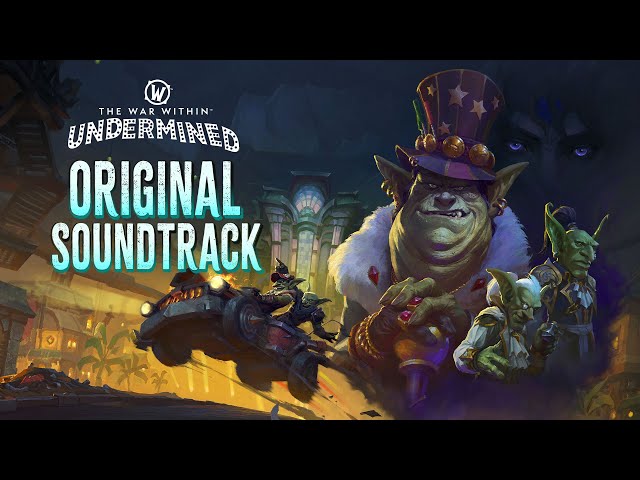
Some of WoW's greatest musical successes in recent years have come from more dramatic experimentation. "The Goblin Jazz album was a pretty big departure, and the community absolutely loved it," Kalinski remarks. Goblin music has always been "a bit jazzier," but when it came to Undermine, the capital city, "it felt really appropriate to take that even further. It was full jazz music, we hired a jazz band… there was no orchestral music in that patch. It was pretty different, but it felt right."
Another personal favorite of Kalinski was the boss track he composed for Dimensius, at the climax of The War Within's final raid, Manaforge Omega. "That was a very involved, very cinematic, multi-phase, narrative-focused track that WoW doesn't normally do," he recalls. "It was such a big time investment. I hoped the community would love it, but you never know, especially in a boss fight with a bunch of sound effects and stuff going on. Do they even notice that extra work you did?"
The good news is that players did notice, and their enthusiasm has spurred Kalinski and his team onward. "It was great, and it has reinforced us to continue trying to do that with bosses going forward," he tells me. "I definitely think we pay attention to the community response - the stuff that is working for them and not working for them - and then we think about that as we move to the next thing."

As an MMO, players spend a lot of time in World of Warcraft, often doing the same things or revisiting the same areas over and over. To keep the music feeling fresh, the team crafts a suite of alternative renditions. "We'll take a three-minute piece of music and turn it into 20 to 30 minutes with a bunch of variations that are trying to be as creative as possible," Kalinski says. "Not just 'remove the melody' or 'this one has the melody under the accompaniment.' Really trying to do more ambient or bolder changes to it, so it still feels related but almost like a new piece of music."
Pyle explains the process, which starts with a 'hero' version. Then, in the recording sessions, the recordings are separated out by instruments - the strings, wind, brass, percussion, and so on. This helps give the composer more freedom to create distinct variations. "There's a lot of depth that goes into that creative process. For Midnight, as an example, I think we did about three hours of hero music across that expansion, but with the alternate arrangements that turned into 15 hours of music that was actually implemented."
"Fatigue is a big thing we look for in music," Kalinski adds. "As soon as someone is getting bored of the music and it's starting to wear on them, that's when they're going to turn it off and put on their own music." In Midnight's Voidstorm zone, for example, the Devouring Host themes might have been fantastic, "but the campaign was really sending you to these spots and not much in between, so you kept hearing that music over and over again," he recalls. After some back and forth with its composer, they queued up some more ambient alts that push out the driving melody, while remaining tonally similar, providing a much kinder long-term experience on the ears.

For as much as World of Warcraft and its soundtrack continue to grow and change, there will always be importance in nostalgia. "There's always a legacy with Blizzard games," Duke emphasizes. "We always want to evolve the music as we go - but we always like to balance nostalgia with whatever the goals are. Whether it's nostalgia or whether we just want to hint at something from the past, there's always some sort of motivation - we're always quite careful with those."
"There's so much legacy with Blizzard," Pyle agrees, "and making sure that's an important part of what happens, but also moving forward and keeping it fresh - and making sure that everybody has what they need to be able to do that creatively - that's the most important thing." Whatever the future may hold for World of Warcraft, Duke concludes, "We are always looking to level up. We never rest on our laurels, we are always trying to keep moving forward. We never just stand still."

 English
 Arabic
 French
 Spanish
 Deutsch
 Turkish
 Dutch
Dutch
 Italiano
 Russian
 Romaian
 Portuguese (Brazil)
 Greek
Greek