


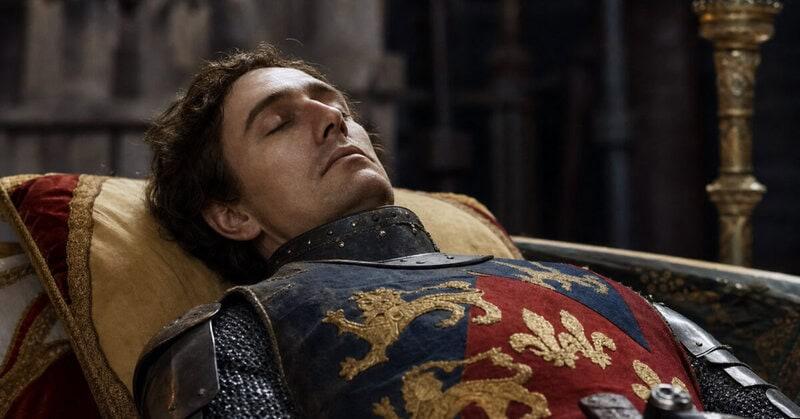
On the morning of 8 June 1376, a forty-five-year-old man lay dying at Westminster while his father — the king — was still alive. That man had captured a king in open battle, terrorised the French countryside for decades, and been hailed as the greatest warrior in Christendom. He would never wear a crown. The body that had carried him through Crécy, Poitiers, and the Pyrenees had simply given out, one agonising year too soon.
The Prince Who Died Before His Crown

Edward of Woodstock’s death is one of the cruellest ironies in medieval English history. Here was a man born to be king in every sense the medieval world understood: physically formidable, strategically brilliant, beloved by his troops, feared by his enemies. His father, Edward III, had spent decades building England into a war machine pointed at France, and his eldest son had been the sharpest weapon in that arsenal. And yet Edward III, elderly and declining, outlived his heir by a single year. The throne passed not to the conqueror of Poitiers but to his ten-year-old grandson, Richard II — a monarch whose reign would end in forced abdication and imprisonment, and whose psychological instability many contemporaries traced, at least in part, to the shadow of the father he had barely known. The dynasty’s great soldier became a prologue to his own dynasty’s unravelling.
What drove Edward of Woodstock to that Westminster deathbed so young is a question that runs beneath his entire biography like a dark current. The campaigns that made him a legend — the grinding winter marches, the brutal raiding rides through France, the crossing of the Pyrenees in punishing conditions — appear to have slowly destroyed the body that carried them out. His life is the story of military glory consuming itself.
Born at Woodstock: A Prince Forged for War

Edward of Woodstock entered the world on 15 June 1330 at Woodstock Palace in Oxfordshire, the eldest son of Edward III and Philippa of Hainault. He arrived into a court already electric with martial ambition. His father was a restless, calculating king who had humiliated the Scots at Halidon Hill in 1333, asserted his claim to the French throne, and begun reshaping English military culture around the devastating potential of the longbow. The son was raised inside that machinery, absorbing its rhythms almost before he could read.
Created Prince of Wales in 1343 at the age of thirteen, Edward was being groomed not merely for kingship but for generalship. The Hundred Years’ War — that long, grinding contest between England and France that would define the fourteenth and fifteenth centuries — was his education. He grew up in a world saturated with chivalric ideals: tournament culture, the romance of the mounted knight, the expectation that a prince’s worth was measured in blood spilled on foreign soil and honour earned in the lists. Edward absorbed all of it. But he would prove to be something more dangerous than a romantic — he was a tactician.
Why Is He Called the Black Prince?

Here is a strange thing: the nickname we know him by today — the Black Prince — appears in no source written during his lifetime. It surfaces only decades after his death, leaving historians to argue, with rather more pleasure than resolution, about its origin. The leading theories cluster around a few possibilities: black armour worn in battle, a distinctive black heraldic shield he carried as a jousting device early in his career, or a French epithet born of the terror his armies spread across the countryside.
What we can say with confidence is that the men who fought alongside him, and the French knights who faced him across muddy fields, did not call him this. The legend grew in the retelling, as legends tend to do — each generation adding another coat of darkness to the figure. The competing theories are laid out carefully at Historic UK’s profile of Edward, and the honest answer remains: nobody is entirely sure.
What is striking is how perfectly the name fits the paradox of the man. Edward of Woodstock was capable of breathtaking chivalry — personally serving wine to a captured king, releasing prisoners on their word of honour — and of savage, devastating violence against civilians, sometimes within the same campaign. Dark charisma is precisely what the nickname captures, even if no contemporary ever wrote it down.
Crécy 1346: The Education of a Teenager Under Fire

At sixteen years old, Edward commanded the right wing of the English army at the Battle of Crécy on 26 August 1346. This was not a ceremonial appointment. The French cavalry came at his position in successive waves, and there were moments of genuine crisis. According to the chronicler Jean Froissart’s account, a messenger was sent to Edward III requesting reinforcements, and the king sent word back that his son should manage — the boy had to win his spurs himself. Whether every detail of the story is accurate matters less than what it reveals about the culture Edward was raised in: a prince earned his place in blood, not by title alone.
He earned it. Crécy was a catastrophe for France and a revelation for England, the longbow cutting through the mythology of mounted chivalry with terrible efficiency. The teenage prince held his nerve, held his line, and emerged from the battle with his reputation transformed from decorative heir to genuinely capable commander. It opened the door to the independent command that would define everything that followed.
The decade between Crécy and Poitiers was one of grinding, hardening experience — raiding expeditions called chevauchées that swept through French territory burning crops and towns, designed to undermine French royal authority by demonstrating it could not protect its own people. These were brutal campaigns conducted in brutal conditions, and they were the forge in which England’s finest medieval soldier was shaped.
Poitiers 1356: The Day He Captured a King

The Battle of Poitiers is the centrepiece of the Black Prince’s legend, and it deserves its place there. In September 1356, Edward found himself commanding a significantly outnumbered English and Gascon force near Poitiers, facing the French army of King John II. What followed was one of the most complete English victories of the Hundred Years’ War — and it ended with the King of France himself taken prisoner on the field.
The tactical architecture of the victory was elegant. Edward used favourable ground, disciplined archery, and what appears to have been a deliberately executed feigned retreat to shatter French morale and cohesion at the decisive moment. The French cavalry, committed at the wrong time and in the wrong order, broke. John II fought personally and bravely before being surrounded and captured.
What followed became one of the most retold scenes of medieval chivalric culture. That evening, Edward — the victor — served at table for his royal prisoner, refusing to sit as an equal and treating John with elaborate courtesy despite having just dismantled his army. The gesture was theatrical, certainly, but it was also entirely sincere within the codes Edward had been raised to honour. The ransom eventually agreed for John II’s return was enormous, running to three million gold écus under the Treaty of Brétigny in 1360 — a sum representing years of French royal revenue. Poitiers made Edward the most celebrated soldier in Europe and, as the BBC’s historical profile notes, the embodiment of English military dominance during the period.
But the campaign that produced Poitiers also involved months of chevauchée — relentless, exhausting raiding that was brutal on soldiers’ bodies as well as on the French countryside. These were not clean affairs of set-piece battles. They were hard marches, bad food, bad water, and constant physical attrition. The price Edward paid was not yet visible in 1356. It would become visible soon enough.
Aquitaine and the Marriage That Surprised a Court

In 1361, Edward was created Prince of Aquitaine and took up residence at Bordeaux, governing England’s substantial landholdings in southwest France. The same year, he made a marriage that reportedly startled the English court: he wed Joan of Kent, his cousin and one of the most celebrated beauties of the age, who had already been married twice. Edward appears to have been genuinely devoted to her. Their union produced two sons; the younger, born at Bordeaux in 1367, would become Richard II.
The years at Bordeaux also revealed a tension in Edward’s character that his battlefield reputation had obscured. Governing a territory was a different task from raiding one. He proved less adept at the fiscal and diplomatic management Aquitaine demanded than he had been at winning battles across it, and his heavy taxation of the Gascon nobility to fund military adventures generated lasting resentment — resentment that would, in time, contribute to the erosion of English influence in the region.
Spain, the Sack of Limoges, and the Body Breaking Down
The Castilian campaign of 1367 — culminating in the Battle of Nájera — is where Edward’s story turns irrevocably darker. He led an army over the Pyrenees in difficult winter conditions to restore Pedro of Castile to his throne, a military operation that succeeded in its immediate objective and wrecked the man who commanded it. Edward returned to Aquitaine seriously ill, suffering from what contemporary accounts describe as a debilitating physical collapse — almost certainly including severe dysentery — that would never fully release him.
The Spanish campaign is widely considered the turning point of his health. He had spent more than two decades marching through rain, mud, and cold, eating campaign food, sleeping in the field, absorbing the physical punishment that medieval warfare inflicted even on commanders. His body had accumulated a debt it could no longer defer. Adding to his difficulties, Pedro of Castile — the man Edward had risked his army and his health to restore — proved unable or unwilling to pay the costs he had promised, leaving Edward financially as well as physically diminished.
In 1370, what followed was the episode that shadows his chivalric reputation most deeply. The city of Limoges had transferred its allegiance to France, and a weakened Edward — by this point reportedly conducted in a litter, no longer capable of riding — ordered its sack. The chronicler Froissart recorded the killing of civilians, noting the horror of what occurred. Modern historians have debated the scale of the atrocity, with some suggesting Froissart exaggerated the death toll, but even the most conservative readings describe an act of deliberate collective punishment against a civilian population.
The sack of Limoges is the permanent counterweight to the courteous gesture at Poitiers — a reminder that the same man capable of serving wine to a captured king was capable, under conditions of chronic pain and perceived betrayal, of something far uglier. Whether the illness grinding through him in those years influenced his judgement, we cannot know with certainty. But it is difficult not to read the episode as the act of a man no longer entirely in command of himself.
The Crown He Never Wore
Edward returned to England in 1371, formally surrendering his principality of Aquitaine, and spent his final years bedridden in slow, grinding decline. The warrior who had made France tremble became a ghost moving through Westminster’s corridors, occasionally intervening in political affairs when his health permitted — he was present at the Good Parliament of 1376, lending his authority to attempts to reform royal finances — but fundamentally finished as an active force. The contrast with the sixteen-year-old who had held his nerve at Crécy was absolute.
He died on 8 June 1376, aged forty-five. His father, Edward III, lived another year — a margin so narrow it seems designed by a particularly cruel storyteller. The throne passed to Richard II, Edward’s surviving son, who was everything his father was not: aesthetically minded, politically volatile, and constitutionally unsuited to the warrior-king role his grandfather had defined and his father had embodied so completely. Richard’s reign ended in deposition and death. The line of descent from England’s greatest medieval soldier collapsed within a generation.
Edward of Woodstock’s tomb at Canterbury Cathedral remains one of the most remarkable medieval monuments in England. His actual armour — or replica arms closely associated with his memory — hangs above the effigy, the equipment of a working soldier rather than a decorative prince. His dying instructions asked to be remembered as a warrior. He understood exactly what he was, and he seems to have understood, in those bedridden final years, what he had never been permitted to become.
The history of Edward the Black Prince is ultimately the history of a life consumed by its own achievements. The campaigns that built the legend appear to have eaten the body that carried them out, denying England’s greatest medieval soldier the one thing his birth had always promised him. He was perhaps the finest warrior medieval England produced — and the battlefields that proved it were the same battlefields that ensured he would never sit on an English throne. History’s most complete might-have-been, buried beneath Canterbury’s vaulted stone, one year and one heartbeat from everything.

 English
 Arabic
 French
 Spanish
 Portuguese
 Deutsch
 Turkish
 Dutch
Dutch
 Italiano
 Romaian
 Portuguese (Brazil)
 Greek
Greek