


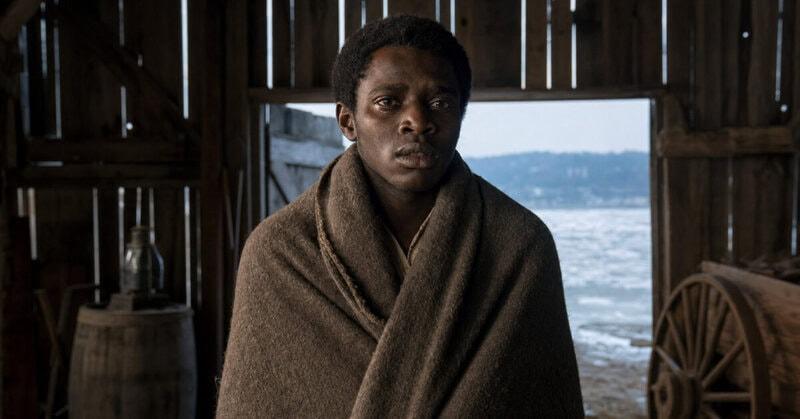
The Ohio River is brutal in January — gray, fast, choked with ice floes that shift and groan in the dark. Somewhere along its northern bank, in the years before the Civil War, an enslaved person who had just made the most dangerous crossing of their life stood shivering in a stranger’s barn, guided there not by a lantern swinging in a tunnel but by a whispered name and the memory of a farmhouse someone had described in a field, months ago, in a voice low enough to vanish into the wind. This is what the history of the Underground Railroad actually looked like: not the torch-lit passages of Hollywood, not a tidy network with schedules and maps, but something far more fragile, far more improvised — and, because of that, far more extraordinary.
What the Underground Railroad Actually Was

The Underground Railroad was a loose, shifting network of free Black Americans, white abolitionists, Native American allies, and formerly enslaved individuals who offered shelter, food, forged papers, and directions to people fleeing bondage. Strip away the mythology and what you find is both simpler and more astonishing than the legend. There was no central command. No membership rolls. No coordinating authority sending dispatches down the line. What held it together was not organization but trust — a web of relationships built in churches, barbershops, mutual aid societies, and whispered conversations across kitchen tables.
The geography of the network is one of its most overlooked dimensions. The Railroad didn’t begin at the Ohio River or the Mason-Dixon Line. It began at the point of enslavement — on a Georgia cotton plantation, in a Virginia tobacco field, in a South Carolina rice marsh. Routes followed rivers, canals, coastlines, and forest trails, using the same natural and man-made corridors that commerce used, because those were the paths a person could move along without looking entirely out of place. Some freedom-seekers traveled north through Pennsylvania toward Canada. Others went west into free territories. Still others went south — into Florida, where Seminole communities had been sheltering runaways since the eighteenth century, a chapter of this history that rarely appears in popular accounts.
The network began forming in the late 1700s, grew through the early antebellum decades, and operated most intensely in the thirty years before the Civil War, continuing until slavery’s legal end in 1865. And here is where the first big myth collapses: there were almost no underground tunnels. The name was a metaphor — “conductors,” “stations,” “lines” — borrowed from the railroad language that was itself new and electrifying in the 1830s. The image of vast interconnected underground passages is largely a fiction that grew in the decades after the Civil War, when some participants embellished their memoirs and nostalgia smoothed the jagged edges off a dangerous, improvisational reality.
How the Underground Railroad Actually Worked

Most escapes began in profound solitude. The majority of freedom-seekers planned and executed the first leg of their journey entirely alone — no conductor waiting, no safe house confirmed, just a direction and whatever scrap of information they had managed to collect without getting caught collecting it. The most dangerous miles were the first ones, crossing territory where every encounter carried lethal risk and where the people most likely to recognize a fugitive were the neighbors and overseers who had known them their entire lives.
Communication along the network was oral and perishable by design. Names of safe houses, the locations of sympathetic farms, the descriptions of contacts in the next town — all of it was memorized, never written, because a written list found in the wrong hands could destroy an entire chain of people. This is worth sitting with: the Underground Railroad left so few records precisely because the people running it understood that records could get everyone killed. The gaps in the historical archive are not accidents. They are evidence of tactical brilliance.
The Fugitive Slave Act of 1850 changed the calculus entirely. Suddenly, northern free states were no longer safe — federal law now required their citizens to assist in the capture and return of anyone deemed a runaway, and it imposed serious penalties on those who refused. The destination had to move further north, into Canada, meaning the network had to stretch hundreds of additional miles to deliver genuine freedom. What had been a harrowing journey became an almost unimaginable one, and yet the number of people attempting it increased in the years that followed.
The People Who Made It Run — Beyond the Famous Names
Popular retellings of the Underground Railroad have a tendency to center white participants — the Quaker farmer, the abolitionist with the hidden cellar — in ways that quietly reassign credit from the people who built and operated the network at the greatest personal risk. The operational backbone of the Railroad was Black: free Black churches, mutual aid societies, and tight-knit urban communities in Philadelphia, Cincinnati, Detroit, and beyond. These were the institutions that raised funds, arranged lodging, produced forged documents, and possessed the local knowledge to know which magistrate might look the other way and which one definitely would not.

It is within this context that Harriet Tubman’s role in the Underground Railroad becomes most fully visible — not diminished, but properly framed. After her own escape from Maryland in 1849, Tubman made approximately thirteen missions back into slave territory, personally guiding around seventy people to freedom. That number is staggering given the conditions under which she operated: she moved at night, relied on a network of contacts whose reliability could never be fully guaranteed, and carried the knowledge that capture meant the end of everything. Tubman herself was the first to insist that she didn’t work alone — that the contacts who passed word ahead and the families who opened their doors at midnight made every mission possible. She was the tip of a very long spear.
Other figures deserve to be spoken alongside her. David Ruggles operated the New York Vigilance Committee and sheltered Frederick Douglass when Douglass first arrived in New York City as a fugitive in 1838. John Parker, a formerly enslaved man who had purchased his own freedom, made dozens of nighttime crossings back into Kentucky, rowing across the Ohio River to bring people out. The Vigilance Committees of Philadelphia and New York raised money, arranged legal defense, and produced the forged papers that made a new identity viable. White allies like Levi Coffin and Thomas Garrett were vital — Garrett reportedly assisted more than 2,700 freedom-seekers over his lifetime — but they operated in support of a structure that Black Americans had largely built, funded, and staffed.
William Still, a free Black man and Philadelphia Vigilance Committee member, kept meticulous written records of the freedom-seekers he helped — names, escape details, family circumstances — at considerable personal risk. Those records, published after the war as The Underground Railroad Records, remain among the most important primary sources historians have. Still was himself the son of an enslaved man who had purchased his freedom and an enslaved woman who had escaped with four of her children. His work was not abstract philanthropy. It was personal.
Myths vs. Facts: The Legends That Grew Over the Truth

Two myths in particular have proven stubbornly durable, and both are worth examining directly — not just because they are inaccurate, but because of what their persistence reveals about how this history has been handled.
The “secret quilt code” story — the idea that quilts hung on fences carried encoded directions for freedom-seekers, with different patterns signaling different routes or warnings — is a compelling idea with no documentary support from the era. Historians trace the story primarily to a 1999 book, not to firsthand accounts, period sources, or Vigilance Committee records. The absence of evidence matters here: William Still documented hundreds of individual escapes in careful detail, and quilts as navigational signals do not appear anywhere in his records, in the WPA slave narratives, or in the accounts of any known Underground Railroad participant. The story has the feel of truth because it is poetic. But poetry is not history.
The tunnel myth is similarly romantic and similarly unsupported at scale. A small number of cellars, root houses, and concealed rooms were genuinely used as hiding places, and some of those spaces survive. But the popular image — a network of brick-lined underground passages connecting farm to farm across hundreds of miles — is almost entirely fictional, a confabulation that grew as postwar nostalgia transformed participants into heroes and heroes into legends. Many “Underground Railroad tunnels” that local tradition has preserved turn out, on architectural inspection, to predate the Railroad’s operational period entirely or to have been constructed for ordinary agricultural purposes.
These myths matter beyond their factual inaccuracy. Romanticizing the Underground Railroad as a tidy, white-led rescue operation quietly strips enslaved people of their agency — it makes them passengers in their own liberation rather than the architects of it. The people who escaped were not rescued. They escaped. The distinction is everything.
The Numbers, the Danger, and What Freedom Actually Looked Like

Estimates suggest the network helped somewhere between 30,000 and 100,000 people reach freedom over its operational life. That range is wide because the records are incomplete by design. But even the high end of that estimate stands against a sobering fact: by 1860, nearly four million people were enslaved in America. The Underground Railroad was an act of profound moral courage, and it reached a fraction of one percent of the people who needed reaching. Both things are true simultaneously, and an honest account of this history requires holding them together without flinching.
For those who attempted the journey and were caught — and many were — the consequences were severe and calculated. Recapture meant brutal punishment intended to deter future attempts, likely sale further south into even harsher conditions, and permanent separation from family. Slave catchers and professional bounty hunters worked these routes with direct economic motivation: an enslaved person represented thousands of dollars in what enslavers called “property,” and the Fugitive Slave Act put the full machinery of federal law behind their recovery. Every mile of a freedom journey was a mile on which everything could end.
Those who made it to Canada found not a utopia but a chance — hard frontier life, cold winters, and communities to build from scratch, primarily in Ontario. Many thrived. They sent back word. That word became its own kind of fuel: proof that the journey was survivable, that the other side of the river existed and had houses and work and children who would grow up free. Those messages fed the network as surely as any safe house did.
Why the Real Story Is the More Powerful One

The sanitized, mythologized version of the Underground Railroad is comfortable history — it allows everyone to imagine themselves as a hero in a story that was, in fact, a story about an entire society’s active participation in a monstrous institution. The real version is harder and more demanding: a story of decentralized resistance improvised under conditions of total legal vulnerability, built mostly by people who had every material reason to look away and chose instead to act, at serious personal cost, because the alternative was unbearable.
Harriet Tubman understood what the real story was. “I never ran my train off the track,” she said, “and I never lost a passenger.” What lives in those words is not romance but precision — the language of someone who treated danger as a problem to be solved rather than a backdrop for heroism. That professionalism, that refusal to sentimentalize the work, is the truest thing we have from the people who actually ran the Railroad.
The primary sources are available for anyone who wants to go deeper. The WPA slave narratives, collected in the 1930s from men and women who had lived through slavery, put real voices at the center of a history too often told about its subjects rather than by them. William Still’s published records, Frederick Douglass’s autobiography, the surviving papers of the Philadelphia Vigilance Committee — these are not obscure. Regional archives hold local records that complicate and enrich the national story in ways that no single survey account can replicate. The scholarly literature on the Underground Railroad has grown considerably in recent decades, driven in large part by historians determined to restore Black agency to a narrative that had systematically minimized it.
The Underground Railroad wasn’t a legend. It was something rarer and more durable than a legend: a network of people — most of them Black, most of them operating without legal protection, many of them doing so while themselves living under the threat of re-enslavement — who decided that someone else’s freedom was worth their own safety. Strip away the tunnels, the quilts, and the Hollywood glow, and what remains is precisely that. It never needed embellishment. The truth was always the stronger story.

 English
 Arabic
 French
 Spanish
 Portuguese
 Deutsch
 Turkish
 Dutch
Dutch
 Italiano
 Russian
 Portuguese (Brazil)
 Greek
Greek