


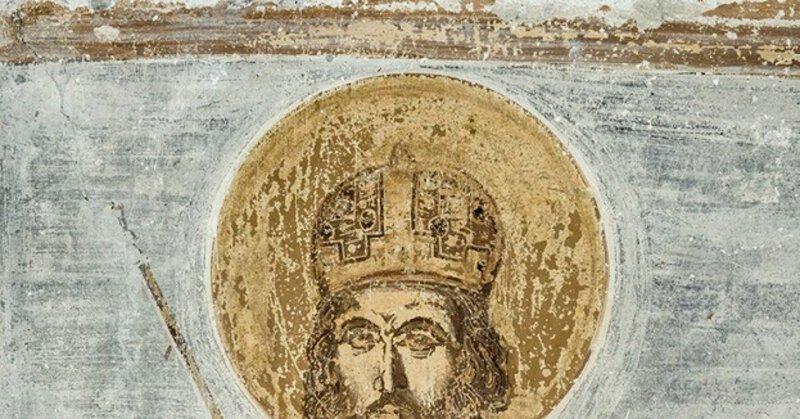
On the night of May 28, 1453, the Emperor Constantine XI Palaiologos did something no Roman emperor had done in a thousand years: he took off his purple regalia, embraced his generals one by one, asked forgiveness of anyone he had ever wronged, and walked into the darkness toward the sound of Ottoman drums. By dawn, he was gone — lost somewhere in the final, desperate press of bodies at the broken walls — and with him went the last breath of an empire that had endured for eleven centuries.
The Last Night of an Empire

History rarely offers a moment so clean in its symbolism. As May 28 turned to May 29 and the Ottoman army of Sultan Mehmed II poured through a breach in the ancient Theodosian Walls, Constantine XI made no attempt to flee by sea, though ships were available. According to accounts that survived, he died fighting, stripped of his imperial markings, indistinguishable from any common soldier in the mud. His body was never identified with certainty. A civilization that had carried the idea of Rome from antiquity into the medieval world ended not with a treaty or a surrender document, but with an emperor swallowed by the dark.
That single night in 1453 is the hinge on which the history of one of Earth’s great cities turns. The place the Greeks called Byzantium, that Constantine the Great remade as Constantinople, would not disappear — it would be reborn, repopulated, and renamed. The world now calls it Istanbul. But the stones remember everything that came before.
A City Built to Rule the World

Few cities have ever been seated in a more strategically commanding position. Around 657 BCE, Greek colonists from Megara planted a settlement on a triangular peninsula jutting into the waters where Europe faces Asia and the Black Sea narrows toward the Mediterranean. They called it Byzantium, after their legendary founder Byzas, and they understood immediately what they had found: whoever held this peninsula held the throttle of an entire world’s trade.
The Emperor Constantine the Great understood it too. In 330 CE he refounded the city as Constantinople — the City of Constantine — designing it with deliberate echoes of Rome itself: seven hills, a forum, a senate, a hippodrome. But where Rome sat vulnerable and largely landlocked, Constantinople was girdled by water on three sides, approachable by land only across a narrow neck of earth. It was not merely a new capital. It was a better Rome, in a position Rome could never have imagined defending.
For a thousand years, the Theodosian Walls — completed in 413 CE, stretching nearly six and a half kilometers with an inner wall, an outer wall, and a moat — made that defensibility a reality. Avars, Arabs, Vikings, Bulgars, and Russians all came, and all eventually turned away. The walls were not just stone. They were the physical argument for why the Eastern Roman Empire, which historians call the Byzantine Empire, outlasted its western counterpart by nearly a millennium.
Why Did Constantinople Fall?

The short answer — cannons and an unlatched gate — is technically accurate but deeply incomplete. By 1453, the Byzantine Empire had been dying by degrees for two and a half centuries. The Fourth Crusade of 1204 was perhaps the cruelest blow: Western Christian armies, supposedly marching to defend Christendom, instead sacked Constantinople itself, looting Hagia Sophia and carrying off treasures accumulated over nine hundred years. The city never fully recovered economically or psychologically. Plague struck repeatedly. Civil wars fractured the ruling families. The Ottoman Empire, expanding methodically across Anatolia and the Balkans, reduced Byzantine territory piece by piece until, by 1453, the empire consisted almost entirely of Constantinople itself and a handful of scattered outposts.
Constantine XI could muster roughly seven thousand defenders — soldiers, Genoese mercenaries, and armed civilians combined. Mehmed II arrived with an army estimated between sixty thousand and one hundred thousand troops, a formidable navy to seal the sea approaches, and a weapon that changed the calculus of siege warfare forever: massive bombards designed by a Hungarian engineer named Urban, capable of hurling stone balls weighing hundreds of pounds against walls that had never been tested by gunpowder artillery. The Theodosian Walls, invincible against ladders and battering rams, had no answer for a cannonball.
The fatal crack, when it came, was almost mundane. A small postern gate called the Kerkoporta was left unlatched during a nighttime sortie. Ottoman soldiers discovered it, slipped through, and raised their banner on the walls. When the defenders still fighting at the main breach looked back and saw Ottoman flags flying behind them, the psychological collapse was nearly instantaneous. The Western relief fleets that Constantinople had been promised never arrived. The city fell because geography, firepower, dwindling manpower, and political abandonment all converged on a single May morning. The night was simply the moment when the accumulated debt of generations finally came due.
Mehmed the Conqueror Rides In

He was twenty-one years old. Mehmed II entered Constantinople on May 29, 1453, and by most accounts was overcome with emotion when he saw the interior of Hagia Sophia — struck by the scale of a monument brought low by centuries of Byzantine decline and the final hours of battle. He ordered the great church preserved and converted it to a mosque, an act that was both pious and political. Outright destruction would have been easier. Preservation sent a message about legitimacy.
Mehmed styled himself Kayser-i Rum — Caesar of Rome — and meant it seriously. He was not simply a conqueror erasing what he found. He was claiming the imperial inheritance, positioning the Ottoman sultanate as the legitimate successor to the Roman tradition. He commissioned surveys of the city, invited and compelled craftsmen, merchants, scholars, and settlers of multiple faiths to repopulate its emptied neighborhoods, and within decades had transformed a war-devastated shell into the largest metropolis in Europe once again. The same geographic logic that had made Constantinople irresistible to Constantine in 330 CE made it indispensable to the Ottomans in 1453. The city was too perfectly placed to abandon, no matter who held it.
For the Islamic world, the conquest carried enormous spiritual weight, fulfilling a tradition attributed to the Prophet Muhammad that praised the commander who would one day take the city. Mehmed’s tomb in Istanbul still receives visitors. Constantine XI has no confirmed grave anywhere on Earth.
What the Fall Changed — Far Beyond the Walls

The conquest of Constantinople sent shockwaves through the connected world of the mid-fifteenth century in ways that continued to reverberate for generations. Consider what followed in the decades immediately after 1453:
- The Age of Exploration accelerated. Ottoman control over key eastern Mediterranean trade corridors made the overland routes connecting Asian markets to European ones costlier and more precarious. European powers — Portugal, Spain, eventually England and the Netherlands — poured resources into finding oceanic alternatives. Columbus sailed west in 1492. Vasco da Gama rounded Africa in 1498. The disruption of one city’s commercial role helped redirect the ambitions of an entire civilization toward the open sea.
- The Italian Renaissance caught fire. Byzantine scholars fleeing westward after the fall brought with them Greek manuscripts — texts of Plato, Aristotle, and ancient historians — that had been preserved in Constantinople while much of Western Europe had lost direct access to them. Their arrival in Italian cities fed directly into the humanist intellectual movement already stirring there. One civilization’s catastrophe became another’s rebirth.
- Military architecture was transformed. The speed with which Ottoman artillery reduced the legendary Theodosian Walls demonstrated that the high medieval fortification — the tall vertical stone wall — was obsolete against gunpowder. European engineers scrambled to develop the angled, low-profile bastion system designed to absorb and deflect cannonballs, reshaping the design of every major fortress built for the next three centuries.
The Name Hiding in Plain Sight
The name Istanbul is itself a historical curiosity. It most likely derives from a Greek phrase — eis tin polin, meaning roughly “to the city” or “in the city” — used colloquially by Greek speakers for centuries before it became the city’s official name under Atatürk’s modernizing Turkish Republic in 1930. Greek speakers, in other words, had long been calling it something like Istanbul in everyday conversation while officially calling it Constantinople. The Ottomans eventually adopted the colloquial form. The Republic made it formal. The city, as ever, simply continued being the city.
Istanbul: The City That Swallowed Empires
Today Istanbul is Turkey’s largest city, home to more than fifteen million people, straddling two continents along the Bosphorus strait — the same narrow waterway that made Byzas set up camp there nearly twenty-seven centuries ago. It remains Turkey’s principal seaport, and the Bosphorus handles tens of thousands of vessel transits annually, making it one of the busiest maritime corridors on the planet. The geographic logic is exactly what it has always been.
No single building captures the city’s layered identity more completely than Hagia Sophia. Built as a Christian cathedral in 537 CE under the Emperor Justinian, it was the largest enclosed space in the world for nearly a thousand years. Converted to a mosque in 1453. Made a secular museum in 1934 as part of Atatürk’s reforms. Reconverted to a functioning mosque in 2020. Its minarets and its Byzantine Christian mosaics coexist in the same stones — which is either a contradiction or a remarkably precise summary of what Istanbul is.
Walking through the city means stepping across time without warning. A Roman aqueduct from the fourth century stands between apartment blocks in the Fatih district. Byzantine mosaic floors surface during excavations for new subway lines. Ottoman mosques and their accompanying charitable complexes — the külliye, which typically included schools, hospitals, and soup kitchens — anchor neighborhood after neighborhood. Art Nouveau facades from the late Ottoman cosmopolitan era face narrow streets that follow paths worn by Byzantine foot traffic. The history of Istanbul is not kept in museums behind glass — it is load-bearing.
What Istanbul Teaches Us About How Civilizations End
No other city on Earth has served as the capital of two empires as consequential and as long-lived as the Byzantine and the Ottoman. Constantinople was the Byzantine capital for over a thousand years; Istanbul served as the Ottoman capital for nearly five centuries after 1453. That continuity is not a coincidence of dynasties. It is the geography asserting itself across every shift of power.
The question that historians and curious readers keep returning to — why did Constantinople fall? — is ultimately a question about how civilizations die. Not in a single night, but across generations of overreach, internal division, failure to adapt, and the slow withdrawal of the alliances that might have saved them. The night of May 28 to 29, 1453 was not the cause of the Byzantine Empire’s death. It was the moment the accumulated weight of two centuries of decline finally collapsed through the floor.
Constantine XI chose to die in the breach rather than survive as a captive or an exile. Mehmed II chose to preserve and inherit rather than simply destroy. Both choices were made in the same city, on the same night, and both still echo in the place those two men fought over. Constantine has no confirmed grave; Mehmed has a tomb that people visit to this day. Somewhere in between — across the Roman aqueducts, the Byzantine mosaics, the Ottoman minarets, and the ferries crossing the Bosphorus at dusk — is Istanbul: a city where history does not end. It just changes languages, and keeps going.

 English
 Arabic
 French
 Spanish
 Portuguese
 Deutsch
 Turkish
 Dutch
Dutch
 Italiano
 Russian
 Romaian
 Portuguese (Brazil)