


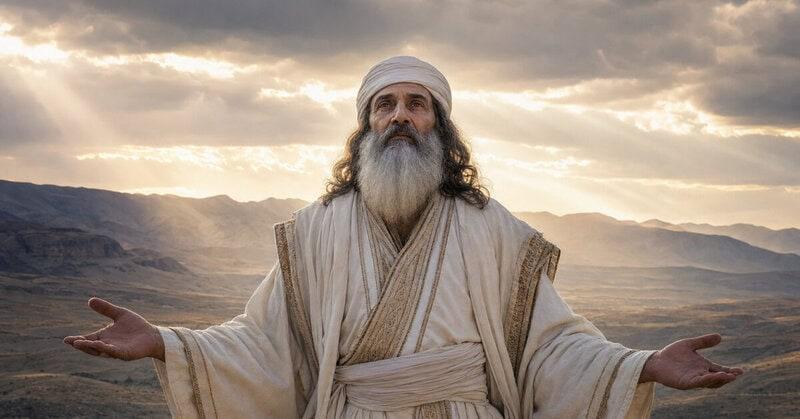
Somewhere on the windswept Iranian plateau, sometime between 1500 and 1000 BCE — perhaps even earlier — a hereditary priest named Zarathushtra Spitama had a vision that would quietly rewire the moral architecture of Western civilization. The concepts most people think of as the bedrock of Biblical religion — Heaven, Hell, a cosmic Devil, a Final Judgment, the resurrection of the dead, a coming savior — all appear in Zoroastrian scripture centuries before they surface clearly in the Hebrew Bible or the New Testament.
Origins and Age: The Oldest Room in the House

Most people, if asked to name the world’s oldest living religions, would reach for Hinduism or Judaism. Very few would say Zoroastrianism — and yet it may be the most historically consequential faith most people have never seriously examined. Conservative scholarly estimates place its origins at roughly 3,500 to 4,000 years ago, making it older than classical Greek philosophy, older than the Roman Empire, and contemporary with or earlier than many texts the Western world treats as simply and timelessly ancient.
The faith grew from the ancient Iranian plateau — the region of modern Iran and the broader Persian world — in a society of nomadic herders and chieftains whose older religion involved polytheistic ritual, animal sacrifice, and reverence for a crowd of competing divine powers. Into that world, Zarathushtra arrived like a stone dropped into still water, and the ripples have never fully stopped.
The religion he founded goes by several names, each a window into its character. Mazdayasna means “worship of Mazda” — the Wise Lord, the one supreme god. Behdin means simply “the Good Religion.” Neither name suggests a faith built on fear or submission. From its earliest days, this was a tradition that understood itself as an invitation to wisdom and righteous living. Its central scripture, the Avesta, contains a collection of hymns called the Gathas, believed to have been composed by Zarathushtra himself. Linguists date the archaic dialect of the Gathas to roughly the same period as the oldest portions of the Hindu Rigveda, making them among the oldest religious poetry in human history attributable to a specific named individual.
Who Was Zarathushtra Spitama?

It is easy to let a figure from 3,000 years ago dissolve into myth, but the tradition preserves details that keep Zarathushtra stubbornly human. He was a zaotar — a hereditary priest trained in the ritual traditions of his clan. He likely grew up in a world of cattle herding and tribal conflict, where religious power was exercised by specialists who knew the proper prayers and sacrifices to appease a pantheon of nature gods. At some point, by his own account preserved in the Gathas, he received a revelation that swept all of that away.
His core insight was radical for its era: the universe is not governed by a committee of capricious gods requiring constant appeasement. It is the arena of a single, great moral drama. On one side stands Ahura Mazda — the Wise Lord, the source of truth, light, and goodness. On the other stands Angra Mainyu — the Destructive Spirit, the embodiment of darkness, chaos, and evil. This was not merely a theological distinction. It was among the earliest articulations by a named religious teacher of a cosmos structured around the opposition of good and evil as fundamental, universal, and ongoing forces — with human beings positioned at the center of the struggle, free to choose which side they served.
Angra Mainyu is worth pausing over. He is the original template for the concept of the Devil: a personal, intelligent, cosmic force of evil opposing the one true god. The figure of Satan as a powerful personal adversary does not appear with full clarity in the earliest layers of the Hebrew Bible. He sharpens into focus in later Jewish literature — precisely during the centuries of deepest Persian cultural contact, a coincidence historians of religion take seriously.
Tradition holds that Zarathushtra’s early preaching was rejected. He wandered for years, a prophet without an audience, before finding a royal patron — King Vishtaspa — who accepted the new faith and gave it the political backing it needed to survive and spread. Centuries later, Nietzsche would borrow Zarathushtra’s name for Thus Spoke Zarathustra, and Mozart would model the sage Sarastro in The Magic Flute on a Zoroastrian archetype. The prophet has been hiding in plain sight in Western culture for a very long time.
The Beliefs That Built the Western Moral Imagination

To understand Zoroastrianism’s core beliefs is to watch a set of ideas being assembled for the first time that the Western world would later take for granted. The faith introduced several concepts that became foundational:
- Ethical monotheism: One supreme god whose primary concern is not ritual correctness but moral truth. Ahura Mazda cares whether you lie, whether you harm the innocent, whether you choose good over evil.
- Cosmic dualism: A real, active force of evil — Angra Mainyu — that opposes the good god and tempts human beings toward destruction. The universe is a moral battleground, not a neutral stage.
- Free will as the central human drama: The three pillars of Zoroastrian ethics — Humata, Hukhta, Hvarshta, meaning Good Thoughts, Good Words, Good Deeds — are not merely a code of conduct. They are the mechanism by which each human being participates in the cosmic struggle. Individual choices carry genuine moral weight.
- Linear eschatology: History has a beginning, a moral arc, and a definitive end. Time is not cyclical and meaningless; it moves toward a final resolution of the struggle between good and evil.
The afterlife architecture Zoroastrianism constructed is strikingly familiar to anyone raised in an Abrahamic tradition. After death, the soul approaches the Chinvat Bridge — the Bridge of the Requiter. For the righteous, it widens into a safe passage leading to the House of Song, a paradise of light and joy. For the wicked, the bridge narrows to a razor’s edge, and the soul plunges into the House of Lies — a realm of darkness, suffering, and stench. Heaven and Hell, as structured concepts with moral gatekeeping, are present here in full form before they appear with comparable clarity anywhere else in the ancient world.
Then there is the Saoshyant — a future savior figure whose coming will mark the end of history. According to Zoroastrian eschatology, the Saoshyant will resurrect the dead, preside over a final judgment of souls, and usher in an age of perfect righteousness in which evil is permanently destroyed. Scholars of religion have long noted the structural similarity between this figure and the messianic traditions of Second Temple Judaism and early Christianity. The template existed in Persia first.
The Persian Empire: When These Ideas Went Global

Ideas need carriers. Zoroastrianism found its greatest carrier in the Achaemenid Persian Empire, founded by Cyrus the Great in the 6th century BCE. At its height, this was the largest empire the world had yet seen, stretching from Egypt and the eastern Mediterranean to the borders of India. Persian administrative language, Persian trade routes, and Persian royal ideology — saturated with Zoroastrian concepts — traveled everywhere Persian power reached.
The single most consequential contact point between Zoroastrian Persia and the Biblical tradition came in 539 BCE, when Cyrus conquered Babylon and freed the Jewish exiles held there. The Book of Isaiah refers to Cyrus as God’s “anointed one” — the Hebrew word is mashiach, messiah — the only instance in the Hebrew Bible where a foreign, non-Jewish king receives that title. A Persian Zoroastrian king, in other words, is called a messiah by a Jewish prophet. The cultural contact was not abstract or theoretical. It was political, immediate, and deeply felt by those who lived through it.
During and after the Babylonian exile — decades of intense Jewish-Persian cultural contact — Jewish scholars were writing, revising, and editing the texts that would become the Hebrew Bible. It is in the later layers of that literature, and especially in post-exilic texts such as Daniel and portions of Isaiah, that Satan as a personal adversary becomes more prominent, that bodily resurrection appears as a clear doctrine, and that the structure of a final cosmic battle between good and evil sharpens into focus. Historians of religion do not claim simple, direct copying — the relationship between cultures is always more complex than that — but the timing and context are difficult to ignore, and mainstream scholarship takes the connection seriously.
The influence did not stop there. Zoroastrian ideas continued spreading through the ancient world even after Alexander the Great conquered Persia in 330 BCE, absorbing Persian culture and carrying elements of it westward. Centuries later, the Roman mystery cult of Mithras — drawing on traditions associated with a Zoroastrian-era deity — spread across the empire, competing with early Christianity for converts among soldiers and traders in the 2nd and 3rd centuries CE. Both traditions were drawing, at different removes, from the same ancient Persian reservoir of ideas about cosmic light, moral truth, and divine judgment.
Survival Against the Odds: From Conquest to the Present

History has not been kind to Zoroastrianism as an institution, even as its ideas flourished inside other traditions. The Arab Muslim conquest of Persia in the 7th century CE ended Zoroastrianism’s role as the Persian state religion and subjected its faithful to sustained pressure — legal discrimination, incentives to convert, and gradual marginalization in the very land of the faith’s birth. Many Zoroastrians converted. But a community of the faithful refused.
In one of history’s quietly remarkable acts of cultural survival, a group of Zoroastrian refugees sailed from Persia to the northwestern coast of India, where they negotiated the right to practice their faith and became known as the Parsis — the Persians. They brought their sacred texts, their fire rituals, their prayers, and their commitment to Asha, the Zoroastrian principle of truth and cosmic order. Over subsequent centuries they flourished. In modern India, the Parsi community became disproportionately prominent in business, law, science, philanthropy, and the arts — among them the industrialist Jamsetji Tata, who founded the Tata industrial group, and the musician Freddie Mercury, born Farrokh Bulsara into a Parsi family. A small community with an outsized historical presence, which feels entirely appropriate for a faith whose footprint vastly exceeds its numbers.
Zoroastrianism Today: A Living Tradition

Zoroastrianism today counts roughly 100,000 to 200,000 adherents worldwide, concentrated in India and Iran, with diaspora communities across North America and the United Kingdom. The numbers are small. The living tradition is not.
Sacred fires still burn in atash behrams — consecrated fire temples — as symbols of divine truth, tended with the same devotion as when Achaemenid kings ruled half the known world. Fire in Zoroastrianism is not worshipped as a deity; it is honored as a visible emblem of Ahura Mazda’s light and purity, kept perpetually burning as an act of communal witness to that truth. The tradition distinguishes carefully between several grades of sacred fire, each consecrated through an elaborate ritual process that can take months to complete.
Young people still undergo the Navjote initiation ceremony — the name means “new worshipper” — in which they receive the sudreh, a sacred inner garment symbolizing righteousness, and the kusti, a sacred cord woven from wool and wrapped around the waist, knotted and unknotted during daily prayers as a physical act of recommitment to Good Thoughts, Good Words, and Good Deeds. The ceremony is both an initiation and a choice: an acknowledgment that the ethical framework of the faith must be actively embraced, not merely inherited.
The community faces genuine demographic pressures. Historically, most Zoroastrian communities have not accepted converts, and intermarriage policies have been contested internally for generations, with reformers and traditionalists disagreeing sharply about how to sustain the community without compromising its identity. These are real debates, conducted with real urgency, inside a community that is fully aware of its own precarity. The faith that shaped Western civilization is fighting, with intelligence and dedication, for its own survival.
Why It Matters Now
Whether or not every specific theological parallel between Zoroastrianism and the Abrahamic faiths can be traced to direct borrowing — and the scholarly conversation is ongoing and genuinely contested — the broader point rests on firm historical ground. Zoroastrianism’s influence on Judaism during the Babylonian exile and Persian period, and through Judaism on the development of Christianity and Islam, is accepted by mainstream historians and scholars of comparative religion. These are not fringe claims. They are part of the standard academic conversation about how the Western religious imagination was formed.
The next time you encounter the concept of Heaven or Hell, a personal Devil, a coming savior, a final judgment of the dead, or simply the idea that what makes a human life meaningful is the moral quality of the choices it contains — you are hearing, in however distant an echo, the voice of Zarathushtra Spitama on the ancient Iranian plateau. A hereditary priest without an initial audience looked at the chaos of his world and decided it had a moral architecture after all. The decision changed everything.
Zoroastrianism demonstrates something genuinely important about how history works: a religion’s impact cannot be measured by its current headcount. A faith practiced today by fewer people than live in many individual cities became a primary source code for traditions that now shape the moral vocabulary of billions of human beings — without most of those billions ever knowing the source. The oldest room in the house of Western religion has been there all along, its fire still burning, its name still missing from the door.

 Arabic
 French
 Spanish
 Portuguese
 Deutsch
 Turkish
 Dutch
Dutch
 Italiano
 Russian
 Romaian
 Portuguese (Brazil)
 Greek
Greek