


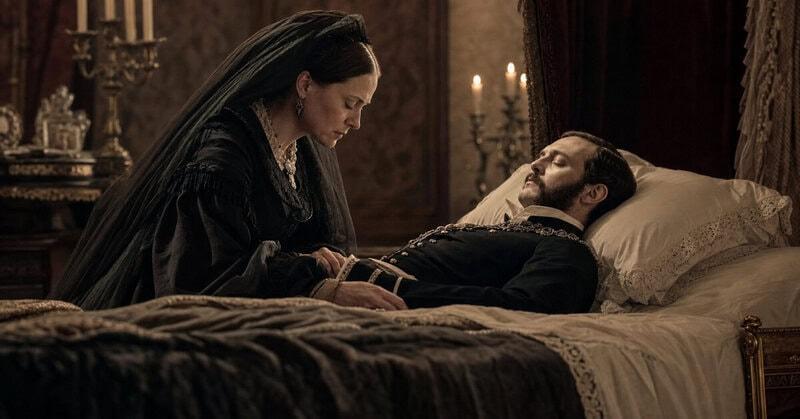
On the morning of 15 December 1861, Queen Victoria knelt beside the body of Prince Albert and understood, with the particular clarity that only devastating loss brings, that her world had ended. She was forty-two years old. She would live for another four decades. And for every single one of the roughly 14,600 days that followed, she dressed in black.
The Victorian Era: Dates, Definition, and Why the Boundaries Blur

Before examining what the Victorians made of death, it is worth establishing exactly what the Victorian era was — and why historians argue about its edges. The strict answer is clean enough: the Victorian era spans Queen Victoria’s reign from 20 June 1837, when an eighteen-year-old princess woke at Kensington Palace to learn she was queen, to 22 January 1901, when that same woman died at Osborne House on the Isle of Wight. That is 63 years — long enough to encompass the railways, the telegraph, the germ theory of disease, the rise of organized labor, and the expansion of the British Empire to cover roughly a quarter of the earth’s surface.
Many historians, however, stretch the period. According to Britannica, the era is sometimes extended to absorb the final years of the Regency before 1837 and the brief Edwardian twilight that followed Victoria’s death, running the cultural period from roughly 1820 to 1914. The reasoning is straightforward: culture does not flip like a switch on a monarch’s birthday. The anxieties and attitudes that defined the Victorian age were already forming before Victoria sat on the throne, and they lingered long after her coffin was lowered into the ground at Frogmore. Using the reign dates as hard boundaries is useful shorthand; treating them as walls is a historical oversimplification.
What those 63 years undeniably share is a set of defining tensions: between tradition and industrial modernity, between religious faith and scientific doubt, between imperial confidence and domestic anxiety. And woven through all of it, more visibly than almost any other culture before or since, was an extraordinary, almost obsessive architecture built around the act of dying.
The World Victoria Inherited: Death as Daily Fact

To understand why Victorians thought about death the way they did, you need to understand what death looked like in 1837. Britain was mid-transformation. The first railways were already running, and rapid urbanization was depositing millions of people into new industrial cities whose infrastructure was wholly unequal to the pressure. In Manchester, one of the engines of the new economy, life expectancy had collapsed under the weight of overcrowding, open sewers, and poverty. Death was not an abstraction. It arrived in the night cough of a child, in the greenish water drawn from the pump, in the sudden fever that could take a working man from robust health to a cold body in under a week.
Cholera swept Britain in epidemic waves in 1832, 1848, and 1866, each killing tens of thousands. Tuberculosis — then called consumption, because it seemed to consume its victims from within — was so prevalent that its pale, wasting aesthetic was briefly romanticized in poetry and art, as though illness itself could be made beautiful if you squinted hard enough. Infant mortality rates meant that many Victorian families buried at least one child, and often more. Death was not the punctuation at the end of a long sentence. It was scattered throughout like commas.
The shift from rural to urban life fractured the communal structures that had previously contained grief. In the old village model, a death was a community event: neighbors came to lay out the body, the whole parish knew the deceased, and the rituals were largely instinctive. As urbanization uprooted millions and deposited them in anonymous terraced streets, those structures collapsed. Into the vacuum stepped the middle class, armed with etiquette manuals, and an emerging industry that had spotted, with perfect commercial instinct, that grief was a market.
The Mourning Industry: Grief as Commerce

By the 1850s, London’s Jay’s Mourning Warehouse on Regent Street had turned bereavement into a retail experience. Black-edged stationery, jet jewelry mined from the cliffs of Whitby, silk crape dresses in graduating weights and shades — all of it catalogued and sold to families navigating the elaborate choreography of respectable grief. Crape, the coarse black silk that became the era’s most culturally loaded fabric, was practically a second language. A widow was expected to wear it heavily for the first two years of mourning, then transition through progressively lighter materials in a precisely timed sequence that broadcast her status and her virtue to every person she passed on the street. Her clothes were a public document.
The class dimensions of all this were stark. A wealthy family could afford the full mourning wardrobe — the crape-hung mirrors, the black-plumed horses drawing the hearse, the elaborate tomb in one of the new garden cemeteries. Working-class families, who could afford none of it, contributed small weekly pennies to burial clubs throughout their lives, saving not for retirement but for a decent funeral — because a pauper’s burial, with no ceremony and an unmarked grave, was considered a social disgrace almost worse than death itself. Even in poverty, grief was a financial transaction.
Charles Dickens saw this clearly and despised it. His undertaker in Oliver Twist, the slippery Mr. Sowerberry, is an opportunistic figure who measures orphan boys for their coffin dimensions with the cheerful efficiency of a tailor — a portrait that landed because it was uncomfortably recognizable. The funeral trade, then known as funeral furnishing, had mastered the art of upselling to people at their most vulnerable, and Dickens was not the only Victorian who noticed.
The Rulebook of Mourning: A Grief With Deadlines

The etiquette of Victorian mourning was, in its way, as precisely engineered as a railway timetable. A widow entered full mourning for two years — black everything, severely limited social contact, no entertainments, no bright colors anywhere in her visible life. After that came half mourning, typically another year, during which muted greys and lavenders were permitted and gradual reentry into society could begin. Every stage was publicly visible and socially enforced. To rush through mourning was to signal that you had not loved properly. To linger in it indefinitely, as Victoria did, was to signal that you had loved too well to ever recover — which, in its own dark way, was admired.
Inside the home, the rituals were equally elaborate. When someone died, the mirrors were covered, reputedly to prevent the soul from becoming trapped inside the glass. Clocks were stopped at the moment of death. The body was laid out in the front parlor — making the Victorian living room sometimes, literally, a room for the dead — and neighbors came to pay their respects in a ritual that was half religious observance, half social performance.
Perhaps the most striking practice of all was post-mortem photography. Early photography was expensive, and many working- and middle-class Victorians never sat for a portrait while alive. When a family member died — especially a child — families would sometimes commission a photographer to capture the body, carefully arranged, occasionally with eyes painted open on the print. These photographs were kept as treasured keepsakes, sometimes the only image a family would ever have of someone they had loved. They are profoundly strange to modern eyes, and profoundly human.
The mourning rules also revealed something uncomfortable about gender and power. Widows bore the heaviest visible burden of grief, their clothing policed by social expectation for years. Widowers faced no equivalent scrutiny — a man could remarry within months without serious social censure. Victorian mourning customs were not only about honoring the dead. They were also, in a more uncomfortable sense, about managing women’s public presence, their bodies, and their choices during a period of enforced withdrawal from ordinary life.
The Architecture of the Afterlife: Garden Cemeteries and the Cities of the Dead

By the 1830s, London’s ancient churchyards had reached a crisis point. They were so dangerously overcrowded that bones surfaced from the mud after heavy rain, and the smell near some of them was reportedly detectable streets away. Parliament responded by authorizing a new model: the large, landscaped, privately managed garden cemetery on the city’s outskirts. Between 1832 and 1841, seven great cemeteries were established in a ring around London — Highgate, Kensal Green, Abney Park, Nunhead, Brompton, West Norwood, and Tower Hamlets — each designed to be not merely a burial ground but an improving landscape, a place of beauty and moral reflection.
Highgate Cemetery became the era’s masterpiece of funerary architecture. Its Egyptian Avenue, flanked by obelisks and leading to the cedar of Lebanon catacombs, drew on Pharaonic imagery with the enthusiasm of a culture that had absorbed the aesthetics of empire. The tombs were statements of identity — gothic spires for the romantically inclined, classical columns for the classically educated, elaborate carved portraits for the newly wealthy middle class who had recently acquired the resources to perform status and wanted, above all, to perform it permanently.
The paradox of these spaces is almost comic: Victorians promenaded through garden cemeteries on Sunday afternoons as a form of recreation, reading epitaphs as improving literature and picnicking in the shade of elaborate mausoleums. English Heritage notes the era’s deep investment in making public spaces carry moral meaning — and few spaces carried more than these elaborately landscaped cities of the dead. Death was simultaneously a spectacle, a sermon, and a day out.
The Widow Who Defined an Era’s Relationship With Grief

Against all this background, Victoria’s personal mourning was not an eccentricity — it was a culmination. Albert died on 14 December 1861, probably from typhoid fever, aged forty-two. Victoria was devastated in a way that went beyond ordinary grief. She kept his clothes laid out, his shaving water brought each morning, his portrait beside her bed. She wore black for the remaining forty years of her life and rarely appeared in public for years after his death, earning the nickname the Widow of Windsor and drawing sustained public criticism for her prolonged withdrawal from royal duties.
And yet, in a cultural sense, her extreme mourning was perfectly legible to her subjects. It was simply the full mourning rulebook applied with royal thoroughness. She was not mad or eccentric by Victorian standards. She was following the script to its logical extreme — and in doing so, she became the most visible embodiment of the era’s defining belief: that how you grieved was an index of how you had loved, and that love, properly performed, was the foundation of respectable civilization.
A Timeline of the Victorian Era’s Defining Moments
Across its 63-year span, the Victorian era moved through recognizable phases, each with its own character:
- 1837-1851 (Early Victorian): Victoria’s accession, the first railways, Chartist agitation, the Irish Famine, and the 1848 cholera epidemic. A period of tremendous instability and rapid change.
- 1851-1870 (Mid Victorian): The Great Exhibition of 1851 announced Britain’s industrial confidence. The Crimean War (1853-1856), the Indian Rebellion of 1857, and the Second Reform Act of 1867 marked both imperial ambition and domestic pressure for democratic reform.
- 1870-1901 (Late Victorian): Compulsory elementary education, the rise of trade unions, the expansion of empire in Africa and Asia, and the emergence of the modern newspaper and popular culture. Victoria’s Diamond Jubilee in 1897 marked the zenith of imperial celebration; her death in 1901 closed the era.
A fuller Victorian era timeline reveals how consistently the period was shaped by the collision between technological optimism and social anxiety — a tension that expressed itself nowhere more vividly than in the culture of death.
What the Victorians’ Death Culture Actually Tells Us
It would be easy, and wrong, to dismiss Victorian death culture as mere morbidity — a civilization so repressed that it found an outlet in coffin catalogues and crape. The reality is more interesting and more sympathetic. The Victorians built their elaborate theatre of mourning because they were, at their core, profoundly anxious people living through the fastest and most disorienting social transformation in human history.
In the space of a single lifetime — roughly the span of Victoria’s reign — Britain went from a largely rural, agrarian society to the center of a global industrial empire. The old certainties of community, land, and inherited place had been bulldozed and replaced with factory whistles, railway schedules, and the anonymous press of urban crowds. In that context, ritual was not weakness. It was the technology through which people imposed order, meaning, and continuity on a world that seemed determined to strip all three away. If you could not control cholera, the factory owner, or the rent, you could at least control the thickness of your crape and the angle of your mourning brooch. You could make grief legible, and legibility was a form of dignity.
The same culture that laid undersea telegraph cables, hosted two Great Exhibitions, and covered a quarter of the globe in pink on the map also needed death to mean something personal and beautiful — because industrial modernity threatened, at every turn, to make it anonymous and ugly. The mourning warehouse and the steam engine were not contradictions. They were two faces of the same hungry, anxious, magnificent civilization.
Victoria’s Final Instructions: Grief Made Permanent
When Victoria herself died on 22 January 1901, she left meticulous instructions for her own burial. Beside her in the coffin was placed Prince Albert’s dressing gown — the one she had kept for forty years — along with a plaster cast of his hand and a lock of his hair. The most powerful woman in the world went to her grave as a mourning widow, performing in death the role she had performed in life. It was the most Victorian thing imaginable: grief made permanent, grief made meaning, grief elevated into the closest thing the secular nineteenth century could manage to a sacred act.
We still live in the long shadow of what she and her era built. The black clothes at funerals, the flowers on the coffin, the instinct to make grief visible and proper rather than private and shapeless — these are Victorian inheritances, so thoroughly absorbed that they feel like human nature rather than historical accident. Whenever we dress for a funeral and reach, almost without thinking, for something dark, we are still, in a very real sense, following Victoria’s rulebook.

 English
 Arabic
 Spanish
 Portuguese
 Deutsch
 Turkish
 Dutch
Dutch
 Italiano
 Russian
 Romaian
 Portuguese (Brazil)
 Greek
Greek