


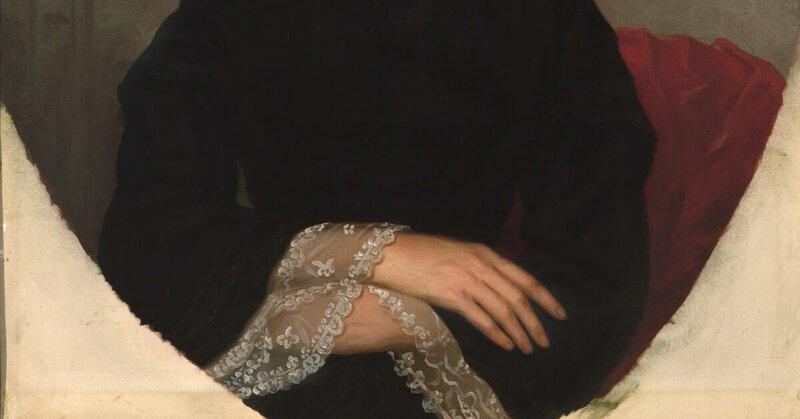
In November 1862, somewhere in the crowded corridors of the Lincoln White House, a small, tired woman who had written a novel at her kitchen table came face to face with the president fighting the war that novel may have helped ignite. The words Abraham Lincoln reportedly spoke to Harriet Beecher Stowe — “So you are the little woman who wrote the book that made this great war” — have echoed through American memory ever since, whether or not he said them exactly that way.
The Disputed Handshake and Why It Matters Anyway
The precise wording of Lincoln’s greeting to Stowe is disputed by historians. No contemporaneous written record captures the exchange with certainty, and the version most people know was recorded years after the fact by Stowe’s son Charles Edward Stowe in his 1889 biography of his mother — a significant remove from the moment itself. But here is the revealing thing about that uncertainty: the legend persisted because it felt true to those who had lived through the 1850s. By the midpoint of the Civil War, Uncle Tom’s Cabin had burrowed so deeply into the national conscience that crediting it with starting the war seemed not just plausible but almost obvious.
The central question, though, deserves a serious answer: can a single novel actually tilt a nation toward war? Is that giving fiction too much credit — or, in a strange way, not enough? To find out, you have to follow the book from Stowe’s writing desk to the battlefield, and weigh what it actually did to the country that read it.
A Nation on a Powder Keg: America in 1852

The United States that received Uncle Tom’s Cabin in 1852 was not a nation at peace with itself. The Compromise of 1850 had papered over the slavery question with legislation that satisfied almost nobody, and its most incendiary provision — the Fugitive Slave Act — had done something politically catastrophic: it made slavery a problem that Northerners could no longer ignore at a safe distance. The law required citizens of free states to assist in the capture and return of escaped enslaved people, imposing fines on federal marshals who refused to act and on anyone caught aiding a fugitive. Suddenly, a moral horror that many Northerners had kept at comfortable arm’s length was knocking on their doors and demanding their participation.
Into this charged atmosphere stepped Harriet Beecher Stowe — daughter of the firebrand Calvinist minister Lyman Beecher, sister of the influential minister Henry Ward Beecher, mother of seven children, and a woman writing in the margins of domestic life in Brunswick, Maine. She had personal grief driving her pen: the death of her infant son Samuel in 1849 had given her, she later said, a visceral window into the anguish of enslaved mothers who watched their children sold away. She had moral fury, too, inherited from a family deeply enmeshed in reform movements and sharpened by outrage at the Fugitive Slave Act.
The story first reached readers not as a book but as a serial, published in installments in the abolitionist newspaper The National Era beginning in June 1851. Readers waited for each new chapter the way a later generation would wait for the next episode of a gripping television drama. By the time the two-volume novel appeared in 1852, an audience was already primed and hungry. As the American Yawp reader on the sectional crisis documents, slavery in this era was not an abstraction — it was a system undergirding the entire Southern economy and the lived nightmare of roughly three million human beings. Stowe was writing into the eye of a storm.
The Story Itself: Why These Characters Broke Hearts
It is worth recovering what Stowe actually wrote, because the character of Uncle Tom has been so thoroughly distorted by what came after. Stowe’s original Uncle Tom is not the shuffling, servile caricature his name eventually became in American slang. He is a man of profound dignity and unshakable Christian faith — a figure who endures unimaginable cruelty without surrendering his moral core. When his brutal enslaver Simon Legree orders him to reveal the hiding places of fellow enslaved people who have fled, Tom refuses, and he pays for that refusal with his life. Stowe intended him as a Christ-like martyr whose suffering was designed to indict the system that produced it, not to commend passivity.
Little Eva — the luminous, terminally ill white child who befriends Tom on the St. Clare plantation in New Orleans — was a calculated narrative strategy as much as a character. Stowe understood her audience. She knew that white Northern readers, many of whom had never witnessed slavery firsthand, needed an emotional entry point calibrated to their own experience. Little Eva provided one: a child who looked like their own children, forming a bond of love with a man the law classified as property. When Eva dies, the grief serves a purpose beyond sentiment. It asks readers to extend that same capacity for mourning to the enslaved families torn apart at auction blocks every day.
Then there is Eliza — the enslaved woman who, upon learning her young son Harry is to be sold away, flees across the frozen Ohio River by night, leaping from ice floe to ice floe with her child in her arms. The scene reads like pure adventure writing — pulse-pounding and visceral — placing readers inside the terror of a mother’s desperation with novelistic immediacy that no political pamphlet could replicate. Stowe drew her characters’ experiences from published slave narratives and abolitionist testimony, including accounts gathered during her years in Cincinnati, where she had direct contact with the realities of the slave trade and the underground network helping people escape across the Ohio River. The fictionalization gave documentary facts emotional force that argument alone could not achieve.
A Publishing Phenomenon Unlike Any Before
The commercial numbers were staggering for any era, let alone the 1850s. The novel’s sales were astronomical, eclipsed only by the Bible. Publisher John P. Jewett could barely keep his presses running fast enough to meet demand.
The book went global almost instantly. Translated into more than twenty languages within a few years of publication, it sold hundreds of thousands of copies in Britain, where its moral weight complicated any sympathy the British governing class might have extended to the Confederacy in the years that followed. When the Civil War came and Britain debated whether to recognize the Southern government, the popular revulsion against slavery that Stowe’s novel had helped cultivate among British readers mattered in ways diplomats felt acutely.
The cultural penetration went deeper than sales figures. Uncle Tom card games, ceramic figurines, and theatrical adaptations flooded the market. “Tom Shows” — traveling theatrical productions of the story — ran for decades across the country, ensuring that the characters became cultural touchstones even for Americans who never read a word of the book. The novel had escaped between its covers and taken up residence in the broader culture in a way few works of fiction ever manage.
The Southern reaction was equally volcanic, which is itself a precise measure of the book’s impact. More than thirty pro-slavery novels were published in direct rebuttal during the 1850s, their authors scrambling to offer counter-narratives of contented enslaved people and benevolent masters. Southern newspapers denounced Stowe as a fabricator and agitator. The book was banned or suppressed across much of the South. When your opponents feel compelled to spend a decade answering you, you have landed a blow they cannot ignore.
How the Novel Reshaped the Political Landscape
Before Uncle Tom’s Cabin, abolitionists were a passionate but politically marginal group, viewed by many Northern moderates as dangerous radicals whose agitation threatened national stability. After it, anti-slavery sentiment found an enormous, emotionally primed audience in the Northern middle class — precisely the people who had previously preferred to keep their distance from the argument. The novel made moral opposition to slavery feel urgent and personal rather than merely ideological.
It gave the broader anti-slavery movement a shared vocabulary. Tom’s martyrdom, Eliza’s flight, the auction block separating mothers from children — these images entered the bloodstream of American public discourse. Preachers invoked them from pulpits. Politicians wove them into speeches. The Fugitive Slave Act had asked Northern citizens to be complicit in returning people like Eliza to bondage; Stowe had now shown those citizens, in granular human detail, exactly what that complicity meant in practice.
Frederick Douglass and William Lloyd Garrison recognized the novel’s power to reach audiences their own writing had not fully penetrated. Stowe’s work crossed lines of class and education that abolitionist tracts rarely managed. It contributed to the moral atmosphere that destroyed the Whig Party, which could not survive the slavery question’s polarizing force, and helped fuel the rise of the antislavery Republican Party — the party that carried Abraham Lincoln to the presidency in 1860.
That said, Black intellectuals then and later raised pointed and necessary critiques. Stowe’s paternalism — her tendency to speak for Black Americans rather than with them, her depiction of Tom’s suffering as spiritually redemptive rather than straightforwardly outrageous, her resolution that envisions formerly enslaved characters emigrating to Liberia rather than claiming full citizenship in America — all reflect the limits of even a sympathetic white imagination working within the racial assumptions of her time. These are not minor footnotes. They are central to any honest reckoning with what the book did and did not accomplish.
Was Lincoln Right? Weighing the Evidence Honestly
The case for Lincoln’s famous greeting containing a real truth is substantial. The novel demonstrably shifted Northern public opinion across the 1850s, energized the moral atmosphere that gave Lincoln’s 1860 coalition its emotional charge, and helped make the restriction of slavery’s expansion a cause that ordinary voters — not just committed abolitionists — were prepared to defend at the ballot box. Trace that chain of causation and Stowe’s pages connect, however indirectly, to Fort Sumter.
The case for nuance is equally important. No single book starts a war. The Civil War grew from decades of economic conflict, constitutional crisis, political failures compounding upon one another, and — most fundamentally — the daily resistance of enslaved people themselves, who forced the issue with their bodies, their escapes, their rebellions, and their courage long before any novel was written. To credit one book with causing the war risks flattening a vast, tragic complexity into a tidy and misleading story.
The most defensible verdict sits between these poles. Uncle Tom’s Cabin did not cause the Civil War. But it dramatically accelerated and emotionally deepened a conflict that was already building through structural forces far larger than any single text. It moved slavery, for millions of readers, from a political argument to a moral emergency — and that shift in emotional register had political consequences that no purely political event could have produced as quickly or as broadly.
The Long Shadow: A Legacy That Remains Unsettled
The novel’s legacy is deeply tangled, and that complexity is worth sitting with rather than resolving too quickly. The Tom Shows that spread across America after the Civil War gradually stripped Tom of everything Stowe had given him. The dignified, defiant martyr became a shuffling, grinning caricature — and his name became an insult hurled at Black Americans deemed too accommodating to white power. It is one of the more painful ironies in American cultural history: a character specifically designed as a hero of moral courage was converted into his opposite by the theatrical culture his story had generated.
The book remains among the most debated works in the American literary canon. Modern scholars interrogate both its genuine anti-slavery force and its racial paternalism — the way Stowe imagines Black freedom primarily as a gift bestowed by white sympathy rather than a right claimed through Black agency. That tension is not a reason to dismiss the novel. It is a reason to read it carefully and honestly, which is what the novel still rewards — the Dover Publications edition remains an accessible starting point for readers coming to it for the first time.
Its place among the works that changed American history is unquestioned. Uncle Tom’s Cabin demonstrated that popular fiction could function as a political weapon of the first order — that a story told with sufficient emotional truth could move hearts that arguments alone left cold, and that moved hearts eventually move history. Every subsequent generation of writers who have used narrative to advance a social cause has worked, knowingly or not, in the tradition Stowe established from her writing desk in Maine.
Ultimately, the book operates as a mirror. What Americans see in it — heroic moral intervention, flawed white saviorism, or both simultaneously — reflects where they stand on questions of race and human dignity that the Civil War itself never fully resolved. The novel that may or may not have made a great war is still, in its way, part of a reckoning that has never quite ended.

 English
 Arabic
 French
 Spanish
 Portuguese
 Deutsch
 Turkish
 Dutch
Dutch
 Italiano
 Russian
 Portuguese (Brazil)
 Greek
Greek