


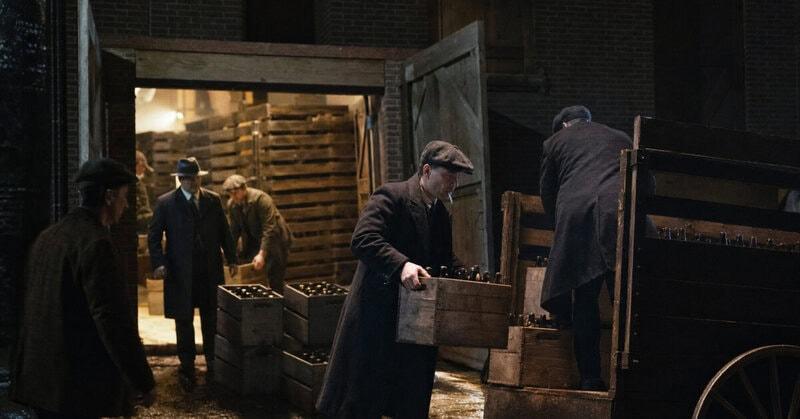
At the stroke of midnight on January 17, 1920, church bells rang across American cities, temperance campaigners wept with joy, and somewhere in the cold shadows of a Chicago warehouse, a set of heavy doors slid open and men began quietly loading crates onto waiting trucks.
The Night America Went Dry — and Nobody Really Did

The 18th Amendment had been ratified on January 16, 1919, and what it promised was nothing less than a moral transformation of the United States. The production, importation, transportation, and sale of all alcoholic beverages were now constitutionally forbidden. Thirteen years of national sobriety lay ahead — or so the reformers believed. What actually followed was one of the most consequential social experiments in American history, a period that reshaped organized crime, popular culture, and the relationship between citizens and their government in ways that still echo today.
The bootleggers moving stock that first midnight were not improvising. They had seen the law coming and had been stockpiling for months. By the time the Volstead Act — the legislation that gave the amendment its practical enforcement teeth — came into force, an underground economy was already running. The demand for alcohol did not vanish because a constitutional amendment said it should. It went somewhere else. And where it went was dangerous.
Why Americans Thought This Would Actually Work

It would be a mistake to dismiss Prohibition as the project of fanatics with no grip on reality. The temperance movement had spent decades documenting genuine suffering: household wages drunk away on Friday nights, industrial accidents caused by impaired workers, domestic violence tied directly to alcohol consumption. The grievances were real, and the reformers who pressed them were not simply puritanical killjoys — many were social workers, physicians, and women who had watched communities hollowed out by unregulated drinking.
The political coalition that turned those grievances into a constitutional amendment was extraordinary in its breadth. Rural Protestant conservatives provided the moral framework. Progressive-era reformers supplied the legislative machinery. Women’s suffrage activists, who understood viscerally that alcohol-related violence fell hardest on women and children, brought organizing energy and moral authority. At the center of it all was the Anti-Saloon League, arguably the most effective single-issue lobbying organization the country had ever seen, capable of coordinating congressional pressure across dozens of districts with a precision that looked, to later observers, almost modern.
The First World War accelerated everything. With American troops in Europe after 1917, grain conservation became a patriotic argument for curtailing alcohol production. Anti-German sentiment added a sharper edge: many of the country’s largest breweries were owned by families of German descent, and in the inflamed atmosphere of wartime, drinking their beer could be framed as a form of cultural disloyalty. The war made Prohibition feel not just moral but urgent, collapsing what might have been a longer political struggle into a matter of a few years.
The optimism was genuine and, in some quarters, extravagant. Factory owners predicted that productivity would soar. Social reformers expected poverty rates to fall sharply. Some public voices suggested that jails might empty within a generation once alcohol’s corrupting influence was removed. They were not posturing — they believed it. The scale of what they got wrong is part of what makes the Prohibition era one of history’s most instructive lessons in the gap between legislative intent and human behavior.
What the Law Banned — and What It Forgot to Stop

The Volstead Act defined intoxicating liquor as anything containing more than 0.5% alcohol by volume — a threshold that covered virtually everything ever served in a bar or tavern. But the law’s reach was uneven in ways that mattered enormously in practice. Sacramental wine was exempted. Medicinal whiskey, available by physician’s prescription, remained legal — and the number of prescriptions written by cooperative doctors rose to striking levels almost immediately after 1920. Industrial alcohol continued to be manufactured for legitimate purposes, and that loophole would carry deadly consequences.
Then there was the home-production provision, which was either a significant legislative oversight or a deliberate concession, depending on who was asked. Households were permitted to produce up to 200 gallons of fermented fruit juice per year for personal use. For the millions of Italian, Eastern European, and other immigrant families who had always made wine as an ordinary part of domestic life, this was barely a restriction. For everyone else, it was an open invitation.
California’s grape growers understood that invitation perfectly. Vineyard acreage in the state expanded after 1920 rather than contracting, because demand for home-winemaking grapes surged. Producers sold compressed bricks of grape concentrate — legal to sell, legal to buy — with label instructions that carefully explained how fermentation could theoretically occur if a buyer were to add water and yeast and leave the mixture in a warm place, and how buyers should therefore take care to avoid exactly that. The wink was visible from considerable distance.
Enforcement was structurally compromised from the outset. The federal Prohibition Bureau was chronically understaffed and underpaid, which made it highly susceptible to the one resource bootleggers had in abundance: money. Bribery became less an exceptional act of corruption and more a standard operating cost built into the economics of illegal alcohol. Local police departments, city officials, and judges were drawn into networks of complicity that spread corruption through institutions that had little to do with liquor before 1920.
The Speakeasy, the Bootlegger, and the Invention of Organized Crime

What the underground drinking economy actually looked like during the Prohibition years was, by any measure, remarkable. Estimates placed the number of speakeasies in New York City alone at roughly 30,000 by the mid-1920s — approximately twice the number of legal saloons that had operated in the city before the ban. Enforcing Prohibition in a city that emphatically did not want to be sober was an exercise in institutional futility.
The deeper transformation was structural. Before Prohibition, criminal networks tended to be local, opportunistic, and relatively limited in scale. The enormous profits available in illegal alcohol supply — profits that existed precisely because the market was unregulated and uncontested by legitimate business — provided both the incentive and the capital for something far more organized and durable. Al Capone’s Chicago operation is the most cited example, but similar networks were running in every major American city. Bootlegging revenue funded corruption at every level of government and law enforcement, and it funded the diversification of criminal enterprises into activities that would outlast Prohibition itself. The rise of organized crime as a national power structure remains among Prohibition’s most consequential legacies.
There was also a cultural paradox that few had anticipated. The speakeasy, by virtue of being illegal, became fashionable in a way the old corner saloon had never managed. Women, who had rarely set foot in pre-Prohibition bars, entered speakeasies in large numbers — partly because the establishments needed female clientele to maintain their cover as private clubs rather than drinking dens, and partly because the transgressive glamour was itself part of the appeal. Jazz culture, cocktail culture, the whole mythology of the Roaring Twenties — much of it was constructed inside rooms that technically did not exist.
The Dangerous Drink: Poison, Policy, and the Government’s Grim Calculation

The most disturbing chapter of Prohibition history is one that receives far less attention than Capone or the speakeasy: the question of who was killing Americans with their drinks, and whether federal authorities understood the consequences of their own policies.
Industrial alcohol — used in manufacturing, cleaning solvents, and dozens of other legitimate processes — was still legally produced throughout Prohibition. Bootleggers quickly identified it as a cheaper raw material for illicit spirits and began attempting to remove the denaturants added to make it undrinkable. Federal authorities, aware of this practice, responded by ordering manufacturers to add increasingly toxic compounds to industrial alcohol: methanol, kerosene, and other substances specifically chosen because they were difficult to remove and lethal in small quantities.
The consequences were catastrophic. Historians have documented that the federal denaturing program contributed to thousands of American deaths over the course of the Prohibition years — people who drank what they believed was ordinary illicit liquor and were poisoned by a substance that government policy had deliberately made lethal. New York City hospitals reported hundreds of deaths and cases of permanent blindness annually from adulterated alcohol, with the toll rising sharply around holidays when demand spiked and supply quality fell.
This is what makes the central tragedy of the Prohibition years so stark: the law did not make drinking safer. It made drinking more dangerous than it had ever been when alcohol was legal, regulated, and subject to at least minimal quality standards. The choice facing an American who wanted a drink in 1927 was not a choice between sobriety and vice. It was a choice between sobriety and a product that might have been prepared by a criminal enterprise using industrial chemicals, in conditions nobody was inspecting, with no legal recourse if the product was adulterated or deadly.
The Long Unraveling: How a Constitutional Amendment Got Repealed

Political support for Prohibition eroded steadily through the late 1920s as evidence of its failures accumulated. The moral case had rested on the assumption that the law would meaningfully reduce drinking; evidence that it had merely reorganized drinking around criminal networks undermined that case at its foundation. Corruption was visible and rampant. Organized crime had grown into something that alarmed observers described as a parallel government operating inside the legitimate one.
The Great Depression, which began in 1929, added an economic argument that proved decisive. With unemployment catastrophic and federal revenues collapsing, the tax income a legal alcohol industry would generate was no longer theoretical — it was a figure politicians could calculate and cite. The legal machinery built to enforce Prohibition strained under the contradictions of a law that vast numbers of citizens refused to respect. By 1932, both major parties were openly advocating repeal — a consensus that would have been politically unimaginable a decade earlier and that reflected the speed with which public opinion had shifted.
The constitutional mechanics of repeal were themselves remarkable. Because Prohibition had been written into the Constitution via the 18th Amendment, it could not be undone by ordinary legislation. A new constitutional amendment was required. The 21st Amendment, ratified on December 5, 1933, made that date the only moment in American history when one constitutional amendment was repealed by another — a measure of how seriously the country had miscalculated in 1919, and how urgently it wanted to correct that miscalculation.
The Hangover That Never Quite Left
The clean ending is a partial illusion. Federal Prohibition ended in December 1933, but the 21st Amendment returned the question of alcohol regulation to the individual states, and many were in no hurry to act. Dry laws remained on the books in counties and municipalities across the country for years. Some rural areas, particularly in the South, stayed legally dry for decades. A number of counties in the United States remain legally dry to this day, a quiet reminder that the temperance impulse that drove Prohibition never entirely disappeared — it simply lost the national argument.
What Prohibition left behind was more consequential than the law itself. It gave America organized crime at industrial scale, with networks, methods, and institutional corruption that persisted long after the legal trigger for their existence was removed. It gave the country a cocktail culture and a speakeasy aesthetic that became permanent features of social life. And it gave Americans a lasting suspicion of government overreach — a hard-earned intuition that when the state attempts to legislate away a deeply embedded human behavior, it tends to produce consequences worse than the problem it set out to solve.
The Prohibition years demonstrated all of this at enormous human cost: in the thousands who died from poisoned liquor, in the corruption that spread through institutions that had not been corrupt before, and in the criminal organizations that grew powerful on the profits of a market that government policy had handed to them by default. Outlawing something that millions of people intend to do regardless does not eliminate the behavior. It eliminates the safety, the oversight, and the accountability — and it transfers the profits and the power to whoever is willing to operate in the dark.
Somewhere in America on the night of January 16, 1920, someone ordered a last legal drink. Somewhere on the morning of December 5, 1933, someone ordered the first legal one in thirteen years. The drink was more or less the same. What had changed was everything around it — and some of what changed never quite changed back.

 English
 Arabic
 French
 Spanish
 Portuguese
 Turkish
 Dutch
Dutch
 Italiano
 Russian
 Romaian
 Portuguese (Brazil)
 Greek
Greek