


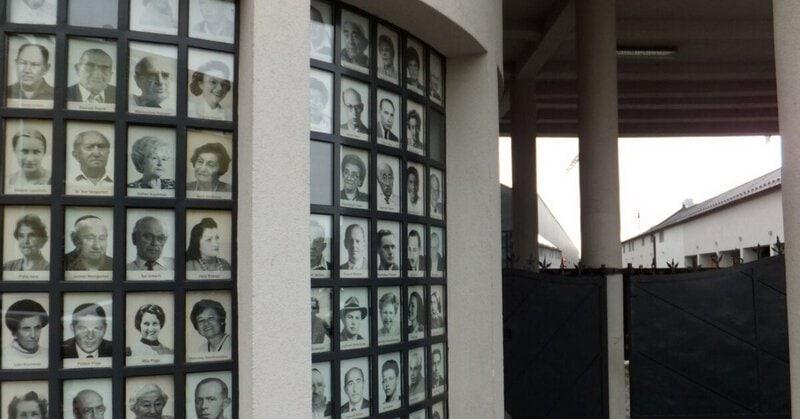
In 1980, a leather goods shop owner in Beverly Hills ambushed an Australian author, pressed a dog-eared copy of a survivor’s testimony into his hands, and refused to accept silence as an answer. That shop owner was Leopold “Poldek” Pfefferberg — one of the roughly 1,200 Jews saved by a German war profiteer named Oskar Schindler — and his decades-long campaign to keep one story alive would eventually produce the most celebrated of all movies about the Holocaust.
The Director Who Almost Said No
Steven Spielberg was, by 1982, arguably the most powerful filmmaker in Hollywood. Raiders of the Lost Ark had rewritten the blockbuster playbook. E.T. the Extra-Terrestrial was still breaking box office records. He had the leverage to make anything he wanted — and he was terrified to make this. When Universal Pictures acquired the rights to Thomas Keneally’s Schindler’s Ark and brought the project to Spielberg, his first instinct was to give it away. He approached Roman Polanski, who declined — though Polanski would eventually make his own essential Holocaust film twenty years later. He offered it to Martin Scorsese. He considered Sydney Pollack. One by one, the directors he trusted with the material stepped back, and the project drifted through years of near-misses.
Spielberg’s hesitation was not cowardice. It was, by his own account, a kind of moral vertigo. He felt too young, too frightened, and believed that turning the machinery of industrial genocide into entertainment struck him as almost obscene. This was the central tension that haunted him: how do you honor an atrocity without aestheticizing it? How do you make a film that witnesses rather than performs? The question had no clean answer, and for years he chose not to answer it at all.
The Man Who Would Not Let It Be Forgotten
Leopold Pfefferberg was born in Kraków, survived the war on Schindler’s list, emigrated to Los Angeles, and opened a leather goods shop on Rodeo Drive. By every measure he had rebuilt a life. But he carried a conviction — urgent, daily, almost feverish — that Oskar Schindler’s story belonged in the permanent record of human history, and that without sustained effort it would vanish. So he lobbied. He approached filmmakers, journalists, and authors with the relentlessness of a man who understood that memory without advocacy is just grief.
His most consequential ambush came in 1980, when Australian novelist Thomas Keneally walked into his shop to buy a briefcase. Pfefferberg kept him there for hours, producing documents, photographs, and survivor testimonies until Keneally understood that he was holding the raw material of a book. Keneally spent years interviewing more than fifty survivors and researching Nazi records, producing Schindler’s Ark, which won the Booker Prize in 1982. That book became Spielberg’s source material — and, eventually, his moral reckoning.
What Pfefferberg communicated, across those decades of advocacy, was not just a story about rescue. It was a story about the obligation of memory — that survival creates a debt not only to the dead but to the living generations who come after. When Spielberg finally accepted the project, he described it less as a career choice than as a responsibility he could no longer ethically defer.
Where Holocaust Cinema Began

Holocaust films began appearing as early as the 1940s, within years of the atrocities themselves, making this one of cinema’s oldest ongoing moral reckonings. From the earliest documentaries shot by Allied forces liberating the camps, filmmakers have struggled with the same impossible question: what does witnessing require of the person behind the camera?
The landmark films that shaped public understanding in the decades before Spielberg each found a different angle of approach. The Diary of Anne Frank (1959) gave the genocide a child’s face — intimate, specific, devastating in its ordinariness. Judgment at Nuremberg (1961) moved the lens to the aftermath, asking how an entire professional class of lawyers and judges had enabled systematic murder. Sophie’s Choice (1982) excavated the psychological wreckage of survival with a ferocity that still disturbs.
Most of these films depicted the Holocaust from a degree of remove — through courtrooms, diaries, or the fractured recollections of those who had escaped the worst of it. They rarely forced audiences to stand inside the machinery of extermination itself, to watch the liquidation of a ghetto not as historical abstraction but as a series of human events happening to specific people in real time. That was the gap Schindler’s List would fill — and the reason it landed with such force on audiences who thought they already knew this history.
The Decision to Film in Black and White
Against significant studio pressure, Spielberg chose to shoot almost the entire film in black and white. This was not a stylistic affectation. It was a declaration. By stripping away color — the sensory richness that makes cinema seductive — he was insisting that this was not a movie in the conventional sense. It was a document, something closer in texture to the newsreel footage and photographic record of the war itself. Black and white removed the pleasure from looking.
The one famous exception became one of the most analyzed images in modern cinema: a small girl in a red coat, the only sustained use of color in the film, moving through the chaos of the Kraków ghetto liquidation. She is visible, specific, impossible to reduce to a statistic — and then she is gone. Spielberg has described the red coat as a visual metaphor for the individual lives that the world’s leaders chose not to see, the way governments and institutions looked at the evidence of mass murder and declined to act. The coat makes abstraction impossible.
Filming in Poland, near the actual sites of the events depicted, was psychologically overwhelming. Spielberg has spoken in interviews about calling Robin Williams each night from the set to manage the weight of working in the proximity of Auschwitz-Birkenau — a detail that illuminates the moral burden carried by anyone who attempts to make historically grounded Holocaust cinema responsibly.
What the Film Gets Right — and Where It Shapes the Story
For viewers seeking Holocaust films that historians and educators recommend, the question of accuracy matters enormously. Schindler’s List rests on a foundation of serious research — Keneally’s book drew on more than fifty survivor testimonies and extensive archival work, and historians broadly praise the film’s depiction of the Kraków ghetto liquidation and the conditions of the Płaszów labor camp.
Where the film takes dramatic license is in the rendering of Schindler himself. The historical Oskar Schindler was a more ambiguous figure than the screen version suggests — a black-market operator, a womanizer, a man whose motivations evolved slowly and messily from war profiteering toward something that might be called conscience. Screenwriter Steven Zaillian, working from Keneally’s book, necessarily linearized and clarified a moral arc that historians describe as considerably more tangled. This is not dishonesty — it is the negotiation that every dramatization of real events must make between the demands of narrative and the grain of lived experience.
Common Sense Media identifies Schindler’s List among the essential films on this subject, describing it as a profound drama based on true events — a judgment that reflects both its critical stature and its function as many viewers’ primary encounter with this history. It also ranks at the top of IMDb’s Best Holocaust Movies list — a position that carries its own responsibility. Spielberg acknowledged that responsibility directly in 1994 by co-founding the USC Shoah Foundation, dedicated to recording the testimonies of survivors before they were gone. The film and the archive were conceived as companion acts.
The Wider Canon: Essential Holocaust Films Beyond Schindler’s List

No single film can carry the full weight of this history, and the strongest argument for Schindler’s List is that it tends to send viewers searching for more. Several films belong alongside it in any serious engagement with the subject.
- The Pianist (2002): Roman Polanski’s adaptation of Władysław Szpilman’s memoir is the film Polanski could only have made because he had lived it — he spent part of his own childhood in hiding during the Nazi occupation of Kraków. The result is a work of almost unbearable restraint, following a single man’s survival through the destruction of Warsaw’s Jewish community with a documentary quietness that many historians consider the most emotionally truthful of all Holocaust films. The absence of redemptive architecture is itself the point.
- Judgment at Nuremberg (1961): Stanley Kramer’s courtroom epic examines not the direct perpetrators of mass murder but the professional enablers — the judges who bent their expertise to legitimize persecution. Its central question, about how institutions and ostensibly intelligent people participate in atrocity, has lost none of its urgency.
- The Diary of Anne Frank (1959): For generations of younger viewers, this has been the entry point — a single girl’s voice making the scale of the catastrophe imaginable and personal. Educators often encourage pairing it with less sheltered films that convey the full brutality of what the diary, by its nature and circumstances, could not record.
- Sophie’s Choice (1982): Meryl Streep’s performance remains one of cinema’s great excavations of survivor guilt — the way the camps followed their survivors into peacetime, into love affairs, into ordinary rooms where the past waited in ambush. The film is as much about the psychology of aftermath as it is about the events themselves.
Together, these films form something like a canon — each approaching the same catastrophe from a different angle of memory, law, survival, and complicity. None is sufficient alone, and that insufficiency is itself meaningful. The Holocaust exceeds any single frame.
Why These Films Still Matter
Poldek Pfefferberg lived to see Schindler’s List win seven Academy Awards at the 1994 ceremony, including Best Picture and Best Director. His decades-long campaign — begun in a leather shop, sustained through years of rejection and indifference — had reached the largest possible audience, had placed Oskar Schindler’s name and the faces of the survivors he saved into the permanent cultural record.
But the deeper argument his persistence makes is about why Holocaust cinema endures at all. Each generation needs to re-encounter this history in the emotional language of its own time, and film — with its capacity to put a specific face on an incomprehensible number, to make one child’s red coat visible in a crowd — remains among the most powerful vehicles for that encounter. Statistics numb. Stories insist.
As the last living survivors age out of living memory, the stakes of that argument grow more acute. Films like Schindler’s List and The Pianist are already shifting in their cultural function — from companion pieces to primary testimony, from dramatizations of living memory to the memory itself. Which movies about the Holocaust we choose to recommend, preserve, and teach becomes, in that light, a genuinely consequential decision. The canon is not fixed. It is a choice we keep making, and the choosing carries real weight.
Spielberg has said, in various forms across the years, that he was afraid of this film — afraid of getting it wrong, afraid of the presumption involved in representing what he had not lived, afraid of what the material would demand of him. He has also said that the fear was exactly the reason he finally had to make it. The best art about atrocity is always made in spite of, and because of, that fear. Poldek Pfefferberg understood that before anyone picked up a camera. He spent forty years making sure someone else would understand it too.

 English
 Arabic
 French
 Spanish
 Portuguese
 Deutsch
 Turkish
 Italiano
 Russian
 Romaian
 Portuguese (Brazil)
 Greek
Greek