


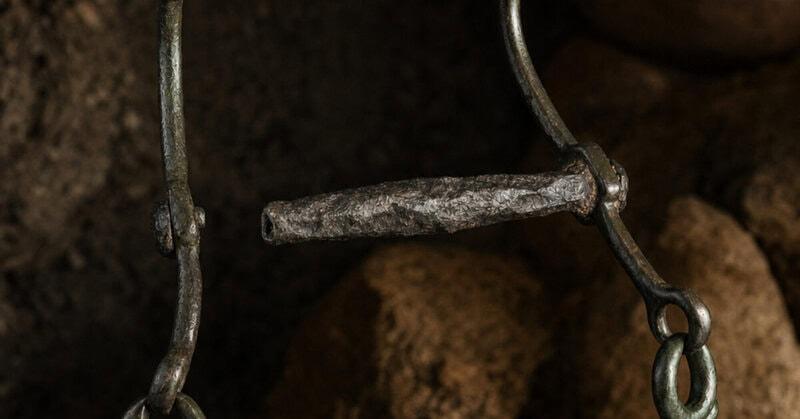
On an unremarkable morning in the Taunus hills outside Bad Camberg, Hesse, surveyors were marking out trenches for solar panels when the ground offered something far older than renewable energy — a sealed chamber holding the carefully arranged possessions of a Celtic lord who had been waiting, undisturbed, for roughly two and a half thousand years.
The Solar Survey That Stopped Everything

Solar park surveys are methodical, unglamorous work. You walk lines, you take readings, you log anomalies and move on. So when unusual soil patterns began emerging near Bad Camberg in June 2026, the first instinct among those present was professional skepticism, not excitement. District archaeologist Kai Mückenberger had seen false alarms before — discolorations that promised drama and delivered nothing. He arrived at the site cautious, prepared to write it off.
He did not write it off. Within hours of serious excavation, the caution dissolved. The chamber was intact. The grave goods were extraordinary. And the word circulating quietly among the dig team — sensation — turned out, for once, to be exactly the right word.
What the surveyors had stumbled across was not just another Iron Age pit. It was, in the formal language of central European archaeology, a Fürstengrab — a princely tomb — one of the rarest categories of burial on the continent, a window flung open onto Celtic elite society at the precise moment of its greatest complexity and reach. Euronews described the find as an “archaeological sensation” when the announcement came on or around June 9, 2026, and the story moved internationally within days.
What ‘Princely Tomb’ Actually Means — and Why It Matters

Archaeologists do not use the word Fürstengrab casually. It is reserved for a small, distinguished group of Iron Age burials scattered across central Europe — sites where extreme concentrations of wealth, imported prestige goods, and unmistakable evidence of enormous ritual effort converge in a single grave. Across all of Celtic Europe, true princely tombs are numbered in the dozens. Each confirmed example either rewrites or reinforces what we understand about Iron Age hierarchy, and the Bad Camberg discovery does both.
To understand why, consider the Celtic world of roughly 600 to 400 BCE — the Hallstatt and early La Tène cultural horizon — when chieftains across what is now France, Germany, Austria, and Switzerland were threading themselves into the edges of Mediterranean civilization. They controlled the mountain passes, the river crossings, the amber and tin routes that linked the warm south to the raw north. They accumulated prestige not through coinage or written law but through feasting, gifting, the display of weapons, and the careful choreography of burial. A great man’s grave was his biography, his political testament, and his claim on the memory of the living.
Bad Camberg sits in exactly the right geography for such a man to have flourished. The Taunus region straddles ancient corridors of movement between the Rhine and the Main rivers — precisely where a powerful local lord could have commanded tribute, taxed trade, and maintained the network of obligations and loyalties that constituted Iron Age authority. Heritage Daily described the find as a major archaeological breakthrough, and the geography alone helps explain why.
Inside the Tomb: Gold, Iron, and the Wheel of Status

The gold rings register first in the imagination, because their weight and craftsmanship announce immediately that this is a man whose worth was measured in metal. Gold in Celtic Iron Age burials is not decorative accident; it is a statement of rank so deliberate it amounts to a manifesto.
Then the weapons. Iron Age Celtic warrior burials consistently include the hardware of martial identity — swords, spearheads, the fittings of shields — and the Bad Camberg tomb was no exception. The presence of arms is not merely about violence or warfare; it is about a specific kind of social identity in which the right to lead and the right to fight were the same right, expressed in iron and staged for eternity. A man buried with weapons is a man whose community understood him, above all, as a warrior-lord.
And then the chariot. Two-wheeled, almost certainly not a battlefield vehicle in any practical sense, but one of the most powerful status symbols in the Celtic aristocratic vocabulary. Chariot burials appear consistently at the top tier of Iron Age Celtic society — in the famous Hochdorf chieftain’s tomb in Baden-Württemberg, in the horizon of burials grouped around the great Vix burial in Burgundy. The chariot does not say I fought from this. It says I moved through the world differently from other men, and I want that remembered.
By the time archaeologists had mapped the corroded iron fittings, traced the ghost-outlines of wood long since returned to soil, and begun to understand the geometry of how this life had been staged for its final audience, the scale of what they were dealing with was undeniable. Coverage of the rare Iron Age Celtic princely grave documented the full constellation of grave goods that confirmed its exceptional status.
The Etruscan Jug: A 2,500-Year-Old Import That Changes Everything

Of everything in that chamber, one object demands its own reckoning: the Etruscan jug. Made in central Italy, almost certainly in the 5th or 6th century BCE, it traveled hundreds of miles through mountain passes and river valleys to end up in a grave in the Hessian hills. In a single ceramic vessel, it encodes an entire history of the ancient world’s interconnectedness — and for many archaeologists, it is the most electrifying object in the tomb.
The Etruscans, who flourished in what is now Tuscany before Rome absorbed their civilization, were master craftsmen and prolific traders. Their wine culture, their drinking vessels, their bronzework were luxury goods carrying enormous prestige value in the Celtic north. Celtic elites craved Mediterranean imports not because they were naive consumers dazzled by shiny foreign things, but because controlling access to such objects was itself a form of power. If you could offer your guests wine from an Etruscan jug, you were a man with connections that reached beyond the visible horizon.
This dynamic is well-documented across comparable sites. The Hochdorf chieftain, buried around 530 BCE in what is now Baden-Württemberg, was interred with a Greek bronze cauldron and an Etruscan couch. The Vix burial in Burgundy — the grave of a Celtic noblewoman — contained a Greek bronze krater so large it must have been assembled inside the tomb. Bad Camberg now joins that roll call, a new data point in the vast economic and cultural story of the ancient Mediterranean reaching northward.
The human question the jug invites is harder to answer than any archaeological catalogue can manage: did this warrior ever drink from it at a feast, passing it among companions in the firelit warmth of a Taunus hall? Or was it acquired specifically as a burial offering — purchased or gifted with the explicit understanding that it would go underground? The object survives. The answers do not.
How the Discovery System Worked — and Why That Matters

There is something fitting about the fact that the archaeologist who caught this find initially doubted it. Kai Mückenberger’s caution was not timidity — it was professional discipline, the earned skepticism of someone who has watched promising anomalies dissolve into nothing. That his doubt collapsed so quickly is its own measure of how extraordinary the confirmation turned out to be. When the evidence overrides a careful expert’s hesitation within hours, you are looking at something genuinely rare.
The procedural reality behind the discovery is worth noting, because it is not a story about luck alone. Solar park development in Germany triggers mandatory archaeological assessment — surveyors must flag anomalies, authorities must respond, and that legal architecture is exactly what caught the Bad Camberg tomb before construction could damage or destroy it. The system worked. Coverage of the Hesse excavation highlighted the role of the solar park survey in triggering the investigation that led to the find.
Mückenberger’s name will now be attached to one of the most significant Iron Age discoveries in recent German history — the person who answered the call when the ground opened up, who walked into a field skeptical and walked out with a sensation.
What the Burial Tells Us About Celtic Society

Read the Bad Camberg burial as the social document it was always meant to be. The combination of gold rings, weapons, chariot, and Mediterranean imports is not random accumulation. It is a curated argument — a statement about rank, lineage, and the right to rule, assembled by people who understood exactly what they were communicating and to whom.
Celtic “princes” of this era were almost certainly not monarchs in any modern hereditary sense. They were regional strongmen whose authority rested on controlling agricultural surplus, extracting tolls from trade, and maintaining the loyalty of armed followers through generosity and display. The feast was political. The gift was contractual. The grave was the final, permanent edition of the argument a man had been making his entire life.
Consider, too, the community behind this tomb. Constructing a substantial burial chamber, acquiring Mediterranean imports through long-distance trade networks, staging a chariot with all its fittings — this is a collective investment in commemorating one man’s power. A community that makes that investment is simultaneously making a claim about its own identity and its place in the hierarchy of the Iron Age world. The tomb is not just his. It belongs to everyone who built it and everyone who was meant to see it.
What we still do not know is sobering. His name is lost — Celtic culture of this period left no inscriptions, no texts, no administrative records. His precise dates are a matter of scientific estimation rather than historical record. Whether he died in battle, in bed, or somewhere in between, archaeology cannot say with certainty. The absence of text is not a failure; it is a feature of a pre-literate world that archaeology alone must speak for, imperfectly and magnificently at once. Discussions among archaeologists and enthusiasts have reflected on both the significance and the open questions the find raises.
Why This Find Arrives at the Right Moment
The solar park irony is almost too neat — the infrastructure of the clean-energy future reaching into the earth and touching the deepest layer of Europe’s pre-Roman past. But the collision of timelines is also a useful reminder that the ground beneath modern Europe is not empty. It is dense with the accumulated centuries of people who built, traded, fought, feasted, and buried their dead with great care and intention, and who are still, in the most literal sense, underfoot.
The Bad Camberg discovery arrives during what amounts to a renaissance in European Iron Age studies. New isotope analysis can track where ancient individuals grew up and where they traveled. LiDAR surveys are revealing the outlines of settlements and enclosures invisible to the naked eye. Ancient DNA research is rewriting narratives of Celtic mobility and identity. Every confirmed princely tomb adds resolution to a portrait of a sophisticated, interconnected Iron Age world that Roman writers both admired and feared — and that modern Europe is, in many fundamental ways, still descended from.
Somewhere in a conservation laboratory in Hesse, the Etruscan jug is being cleaned of two and a half millennia of soil, its original surface emerging from the dark. An Italian craftsman made it, probably in the 5th or 6th century BCE, for hands that expected to hold it above a table, not carry it below the earth. A Celtic lord claimed it, carried it or had it carried across mountains and rivers, and took it with him into a grave in the Taunus hills. A solar park survey found it in 2026. It is now among the most remarkable archaeological finds in recent German history — and proof, if any more were needed, that the past has a way of surfacing exactly when you least expect it, and in exactly the place you were least looking.

 English
 Arabic
 Spanish
 Portuguese
 Deutsch
 Turkish
 Dutch
Dutch
 Italiano
 Russian
 Romaian
 Portuguese (Brazil)
 Greek
Greek