


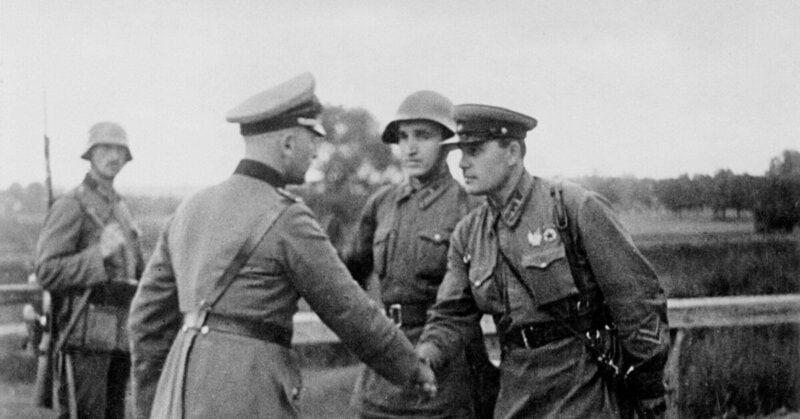
At dawn on September 1, 1939, Warsaw residents woke to the wail of air raid sirens and the distant rumble of German armor crossing the border — the moment the world would later agree history turned. But two years and two months earlier, on the night of July 7, 1937, shots had already been fired outside Beijing, a Japanese soldier had gone missing during a training exercise near the Marco Polo Bridge, and the deadliest war in human history had already begun killing people who would never appear in most Western textbooks. The dates stamped into our collective memory are real. They are also, quietly, incomplete.
The Official Answer — and Why It Only Goes So Far
Ask almost anyone when World War II started, and they will say 1939. Ask when it ended, and they will say 1945. They are not wrong. World War II officially spanned from September 1, 1939 to September 2, 1945 — six years and one day — a frame endorsed by governments, memorial institutions, and reference authorities around the world. The Holocaust Encyclopedia at the United States Holocaust Memorial Museum marks September 1, 1939 as the war’s beginning, the day German tanks and infantry crossed into Poland without warning or formal declaration of war. Two days later, Britain and France declared war on Germany, and the conflict acquired the European epicenter that would anchor most of its early historical accounts.
Britannica describes World War II as a conflict that involved virtually every part of the world, yet even that encyclopedic sweep tends to orbit the European theater. The reason 1939 calcified as the default start date is straightforward: the historians who wrote the first definitive accounts were predominantly European and American, and they naturally centered a story whose European emergency began with the invasion of Poland.
The problem this creates is not academic hairsplitting. If you lived in Nanjing in 1937, if your village in Manchuria burned in 1931, then calling 1939 “the start” does not merely get the date slightly wrong. It erases years of lived wartime reality from the official record of human suffering — and it quietly arranges that suffering as prologue rather than story.
The War That Started Earlier: China, Japan, and the Summer of 1937

On the night of July 7, 1937, Japanese and Chinese soldiers faced each other across the Marco Polo Bridge, an elegant eleven-arch span over the Yongding River southwest of Beijing. A routine Japanese night exercise ended in confusion — one soldier was reported missing, the Japanese commander demanded entry to a nearby Chinese town to search for him, the Chinese refused, and shots were exchanged in the darkness. The missing soldier turned up unharmed. The war did not stop.
Within weeks, Imperial Japan had launched a full-scale invasion of China. Shanghai fell after brutal urban combat. Nanjing followed, and the mass killings and atrocities that unfolded there over the winter of 1937-1938 constitute one of the war’s defining horrors — occurring more than two years before a single German tank entered Poland. The Second Sino-Japanese War would ultimately kill an estimated 15 to 20 million Chinese soldiers and civilians before it merged into the broader Pacific conflict.
Merged is the crucial word. When Japan attacked Pearl Harbor on December 7, 1941, drawing the United States into the fight, it was not beginning a new conflict. It was extending one already four years in progress. The same Imperial military machine, the same commanders, the same strategic ambitions that had been consuming China since 1937 simply expanded their reach across the Pacific. Seen through this lens, the debate over a 1937 versus 1939 start date is not a fringe quarrel. Many Asian historians and institutions treat 1937 as Year One of World War II, and that argument reshapes everything: how long the war lasted, who suffered most in total, and which nations carry the deepest historical wounds.
Even Earlier Shadows: Manchuria, Ethiopia, and the Long Road from Versailles

Push the timeline further still and the picture grows darker. In 1931, Japan manufactured a pretext to seize Manchuria from China, establishing a puppet state and demonstrating to every watching government that the League of Nations — the international body created specifically to prevent another catastrophic war — could be defied without consequence. Four years later, Italy invaded Ethiopia, a sovereign member of that same League, and again the collective security apparatus failed to respond effectively. These events were not merely precursors. They were proof-of-concept invasions that taught the aggressors of the 1930s that conquest was available to anyone bold enough to attempt it.
The PBS World War II major events timeline reaches back to 1918 — to the armistice that ended the First World War and the Treaty of Versailles that followed. Versailles imposed punishing reparations and humiliating territorial losses on Germany, seeding a generation’s worth of resentment and economic desperation that Adolf Hitler and the Nazi movement would harvest with devastating efficiency. The war did not arrive like a lightning bolt from a clear sky in September 1939. It arrived like a storm that had been building on the horizon since at least 1918, gathering energy through every failed diplomacy, every appeased aggressor, every year the international order was tested and found wanting.
The War That Ended in Stages

The ending was just as complicated as the beginning.
On May 8, 1945 — Victory in Europe Day, V-E Day — Germany surrendered unconditionally, and the streets of London, Paris, and New York erupted in celebrations that had been deferred for six years of unimaginable sacrifice. For millions of people, the war was over. They danced, they wept, they rang bells, and many of them had lost so much that simple survival felt like its own kind of miracle.
But in the Pacific, the killing continued. For nearly four more months, American forces fought island by island toward the Japanese home islands at enormous cost. The Soviet Union declared war on Japan and launched a massive invasion of Manchuria in August 1945. Atomic bombs fell on Hiroshima on August 6 and on Nagasaki on August 9 — killing hundreds of thousands of people in a war that much of the Western world had already privately filed away as finished. The gap between Europe’s celebration in May and Japan’s surrender in September is not a footnote. It is a distinct chapter of the war, with its own battles, its own dead, and its own moral weight.
The legal end came on September 2, 1945, aboard the USS Missouri anchored in Tokyo Bay. Japanese officials in formal dress stood at a table on the battleship’s deck and signed the Instrument of Surrender while Allied commanders watched. That signature is the war’s true finish line. Everything between V-E Day and V-J Day happened inside a conflict still very much alive — a reality that the clean, celebratory narrative of May 1945 tends to obscure.
The Full Shape of the War, Told as a Sequence of Scenes

If you want to hold the whole arc of the war in your mind at once, here is the spine of it — not as a dry list but as a sequence of moments, each one cracking the world open a little further.
- 1918-1919: The armistice ends World War I. The Treaty of Versailles punishes Germany with reparations and territorial losses so severe that they become the founding grievance of the next conflict before the ink is fully dry.
- 1931: Japanese troops seize Manchuria. The League of Nations condemns the act. Japan ignores the condemnation and stays. The lesson about international impunity is learned by every government watching.
- 1935: Italy invades Ethiopia. The League again fails to halt an aggressor. Collective security, the great hope of 1919, is effectively finished as a functioning deterrent.
- July 7, 1937: Shots are exchanged at the Marco Polo Bridge. Within months Shanghai is burning, Nanjing is falling, and China is absorbing an invasion it will endure for eight years.
- September 1, 1939: German armor crosses into Poland before dawn. Warsaw’s sirens scream. Britain and France declare war two days later. Europe enters the catastrophe Asia has already been living for more than two years.
- December 7, 1941: Japanese aircraft strike Pearl Harbor on a Sunday morning. The United States declares war. The separate conflicts consuming Asia and Europe are now formally one planetary emergency.
- May 8, 1945: Germany surrenders. Europe celebrates. The Pacific war continues at full intensity.
- August 6 and 9, 1945: Atomic bombs destroy Hiroshima and Nagasaki. The Soviet Union enters the Pacific war. Japan’s military position collapses within days.
- September 2, 1945: The Missouri. Tokyo Bay. The pen moves across the paper. It is over — officially, legally, finally.
What this timeline cannot capture is that the people living through those years experienced no such clean chapter breaks. For a Chinese farmer in Hunan, 1939 was simply another year of war, indistinguishable in its terror from 1938 or 1940. For an American Marine island-hopping across the Pacific in June 1945, the European celebration was news from another world. A timeline is a human construction imposed on chaos. The chaos did not know it was following a schedule.
Why These Disputed Dates Still Matter Today

The conventional 1939-1945 frame is not dishonest. It is, in its way, indispensable — a shared reference point around which nations organize memory, commemoration, and legal responsibility. But the frame carries consequences that ripple into the present. When the war’s start is anchored in Europe, the suffering of China from 1937 onward, of Manchuria from 1931, and of Ethiopia from 1935 is structurally positioned as prologue rather than as the catastrophe it actually was for the millions who lived and died through it.
This is not a settled question. It is an active tension in diplomacy and national identity across East Asia. How Japan, China, South Korea, and Russia remember the war’s beginning and end shapes territorial disputes, political relationships, reparations arguments, and the tone of summit meetings decades after the guns went silent. The year the war started — 1937 or 1939 — is not a trivia question with a single correct answer. It is an argument about whose suffering counts as the real war, conducted in the language of calendars because calendars are what national memory runs on.
The official answer remains September 1, 1939 to September 2, 1945: six years and one day. It is accurate, sanctioned, and useful. It is also a frame placed around something far larger, longer, and more painful than any two dates can contain. The honest thing — the historically complete thing — is to hold both truths at once: the clean dates that give us a shared language for remembering, and the sprawling, multi-continental reality those dates were never quite built to hold. The war did not begin when the textbook says it began. It did not end when the street parties suggested it had ended. It accumulated over years and decades from a world that chose not to act until acting could no longer be avoided — and it stopped, unevenly, in stages, on a battleship deck in a Japanese bay, on a Tuesday morning in early September, six years and one day after the sirens first sounded over Warsaw.

 English
 Arabic
 Spanish
 Portuguese
 Deutsch
 Turkish
 Dutch
Dutch
 Italiano
 Russian
 Romaian
 Portuguese (Brazil)
 Greek
Greek