


Control Resonant lets Remedy's creativity shine, so avoiding generative AI was a "pretty natural" decision
Control Resonant lets Remedy's creativity shine, so avoiding generative AI was a "pretty natural" decision
Control Resonant is looking set to deliver that beautiful fusion of visuals, sound, and narrative that makes Remedy Entertainment's games such a treat for the senses. I came away from my recent preview of the action game very satisfied that the developer is continuing to excel in the areas it always has done. While I was there, I had the opportunity to chat with Lead Gameplay Designer Sergey Mohov, so I took the chance to ask him about the likes of the new enemy designs, the studio's decision to steer clear of gen AI use, and whether we can expect a similar musical spectacle to the first game's iconic Ashtray Maze.
We got confirmation that Remedy did not make any use of generative-AI content in the creation of Control Resonant several months ago, but I was curious to ask whether that was a decision the team had to actively labor over. Mohov's response suggests it was an easy answer: "It just comes down to, we are creative individuals at Remedy. We're very much artists and designers, and everybody really cares about making sure that the game is made by us," he tells me. "We believe in the creative freedom of the artist to make the art, so I think it was a pretty natural thing overall for the company."
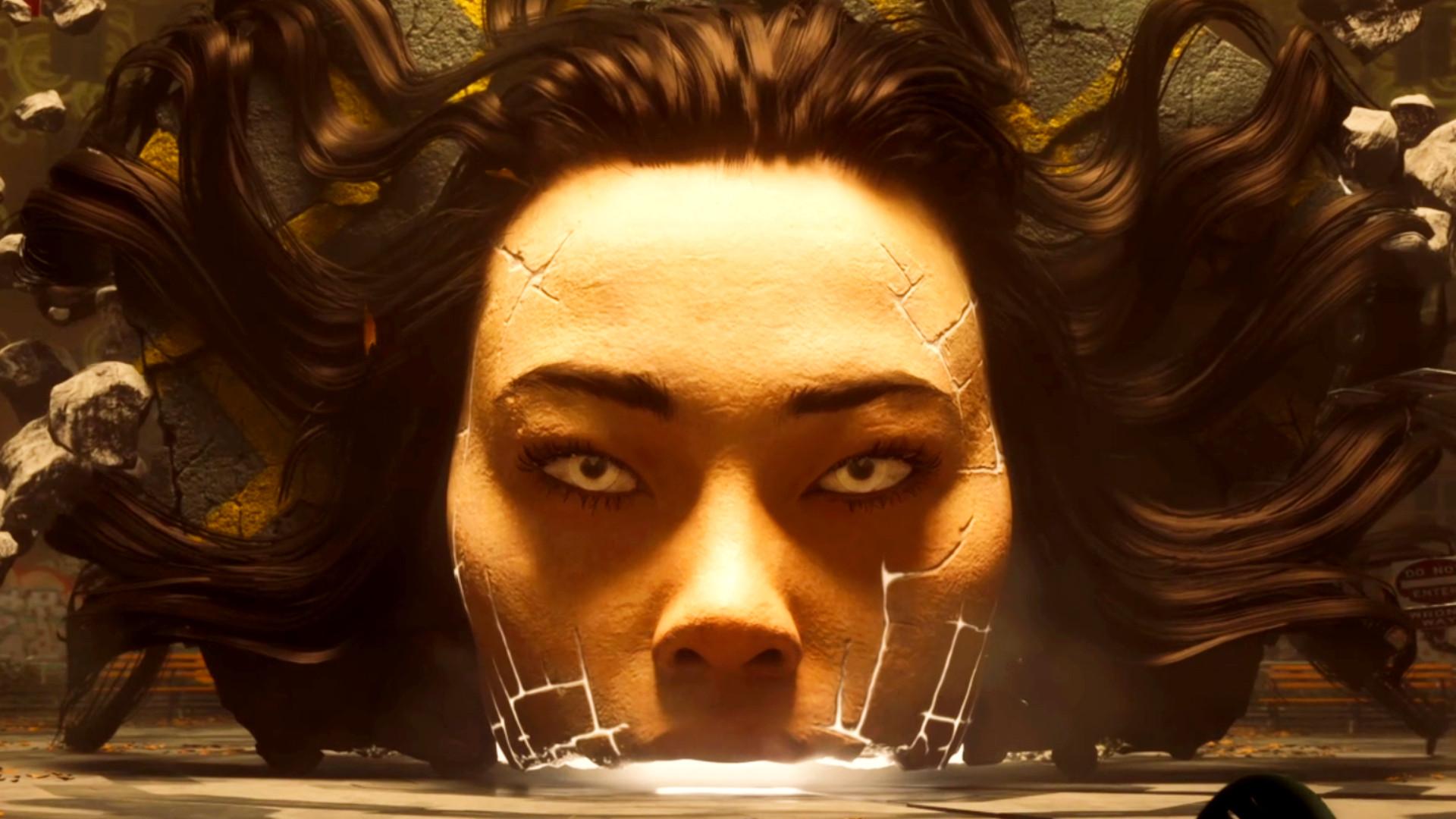
While it steps out of the Oldest House and onto the streets of a twisted Manhattan, Control Resonant maintains all the hallmarks of its predecessor's aesthetic, from the signature reds and blacks of its color palette to the unsettling sound designs of the Hiss, and the crackly real-life FMV through which it deploys nuggets of story. One of the most important changes from the first Control, however, is an expansion of the enemy variety, which previously felt a little too one-note in the monsters it constantly threw your way.

"I love the bus," Mohov tells me. The Hiss-infested vehicle is one of the recurring larger enemies you'll encounter, and it floats jarringly off the ground, tipped vertically, with desperate passengers clawing out of its windows. These lost souls actually act as weak spots, and destroying them can fast-track you to taking down the full bus, which does its best to slam violently into the floor and disorient you with shockwaves in the meantime.
"It's my personal favorite," Mohov says, "because I think it is a really fun encounter whenever you find it - especially if it is in a gravity anomaly - and then it is spawning bus seats that are attacking you. I like a good summoner-type enemy, but also, I think that aesthetically, it's really cool that it shows how the Hiss has evolved from the first game." One of many major threats in Control Resonant, this returning force has greatly expanded its capacity for carnage.
"It used to be that it would only possess individuals and control their will, and they could only do mostly the things that they were able to do while they were human, plus some telekinetic tricks that the Hiss would give them," he explains. " In this game, the Hiss can actually merge people with buses and geometry, and morph the environment as well, and this enemy is a really great example of this. Plus it has a really cool execution animation where you jump inside and make it explode from the inside." I'll vouch for that one too.

In a similar vein, music has always played a key role in Remedy's catalogue. 23 years ago, Max Payne 2 enhanced its emotional storytelling with a slow-build of the Poets of the Fall song 'Late Goodbye,' which can be encountered in various forms, scattered throughout key moments in the story. That particular band has now become almost synonymous with Remedy, and features heavily in the form of its in-universe alter egos, Old Gods of Asgard.
Both the 'Herald of Darkness' musical scene in Alan Wake 2 and Control's Ashtray Maze, where you navigate a shifting labyrinth to the sounds of 'Take Control,' are frequently cited among their most memorable moments - so can we expect a similar sequence in Control Resonant? Mohov obviously isn't going to give anything too specific away here: "I think one big reason why those work is that we never spoiled those." He does, however, acknowledge, "it's always been important to us to use music well in our games."
Mohov recalls, "As far back as Max Payne, we used music quite a lot in those, it was already quite iconic. Then we just started integrating it more and more inside the gameplay, and building real levels around it, that sort of thing." He points to the 'Paranatural Manhattan' trailer that debuted during the Summer Game Fest showcase, which features an exclusive track, 'Manalan Mailla,' from Finnish folk singer Vilma Jää.
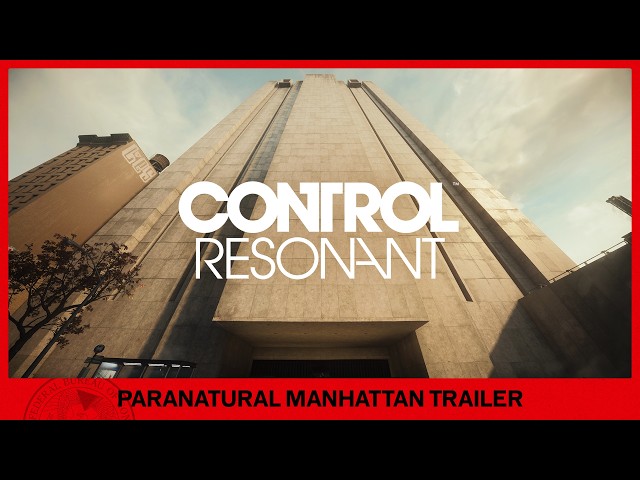
"That song was custom-written for Control Resonant," he notes, " so it actually has to do with the story of this game - it's very important to the game. Generally music plays a big part in Control Resonant, but I don't want to go too much into detail." I'm told that translating the lyrics from Finnish - which helpful Remedy enthusiasts have of course already done - might be a good way to get some more hints about what awaits Dylan as his journey unfolds. I'll get you started: "Manalan Mailla" simply means "the land of Manala," which is one of several names for the underworld in Finnish mythology.
Control Resonant launches on September 24. You can read my full preview if you're curious for more of a deep-dive into how it actually plays, but suffice it to say that I'm very much looking forward to what Remedy has been cooking up.

 English
 Arabic
 French
 Spanish
 Portuguese
 Deutsch
 Dutch
Dutch
 Italiano
 Russian
 Romaian
 Portuguese (Brazil)
 Greek
Greek