


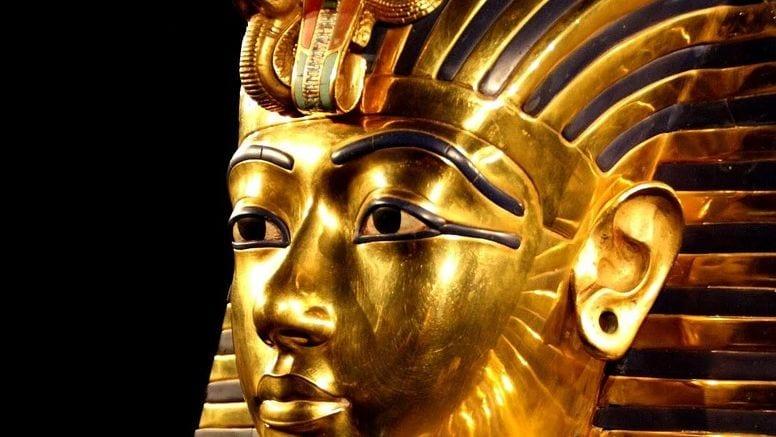
Somewhere between a Hollywood soundstage and a genuine excavation site lies the cinematic version of ancient Egypt — a place of cursed priests, scheming queens, and sand-blasted adventure that has captivated audiences for over a century. Historians, naturally, have opinions. Here are nine ancient Egypt movies ranked by how much of the real thing actually survived the journey to the screen, from the surprisingly grounded to the spectacularly, almost instructively wrong.
1. The Ten Commandments (1956) — Hollywood’s Most Ambitious Egypt, With Surprising Accuracy Buried in the Spectacle

Cecil B. DeMille spent years preparing his magnum opus, and the effort shows in places you might not expect. The visual world of the film — costumes, architecture, the choreography of mass labor — was drawn from genuine tomb paintings and ancient sources including the writings of Philo of Alexandria and Josephus, giving it a grounded texture that most 1950s epics never bothered to achieve. The depiction of enslaved laborers hauling stone for monumental construction aligns, at least in spirit, with archaeological evidence of large organized workforces at Giza and Amarna, even if Egyptian records contain no mention of Hebrew slaves specifically.
Where the film invents freely, it invents boldly. Ramesses II is cast as the definitive pharaoh of the Exodus — a popular identification that is entirely unproven. The biblical text never names the pharaoh, and scholars have debated candidates ranging from Thutmose III to Ramesses II to no historical figure at all. DeMille chose spectacle over ambiguity, which is its own kind of honesty: this is a film that tells you exactly what it is and then delivers it on a scale that archaeology could never quite match. You can find it — alongside other historically complex entries — on IMDb’s comprehensive list of films set in ancient Egypt.
2. Cleopatra (1963) — A Queen Who Was More Dangerous Than Even Elizabeth Taylor Made Her Look

The production nearly bankrupted Twentieth Century Fox and starred Elizabeth Taylor in a performance that became synonymous with Old Hollywood glamour. Yet buried beneath the legendary excess is one genuinely underrated historical instinct: the film treats Cleopatra VII as an active political agent rather than a passive ornament. That much, at least, historians can live with. The real Cleopatra spoke nine languages — she was the first Ptolemaic ruler to bother learning Egyptian — and her alliances with Rome were calculated acts of statecraft as much as affairs of the heart.
The spectacle, however, badly distorts the timeline. Roughly two decades of geopolitical maneuvering between Rome and Egypt are compressed into what feels like an extended romance, and Caesar’s assassination arrives so abruptly that audiences barely register the seismic power vacuum it created. Most memorably wrong is Cleopatra’s entrance into Rome on a giant Sphinx float — pure Hollywood invention. Her actual arrival was deliberately understated: she stayed in Caesar’s private villa across the Tiber, avoiding the Roman public eye entirely, because a foreign queen parading through the capital would have been a political catastrophe. MovieWeb’s ranking of the best Cleopatra films rightly celebrates Taylor’s performance while acknowledging how thoroughly the genre reshapes its subject.
3. The Egyptian (1954) — A Forgotten Epic That Gets the New Kingdom’s Cosmopolitan World Eerily Right
Based on Mika Waltari’s meticulous 1945 novel, this two-hour-plus epic is set during the reign of Akhenaten — the so-called heretic pharaoh who imposed monotheistic worship of the Aten around 1353-1336 BCE — and it treats that religious revolution with unusual seriousness. The film correctly depicts Akhenaten’s upheaval as a top-down imposition that alienated the powerful priestly class of Amun, a reading that matches both the archaeological and textual record. Even the aftermath is handled with care: the erasure of Akhenaten’s name from monuments after his death, a process scholars call damnatio memoriae, is reflected in the film’s portrayal of his legacy being violently suppressed once he was gone.
The invented protagonist — a wandering physician named Sinuhe who serves as an eyewitness — is entirely fictional, and the romantic subplots exist purely to give audiences someone to follow. But crucially, the invented frame moves through historically attested events rather than around them, which is more than most ancient Egypt films can claim. It remains one of the more quietly rewarding entries on any comprehensive list of ancient Egypt films, precisely because it took the history seriously enough to dramatize its real contradictions.
4. Land of the Pharaohs (1955) — Howard Hawks Takes on Khufu, and the Pyramid’s Real Purpose Stays Mysterious
Howard Hawks directing from a William Faulkner screenplay sounds like a creative fever dream, and Land of the Pharaohs delivers on that promise in ways both intentional and accidental. The film dramatizes the construction of the Great Pyramid of Giza as a royal obsession designed to seal Pharaoh Khufu’s treasure forever — a premise archaeologists firmly reject, since the pyramid was a religious monument and an instrument of state power, not a fortified safe. And yet, buried in the spectacle, is one genuinely accurate detail: pyramid construction is shown as a massive, organized state labor project rather than the slave-driven nightmare of popular imagination, which aligns with the discovery in the 1990s of workers’ villages at Giza demonstrating that builders were paid, fed, and given medical care.
The sealed-chamber death trap that provides the film’s climax has no archaeological parallel. But it accidentally gestures toward a real truth: Egyptian tombs were indeed engineered with elaborate blocking systems, false passages, and concealed corridors specifically designed to deter grave robbers — though all known pyramids were looted anyway, almost certainly in antiquity. It is a quietly respectable legacy for a production that captured something genuine about the obsessive ambition behind the ancient world’s most enduring structures.
5. Raiders of the Lost Ark (1981) — The Archaeology Is Appalling, and That’s Precisely the Point
No ancient Egypt movie list is honest without acknowledging the film that made an entire generation want to become archaeologists — and then horrified actual archaeologists for decades. The Tanis dig sequence, set in Egypt in 1936, centers on the Ark of the Covenant: an artifact described in the Hebrew Bible (Exodus 25) that genuinely vanished from history, possibly during the Babylonian sack of Jerusalem in 587 BCE, and whose fate remains one of antiquity’s great unsolved mysteries. The premise is rooted in a real historical disappearance. Tanis itself is a genuine Delta site — modern San el-Hagar — with significant New Kingdom remains, though it was abandoned and silted over naturally, not buried by a dramatic sandstorm as the film memorably suggests.
Indiana Jones’s excavation methods — jackhammer approaches to fragile strata, zero provenance documentation, priceless objects treated as portable prizes — represent almost every practice that modern archaeology exists to prevent. The film winks at this rather than correcting it, which is perhaps the most honest thing it does. Collider’s list of the best movies for fans of ancient Egypt includes Raiders among its top picks, noting that it transports viewers down the Nile and thousands of years into the past — even if the journey involves a significant amount of fabrication along the way.
6. The Mummy (1999) — Brendan Fraser’s Egypt Is Pure Fantasy Built on a Kernel of Real Terror
The film invents Imhotep as a high priest cursed for a forbidden love affair — a spectacular historical insult to one of antiquity’s genuinely remarkable minds. The real Imhotep was a chancellor and architect under Pharaoh Djoser around 2650 BCE, so revered for his wisdom and medical knowledge that he was eventually deified and worshipped as a god of medicine for centuries after his death. Transforming him into a rotting supernatural villain is roughly equivalent to making Hippocrates a zombie warlord. The Hom-Dai curse and the Book of the Dead as a resurrection manual are similarly fictional, though the real Book of the Dead — more precisely translated as the Book of Coming Forth by Day — was a genuine collection of spells used from roughly 1550 BCE onward to guide the deceased through the afterlife, a detail the film’s premise obliquely nods toward.
The fictional city of Hamunaptra echoes, however loosely, the real Valley of the Kings at Luxor — which the ancient Egyptians called Ta-Set-Aat, the Great Place — a hidden royal burial ground for the New Kingdom, concealed precisely because earlier pyramid-tombs had been systematically plundered. The Wrap’s ranking of the best mummy movies situates it as the gold standard of its particular subgenre, and the film earns that status — not through accuracy, but through the infectious energy with which it throws history overboard and dives into the deep end.
7. Serpent of the Nile (1953) — A Low-Budget Cleopatra That Accidentally Preserves One Important Truth
William Castle directed this low-budget dramatization of Cleopatra’s alliance with Mark Antony on what was clearly a shoestring, and the sets and costumes show it. The documented material culture of Ptolemaic Egypt blended Greek Hellenistic style with traditional Egyptian iconography in sophisticated, layered ways — Cleopatra herself almost certainly dressed in the Greek fashion for most court functions — none of which made it onto Castle’s soundstage. What the film cannot afford to invent, however, it cannot afford to distort, and the bare historical skeleton it presents is sound: after Caesar’s assassination, Cleopatra’s alliance with Antony was simultaneously a grand romance and a calculated geopolitical gambit to keep Egypt independent from Rome’s expanding grip.
What the film accidentally preserves is the political desperation of those final years. The portrait of two leaders facing Octavian’s overwhelming military superiority — scrambling to hold together an alliance that Rome was determined to destroy — is genuine history. Their defeat at the Battle of Actium in 31 BCE, followed by the suicides that ended three centuries of Ptolemaic rule, are among the best-documented events of the ancient world, and even a poverty-row production cannot quite drain them of their tragedy.
8. Gods of Egypt (2016) — A Movie So Wrong It Became Its Own Kind of Useful
The film depicts Egyptian gods as giant humanoid beings of a literally different physical order from ordinary Egyptians — a concept with no basis in any Egyptian religious text. In Egyptian theology, the gods (the netjeru) were cosmic forces depicted with animal heads precisely to signal their non-human, metaphysical nature; they were not a ruling class of tall, luminous people living alongside mortals. The mythological plot loosely follows the real conflict between Horus and Set — a cycle genuinely central to Egyptian religion, describing the murder of Osiris by his brother Set and the subsequent struggle for dominion — but strips it of every theological and cosmological dimension it originally carried, reducing one of the ancient world’s richest religious traditions to CGI action choreography.
The controversy over the film’s casting inadvertently sparked a mainstream conversation that historians had been having for years: what did ancient Egyptians actually look like? It is a genuinely complex question. Ancient Egypt was a North African civilization whose population showed a range of phenotypes, with genetic studies suggesting affinities to both ancient Near Eastern and sub-Saharan African populations depending on period and region. That Gods of Egypt forced that discussion into wider public view is perhaps the most historically significant thing it ever accomplished. Polygon, marking the film’s tenth anniversary, noted that it united the internet in derision — a rare achievement, and in its own way, a revealing one.
9. Two Nights with Cleopatra (1954) — The Queen as Pure Comedy, and Why That’s Accidentally Revealing
This Italian farce starring Sophia Loren treats Cleopatra as a comic seductress — which inadvertently reflects exactly how ancient Roman writers like Horace and Propertius actually portrayed her. That image of an intoxicating, dangerous foreign temptress was not an accident of ancient taste; it was propaganda that Octavian deliberately cultivated to justify his war against Antony, framing the conflict as Rome defending itself against an Eastern enchantress rather than a Roman general fighting a civil war. Two thousand years later, a low-budget Italian comedy is still, entirely without meaning to, reproducing Octavian’s messaging.
The film’s invented double-queen plot device has zero historical basis, but the real Cleopatra did navigate lethal palace politics of a genuinely different kind: she had her sister Arsinoe IV killed to eliminate a rival claimant and had nearly been displaced herself during a civil war with her brother Ptolemy XIII, whom Julius Caesar defeated on her behalf in 47 BCE. The comedy genre accidentally captures something scholars have noted for decades — our entire popular image of Cleopatra as primarily a seductress rather than a ruler is a 2,000-year-old Roman invention, and films like this one, in their cheerful ignorance, are its most faithful inheritors.
From DeMille’s genuinely researched spectacle to the cheerful wrongness of Gods of Egypt, the history of ancient Egypt movies is itself a kind of document — revealing less about the pharaohs than about the anxieties, fantasies, and blind spots of every era that has tried to put ancient Egypt on screen. The sand always shifts; the monuments, and the questions they raise, endure.

 English
 Arabic
 French
 Spanish
 Portuguese
 Deutsch
 Turkish
 Dutch
Dutch
 Italiano
 Russian
 Romaian
 Greek
Greek