


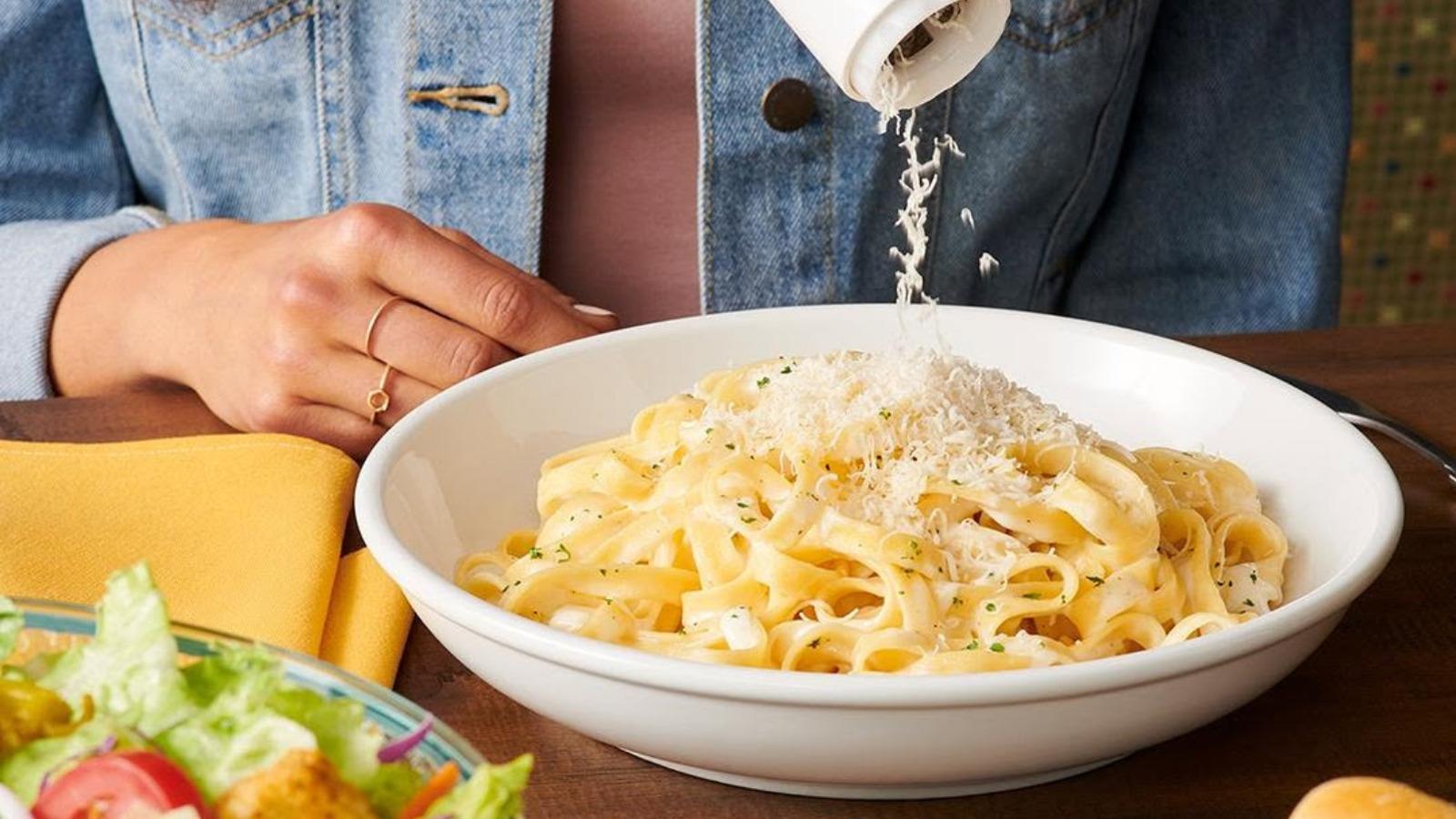
When you're about to dig into a deliciously saucy bowl of Olive Garden pasta, there's only one thing that can enhance your meal: a sprinkling of tasty, savory, fresh-grated cheese. Generously applied by your server in whatever volume you choose, this is the perfect way to boost an already-satisfying meal. However, while plenty of customers know and love this cheese, fewer may know exactly what type is topping their spaghetti or chicken parm. Instead of the universally recognized Parmesan, the chain actually uses a similar cheese known as Romano.
Current and former servers confirmed this fact on Reddit, noting that they're trained on the difference and sometimes correct customers who ask for Parmesan. Olive Garden superfans don't have to take their word for it, though — the chain sells its distinctive rotary cheese graters, and each comes with a block of Romano, indicating this is the true cheese piled atop your pasta.
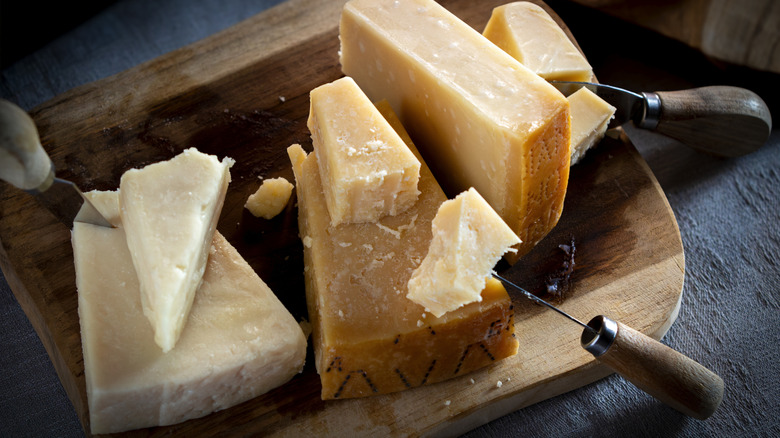
Although Parmesan and Romano may appear similar as hard, off-white cheeses, there are some important distinctions between these two varieties. For one, Parmesan typically comes from cow's milk, while Romano can come from the milk of sheep or goats, too. Milk used in Romano cheese can also be pasteurized, while authentic Parmesan exclusively uses unpasteurized dairy. In order for cheese to be called Parmesan in the U.S., it must have a hard, brittle rind and grate into a grainy texture. Meanwhile, Romano cheese often has a sharper flavor with a spicier bite, and it's often a bit saltier, too.
Romano cheese is lesser-know than Parmesan but equally prized and protected
Brothers Art/Shutterstock
Terminology can be important when it comes to both Parmesan and Romano cheeses. Versions labeled "Parmigiano-Reggiano" or "Pecorino Romano" have what's known as a PDO, or a protected designation of origin. That means items sold under these descriptors were authentically produced in the region where they were invented — in this case, Northern and Central Italy, respectively. Simple "Parmesan" or "Romano" doesn't have to meet these strict sourcing standards and can be produced anywhere.
Although some may be surprised that the beloved Italian-American chain uses the lesser-known cheese, it's just one of a few items that made our list of shady things about Olive Garden's menu. This eyebrow-raising group also includes the fact that O.G. precooks much of its pasta to speed up service and doesn't salt its pasta water (an age-old standard seasoning tip) due to concerns over how this would affect the cooking equipment long-term.
Those who enjoy a mouthwatering helping of grated cheese shouldn't be shy about utilizing this Olive Garden perk. After all, it's unlimited and can be applied to everything from vegetable sides and salads to soups and entrées. And while it might not make much of a difference when you're savoring your meal, it's worth remembering that this tasty cheese is actually Romano and not the more familiar Parmesan.

 English
 French
 Spanish
 Portuguese
 Deutsch
 Turkish
 Dutch
Dutch
 Italiano
 Russian
 Romaian
 Portuguese (Brazil)
 Greek
Greek