


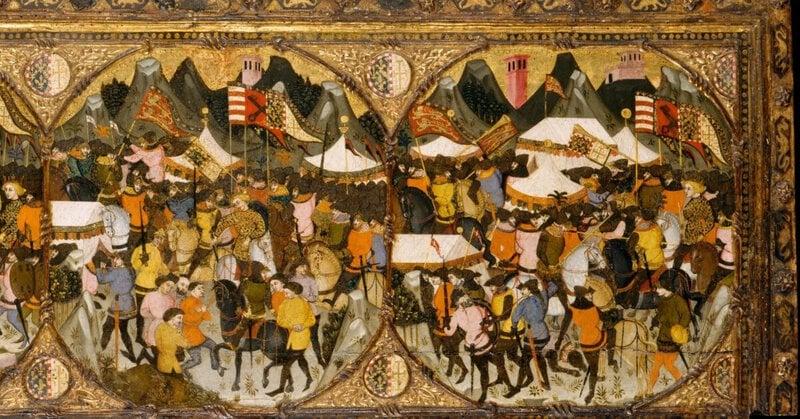
Somewhere around 1400 BCE, a Mesopotamian scribe pressed a wedge-shaped stylus into wet clay and recorded the outcome of a battle — not for history’s sake, but for the glory of a king who wanted the gods to know he had won. That scribe could not have imagined he was opening an account that would still be accepting deposits 3,400 years later. Historians and archivists who have spent careers combing through chronicles, treaties, inscriptions, and diplomatic records now estimate that more than 3,000 distinct armed conflicts appear on the full wars-in-history list — and the ledger is not closed. The question lurking behind that number is deceptively simple: what does it mean that the single most consistent activity of human civilization, across every continent and every era, has been organized violence?
How Historians Count — and Why the Number Is Slippery
Before anyone can answer that question, they have to wrestle with a more practical one: what exactly counts as a war? A decade-long dynastic struggle between two empires and a two-week frontier skirmish both appear on the same lists, and whether scholars treat them as equivalent entries — or split multi-theatre conflicts into dozens of sub-campaigns — can swing the total number of wars in recorded history by thousands. Estimates range from roughly 1,500 well-documented conflicts at the conservative end to well over 3,000 when smaller engagements, colonial frontier actions, and civil insurrections are folded in.
Wikipedia’s Timeline of Wars illustrates just how fast the ledger grows depending on scope. The page catalogs conflicts spanning thousands of years of human history and makes plain that any single curated reference captures only a slice of the total picture. Pull in additional regional archives, manuscript traditions, and colonial administrative records, and the figure climbs steeply.
Britannica’s comprehensive wars list makes the editorial challenge vivid. It places the Cape Frontier Wars — nine distinct confrontations between Xhosa peoples and European settlers — under a single heading spanning 1779 to 1879, a full century compressed into one line item. Two entries away sit the Tripolitan War (1801-05) and the Second Maratha War (1803-05), each a tightly bounded clash of only a few years. One ledger, wildly different entries. The working figure used throughout this article — 3,000-plus — should be understood as a conservative scholarly floor, not a ceiling.
Three additional variables make any firm total elusive. First, record survival is uneven: wars fought by literate, archive-keeping states are documented in granular detail, while conflicts in pre-literate or colonized societies often survive only as fragments in an adversary’s records. Second, historians disagree on whether a ceasefire followed by renewed fighting constitutes one war or two. Third, the very concept of “war” is culturally specific — some societies had no word for the distinction between war and raiding, making classification a modern imposition on ancient realities. These are not trivial quibbles. They are why professional historians routinely describe any total count as an approximation rather than a fact.
The Ancient World: Where the Ledger Begins

The earliest entries are almost insultingly mundane. Around 3200 BCE, Sumerian city-states were raiding each other’s grain stores — the violence practical and unglamorous, one city taking what another city had. Egyptian pharaohs eventually gave warfare its first propaganda polish, carving their victories at Megiddo and Kadesh into temple walls not to inform posterity but to impress the divine. These are among the first entries in humanity’s history-of-wars timeline, and they were recorded for gods, not for scholars who would arrive millennia later trying to count them.
What the ancient world lacked in systematic record-keeping it made up for in scale and consequence. The Persian Wars, the Peloponnesian War, Alexander’s campaigns from Greece to the edge of India, and the three Punic Wars between Rome and Carthage collectively killed millions and redrew every political boundary of the known world — and nearly all of it happened across barely 300 years. The Peloponnesian War alone, lasting from 431 to 404 BCE, exhausted two of the ancient world’s most sophisticated city-states so thoroughly that neither fully recovered. The Punic Wars, by their conclusion in 146 BCE, had eliminated Carthage entirely as a civilization. These were not minor border disputes. They were civilizational reshapings, and they are precisely why the ancient portion of the wars timeline is so dense even before accounting for conflicts in China, India, and the Americas during the same centuries.
Rome deserves its own accounting. Roman legions fought on three continents — Europe, Africa, and Asia — for nearly 700 consecutive years. That is not a figure padded by counting skirmishes; it reflects sustained, institutionalized military campaigning that by itself accounts for hundreds of line items on any comprehensive wars timeline. When the Western Roman Empire finally fell in 476 CE, it did not bring peace. It fragmented into dozens of successor kingdoms, each inheriting Rome’s appetite for expansion without its administrative machinery to contain conflict. The ledger kept filling without a single pause.
Meanwhile, in East Asia, China’s Warring States period (475-221 BCE) produced sustained multi-state warfare that scholars estimate killed millions before the Qin dynasty imposed unification by force. The Han dynasty that followed fought continuous campaigns against the Xiongnu nomadic confederation for generations. In South Asia, the Maurya Empire expanded through military conquest across the Indian subcontinent in the 4th and 3rd centuries BCE. The wars of the ancient world were not a Mediterranean phenomenon. They were a human one, appearing independently wherever states formed and competed for resources and territory.
The Medieval and Early Modern Crush (500-1700 CE)

Medieval Europe was a continent in near-permanent low-grade conflict punctuated by catastrophic peaks. The Crusades alone — launched in 1095 and grinding through their final chapters into the late 13th century — produced nine major numbered campaigns and dozens of splinter conflicts: popular crusades, political crusades launched by popes against Christian rivals, and crusading orders that continued fighting long after the Holy Land campaigns collapsed. Each spawned its own sub-ledger of violence.
Zoom the camera outward and the picture darkens further. The Mongol conquests of the 13th century are estimated by historians to have killed tens of millions of people — a range that, accounting for scholarly debate, spans from roughly 30 million to 40 million deaths, though some estimates run higher. A single entry on the wars-in-history list reshaped Asia, the Middle East, and Eastern Europe within a single human lifetime. Cities that had stood for a thousand years ceased to exist. Baghdad, the capital of the Abbasid Caliphate and one of the world’s great centers of learning, was sacked in 1258; the destruction of its libraries represented an intellectual loss whose full dimensions remain incalculable. Entire agricultural systems collapsed because the irrigation infrastructure that sustained them was destroyed and never rebuilt. If any single conflict entry in 3,400 years earns the word catastrophic without qualification, the Mongol conquests earn a strong claim to that designation.
The colonial era introduced a new editorial headache for anyone compiling a total. Those Cape Frontier Wars — cataloged by Britannica as one entry spanning 1779 to 1879 — were in lived experience nine separate wars, each with its own causes, combatants, and consequences. Compressing them into one line honors administrative tidiness at the expense of historical reality. The same compression applies to the centuries of warfare that accompanied European colonization across the Americas, sub-Saharan Africa, and Southeast Asia — conflicts that generated enormous casualties and permanently altered indigenous societies but that often appear in Western-compiled lists as minor footnotes or single compressed entries.
By the time the Thirty Years’ War concluded in 1648, something fundamental had already begun shifting. That conflict — fought across Central Europe from 1618 to 1648 — killed an estimated 8 million people through combat, famine, and disease, and depopulated significant portions of the Holy Roman Empire. Its resolution in the Peace of Westphalia established the principle of state sovereignty that still nominally governs international relations. Wars had become, at least in theory, affairs between states with defined borders and recognizable governments — a conceptual change that would shape how the ledger was organized for the next three centuries, even as the killing continued at the same pace.
The American Chapter: A Young Nation’s Long Wars List

The United States offers a compact case study in how even a republic born from Enlightenment principles about liberty and self-governance compiles a dense personal ledger in very little time. The U.S. Department of Veterans Affairs formally traces American conflicts beginning with the Revolution (1775-1783) and running forward through the 20th century — a span in which no complete generation passed entirely without an officially recognized American war.
The early entries arrive in quick succession: the War of 1812 (1812-1815), the Mexican War (1846-1848), and then the Civil War (1861-1865), which produced more American military casualties than any other conflict in the nation’s history before or since. Estimates of total Civil War dead — incorporating recent demographic research — range from approximately 620,000 to 750,000 or more. The Civil War is simultaneously a domestic catastrophe, a defining ideological rupture, and a preview of the industrialized slaughter that would characterize the following century — all packed into four years and a single line on the ledger.
What popular war lists frequently undercount is the sheer geographic and temporal sprawl of what the Federal Depository Library Program documents as the Indian Wars (1789-1891) — more than a century of frontier conflict involving dozens of distinct campaigns against hundreds of Native nations across an entire continent. Compressing this into a single entry may be the most extreme example of editorial compression in the American wars-in-history list. It encompasses conflicts as different in character as the Creek War (1813-1814), the Second Seminole War (1835-1842) — the longest and most expensive Indian War in American history — and the campaigns against Plains nations in the post-Civil War decades. Each had distinct causes, combatants, and consequences; the umbrella label quietly inflates any claim that the young republic spent its early decades in comparative peace.
The Spanish-American War (1898-1902) changed the ledger’s geography permanently. After it, American military entries would no longer be confined to North American soil. The conflict also produced a largely forgotten sequel: the Philippine-American War (1899-1902), a brutal counterinsurgency campaign that killed far more Filipinos than the Spanish-American War itself had killed on any front. The nation’s wars-in-history list had gone global, and it would stay global.
The 20th Century: The Ledger Nearly Breaks

No century in the history-of-wars timeline absorbed more violence in less time than the twentieth. Two World Wars, scores of colonial independence conflicts, the Cold War’s relentless proxy battles, and genocidal campaigns produced a hundred years that, by conservative scholarly estimates, killed more than 100 million people through organized armed violence. The arithmetic alone is staggering; the human reality behind it resists full comprehension.
The century also exposes the counting problem in its most acute form. World War I and World War II each contain hundreds of sub-campaigns, individual battles, and distinct operational theatres that could qualify as separate wars under looser definitions. The Pacific theatre of the Second World War alone involved more sovereign nations than had participated in all of the Napoleonic Wars combined. Is it one entry? Dozens? The answer shapes the total number of wars in human history more than almost any other editorial decision on the list. Historians who count each campaign separately produce totals far higher than those who treat each World War as a single event — and both choices are methodologically defensible, which is precisely the problem.
World War I deserves particular attention as a pivot point. The industrialized slaughter of the Western Front — where artillery barrages could kill thousands in an hour and territorial gains were measured in yards — forced a complete reconceptualization of what war could do to a society. The approximately 20 million deaths it produced directly were followed by the 1918 influenza pandemic, which spread along military supply lines and killed an estimated 50 million to 100 million people globally. War’s ledger, in 1918, extended far beyond the battlefield.
The postwar settlement of 1945 did not close the ledger. The United Nations has documented dozens of armed conflicts in every decade since — in Korea, Vietnam, the Middle East, sub-Saharan Africa, Central America, and the Balkans. The peace that the 1945 treaties seemed to promise arrived in selective patches, not as a global condition. New lines kept appearing on the ledger, year by year, continent by continent. The Korean War (1950-1953) killed an estimated 3 million people. The Vietnam War killed approximately 3.5 million. The Rwandan genocide of 1994 killed roughly 800,000 people in approximately 100 days — a rate of organized killing that has few parallels in recorded history. The ledger did not slow after 1945. It diversified.
One figure brings the full timeline into uncomfortable focus: if the 3,000-plus recorded conflicts are distributed across 3,400 years of history, humanity has started a new war roughly every thirteen months on average. That reframes everything. Peacetime, in the long view, is not the default condition of civilization. It is the anomaly — the exception that requires explanation, not the war.
Patterns Across the Full Ledger

The wars-in-history list is not a random scatter of violence. When historians map it longitudinally, the same core triggers appear in Mesopotamia in 3000 BCE and in the 21st century alike: resource competition, succession crises and power vacuums, imperial or territorial expansion, and ideological or religious revolution. The faces change, the weapons change, the borders change — the underlying mechanics do not. A Sumerian city raiding a neighbor’s grain stores and a modern state securing energy corridors are more structurally similar than they are different, which is either a depressing continuity or a useful diagnostic, depending on what you intend to do with the observation.
Geography matters too. Conflicts cluster around resource chokepoints — river systems, trade routes, arable land — across every era. The Fertile Crescent was contested for 3,000 years precisely because it was fertile. The Strait of Hormuz, the South China Sea, and the Danube corridor have all been fought over repeatedly because their geographic value does not change between centuries. Any map of the world’s wars overlaid across time reveals not randomness but patterns — the same locations contested again and again by different actors who may have been unaware they were re-running a structural conflict their predecessors had already fought.
The counterweight to despair is real, if complicated. Scholars who track long-run data argue that the rate of interstate war — formal conflict between recognized sovereign states — has declined measurably since 1945, even as internal conflicts, proxy wars, and hybrid warfare have increased. The violence has not disappeared; it has migrated and changed form. Whether that constitutes meaningful progress depends partly on where you are standing and partly on which metrics you weight most heavily. A world with fewer interstate wars but more civil wars and insurgencies represents a genuine structural change, but not necessarily a safer one for the populations caught inside those internal conflicts.
The Ledger Remains Open
As of this writing, multiple armed conflicts are active on multiple continents. New entries are still being added to an account that a Mesopotamian scribe opened, unwittingly, thousands of years ago. The final total number of wars in human history is, definitionally, unfinished — a number that cannot yet be written because the last page of the ledger has not been reached.
What the long count does offer is perspective that no single war, viewed in isolation, can provide. Individual conflicts have beginnings and endings, heroes and villains, causes that feel specific to their moment. The full list reveals something different: a structural persistence that transcends any individual conflict’s particular circumstances. Specific wars end. War itself, as a recurring feature of organized human society, has not.
Every one of those 3,000-plus lines was once someone’s catastrophe. Someone’s last morning. Someone’s city reduced to rubble and ash, someone’s harvest burned, someone’s child who did not come home. The true weight of the count is not in the statistic. It never was. It is in what every single entry, on every line of that ancient ledger, actually cost — and in the recognition that the account, after all this time, is still accumulating interest.

 English
 French
 Spanish
 Portuguese
 Deutsch
 Turkish
 Dutch
Dutch
 Italiano
 Russian
 Romaian
 Portuguese (Brazil)
 Greek
Greek