


Vladimir Mironov/Getty Images
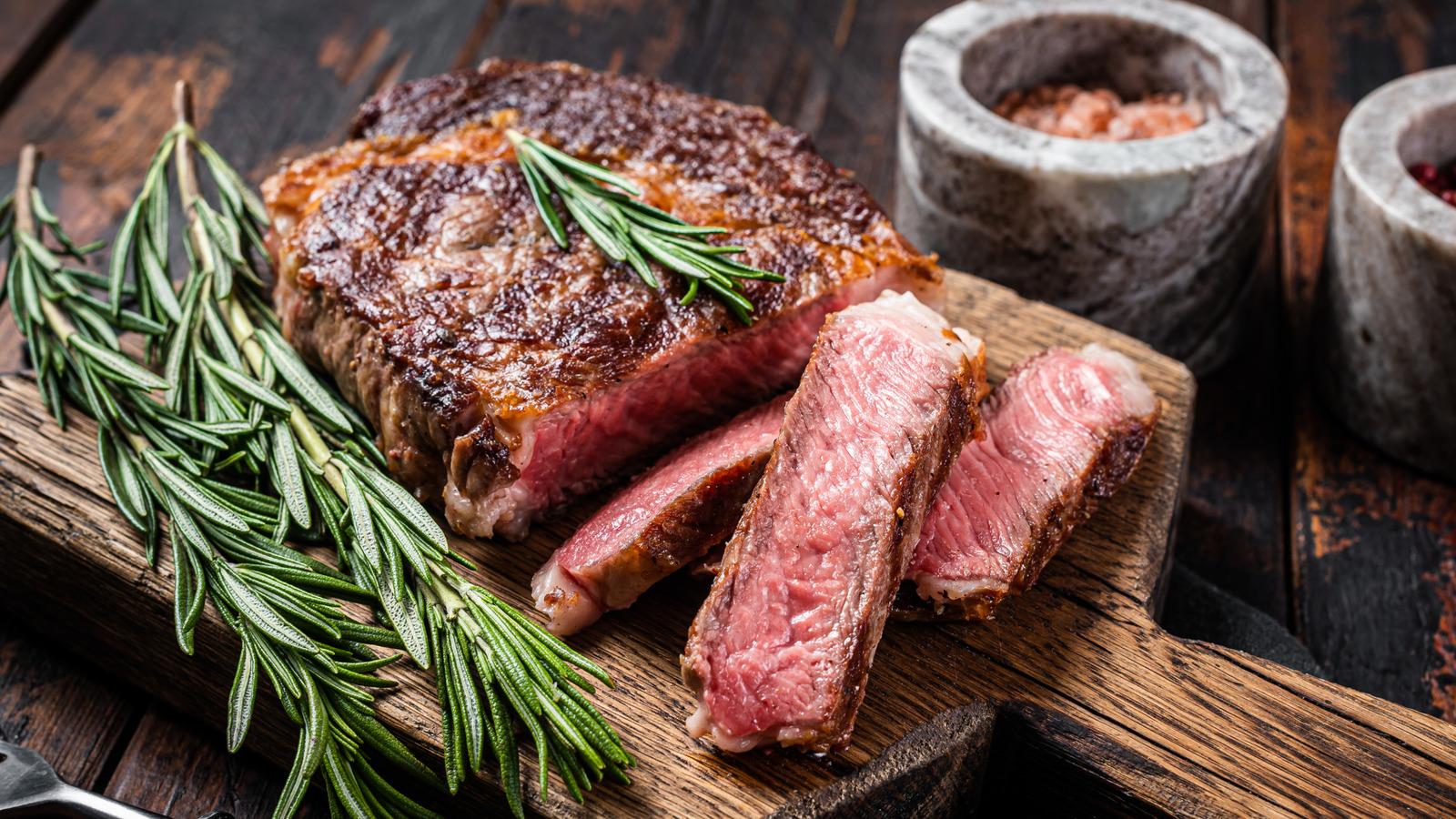
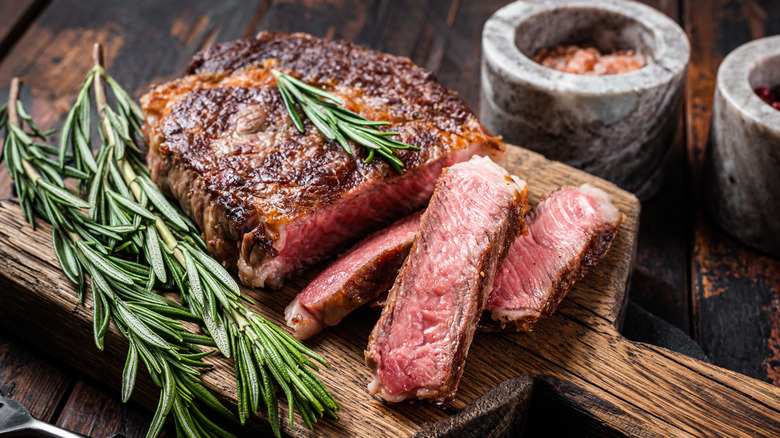
If you're about to fire up the grill or just make a delicious dinner at home, you might turn to a ribeye steak. It's one of the most-beloved cuts and a favorite among Michelin-starred chefs. With a taste profile that's naturally tender, juicy, and deeply flavorful, its popularity is no surprise. Most ribeye steaks are easy to get right (even in a pan), but selecting a great one will make it easier to turn into a delicious meal.
Choosing a good ribeye is essentially the same as picking any other high-quality steak, but this particular segment has some quirks. As is true of most cuts, a piece that's evenly marbled and free of connective tissue will be your best bet. Look for a small eye (that's the lean, firm part) and a large cap (the softer, fattier portion). With ribeyes, too, bigger does generally mean better: Look for a thick-cut piece, preferably between 1½ and 2 inches.
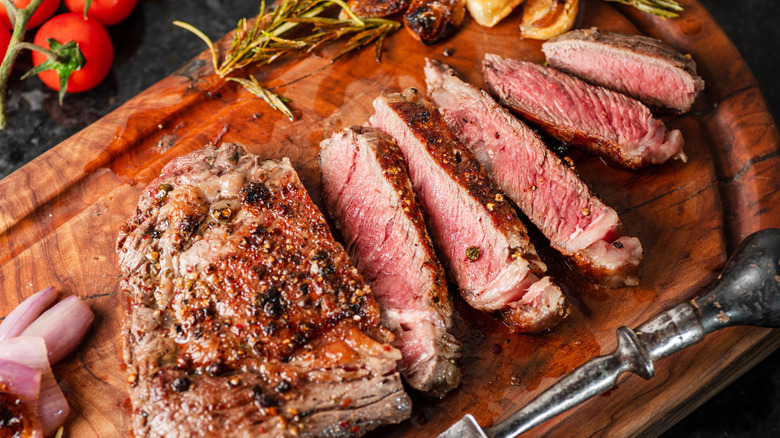
This steak stands well on its own, so when you've chosen a good one, there's no need to mar the natural taste with other bold flavors. Simply salt the meat and then sear it for a perfect crust, though because it's thick, you'll want to let it sit (salted) for around 40 minutes so the salt can draw excess moisture out of the beef and tenderize it.
Look for a small eye and a large cap
Mironov Vladimir/Shutterstock
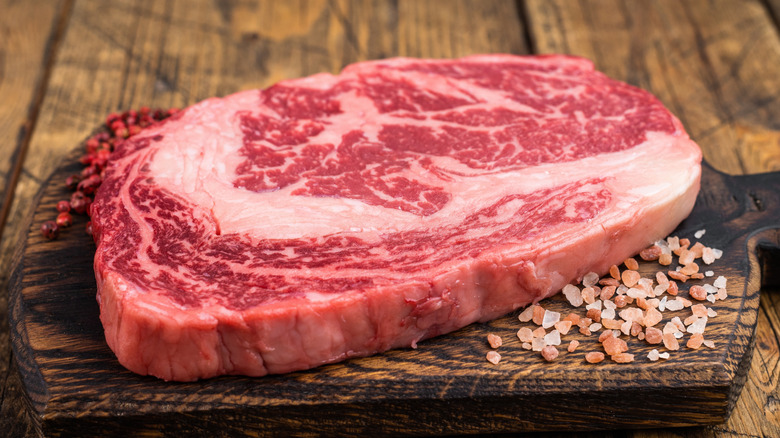
Knowing what to look for in your steak's muscles will help you choose a super tender piece. Two basic parts of the ribeye matter to the average beef enthusiast: The eye and the cap. The eye is in the middle of the steak and is a muscle called the Longissimus dorsi. The surrounding cap is called the Spinalis dorsi. It doesn't look like much since it's thin and separated from the eye by a strip of fat. It almost looks like you could simply trim it off and discard it. But if you did that, you'd be losing the best part of the ribeye.
The cap is the tenderest part, and that's because the Spinalis dorsi muscle doesn't generally do much work. Muscles that the cow uses more frequently become tougher cuts of beef (think brisket), while less-used muscles give a softer texture. In steak terms, the cap might be compared to a filet mignon because of its practically buttery texture when cooked.
So, when you're choosing a ribeye steak, look for a big cap to maximize the tenderness potential. That's not to say the eye is bad — it's simply not as luxurious a cut. Some ribeyes even have as much cap as eye, which would be the most indulgent option. You can ask your butcher for a chuck-end ribeye, which will produce an extra-juicy steak (because it often has more cap and less eye), or even get ribeye cap on its own.
Marbling is a sure sign of a juicier steak
Yaroslav Astakhov/Getty Images
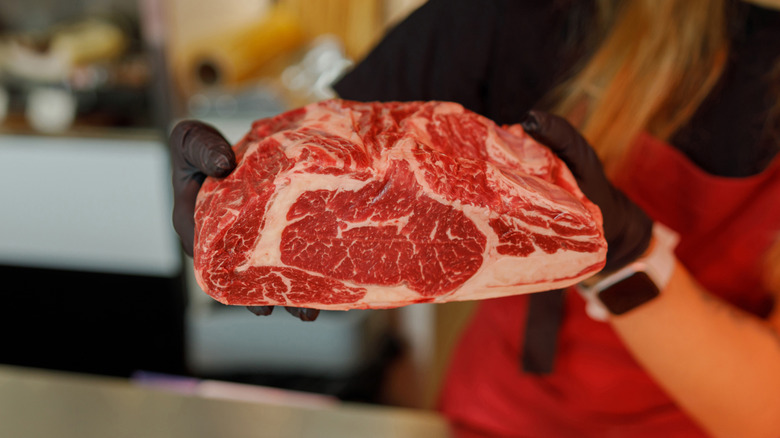
Steak aficionados probably know about marbling, which refers to intramuscular fat — that is, the fat spread throughout the cow's muscle — and shows up as white specks or streaks in the meat. When buying a ribeye, the best choice is a steak with even and abundant marbling. Look for fine white flecks of fat distributed evenly throughout both the eye and cap. This is separate from the fat cap present on most steaks, which is the layer of fat that surrounds the meat rather than being inside it.
Marbling is one of the factors the USDA uses to grade meat, and a higher grade (like USDA Choice or Prime beef) will have better marbling. But even if you're buying a higher-end grade, you'll still want to make sure your particular steak is nicely marbled. Also take note of the animal's diet: Grain-fed beef will have better marbling than grass-fed, as the grain contains more fat. That's why USDA Choice or Prime grass-fed beef isn't very common.
A well-marbled steak will remain juicy when it's cooked because the fat will slowly render down, or turn to liquid as the meat heats up. Steaks with less intramuscular fat will become drier when cooked. So, when you're choosing a ribeye, make sure the entire cut (both eye and cap) have consistent, significant marbling to keep the steak moist when it's cooked.
Minimize the connective tissue
Valentyn Volkov/Shutterstock
Don't mistake marbling for connective tissue. They look somewhat similar but will produce very different textures. While marbling (which is fat) melts down at high temperatures, the connective tissue will instead get chewy. One type of connective tissue common in beef cuts is collagen, and while it'll melt beautifully when cooked low and slow like with braising, a quick sear like you'd do for a steak will instead bring out its toughness.
On a steak, connective tissue looks almost like a skin on the outside of the meat. That's because its function in the cow's body is to hold the muscle groups together, and each cut of meat is essentially one muscle group (or two, in the case of the ribeye). Unlike fat marbling, it won't usually run through the meat and will appear almost silver in color.
Generally, the ribeye is a tender cut of beef. Small pieces of connective tissue are easily trimmed away (and it's anatomically impossible for a piece of steak to not have at least some connective tissue), but a steak with lots of tissue still attached can be a red flag. Visible silver skin or thick bands of connective tissue are worth avoiding when possible.
Size matters: Look for a thicker steak
C3pics/Getty Images
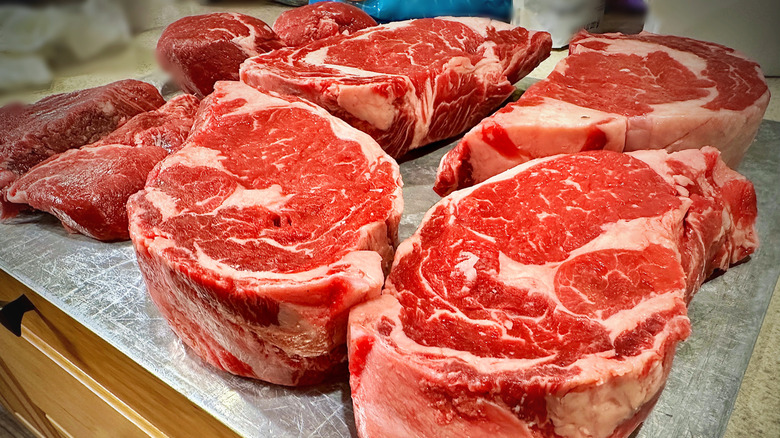
A good ribeye is an imposing hunk of meat, but don't be intimidated. Look for a cut that's 1½ to 2 inches thick. For a ribeye, that means a single steak could be up to 2 pounds, far larger than most. This might seem like overkill, but a thicker cut will produce better results when cooked properly. It's all about controlling the temperature, in and outside of the meat, and a bigger steak will help with that.
Thicker steaks are more forgiving, as it's easier to overcook a thin piece of beef than a thick one. Thick cuts of meat will take longer to cook all the way through, meaning you have more opportunity to make sure it's done the way you like it. That's a particular advantage of the ribeye: Its rich marbling will keep the meat juicy throughout, meaning that even somewhat overcooked ribeye will remain moist and flavorful.
Another important trait of a thick steak is its ability to develop a beautifully charred crust. Starting the beef over low heat and finishing it with very high heat (a reverse sear) results in a cooked-through interior without the sad, gray look of an overcooked steak while building the outside crust and keeping the whole thing at a perfect medium rare.

 English
 French
 Spanish
 Portuguese
 Deutsch
 Turkish
 Dutch
Dutch
 Italiano
 Russian
 Romaian
 Portuguese (Brazil)
 Greek
Greek