


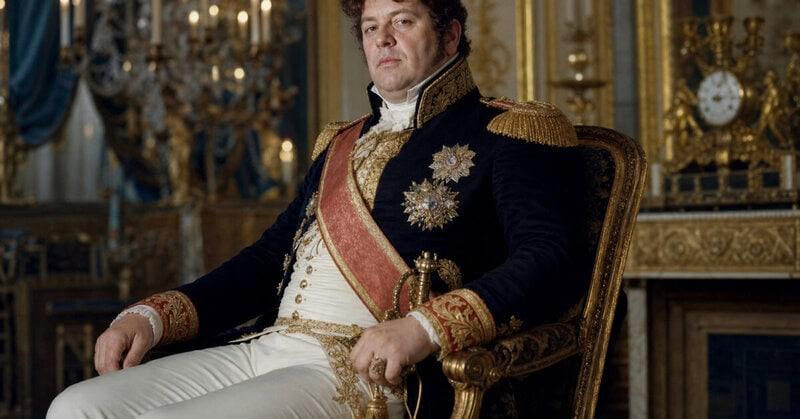
The candles burned until dawn at Jérôme Bonaparte’s palace in Kassel. Footmen in powdered wigs circulated through gilded rooms, champagne arrived from France by the case, and somewhere amid the masked dancers and the imported silk upholstery, the King of Westphalia was spending money that his kingdom did not have — while his brother’s armies bled into the mud of a continent at war.
The King Who Threw a Party While His Empire Burned

It is one of the more striking ironies in Napoleonic history: at the precise moment Napoleon Bonaparte was reshaping Europe through force of will, discipline, and military genius, his youngest brother was redecorating. Jérôme Bonaparte, King of Westphalia, became so notorious for his extravagance that his own subjects — taxed heavily to fund his court — gave him a nickname that carried all the warmth of a slow sigh: König Lustik, the Merry King. The title was not a compliment. It was the sound of an entire population watching their treasury disappear into banquet halls and boudoirs.
Napoleon had handed his youngest brother a kingdom as a geopolitical instrument — a model Napoleonic state designed to demonstrate that French-style governance was superior to everything that had come before it. Jérôme treated it like a personal inheritance. The gap between those two visions would define, and eventually destroy, one of the strangest experiments of the Napoleonic era.
The Youngest Bonaparte
He was born Girolamo Buonaparte on November 15, 1784, in Ajaccio, Corsica — the youngest of the Bonaparte siblings, arriving into a family of modest means and enormous ambition. By the time Jérôme was old enough to form memories, the world around him was already rearranging itself to suit his eldest brother’s destiny. Where other children grow into the world gradually, Jérôme grew into an empire already under construction.
The family dynamic was formative and, perhaps, damaging. Napoleon’s other brothers — Joseph, Lucien, Louis — had at least been required to develop some political instinct, some capacity for serious work, before the rewards arrived. Jérôme was the pampered afterthought, the baby of a clan simultaneously rising to the summit of European power and indulging its youngest member in the way that youngest children often are. Discipline, for Jérôme, remained largely theoretical.
Napoleon tried, in his way, to provide structure. He sent Jérôme into the navy, hoping the sea would build character through discomfort and necessity. The strategy yielded mixed results at best. Before any nautical career could take shape, there had been an American episode that revealed everything about Jérôme’s approach to life: posted to the United States, the young Bonaparte fell in love with Elizabeth Patterson of Baltimore and married her in December 1803 — a romantic gesture that Napoleon received like a diplomatic insult. The emperor refused to recognize the marriage, eventually obtained its annulment, and moved on, filing his brother’s impulsive heart under problems to be managed rather than feelings to be considered. Elizabeth Patterson never remarried and spent decades pursuing legal recognition of the union, without success.
In September 1806, Jérôme was appointed rear admiral — a rank that owed considerably more to his surname than to any particular nautical achievement. The promotion was, in practical terms, a way station on the road to something more politically useful.
A Crown Wrapped in a Warning

Napoleon’s strategy for securing his empire rested partly on a family logic that was as bold as it was flawed: ring France with Bonaparte kings, loyal by blood, who would enforce the Continental System and reflect French Enlightenment values outward into Europe. It was a dynastic chess move that presumed the pieces would behave like bishops and knights rather than like younger brothers with expensive tastes.
On March 14, 1807, Jérôme was formally made a French prince and general of division — the imperial machinery clicking purposefully into place before the larger gift arrived. That same year, following the Treaty of Tilsit, the Kingdom of Westphalia was created: a new state assembled from Prussian, Hanoverian, and other German territories, placed under Jérôme’s rule and endowed with a written constitution, reformed laws, and the abolition of serfdom. It was meant to be a showcase — proof that Napoleonic governance was not merely conquest but the advance of civilization.
Napoleon wrote to his brother with characteristic bluntness, instructing him to govern responsibly, reduce aristocratic privilege, and demonstrate that his subjects lived better under French principles than under the old regime. The tone of those letters — part encouragement, part command, part barely suppressed alarm — suggests Napoleon already sensed the problem. He was handing Jérôme an instrument of statecraft and watching his brother examine it for its decorative possibilities. He also arranged a dynastic marriage to Princess Catharina of Württemberg in 1807, closing the door permanently on any lingering question about Elizabeth Patterson.
König Lustik: The Merry King of Westphalia

The court that Jérôme constructed at Kassel was not a government. It was a performance of government — a gilded theater in which the king played the most enjoyable role while ministers quietly attempted to run an actual country behind the curtain. Jérôme demanded a lifestyle that evoked Versailles at its most extravagant: custom furniture, elaborate entertainments, a household operation whose costs dwarfed those of far wealthier kingdoms. The bills went to Westphalia. Westphalia sent them, inevitably, to Napoleon.
The emperor’s surviving correspondence from this period reads like the dispatches of a man who cannot quite believe what he is reading. Letter after letter scolded Jérôme for his debts, his negligence, and his apparent indifference to the actual work of governance. Napoleon had given his brother a progressive state with genuine constitutional promise; Jérôme had redirected its energies toward mistresses, masked balls, and a furniture budget of staggering proportions. The nickname König Lustik spread through Westphalia with the particular bitterness of people who have no other recourse than dark humor.
What makes the Kingdom of Westphalia so historically instructive is the gap between what it was supposed to be and what it became. The constitutional framework was real. The legal reforms had genuine merit — the abolition of feudal privileges and the introduction of the Napoleonic Code represented meaningful advances for ordinary Westphalians. In another pair of hands, Westphalia might have been exactly the demonstration Napoleon intended. Instead, it became a cautionary tale about the limits of nepotism — a reminder that good institutions require capable stewards, and that bloodlines are a remarkably poor substitute for judgment.
The Russian Campaign and the Collapse of Westphalia

By 1812, the cohesion of Napoleon’s empire was visibly fraying, and the emperor needed every member of his family to perform. The invasion of Russia — the campaign that would ultimately break the Grande Armée — brought Jérôme in as a commander on the right wing of the initial advance. It was the most consequential military test of his adult life, and he failed it with a thoroughness that might have been impressive under different circumstances.
Placed under the operational authority of Marshal Davout, one of Napoleon’s most formidable and exacting commanders, Jérôme discovered that being a king did not exempt him from military hierarchy. The clash was swift and damaging: Jérôme quarreled with Davout over command authority, found subordination intolerable, and — rather than resolve the dispute — simply left. He abandoned his post in early July 1812, before the campaign had properly begun, and rode back to Kassel as Napoleon’s forces pressed deeper into Russia toward catastrophe. The departure allowed the Russian force under Bagration to escape encirclement, a failure with real operational consequences. Napoleon never entirely forgave him.
The end of Westphalia followed the rhythm of the larger Napoleonic collapse. After the Russian disaster, French power began its slow recession across Europe, and Jérôme’s kingdom — never economically self-sufficient, always dependent on imperial subsidy — became impossible to maintain. In 1813, as allied forces closed in following Napoleon’s defeat at Leipzig, Jérôme fled Kassel. The Kingdom of Westphalia dissolved with the speed of something that had never quite been solid, a stage set struck after the final curtain. It had lasted six years.
Exile, Reinvention, and an Improbable Rehabilitation

History tends to punish the architects of spectacular failures. Jérôme Bonaparte, with the resilience of a man who has always assumed the world will provide, survived. Through the fall of Napoleon, through the Bourbon Restoration, through the long years of exile — spent variously in Austria and Italy, accumulating new debts with the same enthusiasm he had once applied to Westphalia — Jérôme endured. He was stripped of nearly everything except his personality, and his personality carried him forward regardless.
His wife Catharina, whose loyalty to him outlasted any reasonable expectation, died in 1835. Jérôme subsequently married Giustina Pecori-Suarès in 1840, a union that attracted considerably less dynastic attention than his earlier marriages. He lived modestly by his own historical standards, which is to say he lived expensively by anyone else’s.
The most remarkable chapter came late. When Louis-Napoleon Bonaparte rose to power and declared himself Napoleon III in 1852, the Bonaparte name became valuable again. Jérôme — by then the last surviving sibling of Napoleon I, a living relic of the First Empire — was rehabilitated with a completeness that felt almost surreal given his record. He was made a marshal of France and president of the Senate, a position of considerable ceremonial prestige. The man who had abandoned his post in Russia and bankrupted a kingdom was draped in honors and installed in a role that required dignity rather than demanding competence.
He died on June 24, 1860, in Villegenis, at seventy-five years old, having outlived virtually every consequence of his own behavior. Whether that constitutes luck or a failure of historical justice probably depends on how you feel about the subjects of Westphalia who paid his bills.
What Jérôme Bonaparte’s Story Reveals About Napoleon’s System
It is tempting to read Jérôme Bonaparte’s life as a simple comedy of excess — the party king, the merry monarch, the man who treated a sovereign state as a personal expense account. But the more useful reading focuses not on Jérôme alone but on the system that produced him and gave him power. Napoleon’s insistence on trusting blood over talent, on building an empire staffed by family members of wildly uneven ability, was not an accident or an oversight. It was a deliberate policy, pursued with the same determination Napoleon applied to everything else. And like several of his policies after 1807, it was wrong in ways that compounded over time.
The pattern across the Bonaparte family is consistent enough to constitute evidence. Joseph Bonaparte fumbled Spain into a grinding insurgency that tied down French forces for years. Louis, made King of Holland, defied Napoleon so consistently in defense of his Dutch subjects’ economic interests that Napoleon eventually abolished the kingdom entirely in 1810. Lucien quarreled over a marriage and exiled himself to Rome rather than submit to his brother’s authority. The Bonaparte dynasty was, in practical terms, a family business in which only one member actually understood the business — and that member had the fatal blind spot of believing the others could be trained to understand it too.
The Kingdom of Westphalia, viewed in this light, is not merely a footnote to the Napoleonic Wars. It is a concentrated illustration of the project’s central structural vulnerability: systems built around one person’s exceptional ability tend to collapse at every point where that ability is absent. Westphalia had a sound constitutional framework and poor leadership. The combination produced exactly what any historian of institutions would predict.
The final image is difficult to forget: Jérôme Bonaparte in old age, white-haired and decorated with honors he had done little to earn, circulating through the salons of the Second Empire under his nephew’s indulgent gaze — still charming, still constitutionally incapable of living within his means, still the Merry King in everything except the kingdom itself. He had watched Napoleon conquer Europe and concluded, not unreasonably for a beloved youngest child, that the rewards were his by birthright. He was wrong about that. But he was also, somehow, still there at the end — older than everyone who had doubted him, older than the empire itself, still at the party long after the music had stopped for everyone else.

 English
 Arabic
 French
 Spanish
 Deutsch
 Turkish
 Dutch
Dutch
 Italiano
 Russian
 Romaian
 Portuguese (Brazil)
 Greek
Greek