


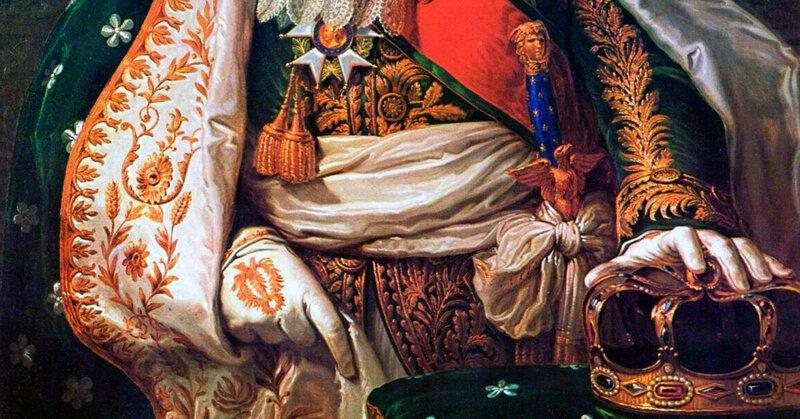
He was born on an island that wasn’t quite France yet, spoke French with a foreign accent his entire life, and came within a bureaucratic technicality of never qualifying for a French military education at all — and yet Napoleon Bonaparte ended up ruling an empire that stretched from Madrid to Moscow. The strangest parts of his story, it turns out, didn’t end at Waterloo. They ended in an autopsy room on a remote Atlantic island, and their afterlife has continued for two centuries since.
Born a Corsican, Not a Frenchman (1769)

On August 15, 1769, a boy named Napoleone di Buonaparte entered the world in Ajaccio, on the sun-scorched island of Corsica. The island had been sold by the Republic of Genoa to France just one year before his birth — a transaction so recent that the ink was barely dry. His mother tongue was Corsican, his family name defiantly Italian in its spelling, and for much of his life his French carried the unmistakable cadence of an outsider. He Gallicized his name only later, sanding down Buonaparte into Bonaparte, Napoleone into Napoléon, as if rewriting his own origin story one letter at a time.
The timing was almost absurdly consequential. Had the transfer of Corsica been delayed by a single year, the young Napoleone would not have qualified as a French subject, and the scholarship that placed him in a French military academy would never have been offered. The entire arc of his extraordinary life balanced on a one-year margin of administrative history — a fact that makes the word “destiny” feel faintly ridiculous and utterly apt at the same time.
A Soldier Catches the Revolution’s Tide (1789)

When France convulsed in 1789, Napoleon was a junior artillery officer of no great distinction and even less money, largely invisible to the aristocratic old guard that controlled military advancement. The Revolution changed the rules overnight. It stripped the officer class of its inherited privileges, executed or exiled much of the senior leadership, and suddenly left an army that needed to be led by men who could actually fight. For a Corsican outsider with a fierce tactical mind and no noble pedigree to protect, this was not a crisis — it was an opening.
His moment announced itself at Toulon in 1793, where his bold artillery strategy helped retake the port city from British-backed royalists and caught the attention of the Republic’s new power brokers. He was twenty-four years old. The Revolution had not just freed France from its king; it had freed Napoleon Bonaparte from the ceiling that birth would otherwise have placed over his ambitions. Every serious account of him must reckon with that structural fact: the man and the moment were made for each other in ways neither could have engineered alone.
The Italian and Egyptian Campaigns That Built a Legend (1796-1799)

If Toulon introduced Napoleon to power, the Italian campaign of 1796-97 introduced him to Europe. He arrived in northern Italy commanding a poorly supplied, demoralized army and within months had humiliated Austria in a cascade of victories that rewrote the continent’s political map. His dispatches from the front were theatrical, carefully crafted, and widely read — Napoleon understood, with a modern instinct that astonished his contemporaries, that a general’s reputation was a weapon as formidable as any cannon.
The Egyptian expedition of 1798-99 deepened the legend even as it undermined the mission. Militarily, the campaign ended in failure: the British navy under Admiral Horatio Nelson destroyed the French fleet at the Battle of the Nile at Aboukir Bay and stranded the army in North Africa. But Napoleon brought scholars and scientists alongside soldiers, made the discovery of the Rosetta Stone possible, and ensured that newspapers across the world tracked his movements as though he were a force of nature rather than a general on a doomed errand. He returned to France not as a man who had lost a campaign, but as a figure of world-historical gravity. Perception and power, he had learned, were two names for the same thing.
Coup, Consulate, and the Road to the Throne (1799-1804)

On 18 Brumaire — November 9, 1799, by the standard calendar — Napoleon moved against the Directory, the corrupt and exhausted government that had nominally ruled France since 1795. The coup was messy, nearly botched, and ultimately successful. He emerged as First Consul, the senior of three consuls nominally sharing power, though sharing was never really on the agenda. He set about remaking France with the focused energy of a man who understood that consolidating a revolution was harder than starting one.
The Napoleonic Code rationalized French law into a coherent system that still shapes legal thinking across much of the world. Political rivals were neutralized, relations with the Catholic Church were formally restored through the Concordat of 1801, and the economy steadied. By 1804, the groundwork was so thoroughly laid that a plebiscite handed him what he had already effectively taken. At Notre-Dame Cathedral, in a ceremony of almost theatrical audacity, he lifted the crown from the Pope’s hands and placed it on his own head — a gesture that announced, without ambiguity, that his authority derived from himself alone. The Corsican outsider had become Emperor of the French.
Waterloo, Exile, and the Final Defeat (1815)

After his forced abdication in 1814 and his unlikely return from the island of Elba in the spring of 1815, Napoleon had one last gamble to play. The Hundred Days ended on June 18, 1815, on a rain-soaked Belgian plain at Waterloo, where a combined British and Prussian force under the Duke of Wellington broke his army for the last time. The defeat was total and the allied powers were in no mood for another Elba. They chose Saint Helena instead — a volcanic speck of rock in the South Atlantic, so remote and so heavily garrisoned that escape was functionally impossible.
He spent six years on that island, dictating his memoirs to a small circle of loyal companions and consciously sculpting what would become the “Napoleon legend” — the myth of a liberal emperor betrayed by reactionary Europe. He complained about the damp, the cramped quarters of Longwood House, and his British overseer, Sir Hudson Lowe, with equal and tireless vigor. Whether the island’s harsh climate accelerated his declining health or whether stomach cancer would have claimed him regardless, he arrived on Saint Helena a conqueror and died there a prisoner.
Death on Saint Helena and the Autopsy That Changed History (May 5, 1821)

Napoleon Bonaparte died on May 5, 1821, at the age of fifty-one. The most widely accepted cause of death is stomach cancer, though theories of deliberate arsenic poisoning — supported by later chemical analysis of hair samples preserved from his lifetime — have circulated for two centuries and have never been fully dismissed by historians or forensic scientists. His body was laid out at Longwood House and a formal autopsy was conducted by a group of attending physicians and aides in its cramped rooms.
It was in the course of that autopsy — or in the subsequent preparation and embalming of his corpse — that his penis was removed. The precise circumstances remain murky, and the identity of whoever made that decision has been debated ever since. What is not seriously disputed is the fact itself. The relic’s strange afterlife began in that room on Saint Helena, and it would wander across two continents for the better part of two centuries before finding anything resembling a permanent home.
A Journey Through at Least Eight Owners Across Two Continents

In the decades following 1821, the preserved member passed through the hands of at least eight different owners across multiple countries. Early custodians reportedly included a Corsican priest — a detail almost too symbolic to be believed — and a succession of European collectors who received, traded, or purchased it with varying degrees of ceremony and documentation. It was treated at different times as a sacred relic, a macabre trophy, a collector’s prize, and an object of prurient fascination, sometimes simultaneously.
Those who encountered it along the way described it in terms that have entered the strange lexicon of Napoleonic trivia: something resembling a piece of leather, or a small, shriveled eel. The descriptions were not flattering, but they did nothing to cool collector interest. If anything, the object’s improbable survival across decades of European upheaval — wars, revolutions, the collapse and redrawing of empires — lent it a morbid prestige that no amount of unflattering physical description could diminish.
The American Exhibition That Scandalized Manhattan (1927)

The relic crossed the Atlantic and surfaced publicly in New York in 1927, displayed as part of a broader collection of Napoleonic artifacts. It drew crowds, as curiosities reliably do, and drew criticism in roughly equal measure. The American press was not entirely sure what to make of it. Time magazine reportedly weighed in with a description that lodged itself in the public memory: the object was said to resemble a maltreated strip of buckskin shoelace — a phrase that managed to be both strangely precise and deeply unkind.
The exhibition marked the first time the relic had been brought to widespread American public attention, and it sparked a debate that has never quite resolved itself: where exactly is the line between preserving history and turning it into a sideshow? The crowds who filed past it in 1927 were not, most of them, thinking about Austerlitz or the Napoleonic Code. But they were thinking about Napoleon — which is, in its way, a testament to how thoroughly he had made his name impossible to ignore.
John Kingsley Lattimer Acquires the Relic at Auction (1977)

In 1977, the long peripatetic journey of Napoleon’s preserved member came to something approaching a conclusion. American urologist and forensic historian John Kingsley Lattimer acquired it at auction for approximately three thousand dollars — a sum that struck some observers as extravagant and others as a considerable bargain for one of history’s more unusual artifacts. Lattimer was not a man easily unsettled by grim historical objects. He had already assembled a collection that included items connected to Abraham Lincoln’s assassination and artifacts from the Nuremberg war crimes trials, making him arguably the most credentialed owner the relic had ever had.
His purchase brought a degree of documented, stable ownership to an object that had spent over a hundred and fifty years accumulating murky provenance and transatlantic folklore. For the first time in its wandering history, there was a clear name, a clear transaction, and a clear location on record. The relic had, in its strange way, finally come to rest.
Still in the Lattimer Family — and Still Unseen (1977 to the Present)

Following John Lattimer’s death in 2007, the relic passed to his family, where it has remained, according to the last verified accounts, ever since. It has not been put up for sale again. It has not been placed on public display. It sits, privately held, in the possession of an American family — which makes it one of the most famous historical curiosities in the world that almost no one alive has actually laid eyes on.
The question of what, if anything, should ultimately become of it — museum display, auction, continued private custody, or respectful reburial with Napoleon’s remains in the Dôme des Invalides in Paris — has no settled answer. Scholars, collectors, and ethicists have offered competing views, and the Lattimer family has offered no public indication of their intentions.
What the Full Story Actually Tells Us

The complete arc — from a Corsican boy whose homeland became French by a single year’s margin, to a self-crowned Emperor who reshaped the legal and political architecture of the modern world, to a prisoner who died on a remote island and was subjected to one of history’s most consequential and peculiar autopsies — is strange enough on its own terms. That the most intimate physical remnant of Napoleon Bonaparte now rests quietly in a private American collection is, depending on your disposition, either a darkly comic footnote or a perfectly fitting coda to a life that defied every expectation placed upon it.
Few figures in history have been as exhaustively studied, and yet the full strangeness of his story — the accidents of timing that made him possible, the outsider’s hunger that drove him forward, the propaganda genius that shaped how the world received him, and the bizarre posthumous odyssey that has followed him ever since — retains a genuine power to catch even seasoned readers off guard. The life, it turns out, was even stranger than the legend. And the legend was already extraordinary.

 English
 Arabic
 Spanish
 Portuguese
 Deutsch
 Turkish
 Dutch
Dutch
 Italiano
 Russian
 Romaian
 Portuguese (Brazil)
 Greek
Greek